6/10
After a very long year of waiting and an overly emotional press tour, Wicked: For Good ultimately falls short. It doesn’t defy expectations (or gravity) in the way that the first part did.
For Good is a screen adaptation of the second act of the Tony Award-winning musical Wicked, based on Gregory Maguire’s novel. After an excellent performance in part one, the energy and emotion of part two feel surprisingly underwhelming. The singing and acting remain strong, but For Good lacks the emotional nuance that made the first installment so compelling.
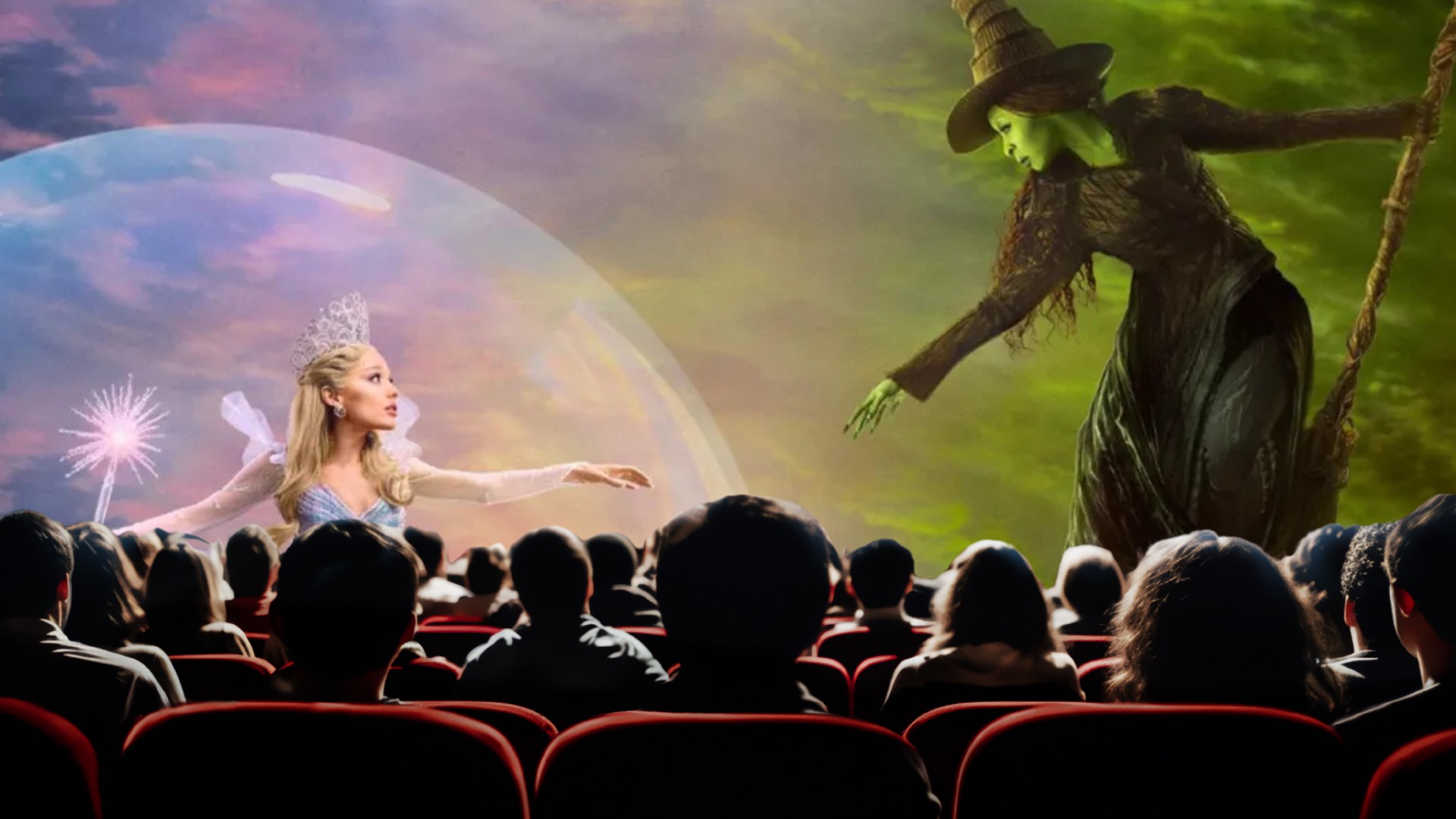
In the fictional land of Oz, Elphaba Thropp (Cynthia Erivo) fights against adversity and forms a friendship with Glinda Upland (Ariana Grande). The first movie concludes with the separation of the two friends. The second part begins with Elphaba, now a revolutionary force in Oz, swooping in to save animals from being overworked during the construction of the Yellow Brick Road.
This film focuses much more on Glinda, exploring how she craves popularity and consistently strives to be the symbol of “Good” that Madame Morrible (Michelle Yeoh) demands her to be. All the while, Elphaba fights to prove the Wizard is corrupt and rescue the animals of Oz. Fiyero Tigelaar (Jonathan Bailey) goes through his own character development—though originally engaged to Glinda, he slowly realizes that he is actually in love with Elphaba.
Despite being about 25 minutes shorter than Part One, a two-hour and twenty-minute run time still feels tedious. Some scenes, especially those featuring secondary characters like Boq Woodsman (Ethan Slater) and Nessarose Thropp (Marissa Bode), lack significance and are unnecessary, dragging the whole movie out. Relief only comes in the musical numbers, with each of the songs contributing new elements and furthering the plot.
Yet again, Erivo outshines the other actors with incredible vocals and a nuanced emotional portrayal. Erivo expertly conveys the balance of Elphaba’s loneliness and revolutionary confidence. She always feels headstrong and empathetic. Erivo’s solo “No Good Deed” stands out as one of the film’s strongest moments.
Grande’s performance is not nearly as charming or fun. Glinda is shallow, preventing Grande from being able to portray a complex character. While her vocals are strong, some moments feel forced, and in duets her voice doesn’t stand out the way it does in solos. Towards the end of the film, however, Grande’s performance peaks, delivering a more effortless performance in “The Girl in the Bubble,” a great addition that highlights her strong vocals.
One of the most notable moments takes place when Glinda slaps Elphaba, and Elphaba slaps right back, marking the first time Glinda makes a decision for herself, and it only takes her half a movie! Progress! It’s a fun fight scene between two friends and a much-needed reprieve from the otherwise tragic arc of the story.
Overall, Elphaba and Glinda truly work in tandem, filling their scenes with believable emotion, humorous banter, heartfelt friendship, and yes, a few slaps. The evolution of their friendship feels magical in the “pink floating bubble” way, not the “accidentally turn a guy into tin” way.
The not-so-wonderful Wizard of Oz (Jeff Goldblum) lightens the mood with his hilarious presence. Goldblum brilliantly balances comedy with villainous demeanor. It’s flawless. His standout moment, the song “Wonderful,” is both humorous and unapologetically cruel.
Madame Morrible is featured very little and for good reason. Yeoh isn’t able to show anything other than cruelty, and her portrayal is painfully one-note, leaving her character unmemorable and grueling. Yeoh told director John M Chu she couldn’t sing, but he cast her anyway, and boy, her singing lines sound terrible. For a movie with a 150 million budget, could they really not find anyone who could sing?
Bailey stuns absolutely no one with an underwhelming performance and lack of personality. The only expression ever visible on his face is concern, probably for the people who had to witness his acting. Bailey completely missed the complexities of his character, creating gaps in the storyline, leaving the audience confused about his actions.
The film’s production design is also surprisingly lackluster. Fiyero is scaring a lot more than just crows as a seriously ugly scarecrow, and background dancers constantly wear costumes that look cheaply made.
The climax of the movie is the title song, “For Good.” This duet between Elphaba and Glinda closes the story, sending both characters on their final, separate paths. The vocals are beautiful, and the emotion is extremely impactful.
In the final scenes, Elphaba and Fiyero walk away from Oz, and Elphaba is shown sending a message to Glinda before they go. Glinda also finishes Elphaba’s hard work, banishing both the Wizard and Madame Morrible from Oz, welcoming the animals back to Oz, finding peace with herself, and finally truly becoming ‘Glinda the Good’.
Erivo clearly carries the film, delivering powerhouse solos and emotional moments that the rest of the cast can’t quite reach. Grande tries, but her Glinda feels pretty flat during a lot of the movie, and Bailey’s Fiyero is so underwritten he might as well be a cardboard cutout. The individual performances are highlights, but the group vocals are awkward, and several scenes drag on. Even with gorgeous costumes and a few memorable duets, the movie struggles to match the magic of Part One.
For Good highlights how those in power can twist the narrative and manipulate public opinion, a reflection of the messy, real-life struggle for truth and authority. It’s a pattern that feels uncomfortably familiar for those who follow real-world politics. Truth becomes flexible, and authority becomes absolute. The film highlights people who challenge these systems. They’re often misunderstood, dismissed, or vilified, but they persist. They fight not for recognition or glory but to make a change that actually matters.
While the film delivers emotional highs, standout solos, and relevant themes, it reminds us that without fully developed characters and vibrant energy, even magic can feel fleeting.