This is the 118th article in Bears Doing Big Things, a weekly column celebrating the stories of notable M-A alumni.
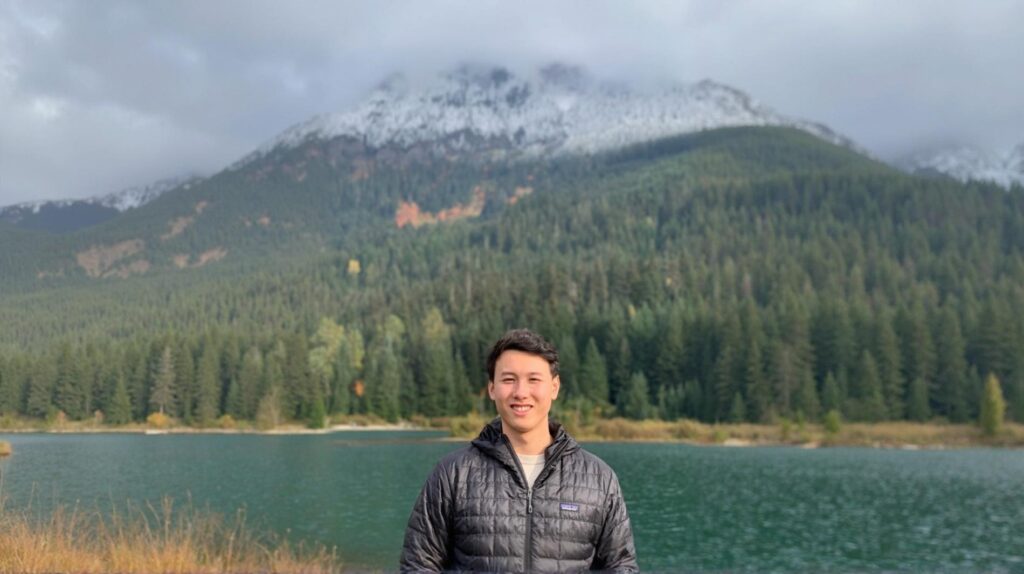
From working as a software engineer at a company tracking carbon emissions to creating AI systems to assist 911 dispatch callers, Noah Smith ’18 has always strived to make an impact however he can.
Smith was raised in the Bay Area, near M-A. “I grew up not too far away from M-A, probably an eight minute walk,” he said.
At M-A, Smith was widely involved in extracurricular activities. He played goalie for the boys water polo team and participated in the jazz band, where he played the trumpet. “I was kind of involved in a ton of different random things. I feel like that’s also been the case in my career,” he said.
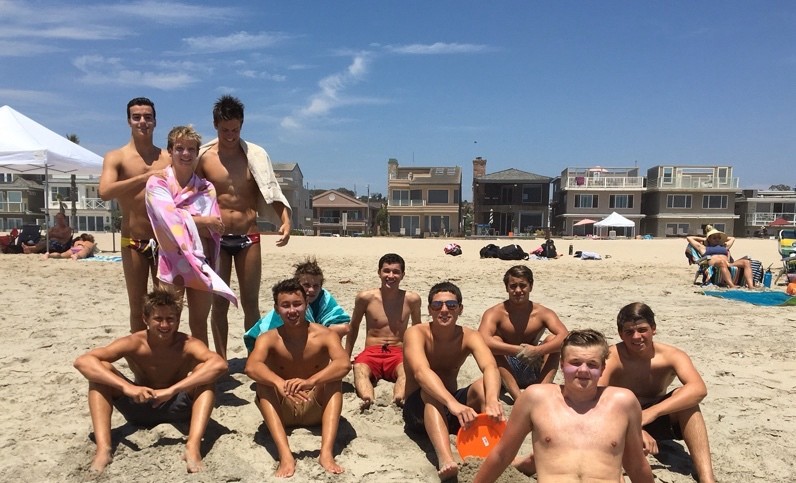
Smith remembers his time at M-A fondly, appreciating its various opportunities and ambitious student body. “M-A was a really challenging school—there were a lot of opportunities to take challenging classes, and there are teachers that push you, and a lot of really brilliant kids there,” he said. “I enjoyed how you get to go out there and fend for yourself, but also a competitive environment. It was a very well-run public school.”
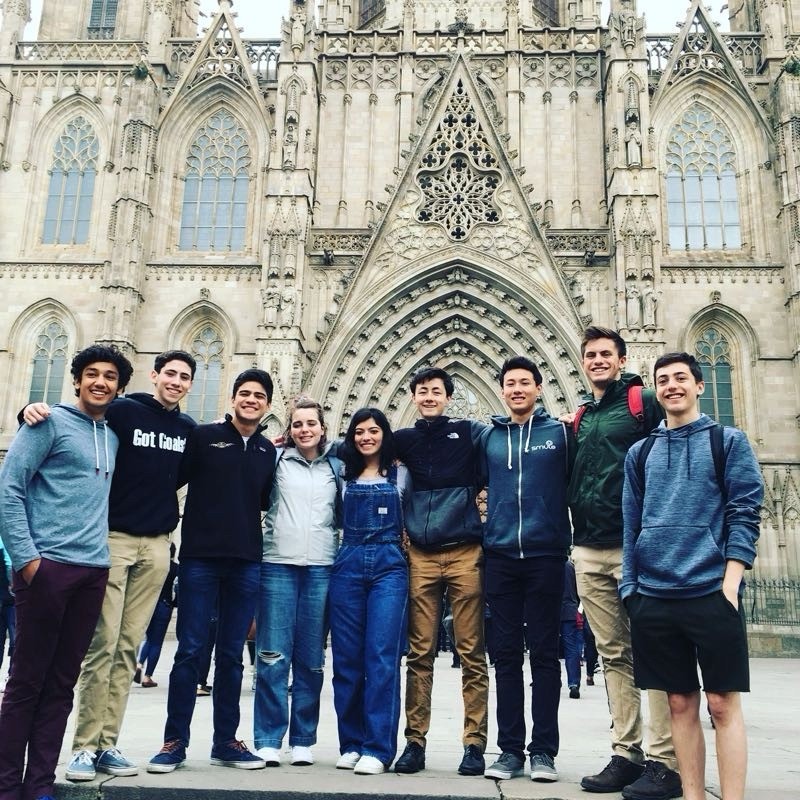
One of the most memorable classes Smith took at M-A was John McBlair’s* Speech and Debate class, which taught him how to develop and articulate compelling arguments. “I feel like I learned quite a bit about how to argue things or come up with evidence for your argument,” he said. “I was the quiet kid in class. I didn’t love to ask that many questions. I think that’s part of why I appreciated Mr. McBlair’s debate class so much—it really pushed me out of my comfort zone and made me actually try to debate and talk and ask questions.”
Smith intended to pursue general engineering rather than software engineering or computer science after struggling in Cindy Donaldson’s AP Computer Science Principles class. “I took AP Computer Science. I didn’t do that well. I thought, ‘This isn’t for me.’ It just felt like a lot of my friends who were really brilliant would just pick it up, and it was just easy for them,” he said. “I’ve always been really interested in engineering, and building things with my hands and fixing things. And so I thought that I was going to be doing mechanical engineering—I was pretty open-minded though.”
Following his time at M-A, Smith was recruited to Harvey Mudd College for water polo, a decision that ultimately came down to commitment level. “The balance there was great. You get to have essentially half of a year of really hardcore training, and then the rest of the year you don’t have to do anything. I thought that was a good balance between still maintaining really high competition while playing water polo, and then also being able to really focus on school for half the year,” he said.
Smith entered Harvey Mudd as a general engineering major. However, due to the immense traction of software engineering at the time, he felt encouraged to switch his major to computer science in his junior year. “The software engineering world was, at least when I was in high school and college, getting a lot of steam. There was a lot of excitement. There were tons of startups everywhere,” Smith explained.
Smith was also drawn to software engineering for the opportunities it provided to spur positive change. “There were a lot of opportunities to build really impactful products. I think that was what was really important to me, building impactful technology. I want it to be, hopefully, making people’s lives a lot better,” he said.
In addition to majoring in computer science, Smith minored in music and environmental science. “I’m really passionate about the outdoors. I think climate change is one of the biggest problems facing humanity right now, and it’s not looking great. I definitely cared a lot about—and still care a lot about—the sustainability aspect of things, and thinking critically around what we can do to actually solve this problem. I really wanted to dive deeper into that in college,” he said.
“The classic pipeline is you get an internship or two over the summer before you graduate college, and then you hopefully get a return offer or something as you come out of college at a tech company,” Smith said, when describing the typical career pathway of a software engineering major. “I remember I made a spreadsheet of, like, 150 companies, and I just started applying. I applied to every single one of them, and then started interviewing.”
Despite initial difficulty, with tenacity and diligence, Smith landed an internship with Rapid7, a cybersecurity service, the summer before his senior year. “I remember my first interview I did so poorly—the guy on Zoom started using his phone, and I was totally stuck on trying to solve a coding problem live. I asked him for help, and he’s like, ‘I think I’ve seen enough.’ And then he left 15 minutes early from the interview,” Smith said. “That was crushing. Especially given how I took computer science in high school and didn’t feel like I did that well.”
“I definitely didn’t feel that confident in my CS skills, but I just kept applying. And then I went to my college’s career fair, and I went through an interview process that was pretty intensive and ended up getting an internship at a small cyber security company in San Francisco,” Smith said.
Despite receiving a return offer from Rapid7 after graduation, Smith wanted to move to a city with his now-fiancée, so they applied for jobs in the same region after graduating. Smith ultimately ended up working at Expedia Group in Seattle, where he participated in a rotational program for recent college graduates, exploring different subsections of software engineering. “I got to be on multiple different teams across the company as a software engineer—coming back to the team of breadth, I think that was something that was really important to me. I really wanted to start my career off and get a wide breadth of industries, and then, from there, my plan was to kind of start focusing a little bit more on an area that I think I’m good at or that I enjoy,” he said.
After seeing an open position on LinkedIn for Muir AI, a company building carbon emissions tracking for products using AI, Smith applied and landed the job two months later. “I wanted to get a climate job right out of college. I got a job at Expedia Group, and I was like, ‘It’s not aligning with what I want,'” Smith said.
Smith believes it is important to keep one’s values in mind as they develop their career. “Hold those values that you care about close to you, and really exemplify them in every job that you have, regardless of what the company is or what it is you’re doing,” he said.
At Muir AI, Smith assisted the company in laying their product’s groundwork. “It was just me and one other engineer at this seed-stage startup and we built a product from zero to one,” he said. “It was hundreds of thousands of lines of code that I wrote in a year and a half, partially with AI too. I think that was a really rewarding experience for me and the product—the product we built was really fun, and I think it still has the potential to have a really high impact in the carbon world,” Smith said.
Smith then obtained his current role at Aurelian, a company that automates responses for non-emergency police call lines. Similar to what drew him to Muir AI, Smith was attracted to the position at Aurelian because he supported the company’s objective. “I was approached, and I realized this job is potentially even more impactful, at the ground level, for people’s day-to-day lives. I think I was just really sold on the mission of this company and their values,” he said.
By diverting non-emergency phone calls to an AI service, Aurelian reduces dispatcher stress by routing true emergencies directly to the appropriate line and giving dispatchers a clear summary of each caller’s issue. “They’re 30% understaffed, and they spend almost 70% of their time answering non-emergency calls. You get paid not very much, and it’s such a stressful job that people just leave all the time. Our motivation is to make that job less stressful for dispatchers, and to make it so that there’s better response times for the community in the city of Seattle,” Smith said.
“If you were to call Seattle on the non-emergency line in the middle of the day, it would probably take 30 minutes to an hour before you reach somebody. And a lot of people actually call non-emergency lines with emergencies,” Smith said.
“I think it’s been really impactful, being able to go and visit customers once or twice a week, or go to a 911 dispatch center and listen to 911 calls,” Smith said. “It’s been about three months, and it’s just a lot of work. It’s intense. I’m working most days of the week and most hours of the day, but it’s been really rewarding.”
Smith’s advice to current M-A Students: “I would prioritize just trying to get experience because I think you can get your foot in the door somewhere, start building up that experience, and then you can use it to leverage yourself into positions where you’re working on things that you really care about.”
To those interested in software engineering: “The engineers that are better or distinguished from some of the other engineers are the ones that are thinking about the end problem. I think the people that are able to pull themselves out of the code and think at a high level are going to be really successful. Learn how to use AI, don’t be afraid of it. But also learn how to not use it because it does make a lot of mistakes.”
*John McBlair is the advisor of this publication.