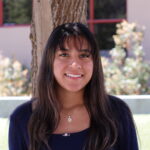
Coming into M-A, students are given a choice to select from four different world languages: Latin, French, Mandarin, and Spanish. While taking a world language class is not a graduation requirement, many colleges require it. Beyond this, world language classes help students expand their perspectives, learn about other cultures or their own culture, prepare for college, and sometimes even improve their English.
Latin

Latin is considered a “dead language,” as it is no longer spoken in everyday conversation, however the ancient Roman language still has a rich history in academics, religion, and administration.
This year, Alan Eaton is teaching all Latin Classes offered at M-A. Eaton, an M-A alum, began his language studies in high school. This is his first year at M-A following 27 years of teaching Latin at Woodside High School.
Students across all levels work on a variety of enjoyable projects. “It really depends on the level, we usually have a lot of action,” Eaton said. “We usually get to translate stories from Latin into English, and then we get to make sure we understand things. We usually have a cultural assignment, whether it’s myths or architecture, or history, and we always have a Kahoot for glory, where people win prizes and practice.”
Students also learn about ancient Roman history and culture. “Latin is still really useful for reading and studying and appreciating the last 3,000 years of art and history and culture and all of that,” Eaton said.
The class focuses on identifying Latin roots and grammar in English speech as well as translating and analyzing texts. “70% or 75% of our English vocabulary has Latin roots, so the students who are learning Latin are also improving their English skills. I feel like it’s really hard to read Shakespeare without having some Latin in your life,” Eaton said.
Because of the language’s close connection to English, Latin can come in handy for some students’ future careers or interests in other languages. “Everything belongs to Latin because it’s so old that it has a reach,” Eaton said. “Latin stretches into so many things—Spanish, French, Portuguese, Romanian, all of Italian, all those languages come from Latin. At the end of the year, I can give my students a poem in Portuguese or some stanzas in Italian, and they can read those languages because of what they have learned in Latin.”
Students should consider taking Latin if they want to learn about ancient Roman history and deeply explore the English language. “Latin is really useful for them when they are exploring the world of not just languages but also the art and the culture, and it’s really fun, it’s super weird, [but] super fun,” Eaton said.
To learn more, visit the Latin room in E-12.
French
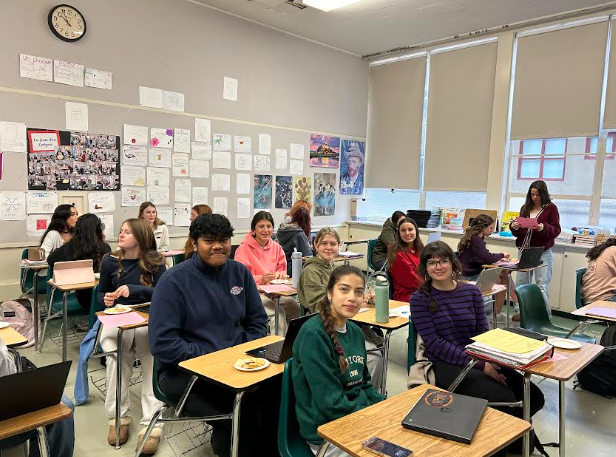
French is one of the most widely spoken languages in the world, often associated with diplomacy, fashion, and the arts.
Sapna Bhagwat has taught all levels of French at M-A for the past four years. Bhagwat began her French-speaking journey in high school. “My mom is a French teacher, so I just learned French in school. I was good at it, so I went to college and majored in French, and I really like to teach, so here I am,” Bhagwat said.
Students focus on all of the aspects and skills of language, including reading, vocabulary, speaking, and listening. “Our class begins with a warm-up, normally a ‘this or that’ question,” Bhagwat said. “With one of my classes, I asked them, ‘Would you rather have a longer Christmas break or a break in February?’ And they had to tell me why.”
The class focuses on learning all the skills of using French. In Bhagwat’s class, the warm up is always related to the vocabulary words they are learning. French students also have to elaborate on their warm up question by sharing, writing down, creating a dialogue, or presenting their responses to the class.
To learn more, visit the French room in E-13.
Mandarin
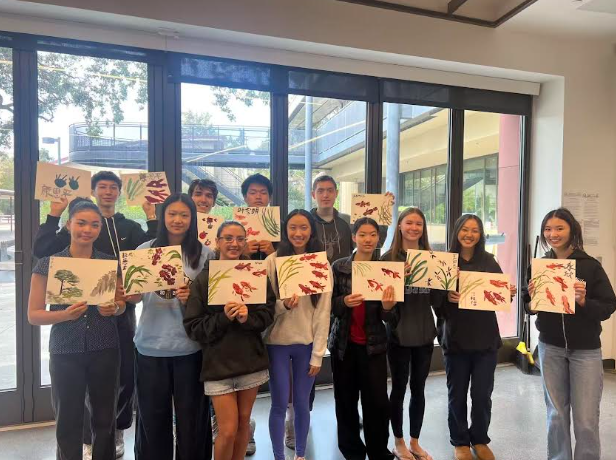
Mandarin has been offered as a language at M-A for the past 11 years. This year, Rui Dong teaches Mandarin at M-A. All five levels focus on disciplined learning for reading, writing, speaking, and listening. “We expect a dynamic class that combines disciplined learning with fun and interactive activities which are all designed to build students’ confidence in speaking, reading, and understanding this culture,” Dong said.
“Learning Mandarin isn’t just about the language, it’s about gaining a firsthand understanding of global trends. Look at the global impact of companies like TikTok, Shein, and Pop Mart. China has the world’s second-largest economy and is a key partner and competitor in various sectors, including technology, finance, and business,” Dong added.
Mandarin is open to both non-heritage and heritage speakers. “It strengthens bonds with grandparents and relatives [for heritage speakers] by allowing them to speak to you in their own language,” Dong said. “Additionally, for non-heritage speakers, learning Mandarin provides a direct window into a different way of thinking and viewing the world, thereby expanding students’ perspective far beyond their own community.”
Mandarin differs from other languages taught at M-A due to the language’s distinct alphabet. “Every character is a tiny piece of art with its own story and learning to write isn’t just memorization; it’s understanding the history and imagery within each character,” Dong said.
To learn more, visit the Mandarin room in E-14.
Spanish
M-A’s Spanish program includes both Spanish for Spanish Language Learners and the Spanish for Heritage Speakers program. Given the popularity of Spanish as a language—both at M-A and on a global scale—having such a large Spanish program gives people a uniquely beneficial opportunity to communicate.
Michael Mueller is one of the teachers for the Spanish Language Learners program. This year, he teaches levels one and three. “Since I was in high school, I loved Spanish class and I had so much fun. I loved learning another language,” Mueller said.
Mueller, along with many others, was a Spanish learner during his high school years. “A lot of my friends spoke Spanish, and I wanted to be in on the joke with them. We would go to their house, and their moms would be yelling funny things at them,” Mueller said. “I wanted to know what the moms were screaming at them so having the friends also made me like, ‘Wow, I want to take more Spanish, I want to get better and be funny and joke with their families too, and be on that joke and enjoy it.’”
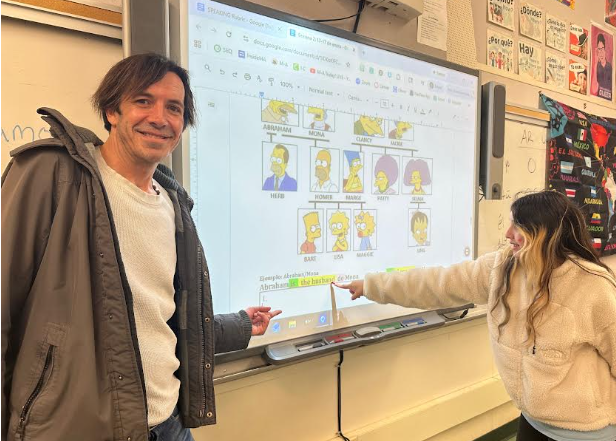
Julieta Oropeza-Gamez teaches Spanish IV for Heritage Speakers and AP Spanish. “Spanish is my first language and I started learning English when I was about seven years old,” Oropeza-Gamez said. “I like being a Spanish teacher because I get to teach other students about the language that I grew up speaking and that I still speak and how it’s not only about language, but also culture.”
Because the language is so widely spoken, Spanish can be useful for some students’ future careers or interests in life. “A lot of the time, I would get higher opportunities because I speak both [English and Spanish],” Oropeza-Gamez said. “I think it’s important, especially now that a lot of the students here in high school are getting ready to go to college, and then afterwards they apply to different jobs. Having another foreign language, even if it’s not Spanish, is really important, and it looks really good.”
Learning Spanish can also benefit students for standardized testing. “The roots of Spanish words come from Latin, which totally prepares our students to be able to score high on those SAT exams and all of these college tests,” Mueller said. “The words are similar to what they are in Spanish, so learning Spanish actually helps people in a lot of other areas later on.”
In Mueller’s Spanish Language Learners classes, there is a focus on improving Spanish grammar, speaking, listening, and understanding. “We start every day with a little warm-up activity where they have some questions that they’re supposed to answer working with words that we’ve learned this week or the week before,” Mueller said. “Sometimes we play a short video or audio to make them listen to it and just to help them start to be able to recognize spoken Spanish and written Spanish.”
Oropeza-Gamez’s classes emphasize learning about Spanish culture and completing plenty of practice exercises. “The lessons depend on the level. If I were teaching Spanish I, the lessons would be more grammar loaded, but in heritage classes, we do teach grammar here and there but it’s not heavily dependent,” Oropeza-Gamez said. “It’s more of an English class, where you get to read, write, and practice a lot through reading and writing so it’s a little bit different.”

Students should consider taking Spanish if they want to learn about culture, prepare for standardized tests, or be able to communicate with the many people who speak Spanish. “I think even if you’re not planning to go live in one of those Spanish-speaking countries, taking Spanish in high school is so important for all students who plan to maybe study and go to college,” Mueller said.
To learn more, visit Mueller in E-17 and Oropeza-Gamez in E-16.