8/10
The first Zootopia was an iconic part of the 2010s. The characters were well-rounded and balanced each other out, and they were aided by the phenomenal music and creative world. Zootopia 2 is just as good.
Both the sequel and its original take place in Zootopia, a city of animals built on the cliché that anyone can be and do anything. Zootopia 2 returns to protagonist Judy Hopps, voiced by Ginnifer Goodwin, and Nick Wilde, voiced by Jason Bateman, as they encounter more injustice hiding within the animal paradise.
With all the unnecessary remakes and discrediting sequels that have been made in the last few years, it was tempting to skip Zootopia 2 altogether and protect the first from this unbearable pattern. Still, the film is much better than expected due to its entertaining delivery of relevant messages.
The first movie, released in 2016 to great acclaim, won Best Animated Feature at the Oscars. Despite having a lot to live up to, Zootopia 2 delivers. It’s a great family movie packed with action and jokes that land for all ages. This isn’t the kind of family movie where your dad falls asleep 30 minutes in. It incorporates interesting engaging action, unique characters, and topics that seamlessly blend into the previously constructed world. From characters, running jokes, or the setting, it always stays loyal to the first movie. With that said, there are definitely some unnecessary additions.
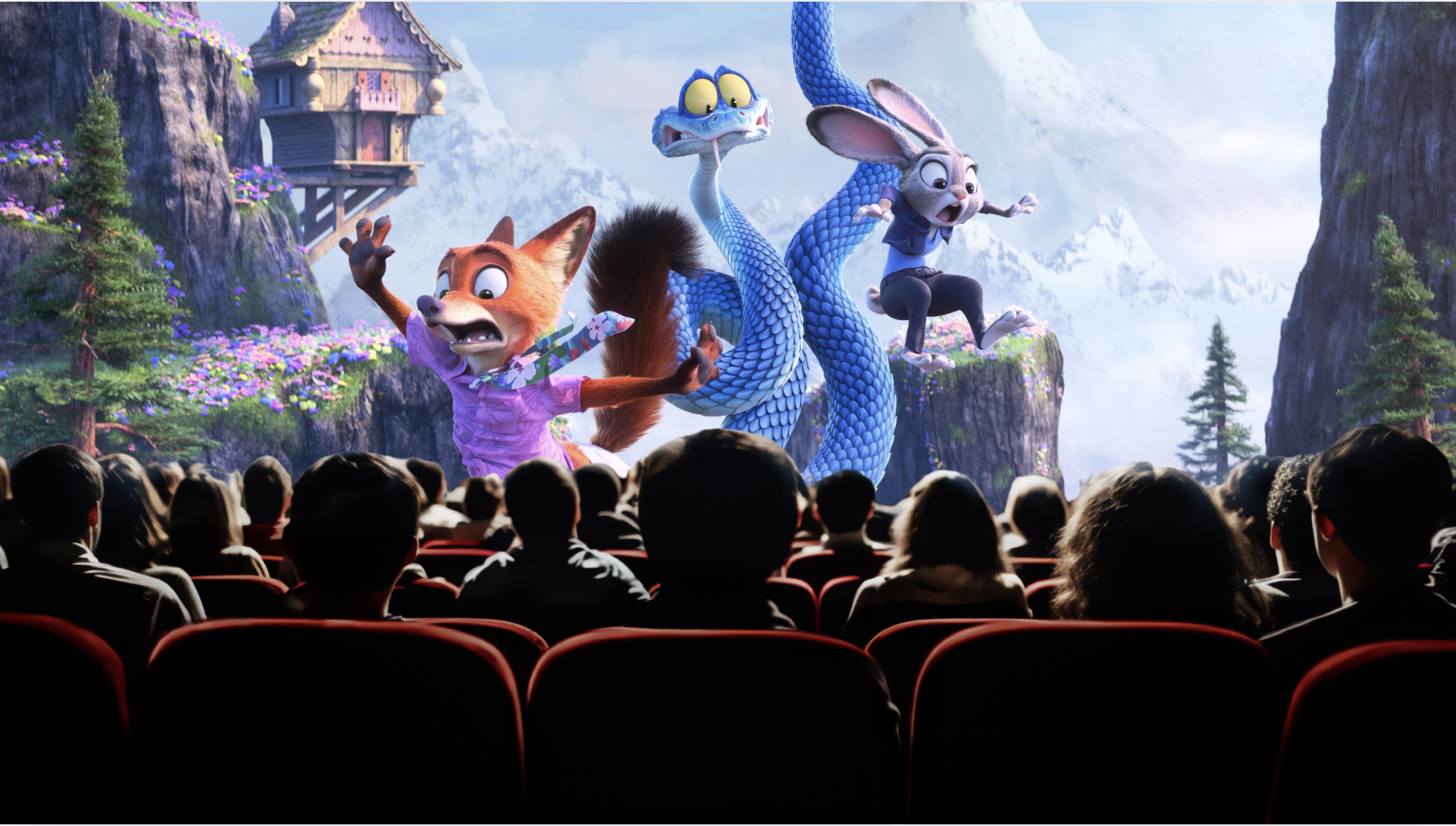
Bunny and fox police officers, Judy and Nick, face their second case when the book of Zootopia’s origins is stolen. The two must work together to figure out who the thief is, uncovering the story behind the book. Besides the action, they work through some partner issues due to conflicting opinions about to what extent it is worth putting their safety on the line while fighting for justice. As they investigate, Judy and Nick discover that reptiles have been excluded from Zootopia for years because of negative stereotypes about their conniving, mal-intended personalities.
The suspicious Lynxley’s, a newly introduced family in Zootopia, go to any extent to attempt to shield the journal from discovery, claiming it is their family who founded the city, when in reality the blueprints belonged to a snake, the grandmother of Gary De’Snake. Gary De’ Snake partners up with Pawbert Linxley, a compassionate misfit in his ruthless family, to get the journal back from Pawbert’s family, to prove the snakes are the true creators of Zootopia and allow Gary’s family to move back into their homes.
Both Judy and Nick feel like the same unique characters from the first film. Bateman’s character is charismatic, yet snarky, all in an endearing way. He is able to balance out the zippy, barely sufferable exuberant Judy and provide comedic relief. Zootopia 2 keeps the same pinpoint precision as its predecessor with characters consistent with the first film. Voice actor Ke Huy Quan gives Gary De’Snake a lisp, perfect for a talking snake, and brings him to life as bashful and lovable.
But, despite the directors’ ability to preserve so many lovable aspects from the first film, some scenes needed to be edited or just removed. There are moments that are so blatantly cringy that you feel bad for the other 50 people in the theater having to endure those scenes with you. In the last 30 minutes of the movie, it is hard not to ask, “This again? How much time is left?”
But Zootopia 2’s main issue is that the sequel and its original have the exact. Same. Plotwist.
The most innocent character turns out to be the malicious one behind all the chaos in the movie. Ten years ago, finding out that the Assistant Mayor Bellwether was the culprit in the first movie was shocking, but watching the exact same trope play out in 2026 comes across as just lazy and unoriginal.
But Zootopia isn’t made for totally shocking plot twists; it’s made for a fun time, and in the case of the second movie, some deeply serious underlying themes. In some ways, they are similar to the first in themes of ‘anyone can do anything’ and combating societal divisions reflected through the juxtaposition of bunny and fox police partners. The movie even explores relationship tensions as the couples’ conflicts boil over into partner therapy. There are various parallels about their relationship that resonate for older audience members. This is evident in moments like when they pretend to have a child to catch a lead and have familiar married couple disagreements. The film’s plot also centers around gentrification and colonialism played out through a clear social structure. It is overall engaging, well animated, and packed with action.
The harsher themes are incorporated with fluidity, rather than abruptly, as they build on the previous film’s topics of social justice and exclusion to make it more digestible. Half way through the movie it is unavoidable to completely forget these rounded characters are animals because of how applicable the themes are to our society. The exclusion of the reptiles for being “sneaky” and “untrustworthy” alludes to issues of discrimination and racial profiling. The creators counter the stereotypes with the new snake character who clearly doesn’t have a harmful bone in his body.
It would be impossible not to mention the music in this movie. Shakira’s catchy, Grammy-nominated “Try Everything” in the first Zootopia is an iconic part of the film. Her new song “Zoo,” still sung as her character Gazelle, is just as catchy, contributing to the film’s overall upbeat vibe.
Often, sequels don’t have much to say. Studios simply want to please the fans of the first movie in a fun way and make money off an idea that’s guaranteed to succeed. But Zootopia 2 doesn’t feel like that. Zootopia 2 comments on societal shortcomings through the exclusion of the marginalized reptiles alluding to racism and inequality in a digestible manner for both children and adults.
The film is able to escape the pitfall of every modern sequel and say something notable about society. It balances its advocacy for equality and inclusivity with its lighthearted feel and creativity. It’s genuinely a good watch.