The District Board of Trustees convened for its monthly meeting on Wednesday, Jan. 14. The Board hosted a specialist who presented a Demography Report that predicted a significant drop in student enrollment in future years. Afterward, they continued their discussion surrounding the potential closure of TIDE Academy and heard over 30 community members share the impact of the school and the importance of accurate and contextual data to help drive the Board’s decision. The Board was then given a Local Control and Accountability Plan (LCAP) and California State Dashboard (CSD) update, as well as a presentation on California School Board Association (CSBA) policy language updates. After four hours, the meeting ended with the Board approving proposed renovations to M-A’s B-wing.
Demography Report
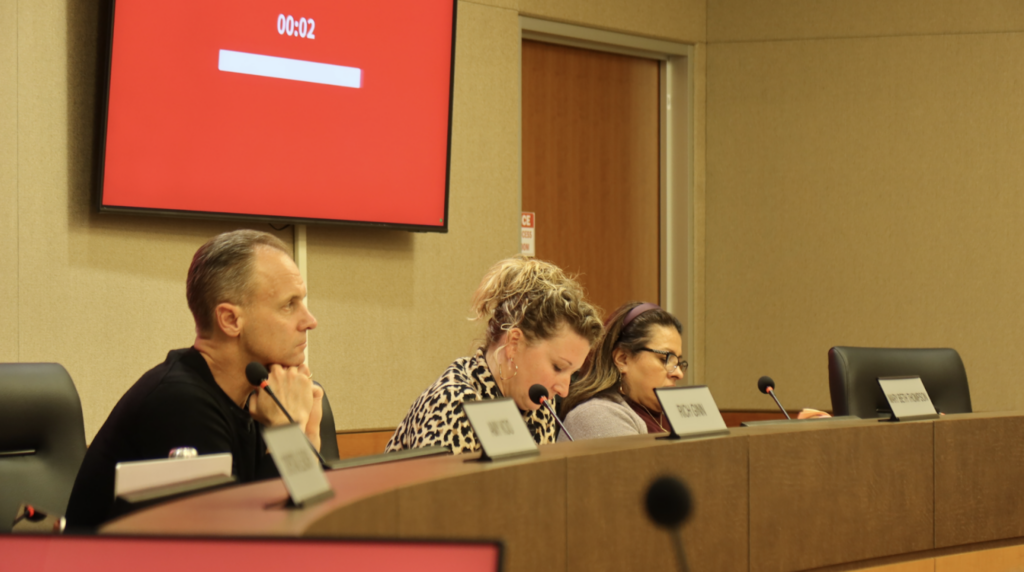
King’s Consulting spokesperson Ron Murray shared the results from their study of District demographics. There was an unexpected spike in students in 2019-20, but since then the enrollment rate has decreased back to 2011-12 levels. Enrollment is expected to continue steadily decreasing with a dramatic drop of 718 students by 2031. According to King’s Consulting, this is attributed to a national trend in declining birth rates. This can be interpreted from the decline from elementary school enrollment, so forth a decrease in birth rates are a factor for this, which SUHSD predicts will fall 7.8% from now.
However, Murray acknowledged that residential housing projects in the District will lead to a slight increase of around 270 students.
Board Considers TIDE Data Following Public Comment
During the Nov. 14 Board meeting, trustees Mary Beth Thompson and Richard Ginn proposed that the Board look into TIDE data before making a final decision on the schools’ future in February.
Since then, the District has hosted two community meetings that have included presentations aimed to inform trustees on data, and to hear from community members. Superintendent Crystal Leach and Assistant Superintendent Janea Marking shared TIDE statistics such as demographics, the increase of expenditures, enrollment, and much more. Janea Marking also mentioned that the district is not considering the closure of EPAA.
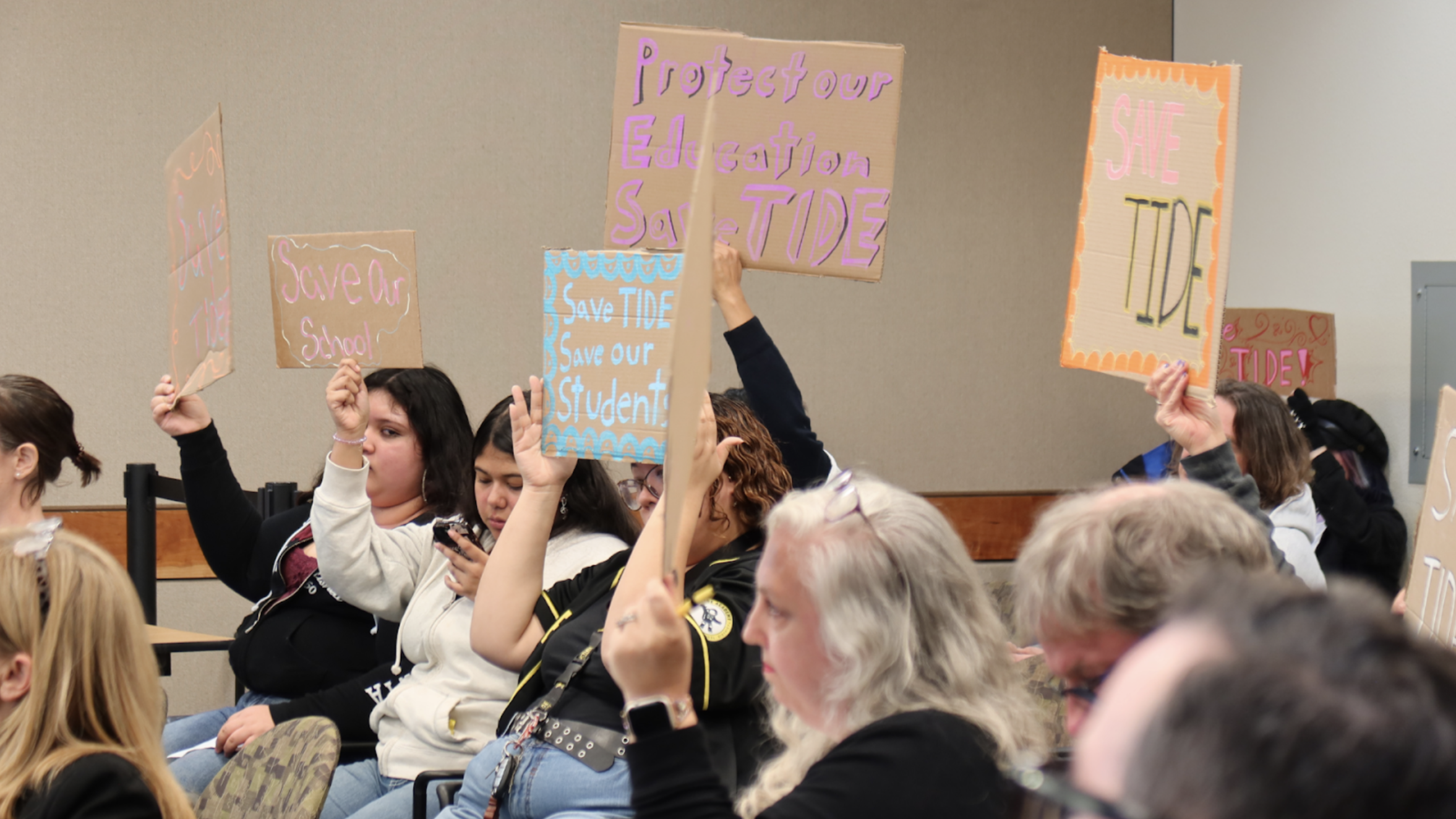
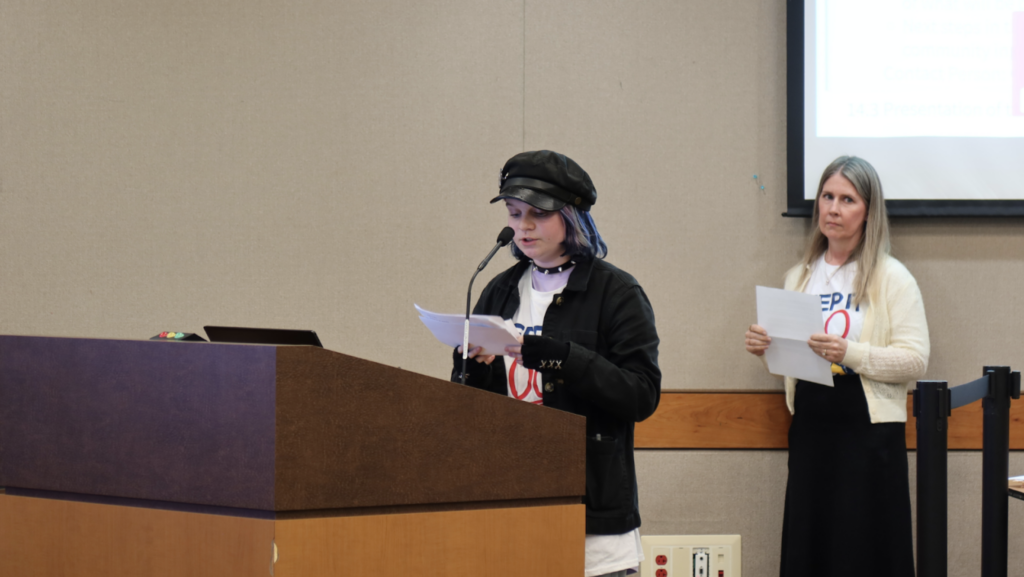
Over 30 people gave public comments regarding TIDE’s closure, many of whom expressed their disappointment with the quality of the data, stating that the numbers were either factually incorrect or not an accurate representation of the school. Some community members mentioned they felt there weren’t enough opportunities for them to give comments to the Board and that the decision feels rushed.
TIDE English teacher Daphne Pacia-McCann criticized the Board’s slideshow. “Last night’s presentation was not a neutral presentation of data. It was a cherry picked argument that selectively framed information toward the closure of TIDE disguised as key takeaways,” Pacia-McCann said.
Lara Sandora, the lead counselor at TIDE, described her frustration to the Board. “I have never felt as undervalued by a district as I do now. These decisions are being imposed upon us, not made with us,” she said.
Lauren Reiser, a therapist at TIDE, explained her concern for the wellbeing of her students. “I’ve been witness to students’ tears and pain through this process, including students worrying that if forced to move schools, they’ll experience resurgences of social anxiety, depression, bullying, and academic failure that they’ve been able to overcome at TIDE,” she said. “Many of us have imagined that we would be working at TIDE and with our TIDE family for the rest of our lives, and I feel nervous to share this, because it has not felt like our opinions and experiences matter in this process,” Reiser said.
“Big schools like Sequoia are really trying their best, but a lot of students, including me, were miserable and suicidal and scared to ask for help because we have been let down by the system too many times,” a recent TIDE Academy graduate, known as Mouse, said.
CSD and LCAP Update
Director of Program Evaluation and Research Diana Wilmot gave a presentation comparing CSD results from the 2023-24 school year to the 2024-25 school year. Wilmot explained that SUHSD ELA test scores decreased 6.9 points on the CSD, 1.2 percentage points down from last year’s score, but District’s ELA scores are still in the green category. These changes reflect poorer performance throughout the District. Math scores declined as well , down to or from 10.1 points moving District scores from green to yellow.
Afterward, Assistant Superintendent Bonnie Hansen gave the Mid-Year LCAP Presentation, with topics regarding chronic absenteeism, aimed to reclassify EL students, and to prepare students for college and careers.
Chronic absenteeism decreased 1.9%—a student missing over 10% of school, for any reason usually due to extenuating circumstances—but a 1.4% increase in the English Learners subgroup.
Assistant Superintendent Dr. Elizabeth Chacon also said it aims to increase the number of English Learner students for reclassification and focus on monitoring. “As you know, we’ve been reclassifying a lot of students over the years, it’s been a priority for us. And you know, the state doesn’t necessarily incentivize that, because they don’t use the RFEP (Reclassified Fluent English Proficient) category as a subgroup. However, we know the value of reclassification. We know that our students have better outcomes with reclassification,” Chacon said. The Board has newly implemented a bulletin that appeared on Canvas, with policies and information of RFEP.
Other student demographic groups saw improvements in reducing suspensions from the 2022-23 to 2024-25 school year, with a 2.5% among Black students and a 4.1% decrease for Pacific Islander students, with the district saying they aimed to mitigate the amount. This is compared to the overall student suspension rate from 3.7% to 2.9%, which are significantly lower rates.
The District stated that they are currently in the process of implementing restorative practices for this category.
The district then addressed goals about 9th and 10th grade CTE (Career Technical Education) participation, saying counselors will prioritize younger students so they will be able to achieve a CTE pathway throughout high school.
Changes in CSBA Policy Language
Lastly, the District made changes to its board policy verbiage in order to match the modifications made to the CSBA policies.
In regards to notifications, parents will be notified more frequently about Family Educational Rights and Privacy Act (FERPA) updates and the District is no longer required to update staff when there is a COVID-19 outbreak. Additionally, the District has added that they will send emails to parents of EL students in English and their native language as well as establishing student and family centers to increase engagement with EL families.
The District has also updated their opt-out policies allowing parents to opt students out of curriculum that goes against their religious beliefs. The updates also allow parents to opt their students out of psychological testing or testing of their home lives for school, not state, tests.
After going back-and-forth for months, the Board has restored its Title IX policy to the 2024 version.
The Board will convene again on Wednesday, Feb. 11.