6/10
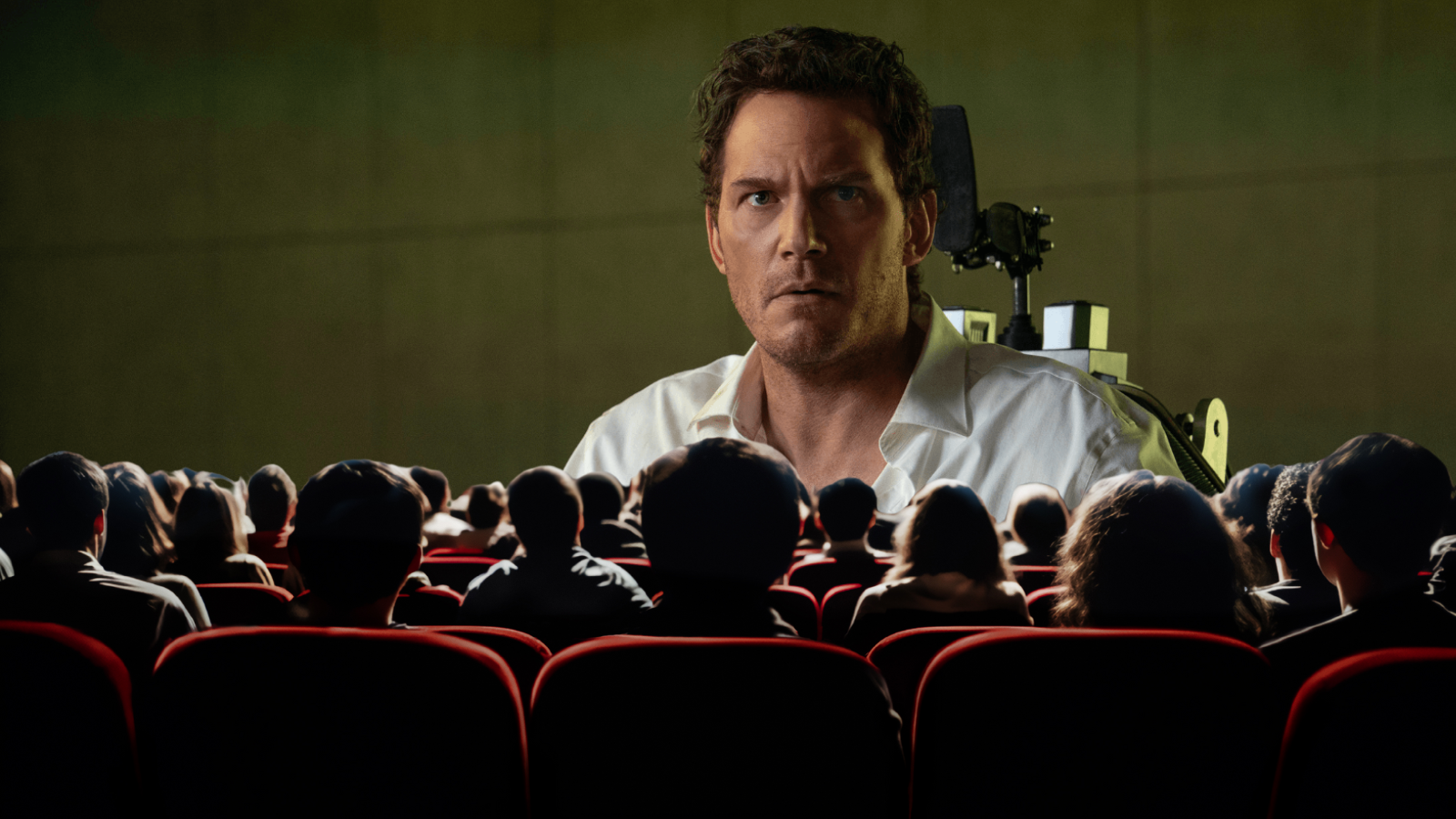
Mercy, directed by Timur Bekmambetov, is a sci-fi thriller starring Chris Pratt (Chris Raven) and Rebecca Ferguson (Judge Maddox). The film remains engaging and tense throughout its runtime due to its intriguing premise and real-time storytelling structure. However, while Mercy is entertaining, it fails to leave a lasting impression or deliver a meaningful takeaway because it lacks narrative depth.
While Mercy is definitely an enjoyable watch, it fails to leave viewers with a genuine lesson. The clever premise of the movie instantly grabs your attention, and the engaging story keeps you following along. Despite this, Mercy still feels lazy and its ending falls flat, leaving the audience without anything truly impactful or insightful.
Set in a dystopian Los Angeles plagued by violent riots, the city implements Mercy—an artificial intelligence designed to convict and execute criminals it deems guilty. Chris Raven, a detective who originally supported Mercy’s implementation, wakes up bound to a chair with no memory of how he got there. Maddox, a cold and calculating AI Judge, informs him that Mercy believes with 97% certainty that Chris killed his wife the previous day. Chris insists on his innocence, but after being knocked unconscious during his arrest, his memory of the incident is hazy. He is given 90 minutes to prove his innocence using Mercy’s vast database—otherwise, he will be executed.
As the clock ticks down, Chris uses both Mercy’s data and his own investigative instincts to uncover the truth behind his wife’s murder. The tension is heightened by the fact that Chris himself isn’t entirely sure he didn’t commit the crime. Near the middle of the film, all the evidence points to Chris killing his wife, leaving both Chris and the audience unsure of his innocence. Despite this, Chris decides to continue searching for the truth that might give him some solace. Maddox repeatedly presents videos that appear to incriminate him, revealing his erratic behavior and emotional abuse towards his wife and daughter. It becomes clear that his marriage was deeply strained prior to the murder. Still, Chris remains determined to find the real killer—even if that truth involves him.
Chris searches through various camera recordings, phone records, and company information to discover the killer. His wife’s killer is revealed to be Rob Nelson (Chris Sullivan), one of his close friends and the brother of the first person Chris ever turned in to be tried and executed by Mercy.
Unfortunately, the film abandons the story’s nuance in favor of a cliché action-packed finale, in which Rob holds Chris’ daughter hostage and rigs explosives to destroy the Mercy building. For a movie that initially presents itself as a thoughtful twist on a Hollywood thriller, this ending is lazy and unimaginative. It almost feels like the screenwriters wrote this conclusion to avoid grappling with the film’s more complex ethical questions, including how much responsibility can you assign to flawed people for their actions.
In the end, Maddox shuts down Mercy after acknowledging that both AI and humans are capable of making mistakes. What the movie neglects to address is the true consequences of Chris’ terrible actions that led to his wife’s murder. The final scenes would have been stronger had they shown him reflecting on the harm he caused to himself and the people around him, offering emotional catharsis while still leaving room for hope for Chris.
Pratt and Ferguson delivered solid performances. Initial skepticism surrounded Pratt’s ability to deliver a serious production as a man in panic and distress, given his association with comedic roles, yet he captures the intensity of the character effectively. Ferguson excels as Maddox, convincingly embodying the cold, uncanny presence of an AI judge. The rest of the supporting cast fails to leave much of an impression at all.
Bekmambetov’s direction relies heavily on action and urgency, with the film unfolding in real time to mirror the viewer’s experience. While this structure keeps the audience engaged, Mercy often fails to capitalize on its own momentum. The plot wanders, overcomplicating itself with unnecessary turns, and emotional moments are rushed past before they can fully land. It’s the type of movie where you might feel afraid of missing something important by going to the bathroom, but when you come back, it’ll still be on the exact same plot points.
Another major fault of the film is its inability to hit the mark on emotional scenes. Glimpses of emotion are shown often, but just as a tear starts to fall, the movie skips to the next scene, leaving the viewer without time to process or relax.
Mercy is filled to the brim with plot holes. The most insulting of these is that defendants must prove their own innocence in 90 minutes using all of Mercy’s data. This means a person is reliant upon their ability to research and provide evidence of their innocence, like a detective. This is fine for Chris, but it seems extremely unfair for the average person—a detail that is never touched upon in the movie.
Furthermore, Mercy is supposed to be a perfect justice system, but it repeatedly fails to notice obvious details that the audience can easily spot. (Mercy might be pretty accurate to AI after all).
Mercy is certainly an entertaining movie full of potential, but it just lacks the follow-through to justify its own significance. The film’s key message seems to be that both AI and humans are capable of making mistakes. This message falls completely flat because no one is forced to face the consequences of their mistakes. Sure, Chris is forced to reflect on how his actions caused the collapse of his family life and how his earlier mistakes led to the murder of his wife. But he never truly takes accountability for his actions. By the end of the story, he returns to his life without much character growth. It feels like Chris is let off way too easily.
Honestly, Mercy might be met with much more ridicule if you asked a pretentious industry film critic, but fortunately, I am not one. The ultimate purpose of a film is to be entertaining, and Mercy is. You can have a good time watching it… just don’t think about it too much.