8/10
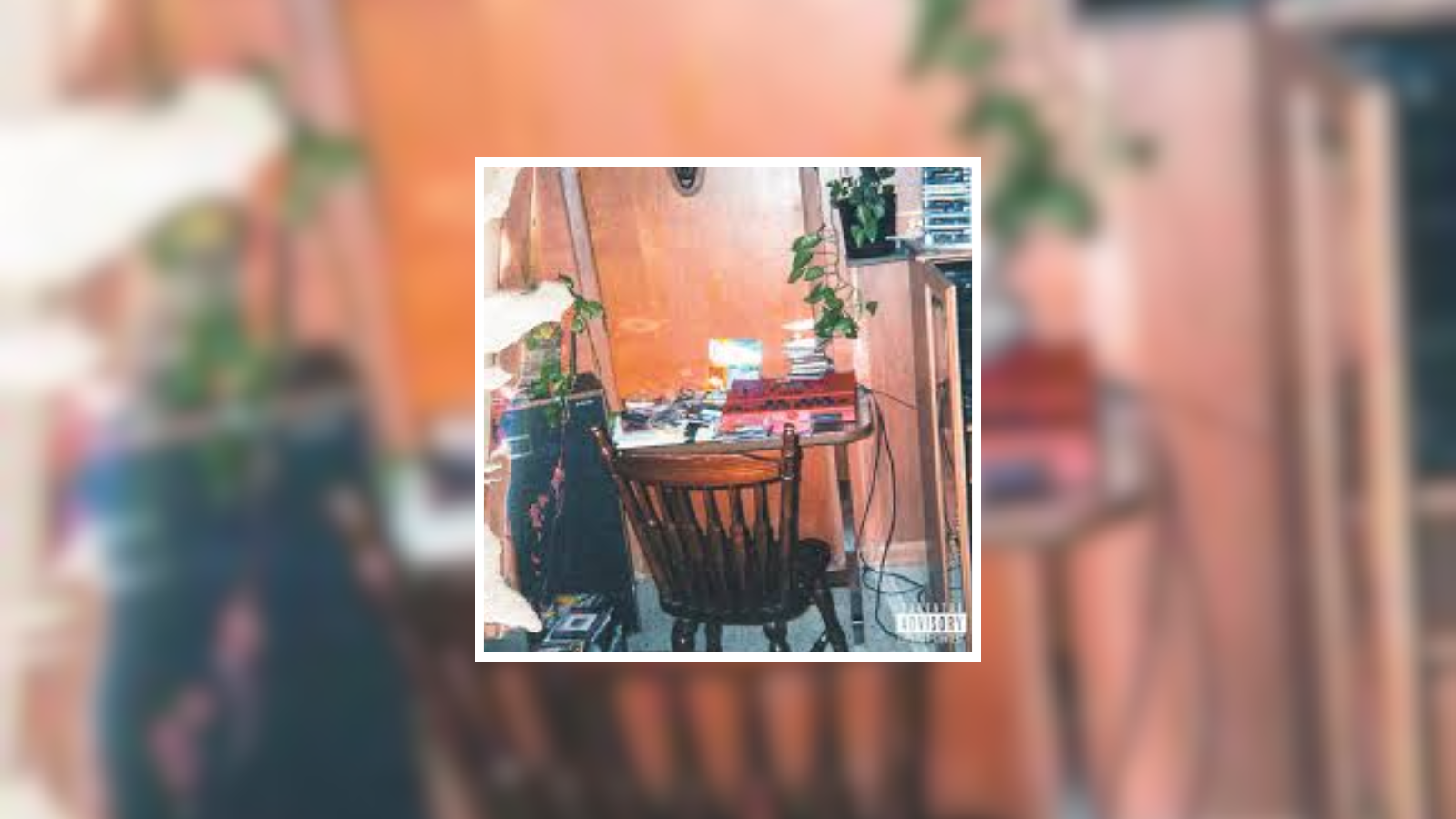
The Fall-Off has been a long time coming. First teased on his 2018 album KOD, the project has long been synonymous with one thing: J. Cole’s retirement. The album has had an almost mystical air around it. It’s uncommon for a commercially successful, culturally beloved artist to disappear in the middle of his prime. But Cole has always been different.
Spread out over two disks, 24 tracks, and spanning one hour and 41 minutes, Cole says The Fall-Off has been 10 years in the making. The first disk, labeled Disk 29, tells the story of Cole’s return to his hometown of Fayetteville, N.C., when he was 29. The second disk, labeled Disk 39, tells the story of his return a decade later.
The Fall-Off is long, and sometimes Cole can drift toward wandering tangents, but overall, it’s fresh, well thought out, and expansive. We see Cole’s complex reflections on personal accountability, love, fame, and above all else, his hometown.
It’s everything you want from a J. Cole project.
The first full length track on The Fall-Off is “Two Six,” one of Cole’s many nicknames for his hometown of Fayetteville (along with Fayettnam and—famously—the Ville). It’s a hard-hitting banger, underscored by twitchy snares and strings, and featuring Cole’s braggadocious rapping about returning home. “When I’m in the city, b*tches screaming out my government / When I’m in the city, b*tches screamin’ Jermaine,” he raps.
On the next track, “SAFETY,” Cole raps about his interactions with friends back in Carolina as he experiences success in New York. It’s the emotional core of the album’s first disk, but it wanders around for a full five minutes. By the end, listeners are left emotionless and bored when they should be tearing up. “I thought about you, holla at me / I would love to catch up, but I know you busy,” he raps. It’s the only emotional moment that doesn’t hit as it should. “Legacy,” featuring N.C. singer PJ, also falls flat. The attempt at an acoustic, guitar-driven moment is admirable for a rapper like Cole, but it feels completely dull.
Things pick back up on “Poor Thang” and “Bunce Road Blues.” The former features one of the most addicting beats on the album, and a mumbling chorus filled with movement. It’s easy and swagger-filled, up with the best laid back moments of Cole’s career. “Poor thing, young pup’s playing war games / he wanted love, but he only made more pain,” Cole raps. On “Bunce Road Blues,” Cole is assisted by Atlanta rapper Future and Nigerian afrobeats singer Tems. Tems is the standout here, her verse feels soothing and meditative, a mystery-filled tone shift from Cole’s borderline-rambling. Tems also introduces another major theme of The Fall-Off, love. “But love might be gone when you’re ready / I should move on and be happy,” she sings.
“The Let Out” seems to reflect the core feelings of Disc 29. It continues Cole’s tendency toward guitar-driven production (though this time in a much more subtle and tasteful fashion) and focuses on the biggest theme of the album’s first disc: anxiety about his growing distance from his hometown. Cole has reached new levels of fame, moved to New York, is touring the world, all while Fayetteville seems to fall further and further away from him. “Somebody gon’ hate you for what? It could be anything / The way that you walk, you talk, the way that you rap, you know / The way that you put on the Ville, but you barely come back no more,” he raps.
“Bombs in the Ville/Hit the Gas” closes out Disc 29 with one of Cole’s iconic verses. Though the rest of the song is pretty lackluster, in its final verse, Cole talks to his younger self. “I bought a iPhone that travels through time / FaceTime done got younger me on the line / Soon as he saw me, he just started cryin’ / I told him ‘Relax, everythin’ gon’ be fine,’” Cole raps. This conversation serves as the catalyst for the second half of the album, and seemingly justifies Cole’s decision to retire early. He has made his younger self proud, all that’s left to do is end his career on a bang.
Disc 29 is good, don’t get me wrong, but it lacks a certain staying power. The songs just wash over you, they don’t truly latch on to your heart. It’s a perfectly fine J. Cole project, but it’s not what makes The Fall-Off special. That would be its second half.
To put it kindly, Disc 39 is miles better than Disc 29. It’s prime Cole. With some of Cole’s greatest moments, the disc solves all of his mysteries, contains some of his most personal tracks, and fittingly concludes a stellar career.
“39 Intro” sets the tone. The song is sonically diverse, beginning with a career-best singing performance and an electrifying guitar solo, before switching into a hard-hitting, soul-sample-centric back half, resembling some of Cole’s earliest mixtapes. It’s here that we first see Cole’s evolution. “My rhymes are like shrines for the city I miss / Remembering times I found beauty in the hideousness,” he raps. The 10-year difference has done wonders for him. He’s ready to answer the questions he posed in the first disc.
The next track, titled “The Fall-Off is Inevitable,” was teased on Instagram as part of the album announcement. It features an incredible premise. On one of the album’s fullest beats, Cole raps his life backward, from his death to his birth. It’s an exercise in rapping excellence, done with a surgeon’s precision and endlessly appealing excitement. “I watch my father walk back in my life and it clears up a hurt / I couldn’t explain, momma gives me my name / Then hands me over to the doctor and I watch as my spirit reverts,” he raps. Cole, it seems, is finally at peace with himself.
“Life Sentence” is the next career highlight on the back half of The Fall-Off. It delves into Cole’s relationship with his wife, one he’s seldom explored. The beat is hypnotic and addictive, and Cole reaches a flow state, floating over the track with ease. The chorus is the album’s best. “All types of games are being played, how’s it going down? / It’s on til it’s gone and I gots to know now,” he raps. After decades of rapping about the turmoils of superficial desire, Cole is finally rapping about real love.
There’s really not a bad song on the second half of the album. On “The Villest” Cole gives insight into his younger thoughts and tells the story of his come-up. The song ends on a sour note, though, as Cole interpolates the chorus of Outkast’s classic “Elevators (Me & You).” Some things are better left as they are. “Old Dog” is a hard-hitting, maximalist banger about Cole’s return to North Carolina. “Only You” is another well-executed, though less impactful, tribute to Cole’s family. Afrobeats artist Burna Boy nails the song’s bridge, focused on the fragility of fame.
“I Love Her Again” is a prime example of Cole’s legendary pen. The track tells the story of Cole’s relationship with rap music through the analogy of a prostitute. We listen as he enamors himself with it, falls out of love with it, despises it, and then learns to accept it for what it is. It’s an important step on Cole’s journey toward retirement. “As long as she’s alive I know I’ll always have a friend / Thank God, I think I’m falling back in love with her again.”
It’s easy to forget that Cole was once a part of the Kendrick and Drake beef. As the third member of the ‘Big 3, ’ Cole’s refusal to join the beef and his apology to Kendrick Lamar at the 2024 Dreamville Festival loom large over The Fall-Off. And though Cole never explicitly mentions the beef, “What If” seems to be Cole’s answer to why he chose to protect his peace.
On the track, Cole raps from the perspectives of both The Notorious B.I.G. and Tupac Shakur, creating a parallel world where Biggie and Pac reconcile instead of doubling down. To Cole, the deaths that resulted from their conflict weren’t worth their own pride, making the connection to contemporary rap pretty hard to ignore. “What if the bullsh*t never got in the way?” he raps.
The next track, “Quik Stop,” is one of the best tracks of Cole’s illustrious career. Here, Cole raps about a chance encounter with a fan at a gas station. After the fan explains Cole’s impact on his life, Cole reflects on his position in society. “This life is more than just rap, more than the b*tches you scrape / More than the riches you stack, see, it’s the difference you make,” he raps. Cole, a notoriously shy celebrity, accepts the positives his fame has given him and the impact he’s had on others. The swells of strings and Cole’s impassioned delivery make “Quik Stop” one of the most emotional songs he’s ever made. And emotion has always been what Cole does best.
The Fall-Off ends with “and the whole world is the Ville.” His final full track, an ode to his hometown, one he’s championed throughout his career. One he’s relearned to love throughout his final album. His words are carefully chosen and released over an Isley Brothers sample with patience and clarity. He knows this is his final message. He’s reconnected with his city, accepted his career, and carved his own legacy. “I been all around the world, but I never forgot the f*ckin Ville / The motherf*cking Ville,” he raps. It’s only fitting Cole’s career ended exactly where it started: home.
The Fall-Off has its faults. It’s incredibly long, meaning that a handful of tracks slip through the cracks of your memory. Its second disk is obviously better than its first. Every once in a while, Cole rambles on and gets too preachy. But above all else, The Fall-Off feels like a fitting conclusion. It showcases what makes Cole so great. What makes him beloved. After all, you need to be pretty high up to fall off.