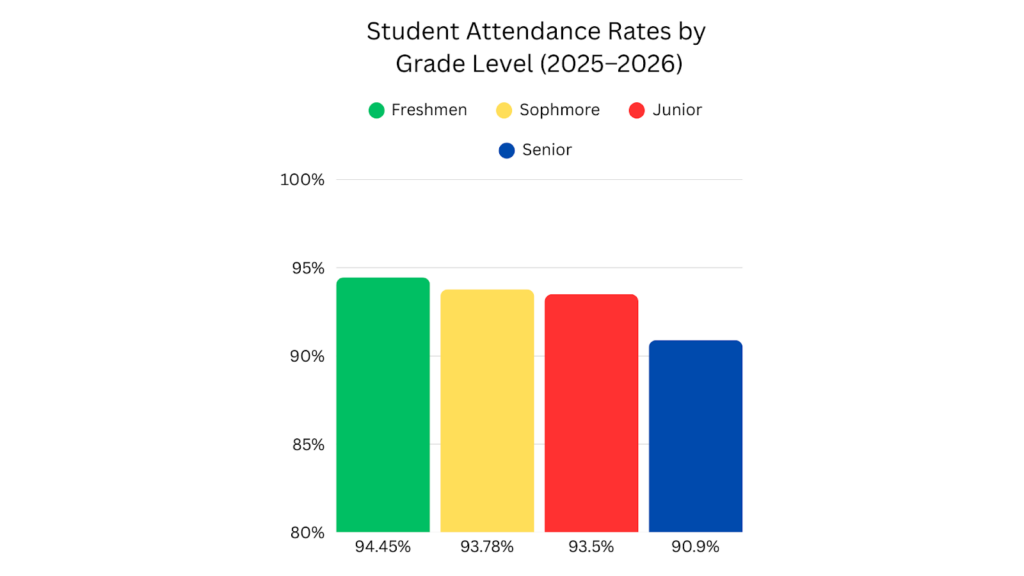
Following the COVID-19 pandemic, student attendance across the District has dropped by 2.3% in the 2021-22 school year compared to the previous year. Despite District efforts, attendance has not improved. The culprit, according to many teachers, is the District’s attendance policy, often criticized for being both unclear and ineffective.
Clarity Issues
The District’s 2026 attendance policy states that at 18 unexcused absences, guardians receive a Truancy Notification letter with “offered interventions.” At 36 absences, a second letter is sent, followed by a third if no action is taken. The school then requests a truancy meeting, where the student and guardian sign an attendance contract.
Another section of the attendance policy states that after the student has had four unexcused absences, the teacher must call home to notify parents. That leaves a 14 absence gap between when teachers must act and when the District does.
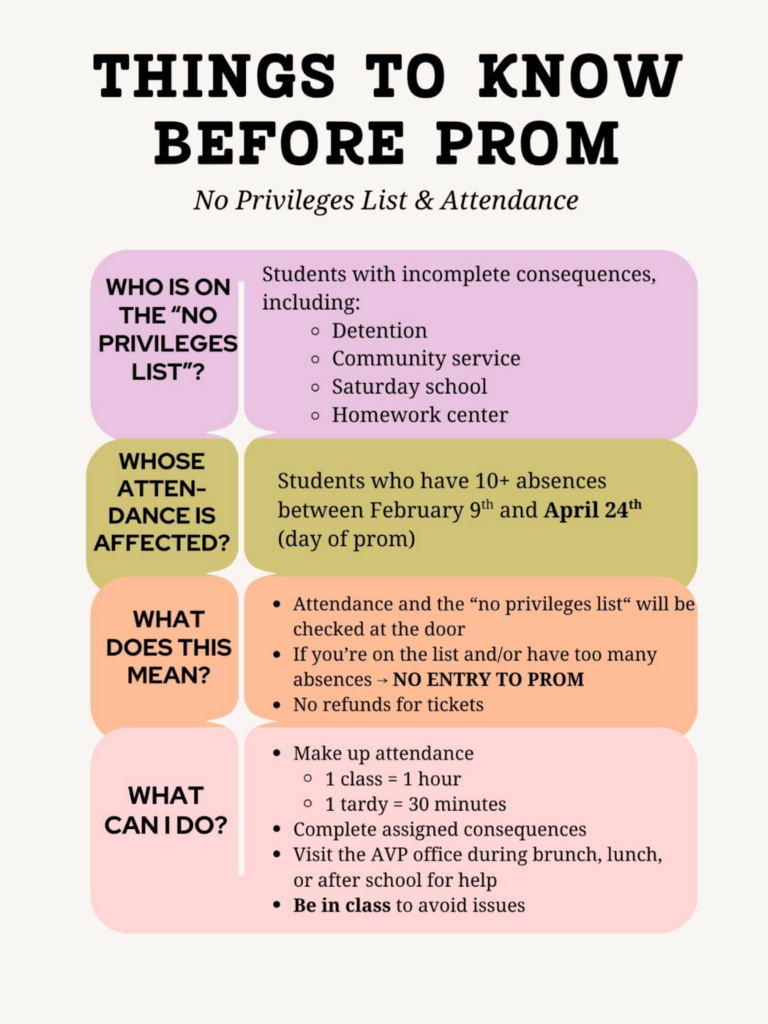
One section of the handbook states that uncleared absences might lead to loss of privileges. “Absences not cleared within 3 days may still be excused but will not permit a student to participate in school activities, attend dances, or attend prom,” the handbook states. However, some staff say the policy sometimes does not specify how many total absences bar a student from activities—only how long they have to clear each one.
One M-A teacher said the line between unclear policy and poor implementation is hard to find. “I have no idea whether we’re not following district policy or if it’s just not clear,” they said.
Implementation Challenges
Many teachers find the absence policy difficult to follow. This is especially true of the four-absence-call-home requirement.
“Teachers seem to be the ones who are supposed to email parents or assign detention. The problem is, we have 80 million other things to do and 149 other children to worry about.”
Anonymous M-A Teacher
Before 2022, the District had a stricter attendance policy that failed students out of classes with 18 absences. This changed when the Board decided to give students more flexibility during the pandemic. Since the policy change, attendance rates have not significantly increased. Although this could be the long-term ramification consequence of the pandemic, some teachers say that the policy change stripped away the only leverage they had, reducing attendance.
Lack of consequences
Teachers are disappointed by the lack of consequences for student absenteeism.
“There doesn’t seem to be any consequences.”
Anonymous M-A teacher
The lack of district-wide consequence for student truancy means some students lack an incentive to attend class. “If they don’t see immediate consequences, they’re not going to care,” a teacher said.
In rare instances, police could be called to intervene in student truancy. In 2018, almost 61,000 cases of student truancy were petitioned to juvenile court. Of those, less than 1,500 students were detained, and 736 were incarcerated.
Because the District sets no clear consequences, enforcement falls to individual schools. For M-A specifically, students with more than 10 unexcused absences are put on the “No Privileges List.” Students on the list will not be allowed to attend certain school events such as prom.
M-A offers a way to get off the list by making up the hours missed during class time. Instead of attending extra class hours or completing makeup work, however, students are instructed to complete community service hours. Many teachers note that community service hours are not equivalent to time in the classroom and do not make up for missed learning.
“In my first period class, I have five students showing up, and then everybody trickles in… I cannot do my job when they are not here,” one teacher said. “We’ve established a culture where kids think they can skip and still be fine.”