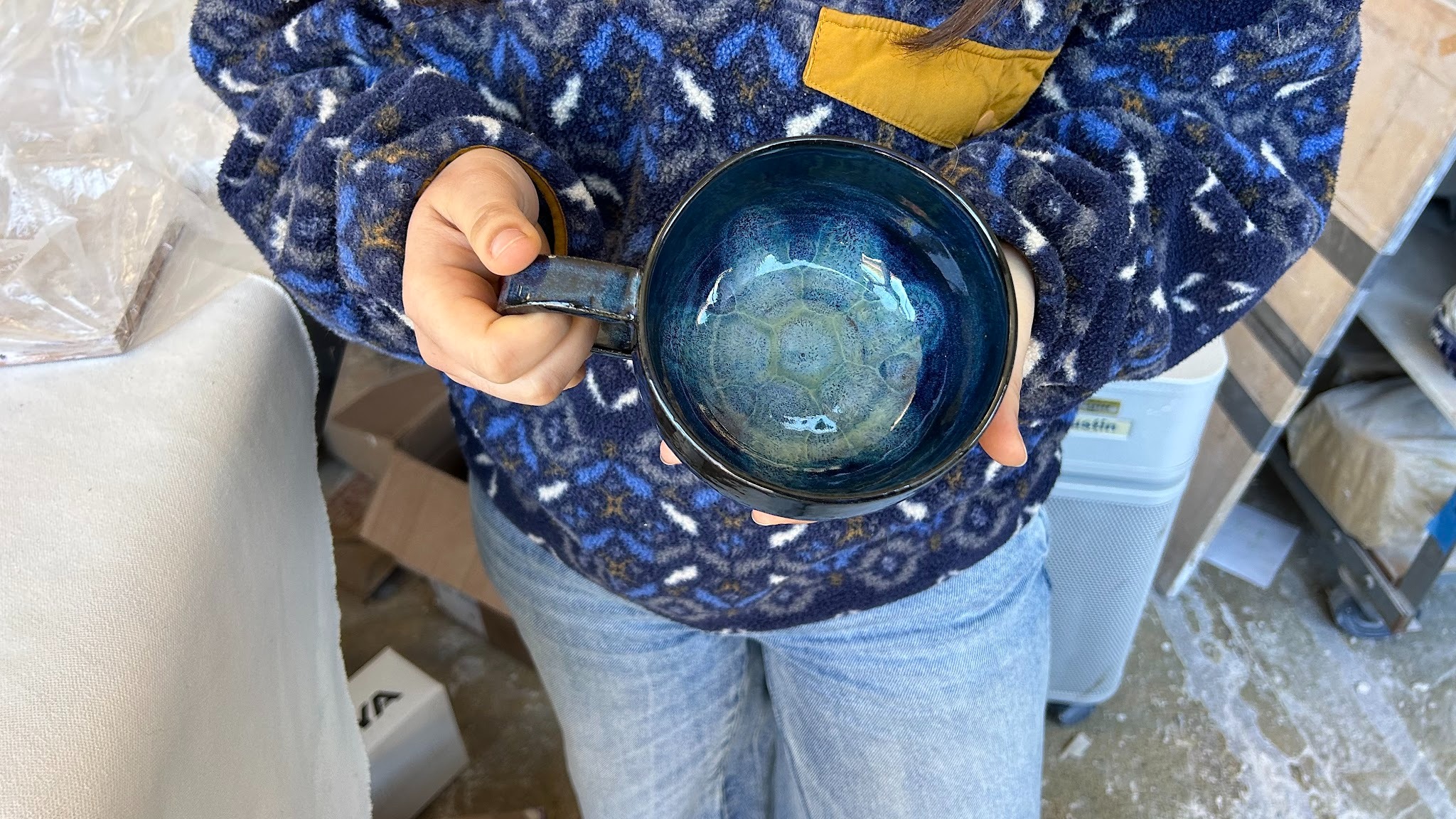
Whether it’s during class, lunch, or after school, the ceramics classroom at M-A is always bustling. Upon entering, there’s the chatter of students as they shape clay at the wheel, and an artistic atmosphere that feels relaxed, focused, and filled with students genuinely excited to be creative.
M-A’s ceramics program has existed for over 25 years, starting with retired M-A teacher Deb Gutof, who taught the first ceramics class in 1999. Since then, the program has grown from a singular section to an expansive program with 10 sections across four levels of ceramics.
At the beginner level, students are given specific projects that teach them basic techniques, but if they choose to move on to higher level classes, students are given the freedom to create unique pieces. All ceramics classes are taught by Rika Hirata and Mike Tillson, whose creativity-forward teaching philosophy emphasizes in-class work and experimentation over strict requirements. “The teachers make a great community, and you just have so much freedom and ability to do whatever you want,” senior Sarah Meyer said.
“It’s really an incredible experience to watch students come into the program with a variety of skills, each growing and learning, advancing their skills from wherever they started,” Tillson said.
Here’s a deeper dive into a few students’ current works:
Sarah Meyer
Senior Sarah Meyer’s interest in ceramics first sparked when she tried it in elementary and middle school. This prompted her to try taking the class her sophomore year, where she enjoyed the creative outlet, leading her to continue taking ceramics the rest of her high school years. Meyer enjoys experimenting with new techniques. She has also been able to take advantage of the program by bringing in her own clay, called speckled buff, to investigate sculpting with different textures.
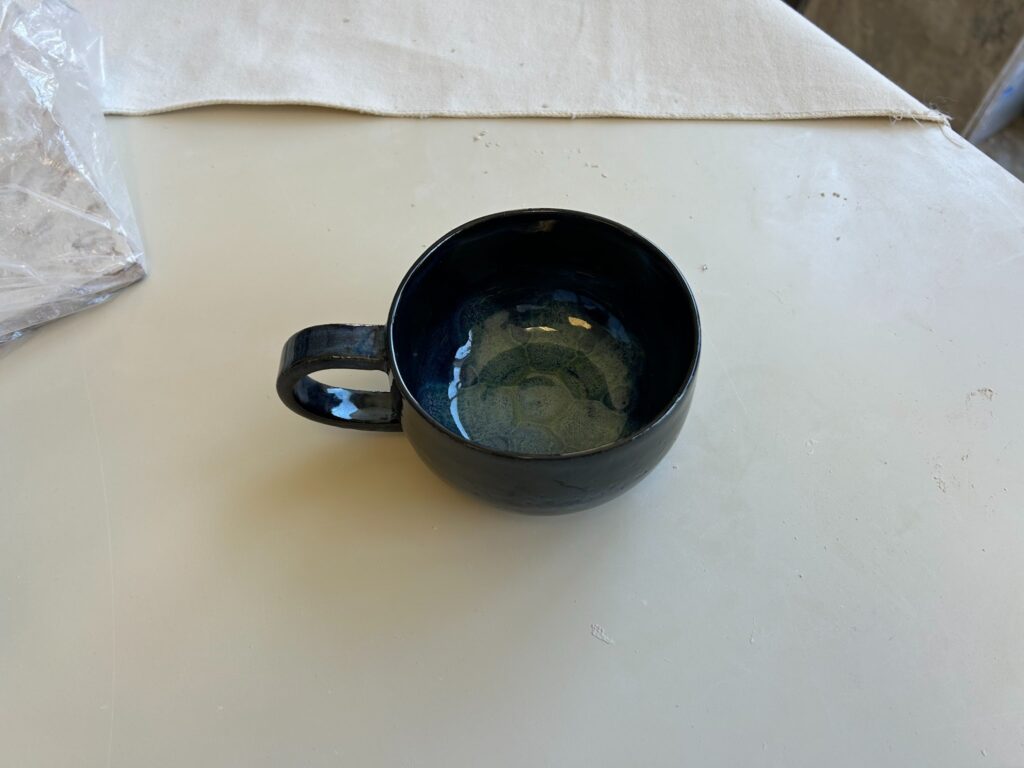
This piece utilizes frozen pond technique, a method that uses a specific type of glaze and creates a distinct pattern with a sponge, to give the bottom of the mug an ethereal frozen water effect.
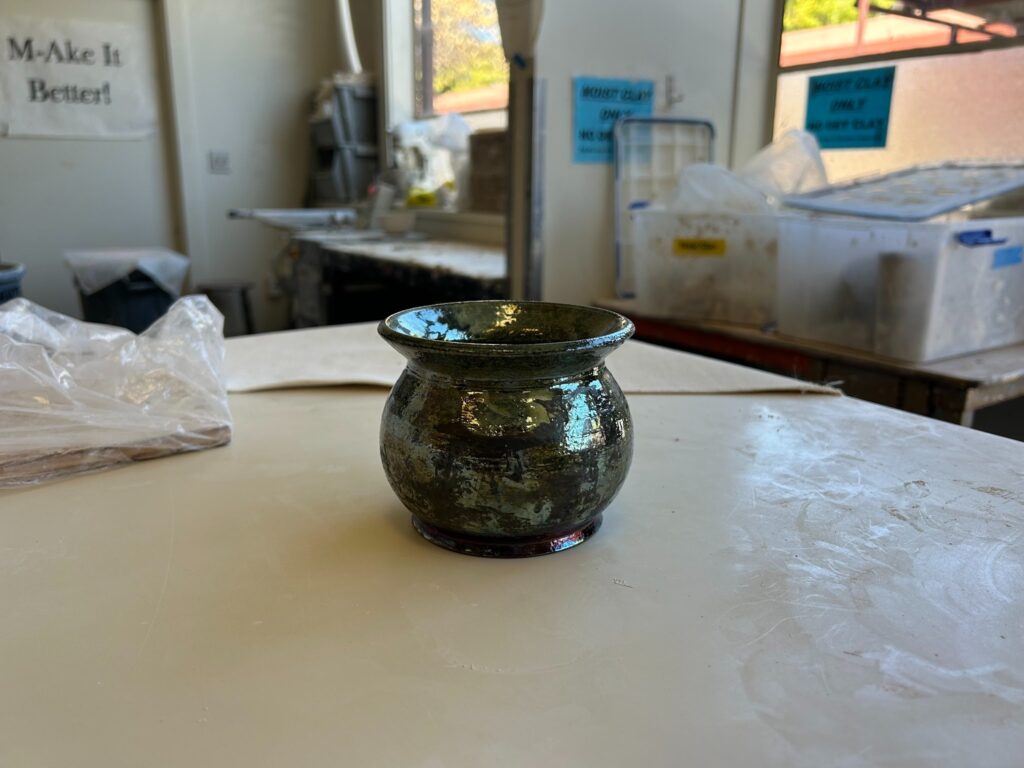
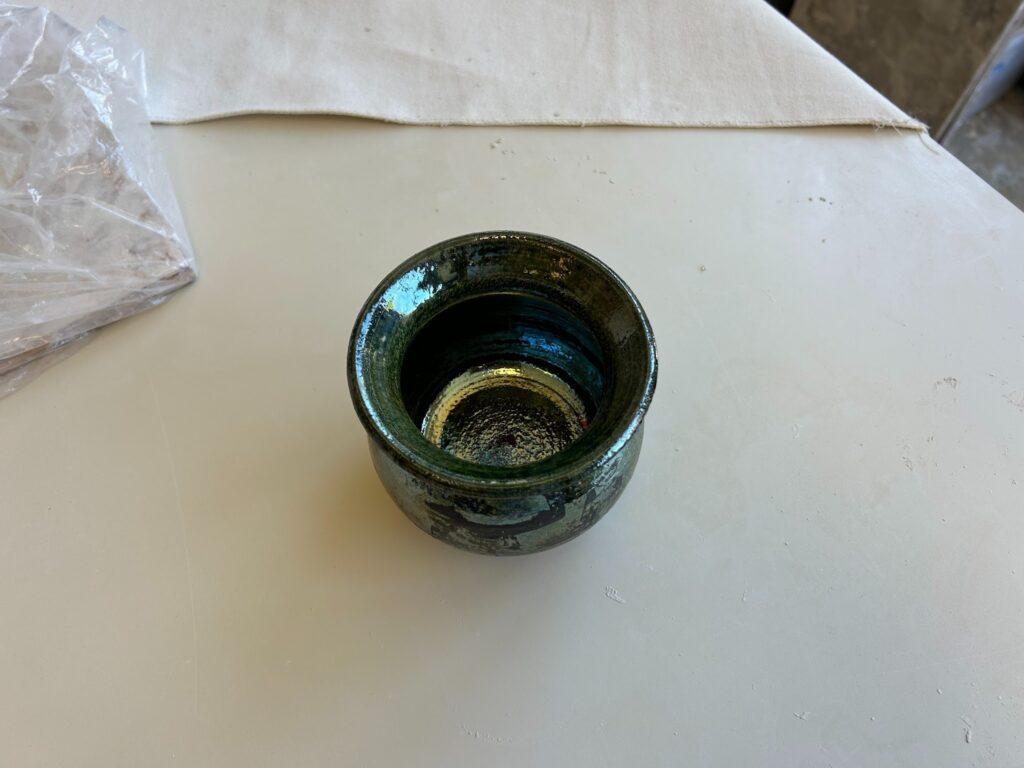
The metallic effect on the bottom edge of this piece was created using Raku firing, an alternative firing technique M-A’s program offers in addition to electric kilns.
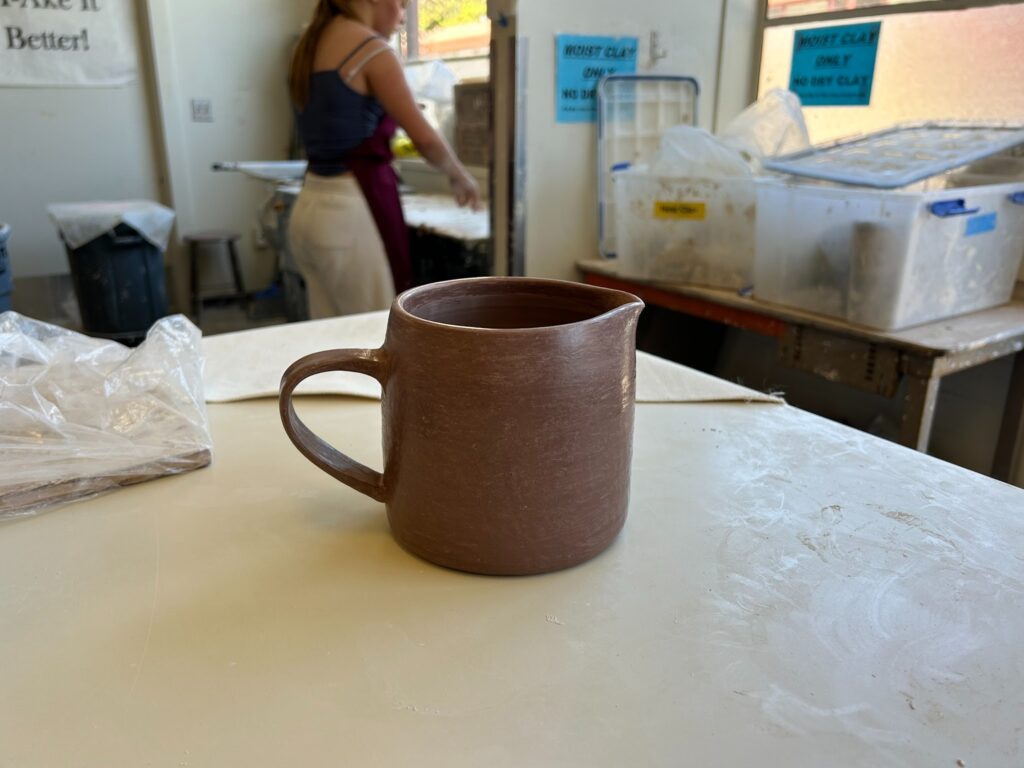
The smooth surface on the clay of this unfinished piece was made using burnishing. This process involves rubbing the clay’s surface with a stone to polish it.
Matilda Smart
Senior Matilda Smart enjoyed Ceramics 1 her sophomore year, but became more immersed in the program when she started coming in to work on ceramics projects after school with a friend during her junior year. This led her to take Ceramics 2 as a senior. Smart enjoys how ceramics has given her the ability to experiment with her art, particularly by delving into different glaze combinations. “Sometimes they turn out terrible, but when they turn out well, it’s so rewarding,” she said.
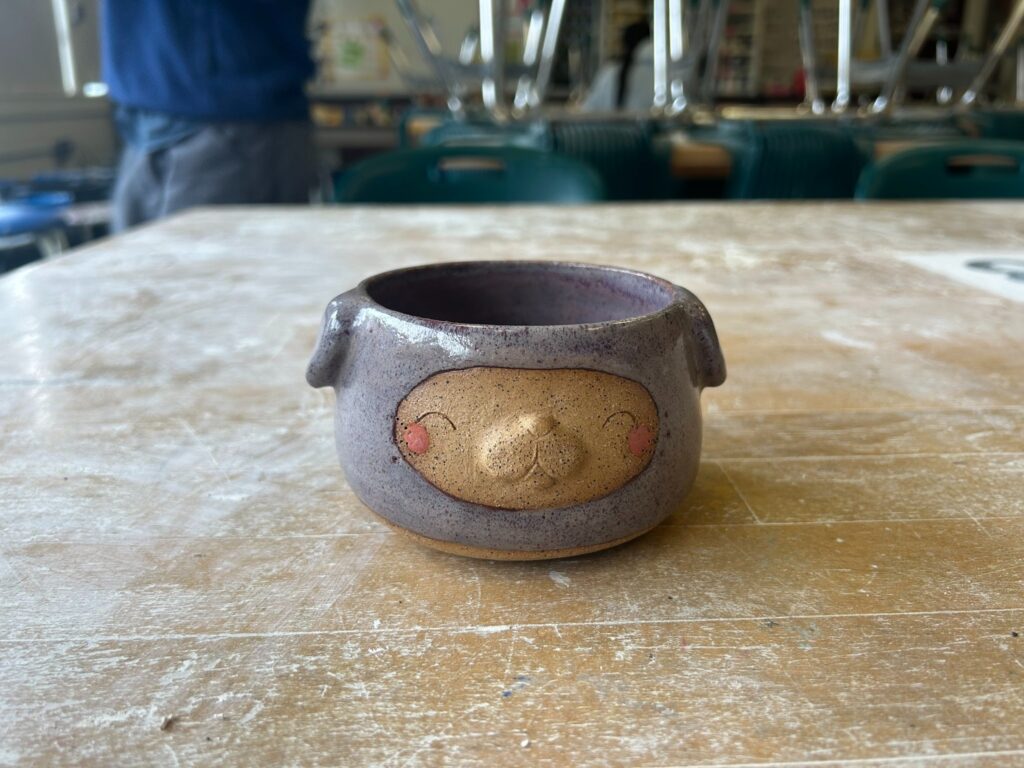
This piece was inspired by potter Amii’s collection of animal pots, which Smart found by watching videos during quarantine. A year later, Smart realized she now had the skills and tools to make one of her own, and adapted the concept to her own style, using speckled buff clay.
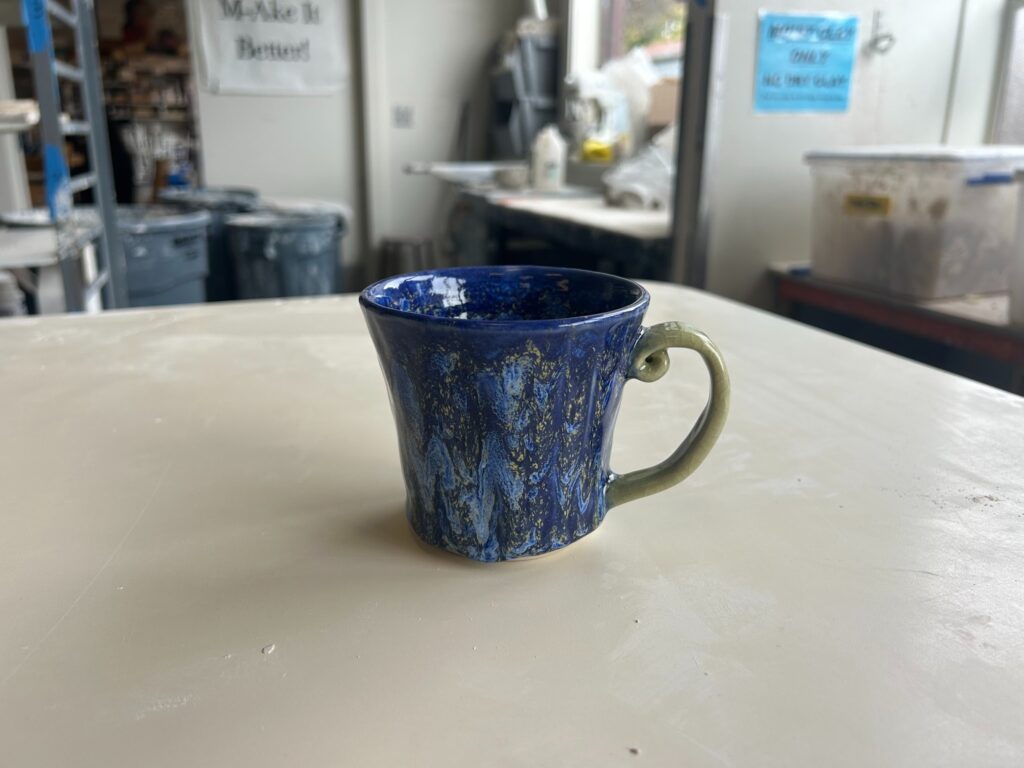
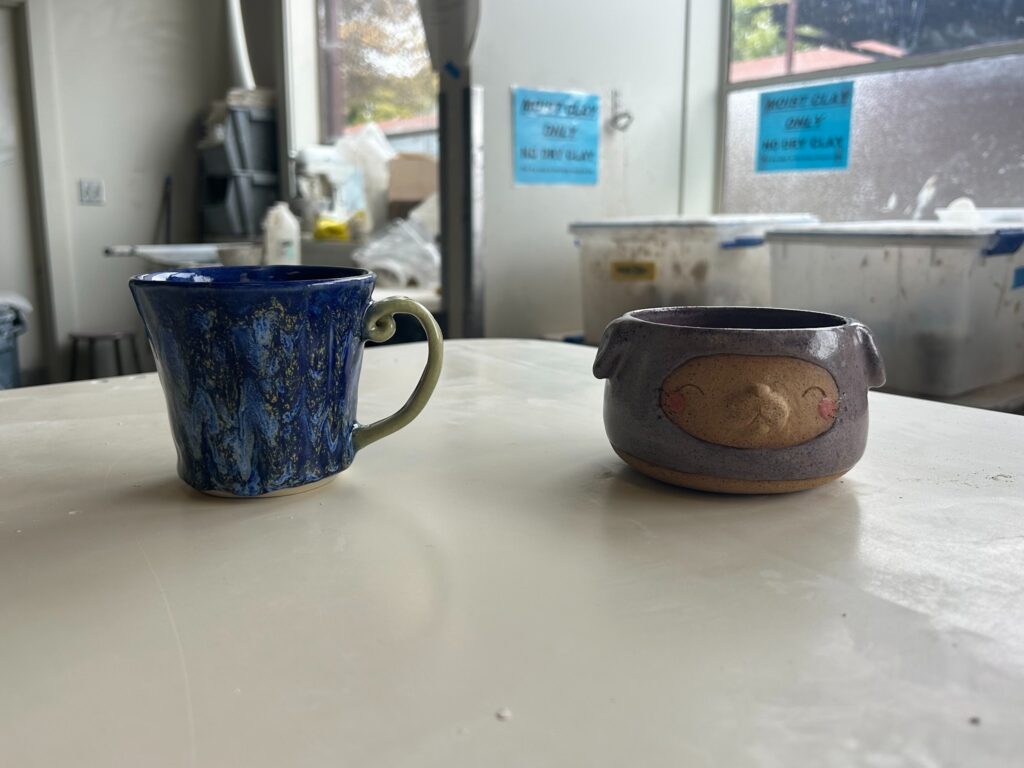
At first, this piece didn’t turn out how Smart wanted to, leading her to experiment with a glaze combo using blue hydrangea glaze. This process of trial and error created the unique layered pattern.
Kayla Greenbaum
Senior Kayla Greenbaum started out by coming into the 6th period ceramics class when she had free time her sophomore year, prompting her to take ceramics both her junior and senior years. Many of Greenbaum’s pieces have been brought to life by finding online inspiration and then working with her teacher to figure out how to create them herself, something Greenbaum emphasized as one of her favorite parts of the class. “The ability to make what I want and have them be test pieces with no expectation of what they had to be is really fun,” Greenbaum said.
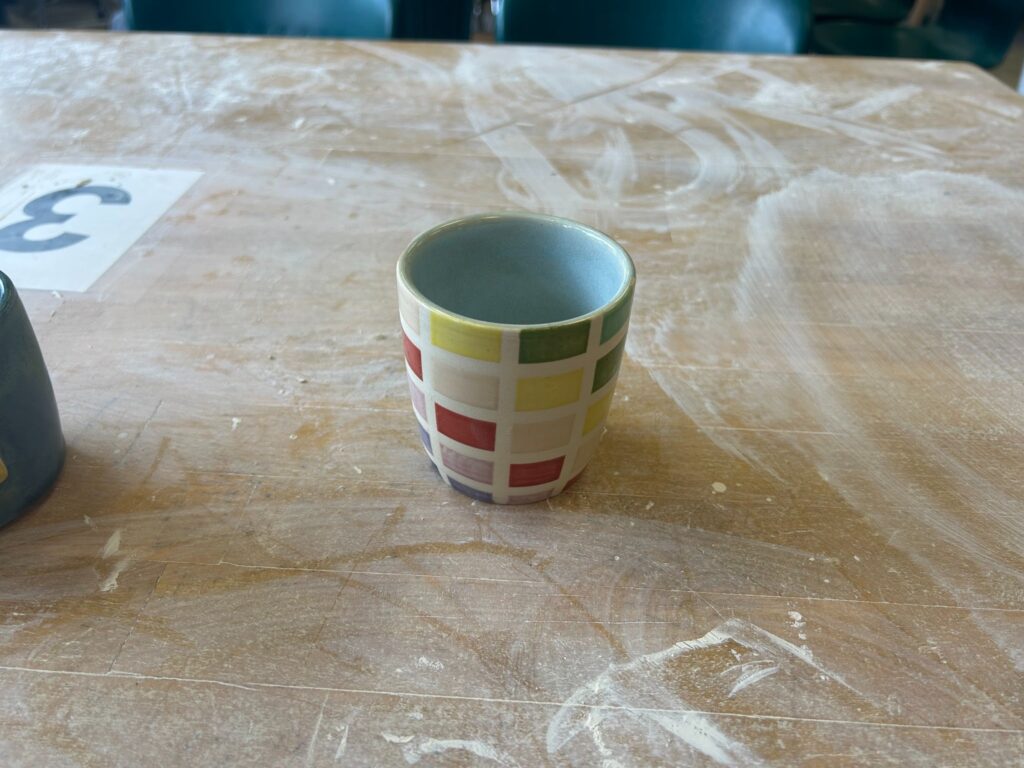
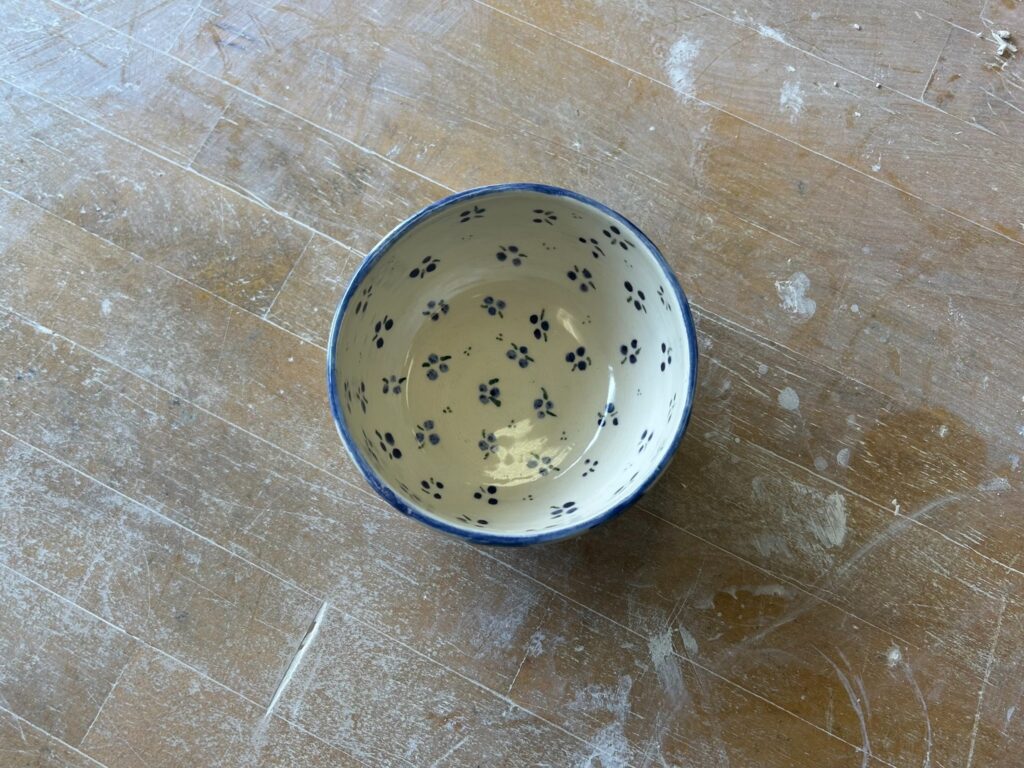
These two pieces were made to experiment with the look of different glazes to help her with her more intense works, and then hand painted by Greenbaum.
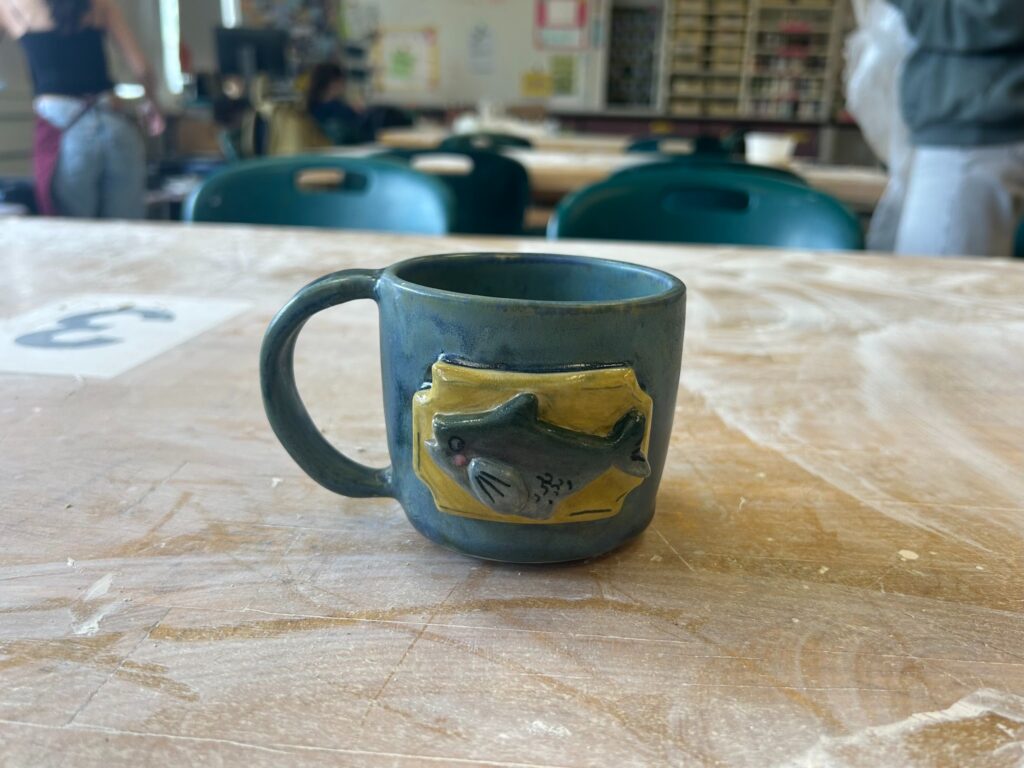
This piece was inspired by a scene in the show The Amazing World of Gumball, where the characters talked to a fish on the wall. The fish and ticket were sculpted separately from the mug, and then slipped and scored together.
Grant Bennitt
Junior Grant Bennitt transferred to M-A last year, but he was already familiar with ceramics as an art form. While M-A primarily teaches ceramics using a wheel, Bennitt is familiar with slab building. Bennitt’s work plays with the idea of turning common objects into more abstract pieces, using physical shapes to convey his real world experience. “What I wanted to do for some of my pieces is take something like a normal vase, and just change it a little bit. Just like, rethink the idea of it and add a new perspective,” Bennitt said.
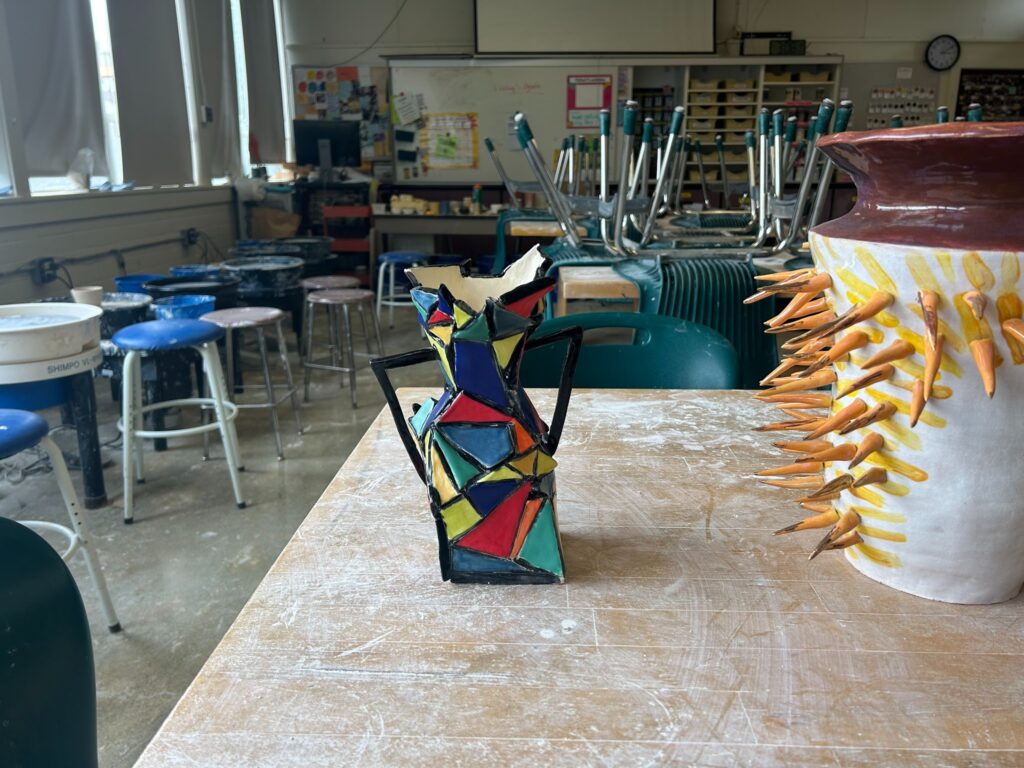
This piece was inspired by Cubism in Picasso and his partner Brock’s works, in which they shattered their paintings and then put them back together. Bennitt applied this concept to his pottery by using individual slabs to build the body of the vase, and painted in a way reminiscent of stained glass.
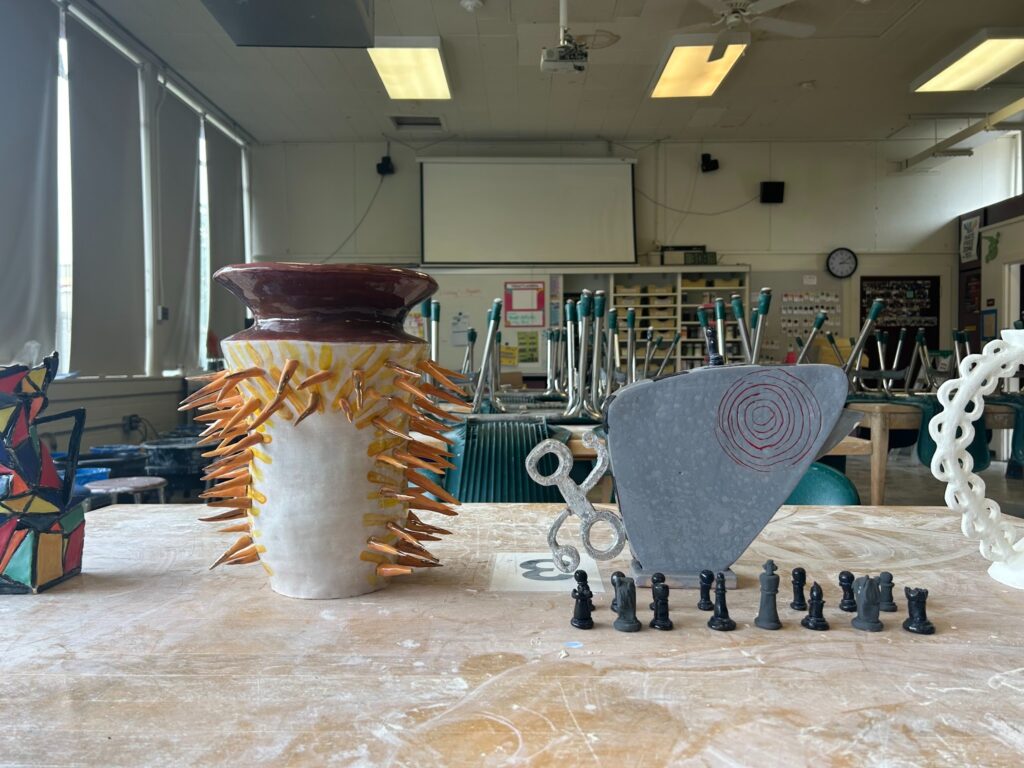
The spikes on the left piece were inspired by a dress Bennitt saw on Instagram, adding an abstract flare to the more simple base Bennitt had already built for the project. The spikes being something associated with fear and an inability to get too close to others. For the piece on the right, Bennitt completely reimagined the idea of a traditional teapot. Each detail, from the exposed king on the top of the pot, to the red swirl on the side of the pot, reflect Bennett’s experience navigating the complexities of friendship, loneliness, and power.
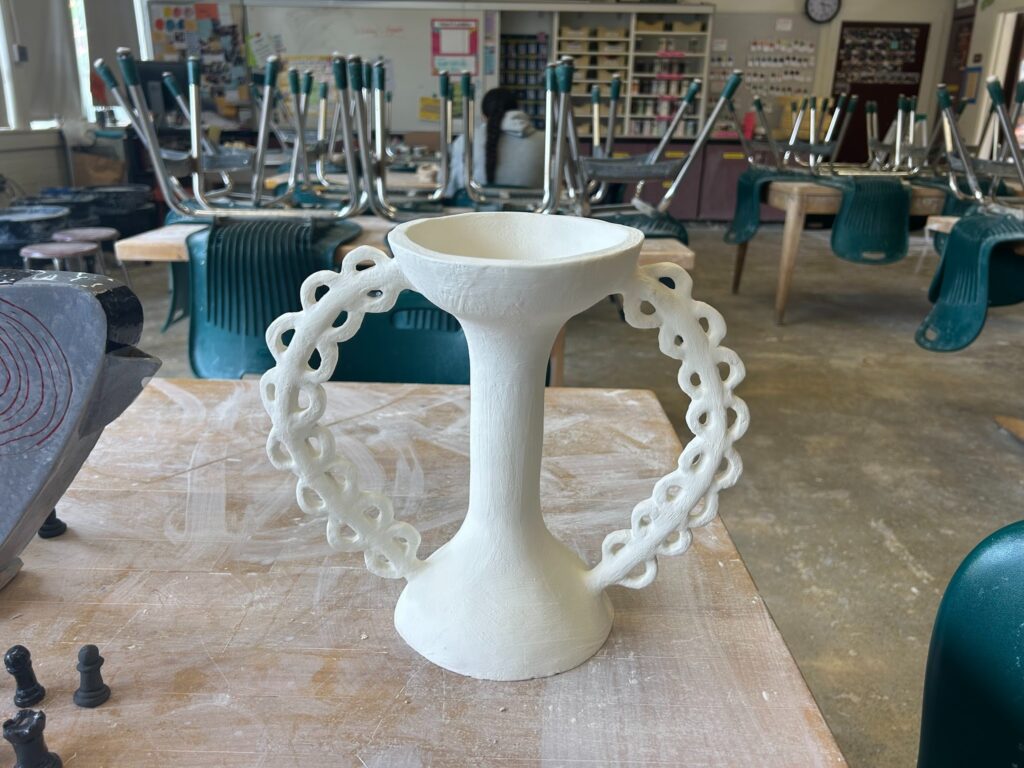
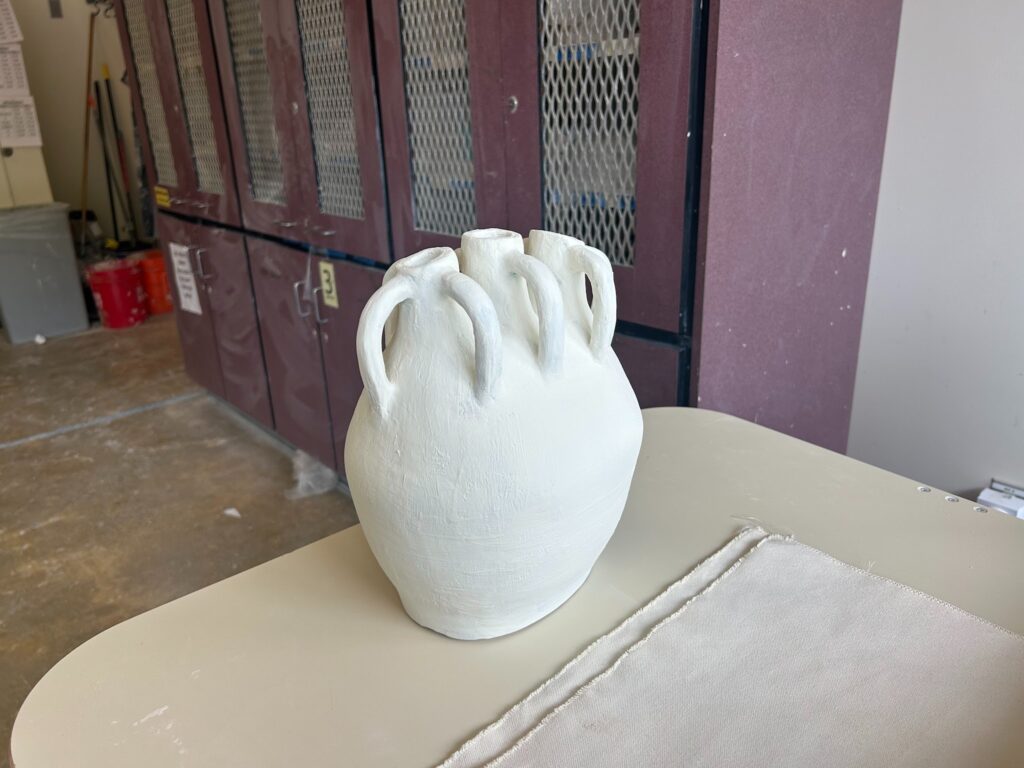
These are two of Bennitt’s currently unfinished projects. The arches on either side of the first piece were built by slipping and scoring each individual coil and using wire for support. After firing, Bennitt worked with Tillson to use paper mixing to cover some cracks, and he plans on finishing the piece by glazing it white to highlight its maximal structure.
These student works demonstrate the importance of having classes that give students a break from academics, and assert the ceramics program as a pillar of the M-A community. “I’ve been told there is no bad time of day to take Ceramics. Students say it’s a great way to start the day, a great break in the day, and a great way to end the day and decompress from their standard classes,” Tillson said.