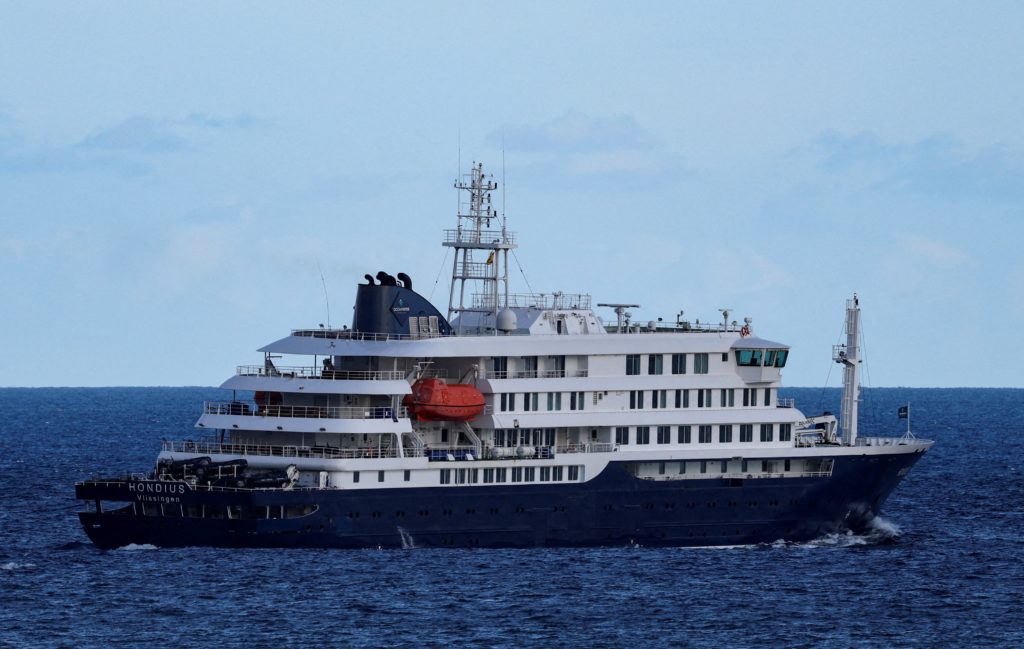
The World Health Organization (WHO) was alerted to a serious outbreak aboard the MV Hondius on May 2. The cruise ship, known for Arctic and Antarctic expeditions, reported cases of hantavirus amongst its passengers.
Of the 175 people on board, nine cases have been identified, and seven confirmed. Three of those cases have resulted in death.
What is hantavirus?
Unlike the coronavirus (COVID-19), which the WHO knew little about initially, the hantavirus has been around for decades. Hantavirus was first identified in 1978, when virologist Dr. Ho-Wang Lee was investigating an outbreak of Korean hemorrhagic fever in South Korea. The virus is transmitted by inhaling particles from rodent droppings or urine.

Dr. Ho-Wang Lee.
How did this outbreak start?
Many explanations have circulated concerning the root cause of the current outbreak. Leo Schilperoord has been identified as a potential patient zero. Schilperoord, a Dutch ornithologist, and his wife were avid birdwatchers and decided to visit a landfill in Argentina to find a rare caracara bird. This is believed to be where they inhaled particles already infected with the hantavirus.
Student perspectives
Knowing that there were California residents on the MV Hondius, students’ concerns are growing. “It feels too close for comfort since it can be a deadly virus,” junior Trey Ohtaki said.
With college just around the corner for seniors Josh Causor and Ryan Quiros, their biggest worry is another lockdown similar to COVID-19. “With college being soon, another lockdown would prove to be extremely saddening,” Causor said. “It would tremendously mess with my college experience making it hard to succeed as a student and person,” Quiros said.
Not only would a lockdown ruin college experiences, it would even ruin some students’ high school experience. “High school is such a more crucial part of my life. I don’t know how I’d perform in school, and not being able to see my friends,” freshman Bryant Ho said.
But with the knowledge that doesn’t spread like COVID-19, the stress does die down. “It’s very reassuring that it’s difficult for it to spread,” Ho said. “It makes me less worried compared to COVID,” Causor said.
How it spreads
With news of the outbreak quickly circulating on social media, it is easy to come across exaggerated or inaccurate information. According to CBC, the hantavirus “does not spread the way we’ve seen with COVID-19, influenza and measles.” Hantavirus is rarely spread from person to person and, in most cases, requires close contact and sharing of bodily fluids.
What are the next steps?
In hopes of reducing the spread and monitoring symptoms, the cruise ship passengers will stay at the National Quarantine Center in Nebraska for 42 days. For some passengers, however, a “self-isolation” option was available. One of those cruise ship passengers was sent back to Santa Clara County, where she is quarantining in her home for the next 42 days. “I understand that the news of an exposed individual in Santa Clara County is causing stress and worry. However, the safety protocols we have in place for the exposed individual, and our very close coordination with state, federal, and national disease experts responding to this outbreak, reassure me that we have a plan to respond to this event while protecting members of our community,” health officer Dr. Sarah Rudman told KCRA 3 News.

The National Quarantine Center.