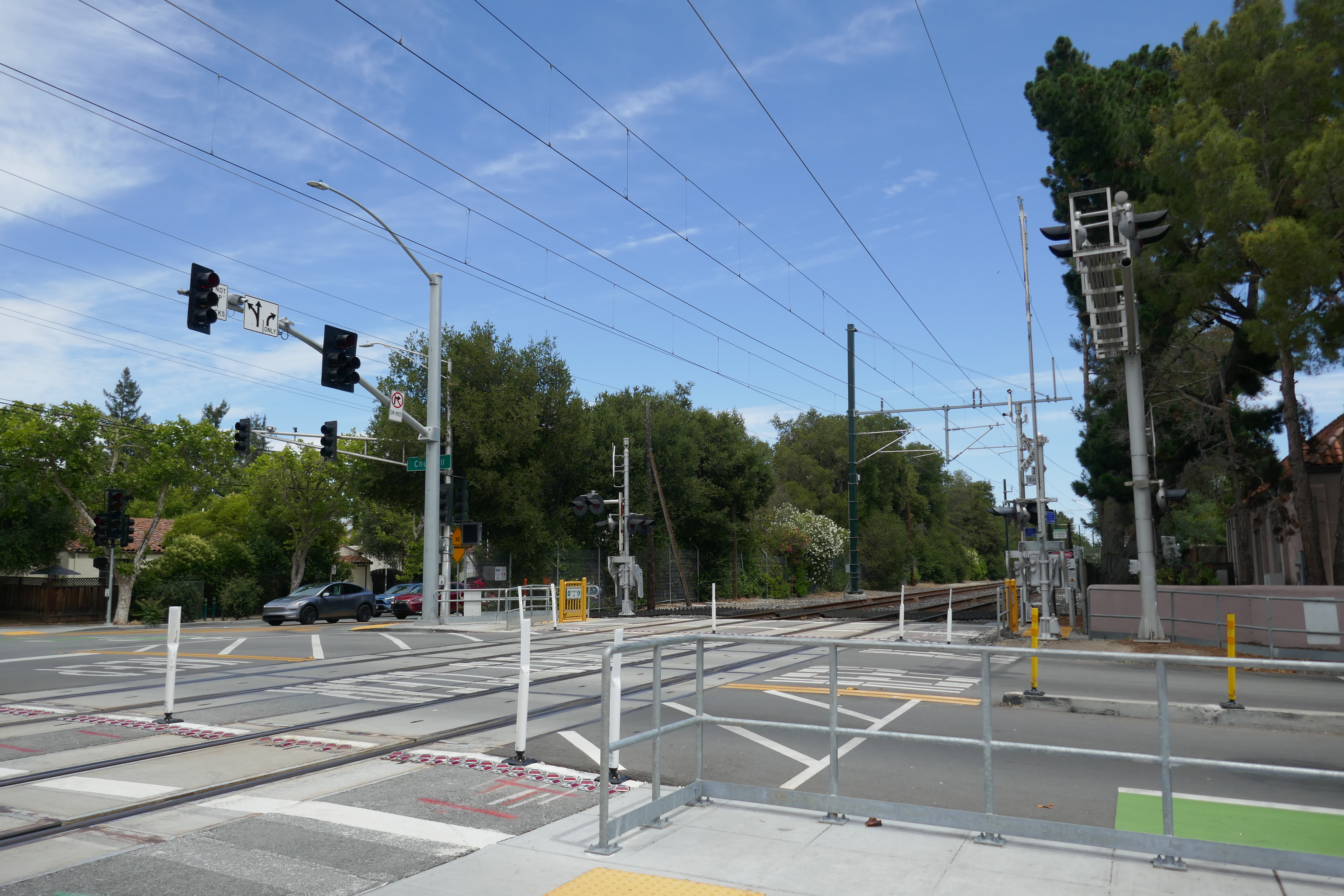
Out of the entire state of California, Palo Alto High School (Paly) is one of the only schools located directly next to a train station without any “grade separation”—staggering of intersecting transportation routes by height, such as making the train above ground level. It also had the highest youth suicide rate in the country in 2014. According to Paly junior Julia Curtis, those two things aren’t coincidences.
The data seems to agree with her. 73% of Palo Alto youth suicides since 2018 were committed by train.
After four teenagers passed at the West Meadow Crossing Station in 2009, the Palo Alto Police Department hired an independent security company to monitor the station. In the case of a crisis, the guards would alert the police and Caltrain. They reported 11 lives saved.
At the onset of the pandemic, the contract ended. It did not resume when school returned to session. Following the passing of two peers just this school year, Curtis started a petition to reinstate in-person guards.
“In PAUSD, teen suicide is definitely more normalized than it should be,” Curtis said. “And I think my one hope, whether it’s closure or grade separation or just having guards around for longer, is to just keep PAUSD students safe.”
The petition has received 3,786 signatures since its creation four months ago. Following the widespread circulation of the petition, the Palo Alto city council hired guards at the Churchill crossing.
Studies show that around 48% of suicide attempts are impulsive. A large percentage of those who survived attempts reported a short duration of crisis, acting almost immediately after the impulse. This means that even while other methods are available, eliminating accessible, highly lethal means is extremely effective.
The Jed Foundation, a non-profit organization focused on youth mental health, reported that the public nature and proximity to Paly are what make the suicides at the Churchill crossing such a focal point of the debate. Additionally, they reported that the plethora of information about this topic may encourage similar behavior in a phenomenon known as contagion.
The report conducted by the Jed Foundation reported that due to the accessibility of the train at several locations, closure at Churchill may prove ineffective in reducing the suicide rate.
On May 11, Palo Alto decided not to close the tracks in order to prevent an increase in vehicle-pedestrian accidents. Instead, they are pursuing other methods, such as making the tracks a quiet zone. This aims to reduce the possibility of contagion and soften reminders of the incidents for Paly students.