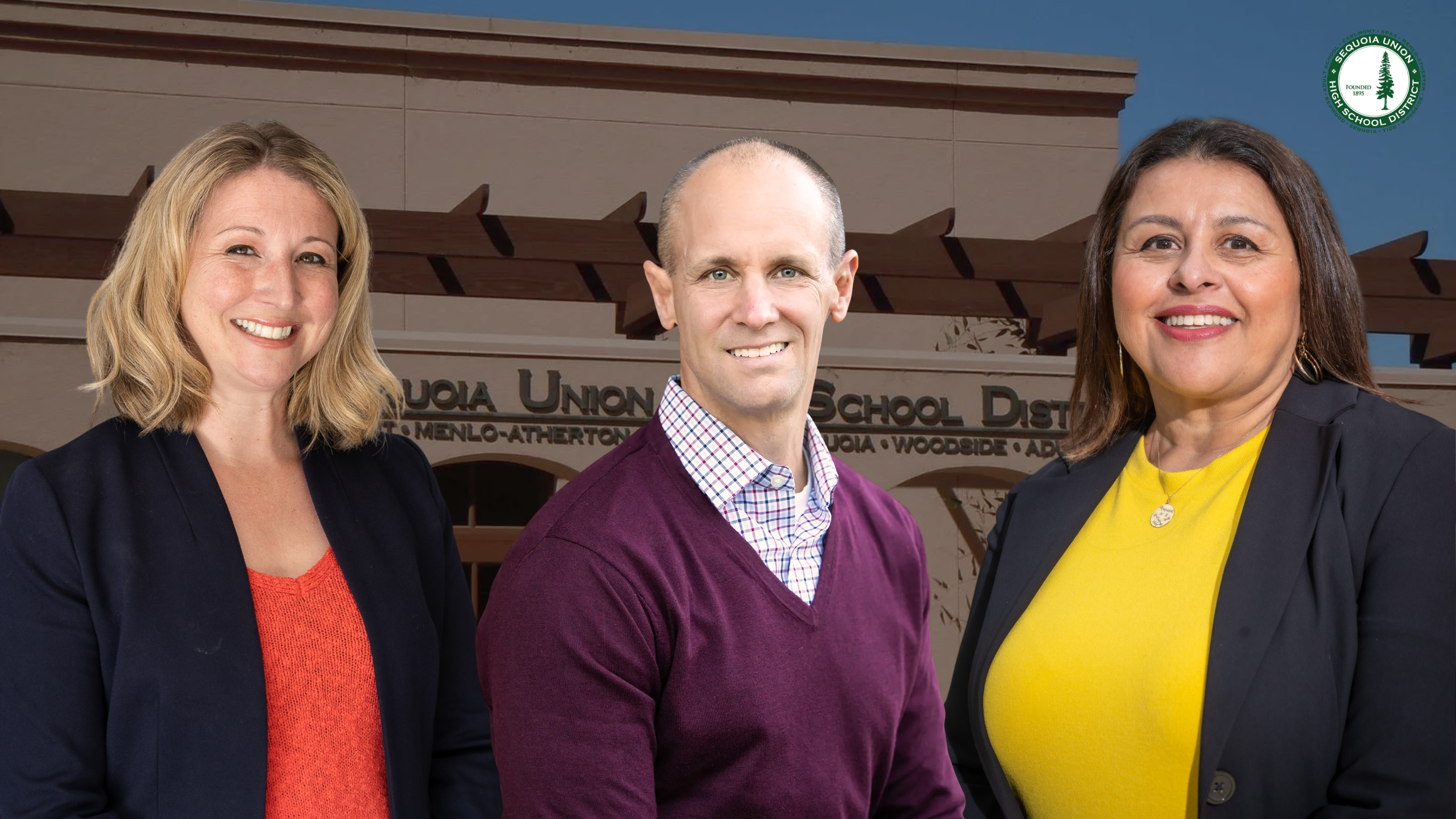
All three District trustees not up for reelection this year are facing recall efforts. Should the two trustees up for regular election also be replaced, this could give the District an entirely new board in 2027. A lack of continuity in the new Board has the potential to disrupt its routine operation, but could bring about a change if voters believe the Board has proven dysfunctional.
RecallSEQ, a group dissatisfied with the current Board and superintendent, has taken steps to recall Trustees Rich Ginn, Maria Cruz, and Mary Beth Thompson, whose terms would regularly conclude in 2028.
The recall group has voiced concerns about how the Board spent District funds, whether it sincerely listened to the public’s frustrations, and its lack of regulation of the superintendent. RecallSEQ also expressed frustration with the Board’s decision to close TIDE Academy in February.
However, the group says that TIDE’s closure is not their main rationale for the recall. “TIDE’s closure is what brought many of us together, and it is one clear example of how this board operates. It is not the case for recall,” RecallSEQ’s website states. “The case is the pattern: no real supervision of the superintendent, processes hidden from the public, and wasteful spending on legal fees because District leaders can’t do the right thing unless compelled by a judge.”
Johanna Mahal, a lead organizer for RecallSEQ, elaborated on these claims. “We see very much of a rubber-stamping type of Board of Trustees,” Mahal said. She also brought up that trustees’ opposition to the superintendent’s positions on TIDE’s closure was quickly shut down and never readdressed. Mahal mentioned a series of questions raised by Trustee Amy Koo. “Amy Koo asked very direct questions at that point of the superintendent about how she was going to [cohort students from TIDE into other high schools] and what the plan was, and those were never followed through,” Mahal said.
A lack of fiscal responsibility is another key component of RecallSEQ’s argument. According to Mahal, it’s very common for parents to be in litigation with the District in order for their concerns to be heard. Mahal cited a case in which there were issues regarding which school a student would be allowed to attend after they changed their residence. Mahal alleges the student’s mother tried to work with the District to place them correctly, but faced major pushback until she took legal action.
The District also recently paid $400,000 to settle an excessive force lawsuit and $325,000 to settle an antisemitism lawsuit.
Mahal pointed out that the District hired a private communications consultant, Heather McGowan, before the discussion about potentially closing TIDE had begun. Mahal suggested that this implies the Board discussed TIDE’s closure behind closed doors, violating the Brown Act.
RecallSEQ attempted to recall Ginn, Cruz, and Thompson last spring, but failed due to lack of sufficient initial signatures and a filing error where a draft of the petition was submitted instead of the official version.
Eventually, RecallSEQ successfully refiled and met their initial signature requirements. While RecallSEQ spent major resources publicizing their campaign, the petition now requires signatures from 20% of voters in Ginn, Cruz, and Thompson’s districts. If this condition is met, the public will vote on the recall in a special election and choose who they believe should replace the trustees for the rest of their terms.
Mahal noted the difficulty in meeting recall requirements. “It’s definitely an uphill battle to collect these signatures. I would say that we’ve got a long way to go,” she said.
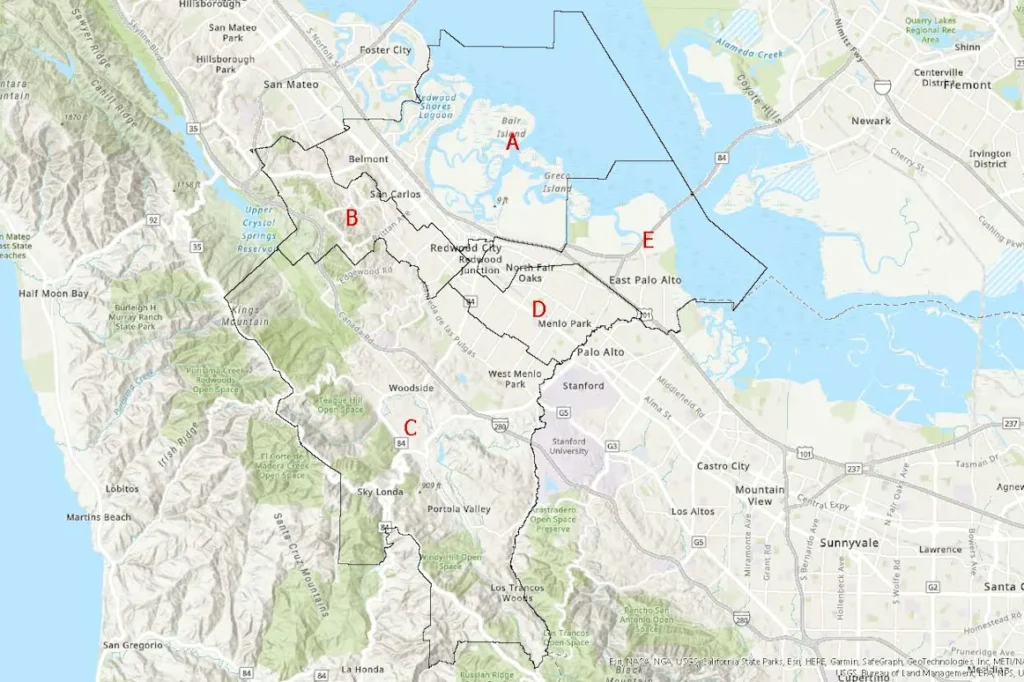
As regular elections roll around in November, voters in Areas A and D will decide on school board members as they appear on their local ballots. In Area A, Trustee Koo is challenged by Alon Shiron, while in Area D, Board member Sathvik Nori has expressed his desire not to be reelected and endorsed his opponent, Michael Dekshenieks.
If both incumbents are replaced and each recall passes, the District will face the unprecedented situation of greeting five new trustees in 2027. Such a drastic change in composition could convolute the onboarding process, given communication impediments among trustees. “If we’re talking about a school board of five, that means you can never have a situation where three people are discussing board business outside of a public board meeting,” former SUHSD Board President and current Stanford Law lecturer Allen Weiner said. “The first time you get to talk to your colleagues about an issue is when you’re before the public debating it.”
New trustees can contact the superintendent and conduct their own research, but without conversing with other trustees, this can only do so much to prepare them for their first board meeting. “Learning about the culture of board decision-making, that’s kind of a learn-as-you-go phenomenon,” Weiner said.
According to Weiner, another major responsibility of a trustee is to understand their role within the District ecosystem. “Is [it] my job to basically say here’s some policy ideas that I have, or is [it] our job mainly to hire and fire the superintendent, or is it to provide strategic direction, or is it to support the superintendent, or is it to model?” Weiner said. “Continuity can be important because [these] norms can be established and passed down.” Maintaining continuity is easier when there are forerunners on the Board to set the standard.
Mahal firmly believes that the current Board is past the threshold of being dysfunctional. “I don’t think it could be worse than it is right now. [The quality of a new Board] does not frighten me, and it shouldn’t frighten any of the voters because really it couldn’t be worse,” she said.
To Mahal, even an unsuccessful recall does not mean the end of her efforts. “We’re not going to give up. And even if the recall is not successful in getting the number of signatures, we already have a plan of pivot. So stay tuned on that,” Mahal said. “We will not just quietly fade into the night and hope for the best for the District.”
All three recalled trustees have answered RecallSEQ’s notices of intention—the group’s declaration of their objective to circulate the petition. Each trustee has urged voters to decline the recall.
“I respect the right to disagree, and I remain committed to transparency, accountability, and keeping students at the center of every decision,” Thompson wrote in her answer.
“Woodside, Menlo-Atherton, and Sequoia deliver for our students every day. Let’s keep the focus on students,” Ginn said in his response.
Cruz pointed out that the District would have to fund a special election if the recall petition acquired enough signatures. “Forcing this recall will cost SUHSD taxpayers hundreds of thousands of dollars. That is money that belongs in our classrooms, not funding a political agenda,” Cruz said in her statement.
RecallSEQ has until early December to collect enough signatures to trigger a special election. From there, it will be until at least January before the finalized Board of Trustees assumes their positions.
Malina Gleitsman was the lead author of this article.