6/10
Verity, a psychological thriller starring Dakota Johnson, Anne Hathaway, and Josh Hartnett, directed by Micheal Showalter, should have been a blockbuster. But it isn’t.
The plot, adapted from the Colleen Hoover novel of the same name, has potential, and its trademark twists still keep viewers on their toes. But, the beginning is blank and boring, with cheesy lines that miss their mark. These lines, often verbatim from the Colleen Hoover novel, feel unnatural, as Johnson’s Lowen feels compelled to externalize her inner monologues. “Manhattan is too crowded to give a sh*t about me. And I love her for it” she says. No one would ever say something like that in real life.
Despite this, the intense suspense and unreliable perspectives of Verity’s characters make it an interesting psychological thriller that leaves viewers contemplating who to believe days afterward. Verity starts as an unsuccessful author, Lowen Ashleigh (Johnson), gets asked to finish writing the book series of Verity Crawford (Hathaway), an accomplished author, by Verity’s husband, Jeremy (Hartnett). Lowen is needed because Verity can’t write the books herself. She is bedridden due to a car accident. When Lowen accepts the deal, she moves into the Crawfords’ Vermont home to try to accurately replicate Verity’s writing style. It’s there she discovers a manuscript of Verity’s autobiography. As Lowen stays in the house, she falls in love with Jeremy and grows suspicious of Verity, whose manuscript leads Lowen to believe that Verity may have killed her own daughter.
When Lowen informs Jeremy of Verity’s manuscript, Jeremy strangles Verity and dumps her body in a lake. Seven months later, Lowen finds a letter from Verity addressed to Jeremy. There, Verity claims that her autobiography was simply an antagonistic journaling technique, designed to make her novels more interesting. Lowen and the audience are both left wondering whether Verity’s manuscript or her letter contain the truth.
Although intriguing, the plot has narrative gaps and contrivances. First, it’s strange that Lowen is chosen to be Verity’s ghostwriter when she has never read Verity’s novels. It would not be possible to perfectly mimic Verity’s style of writing, without having studied the books extensively. She is a mid-list author with minimal sales, so taking over a multi-million dollar franchise seems unrealistic. Additionally, it is odd how investigators believe Verity’s story that her eight-year old daughter tipped over a row boat by herself, drowning herself in a freak accident. Though designed to leave room for the audience to doubt that Verity’s autobiography was simply a writing technique, it just feels too crude. The logistics of her not being able to save her own daughter does not make sense. Moreover, Verity’s home nurse is a horrible red herring. She constantly says mysterious things, telling Lowen when Verity eats or sleeps, but never elaborates on her ominous sentences. Her role feels misleading. She was completely unnecessary, and her role did not impact the plot in any way. Instead of contributing to the plot twists, the nurse just disappears and leaves the audience with loose threads.
Dakota Johnson’s performance brings the whole movie tumbling down. She has no genuine emotion and most times, the audience reacts to the film’s shocking plot points before she can. Her botox masks all feeling. It is true RBF—resting bored face. Many of her lines come off as completely cringey. When she meets Crew (Brady Wagner), Verity’s shy son, she greets him by saying “It’s okay, I’m shy too,” while lowering her sunglasses in a creepy way. She’s so insufferable that, later in the movie, Crew sticks a butter knife down his throat to avoid talking to her.
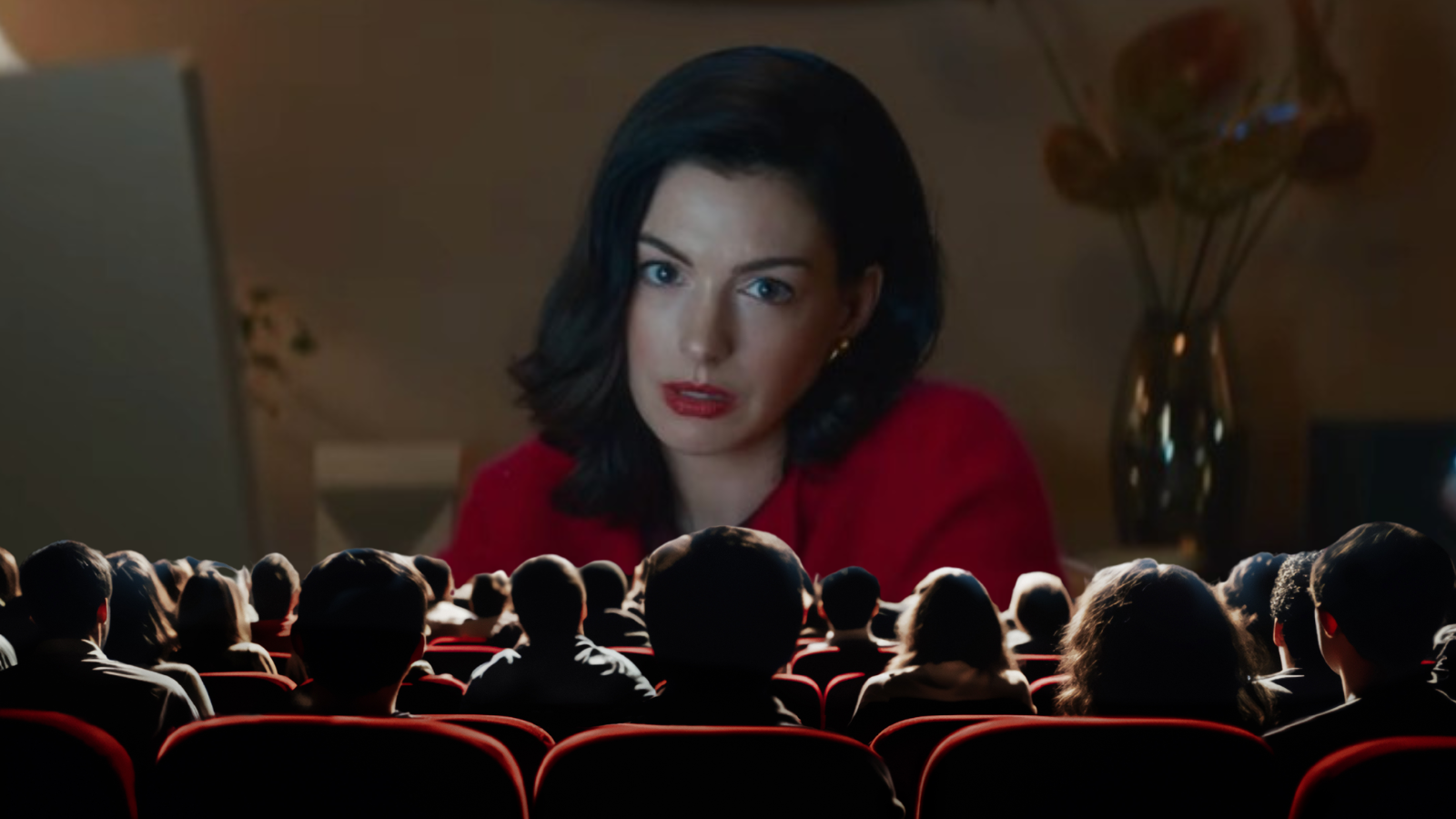
In Verity, it’s Anne Hathaway who excels. Her portrayal of the titular character is chilling, as her nuanced depiction of extreme paralysis forces her to play three different characters: paralyzed Verity, pre-accident Verity and an omnipotent version of Verity who reads her manuscript to Lowen. She completely carries the movie. It is impossible to tell when she is being manipulative or genuine and whether she truly hates her children or not. Hathaway is one of the few actors having a legendary 2026, Verity is the third major release she stars in, after The Odyssey and The Devil Wears Prada 2. She’s on a roll.
Other actors shine in certain situations. As Harnett chokes Verity in the film’s climax, his tearful, raging performance is emotional and believable. Crew is also portrayed nicely. His denial of his sister’s death is heartbreaking, and his adorable personality and convincing representation of childhood trauma make him a clear highlight.
But worst of all, in a movie designed to be deeply romantic, Harnett and Johnson lack chemistry. They deliver lines like they are reading off their hands, and their overly uncomfortable and passionate sex scenes always feel like a desperate attempt to make up for the absence of spark. While out at dinner, they have a strange conversation where Jeremy admits to admiring Lowen’s writing. It’s eerily similar to a conversation he had with Verity in a flashback. The difference is, with Verity, it doesn’t sound as robotic and out of place. Maybe it’s Johnson’s expressionless persona that kills anything it comes into contact with.
This date is a prime example of another one of the film’s themes. Throughout the film, Lowen increasingly becomes more and more similar to Verity. In a pivotal scene, Lowen even wears Verity’s red dress. Lowen is aware, through Verity’s manuscript, that Verity wore a red dress when she first met Jeremy. The message is that Lowen is trying to create the love that Jeremy and Verity had. As Lowen takes over Verity’s book series, she takes her husband, her house, her fame, and her children, too.
Verity’s pacing is also unbalanced and confusing. The film’s first act focuses more on the romantic tension between Lowen and Jeremy than Verity’s mysterious backstory or any action, forcing the audience to sit through even more of Lowen and Jeremy’s laughable chemistry. Most of the film’s plot is packed into the last 20 minutes of the two-hour movie. The ending is plot twist after plot twist as the film reveals too many new developments. Despite the awkward pacing, the quality and storyline of the finale itself is memorable and thrilling, leaving viewers scratching their heads in shock.
While Verity has many flaws, with acting that falls short and clunky pacing, it still proves to be exciting. Verity leaves the audience with their mind in shambles because of the aweing arc of the story, its constantly pivoting plot, and its morally grey and manipulative characters.