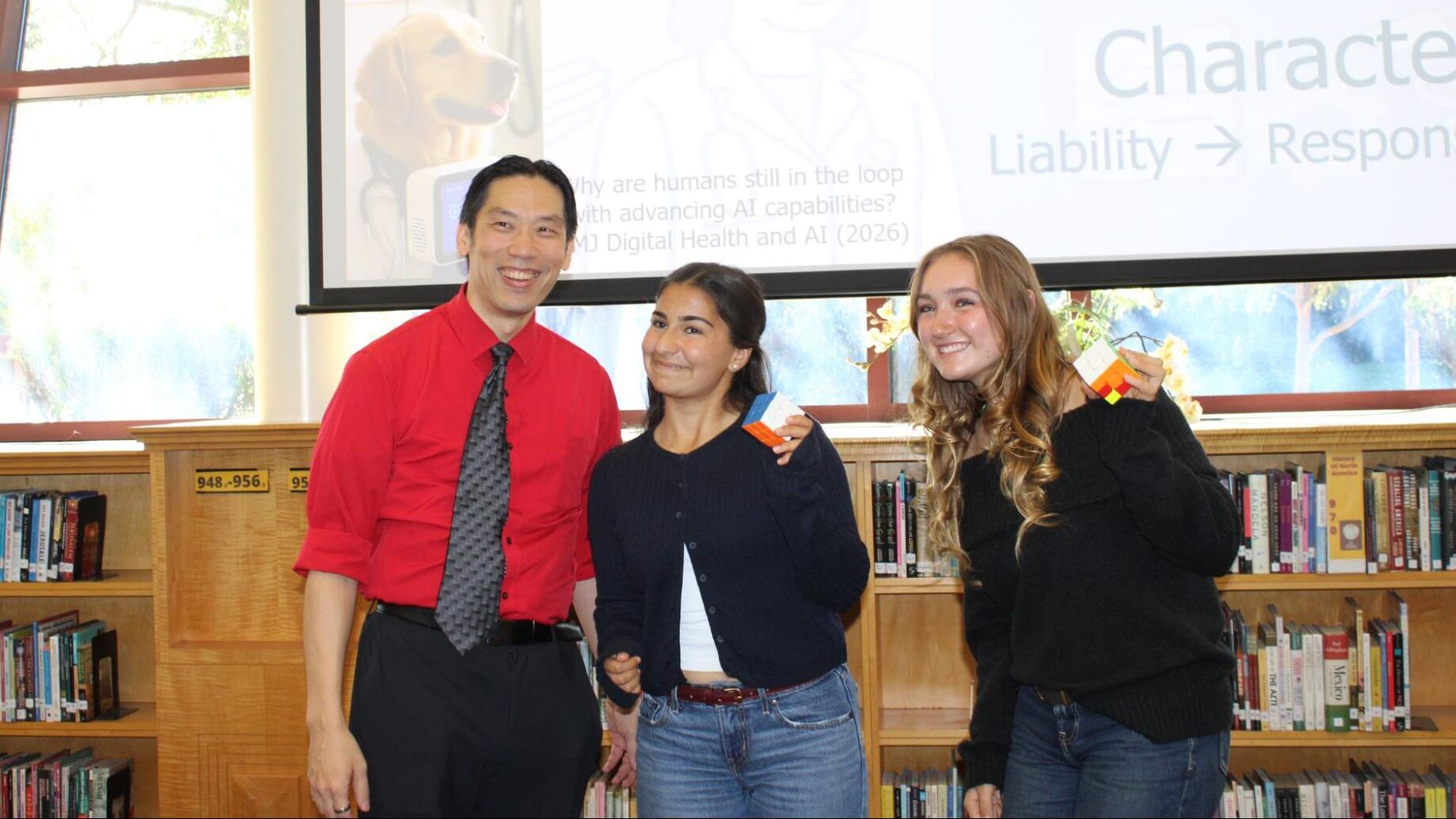
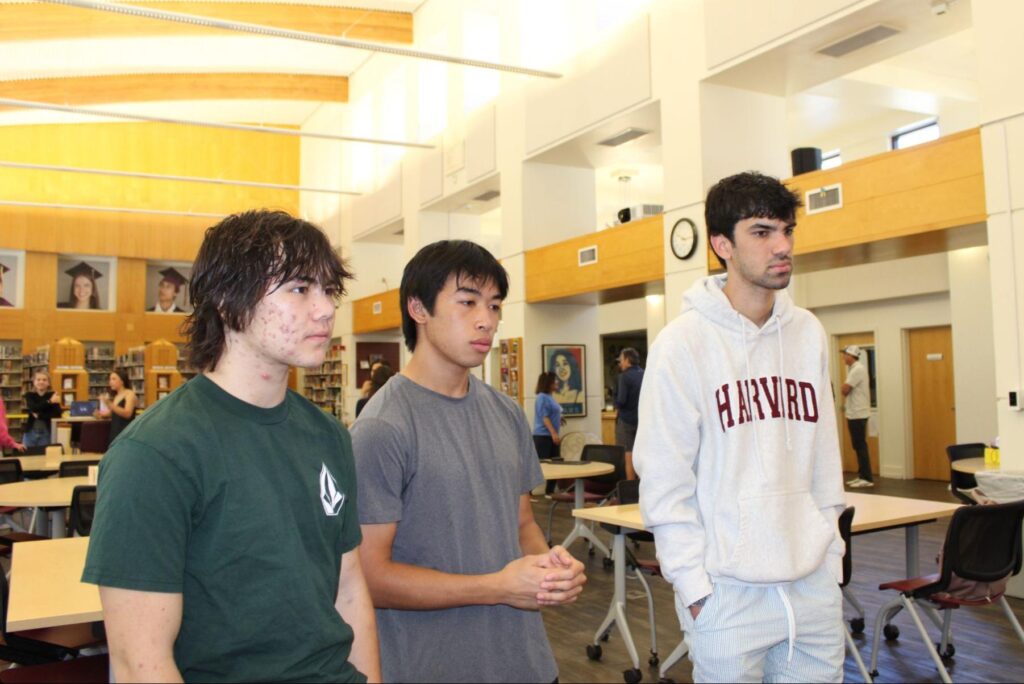
Students gathered in the Library to listen to keynote speaker Dr. Jonathan Chen, a Stanford health director, discuss AI ethics on Saturday morning. The M-A community event, organized by the Digital Impact Club, featured student poster presentations and Chen’s speech. Parents, siblings, and non-club members also attended to learn more about AI and support the club. The event also attracted community members, showing up out of curiosity for the speaker and the concept of ethics in AI.
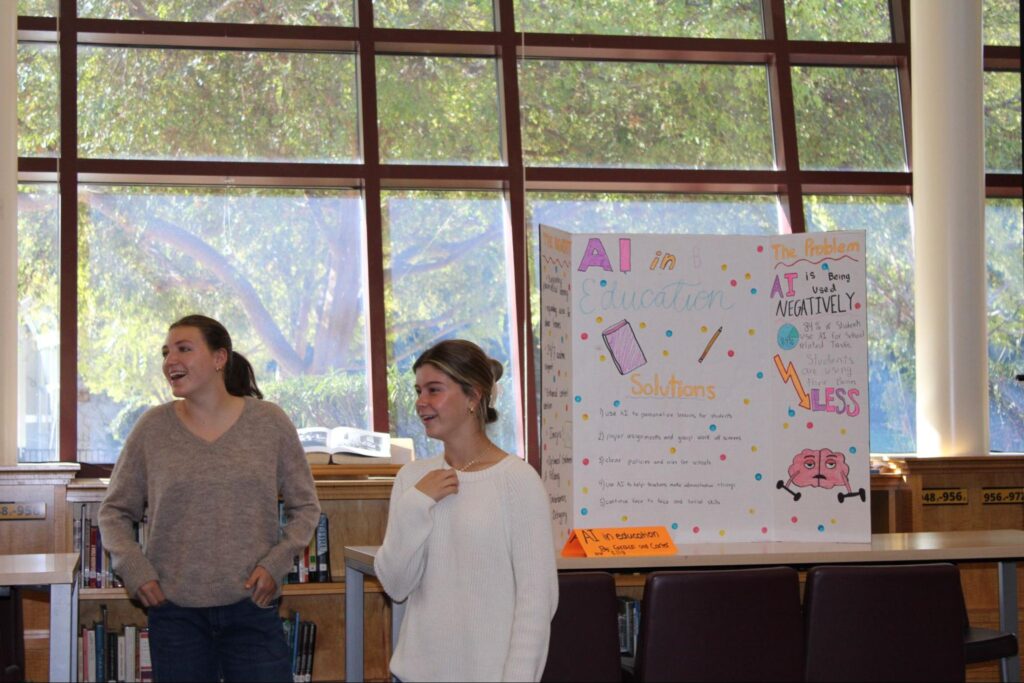
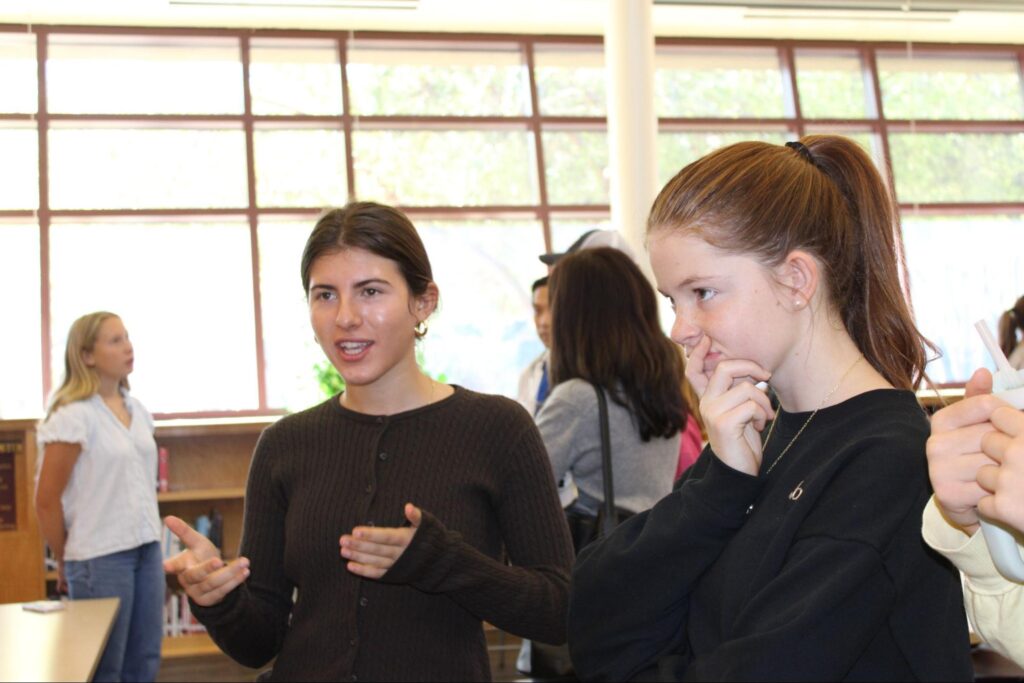
At 10 a.m., club members set up their projects for a showcase. Their posters compiled research on AI in healthcare, social media, discrimination, and the economy. Chen and other community members viewed the trifolds and listened to the presenters’ ideas during a gallery walk.
After the presentations concluded, Chen began his talk. He discussed the pros and cons of AI, noting its positive use as a study tool, but also its potential to lead to unhealthy dependency. He addressed the rapid advancements in AI, including its growing knowledge and insights into human nature, such as its potential to replace doctors.
Sophomore and club member Aubrey Nelson expressed her curiosity regarding her learning from the presentation. “[The event] is really interesting because you get to learn about AI, which is something that we’re not really allowed to use in school,” she said.
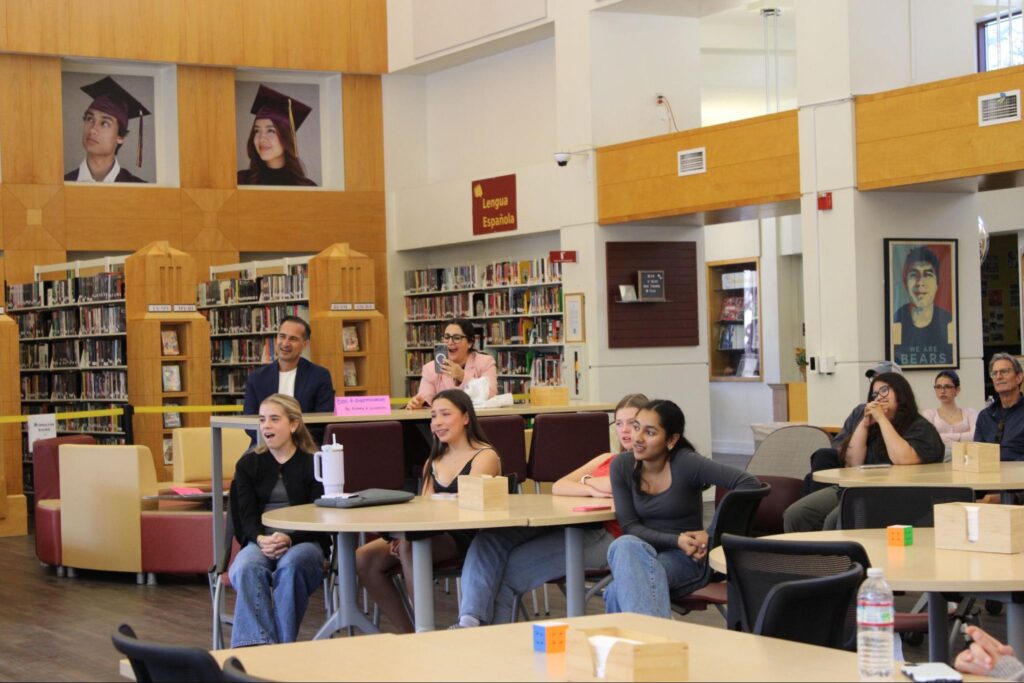
Chen expanded upon how using AI can leave your mind dependent on its assistance. He referred to this concept as the “deskilling of AI,” while also acknowledging how the tools can be used positively, even for studying.
“The world is definitely changing,” Chen said. “You’ve got to learn how to adapt and be on the leading edge of it.”
During his presentation, Chen said that AI will not replace people, but people who know how to adapt and use AI will replace those who don’t.
“It used to be if you learned a good trade, a good skill, a good profession, for five to 10 years you can just practice that, and you’ll have a good job,” Chen said. “Right now it’s like, ‘Dude! I might have to change my skills every year.’ It’s hard to keep up with.”
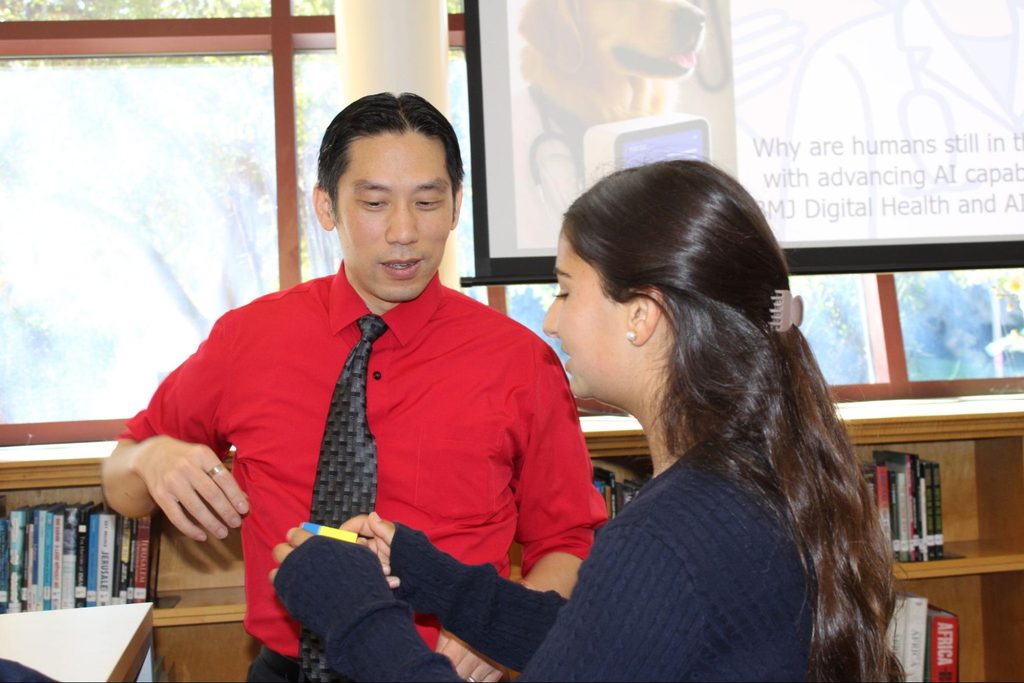
Chen kept the audience on their toes with magic tricks throughout his talk. He started by solving a Rubik’s Cube with merely the flick of his wrist.
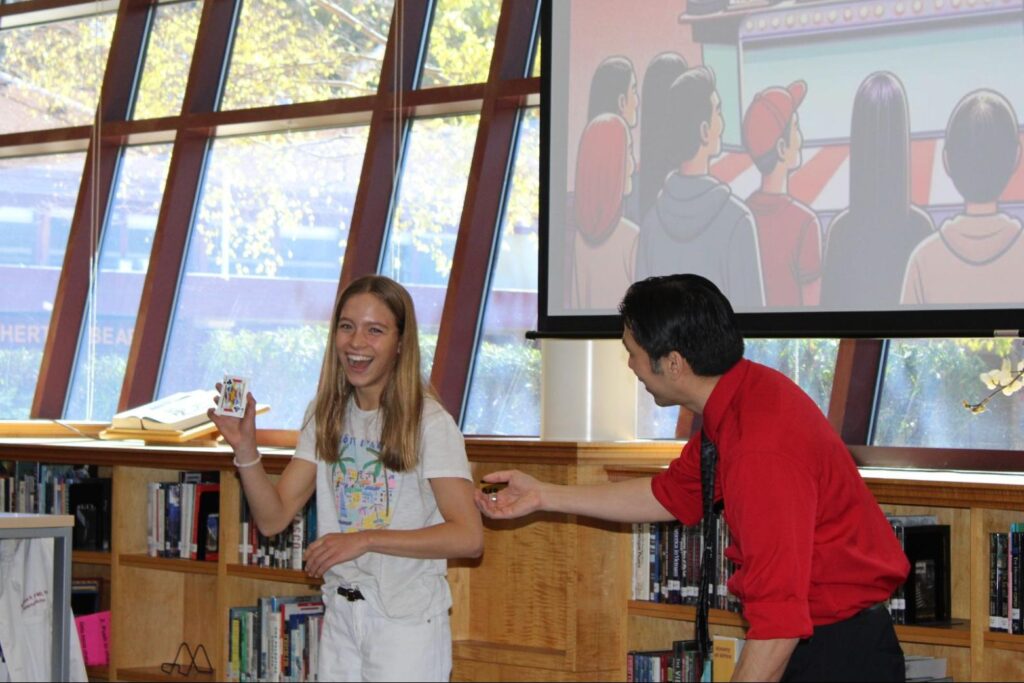
His lecture became interactive, as he had volunteers choose cards from his hands. Chen then asked questions about their cards and guessed whether the students’ responses were honest based on their reactions and body language.
In guessing which cards the three volunteers held, he correctly figured out two of them. However, he missed the last card. Chen then asked an AI chatbot to guess which card lay in each volunteer’s hand. The chatbot used each student’s reactions to correctly predict the card number, suggesting it may prove more successful than humans at tasks requiring body language analysis. This realization was thoroughly discussed throughout the presentation.
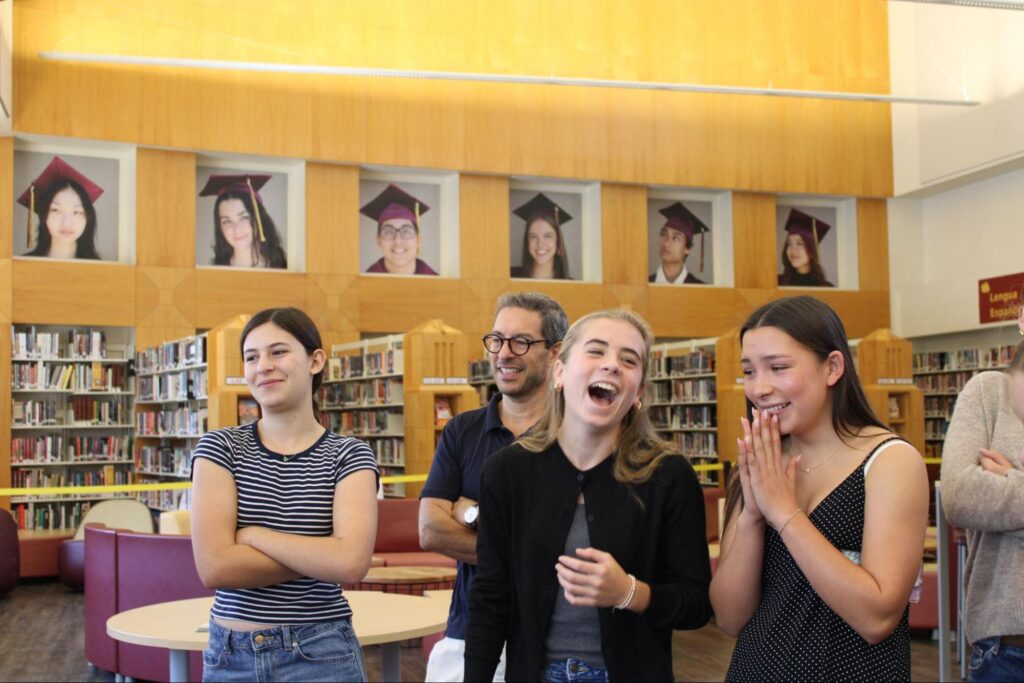
Club member and sophomore Zoe Mehta reflected on Chen’s speech. “I didn’t realize how much AI was affecting our lives,” she said. “It really sparked a realization in my mind.”
In an interview after his presentation, Chen discussed his background and what drew him to this line of work. “When I was a kid, my mom wanted me to be a doctor. And I wasn’t opposed to that,” he said.
Chen started college when he was 13 years old. By the time he was 18, he decided he wasn’t ready to commit his life to “being a healer.” He graduated a year later and became a software engineer. “I’m much more of a computer nerd,” he said.
After a few years of working, he began thinking about combining healthcare with computer science. “Twenty years ago, I didn’t know where I was going to end up, but now it finally makes so much sense to put the two together,”Chen said.
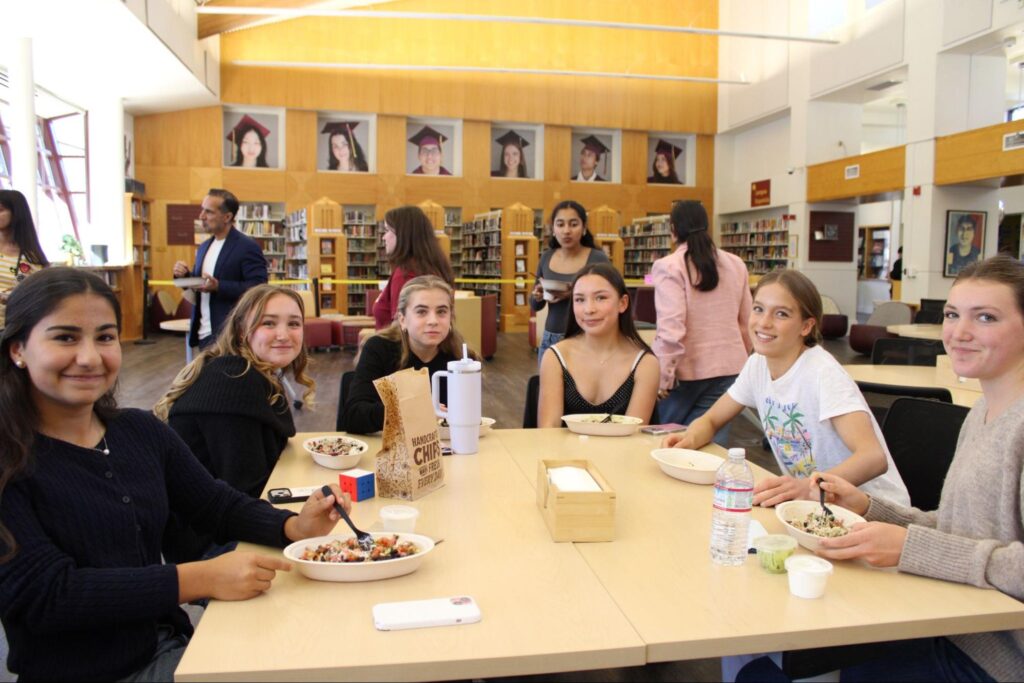
The event ended with catered Chipotle and smiles around the room. Chen answered individual questions while attendees enjoyed bowls, burritos, and cookies. He demonstrated more tricks, such as transforming one dollar bills into hundreds and turning shredded newspaper back into a whole one.
Chen’s humor kept the audience engaged, and his versatile talents demonstrated that any skill can be taught. Utilizing his abilities, he successfully tricked attendees’ minds and showed that some AI concepts can’t be trusted because they create similar illusions in the brain.
Sophomores and Digital Impact Club Presidents Maliha Bhat and Brooklyn Shank planned the event. “Events where you can bring a community together for a common purpose or discussion are really fun,” Bhat said.
The event brought students together around an impactful issue and created space for thoughtful discussion among peers.