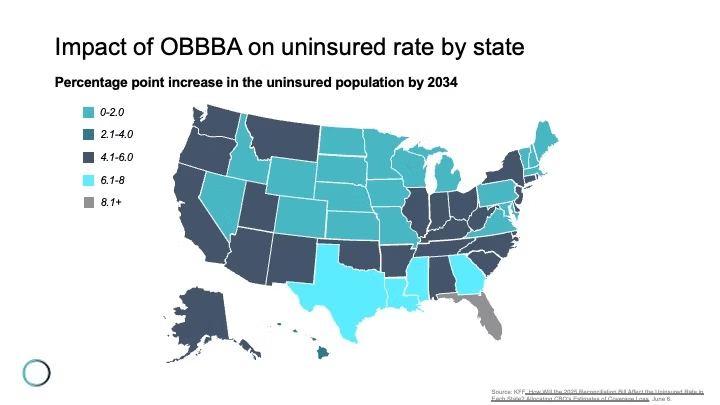
Millions of seniors and low-income Americans are at risk of losing healthcare due to extensive cuts on federally funded healthcare that will come into effect after the midterms. These cuts are mandated by the One Big Beautiful Bill Act (OBBBA), which was endorsed and signed into law by President Trump in 2025.
The bill includes several changes to tax policies, SNAP rules, and defense funding, though it will mainly affect the health insurance of many low-income Americans, seniors, and immigrants who cannot afford private insurance.
“I’m very low income. I’m on a limited budget. I can’t work. You know that’s devastating to me, and so it is very tough. I’ve had to make some very tough decisions,” Giana Knight, a Medicare patient in Mountain View, said.
This bill impacts both government-funded healthcare and people who rely on Affordable Care Act (ACA) marketplace insurance. The OBBBA will also cause insurance companies under Covered California to raise their monthly premiums, because it allowed enhanced federal marketplace subsidies to expire at the end of 2025. This will result in a sharp rise in costs for many buyers.
Geri Weitzman, a self-employed psychiatrist in Mountain View, has experienced this change firsthand. Her monthly premiums have doubled in price, from around $700 a month to $1400, since the OBBBA was passed.
“I have noticed that my budget is tighter. Like when I was thinking this summer of doing more traveling, suddenly I’m looking at my amount that I have in my bank account, and it’s lower,” Weitzman said.
While the OBBBA has not changed the income baseline to qualify for Medicaid, it has introduced strict new eligibility requirements. These work requirements primarily apply to non-pregnant adults ages 19-64 and include having to provide proof of volunteering, attending school, or working 80 hours per month to stay eligible. This requires extensive additional paperwork and an understanding of complicated terms and conditions.
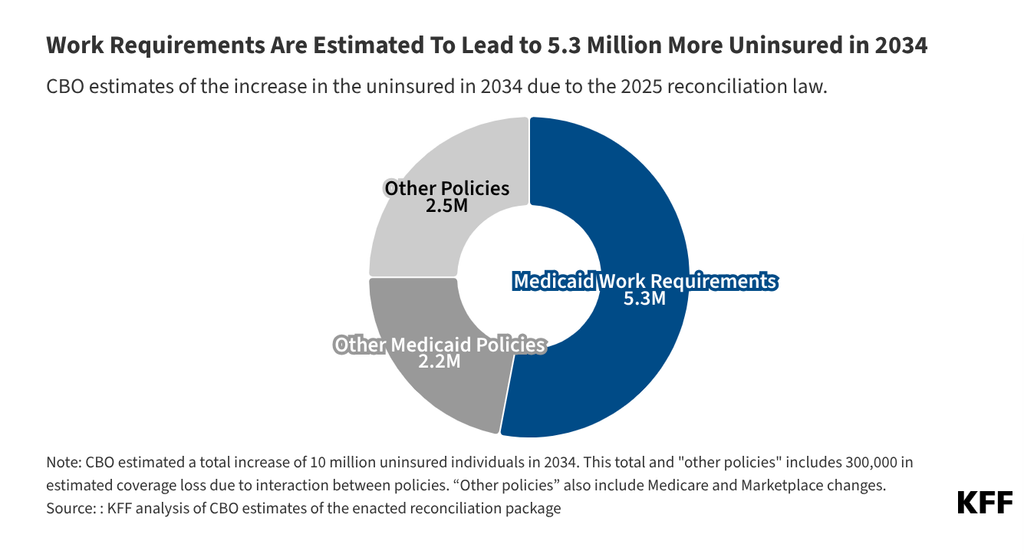
Akash Pillai is a policy analyst at KFF in Washington, D.C., a non-partisan, non-profit national health research organization. He focuses on the Medicaid, racial equity, and health policy team. He says families experienced similar hardships during the first Trump administration, when certain states enforced work requirements.
“We did see that people were being disenrolled for procedural reasons, meaning they were eligible but they couldn’t complete the paperwork requirements,” Pillai said. “Or maybe there were missing notices, or maybe there were other barriers like language issues.”
Donna Lera, a licensed marriage and family therapist in San Carlos, has had similar troubles with some of her patients. “One client that I spoke with in depth about this is a single mom, and she cannot work, and she was mandated to work. Otherwise, they were going to pull their funding for her,” Lera said.
Alongside these new developments, OBBBA has also brought back the income cliff as it was enacted without extending the temporary enhanced premium tax credits. The income cliff is a sharp financial threshold where even a small rise in income pushes one over the eligibility limit. Enhanced premium tax credits, which were in effect under the Biden administration, capped the cost of health insurance at 8.5% of household income for most families. It also smoothed out the transition from Medi-Cal to Covered California. This elimination revives the cliff, creating new hurdles for patients shifting between the two programs.
Eliminating premium credits can be detrimental for families who are not used to paying monthly premiums and copays for their insurance. While the government does provide help with payments, transitioning into Covered California from Medi-Cal can add significant financial strain.
Veronica Walter, a teacher based in Newark, is anxious that these new provisions could impact her. Walter is on Medi-Cal right now, but she might no longer qualify as her husband’s income is above the threshold to qualify for Medi-Cal.
“I think the premium, which is currently free for people of low income like me, would go up,” Walter said. “That would be a hardship, because that would probably mean we’d also have to pay for medicines and visits, and I take so much medication that I rattle when I walk because I’m diabetic.”
The bill has also substantially modified Medicare standards. Local practices are going out of business or no longer accepting Medicare patients because of a number of mandates.
These mandates increase the conversion factor, which is essentially a pay bump, by 3.26%, (including a 2.5% increase from the OBBBA), but lower the value of the work Relative Value Units the doctor gets for non-time based services, determining their payout, by 2.5%.
As inflation rises, the marginal increase in doctor’s payouts do not suffice. Doctors are not allowed to charge Medicare patients more than the Medicare-approved amount and since inflation is an active problem, they face worse financial pressure by accepting more Medicare patients. To stay afloat, doctors need to accept more patients using private insurance whose insurance prices are negotiated to increase with rising business costs.
Knight has also experienced disruption in her care. “In the last couple years, a lot of my providers have started saying they’re not accepting Medicare anymore,” Knight said. “And one doctor that I was just desperate to hold on to, I only held on to him because now I pay him a monthly stipend for him to be like a concierge doctor, and it is incredibly hard for me to pay that money.”
Patients have also faced other troubles as a result of prescription prices rising, due to cost-sharing measures.
“I had to stop taking one of my medicines because it went up by $30. I was like, ‘I just can’t,’” Knight said. “I can [pass out and get extreme pain]. It’s very dangerous, and I just can’t afford the medication to combat that.”
Adrian Espinosa, a nurse practitioner at Ravenswood Family Health Network in East Palo Alto, has experienced the effects of the OBBBA firsthand.
“I had one in particular who mentioned their medications were going up in price, so they’re now concerned not only about being able to access their treatment, but now if they’re paying more for medicine, that’s less money to pay for rent,” Espinosa said. It has become a choice between household necessities and medicine for many low-income families.
Furthermore, when swaths of people don’t have primary care physicians, emergency rooms often pay the price. “If they don’t have insurance, they will often not come to clinics for preventative care. You know where they may get a bill, but they often will wait until their condition is worse, and potentially present it to an emergency department when it’s really bad,” Cheryl Pan, a physician at Santa Clara Valley Healthcare, said.
Still, many clinics and county hospitals have enacted programs to support those affected by the OBBBA cuts. “We are now also evaluating an alternative program to the patients who cannot or will not be covered by Medicaid or Medi-Cal. So we’re looking at a free type of insurance that would help patients be able to come in and not require them to pay if they cannot,” Pan said.
Ravenswood FHN is attempting to combat these cuts by implementing new policies. “It’s a lot of that kind of work individually advocating, but also as clinics and as a group, we also try to offer services to patients based on income, like a sliding scale,” Espinosa said.
Many new measures will be enforced after the 2026 midterms and low-income families will have to make huge adjustments. “Healthcare is a human right. Healthcare is something that we all deserve and that we should all have access to. By affecting access to healthcare, we are really putting at risk the health of our most vulnerable populations: our elderly, our children, our working families,” Espinosa said.