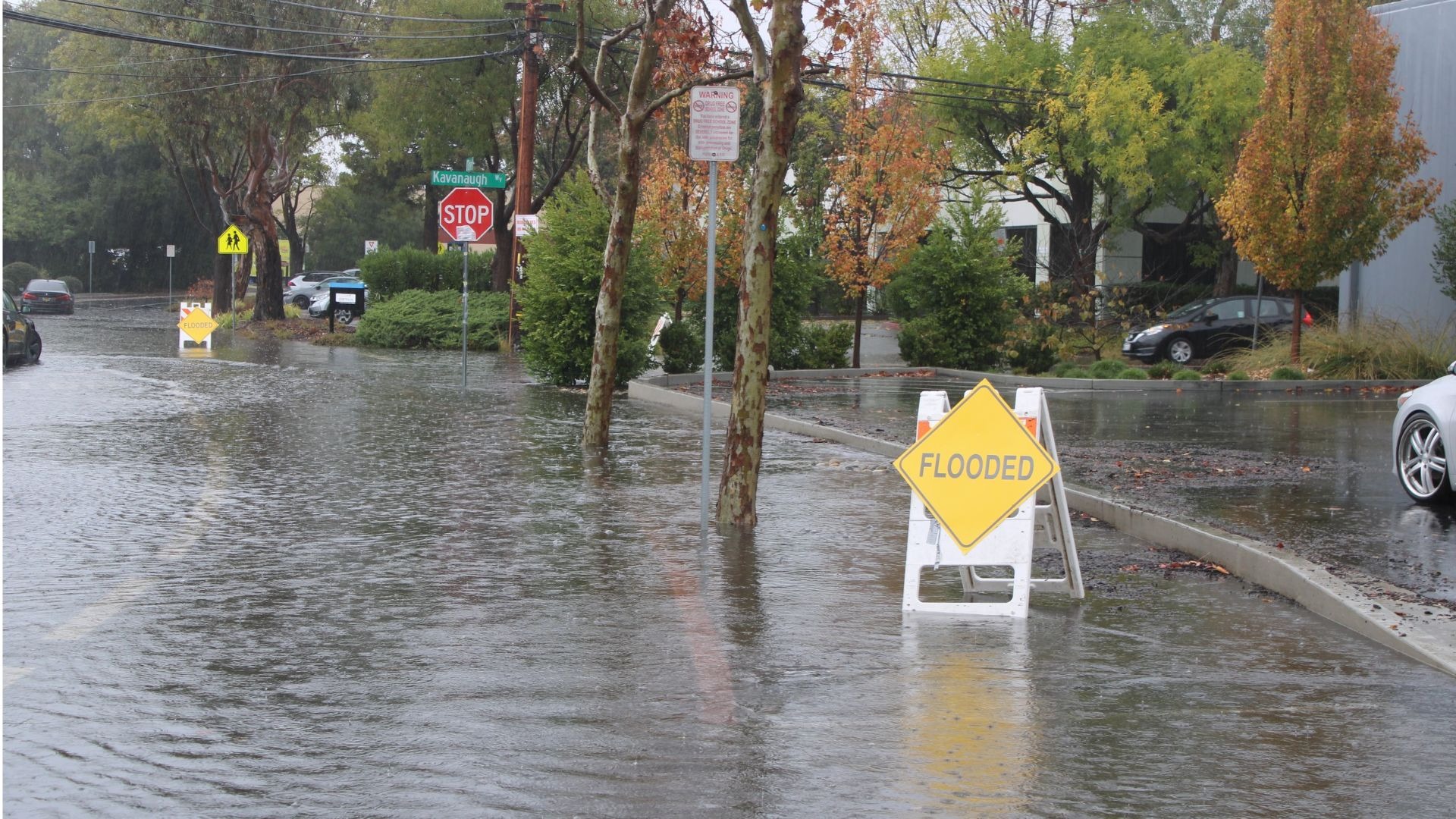
The Bay Area is no stranger to extreme weather. The region has seen record-breaking dry spells and even orange skies. But this holiday season sees the return of a familiar foe: El Niño, potentially at its worst. And low-lying cities like East Palo Alto are in danger.
El Niño is a global climate pattern, punctuated by severe winter storms and increased rainfall.
The National Oceanic and Atmospheric Administration (NOAA) is predicting a historically strong El Niño for this upcoming winter. California governor Gavin Newsom and San Francisco mayor Daniel Lurie have both declared a state of emergency in preparation.
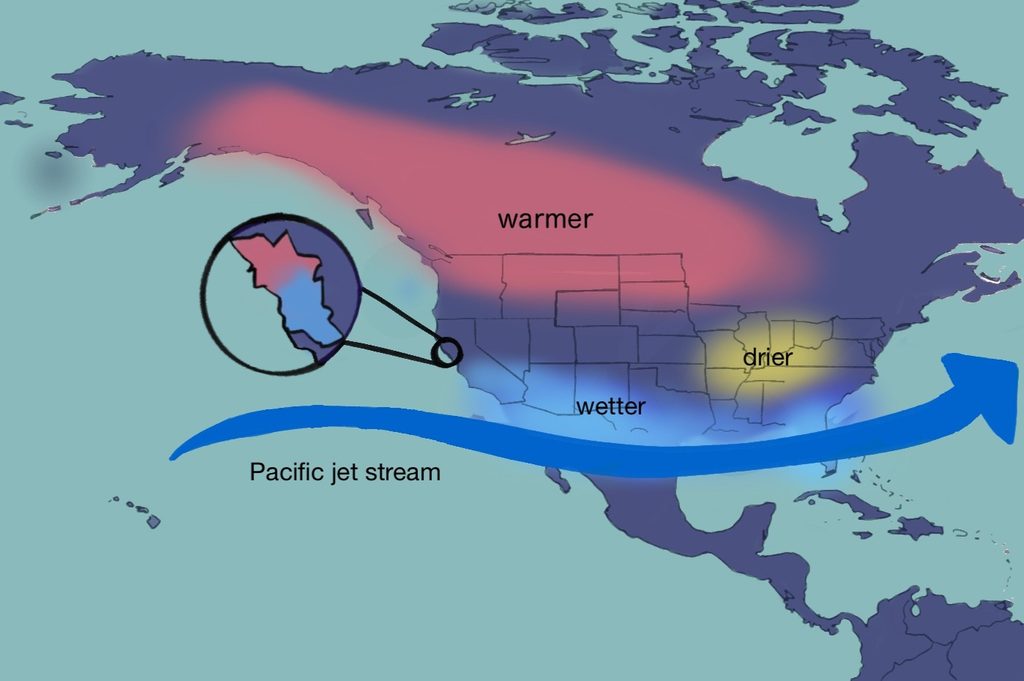
EPA is especially susceptible to El Niño’s effects due to its unique location at the bottom of the San Francisquito Creek watershed. “A watershed works like a shower,” Kamille Lang, Director of Outreach and Education at Climate Resilient Communities (CRC), an environmental non-profit that services EPA, said. “[The water] goes into Woodside, down into Palo Alto, and then it goes all the way to the drain. That’s EPA.”
In fact, EPA has already been hit with intense flooding from rainfall on Wednesday afternoon. This flooding reached M-A, causing a brief closure of a section of Middlefield Road.
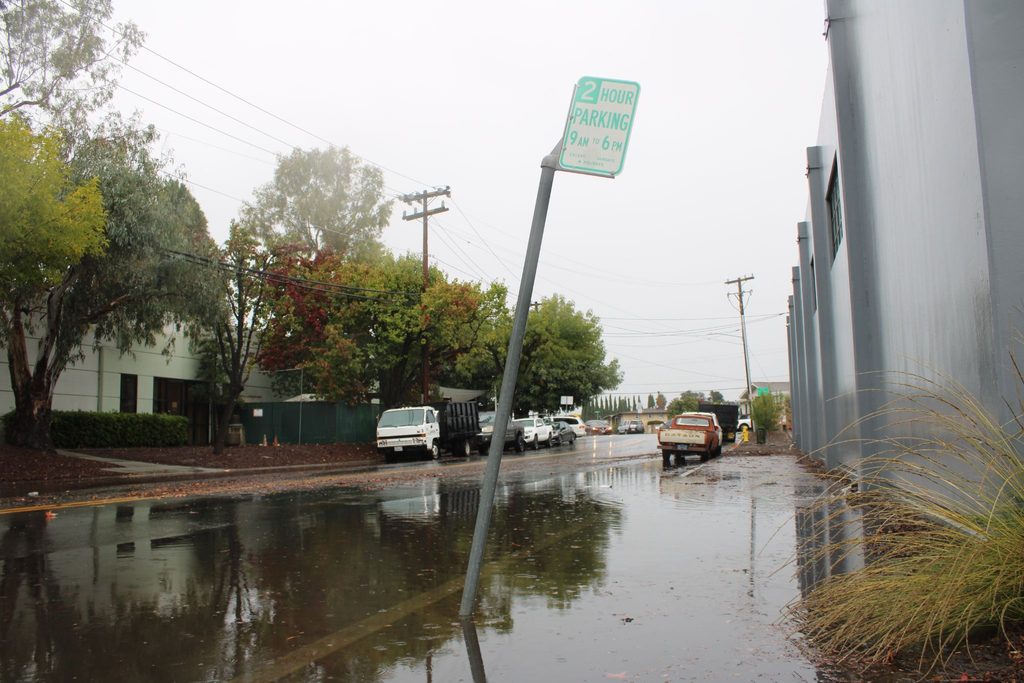
Sophomore and EPA resident Maria Diaz had trouble accessing parking by her home. “The parking spaces have been really flooded,” Diaz said. “It’s hard in the morning to get to school because there is water everywhere.”
“We are trying to park our car outside, but parking is really hard to find, so we are kind of struggling,” Diaz added.
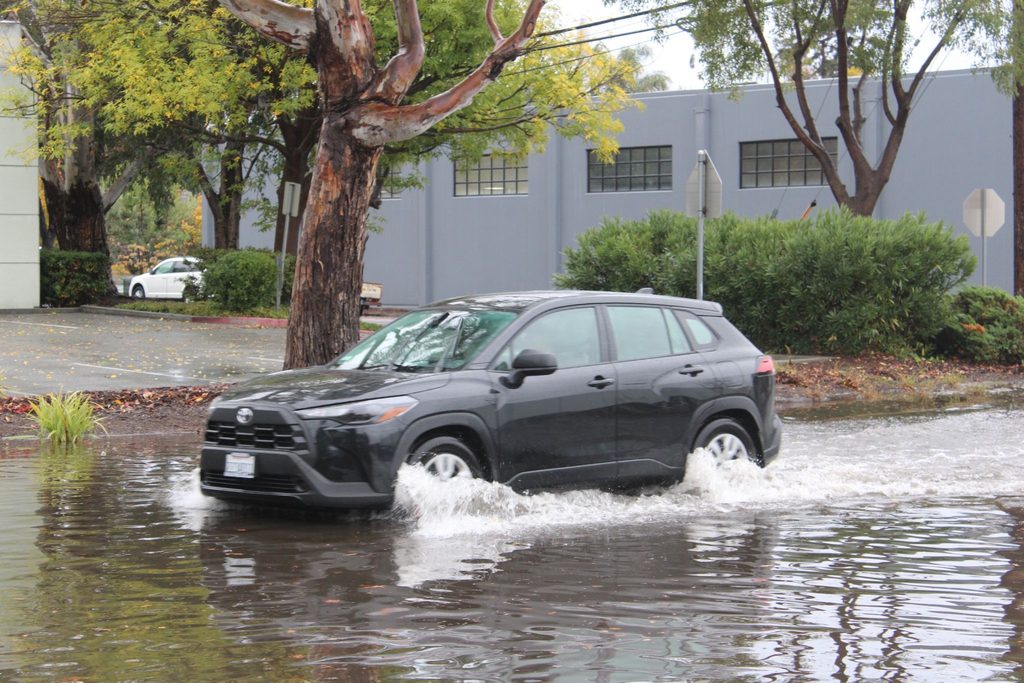
EPA also borders the San Francisco Bay, making coastal flooding a second threat. “All of the fresh water comes down into the community from one side, and then on the other side is the San Francisco Bay,” Lang said.
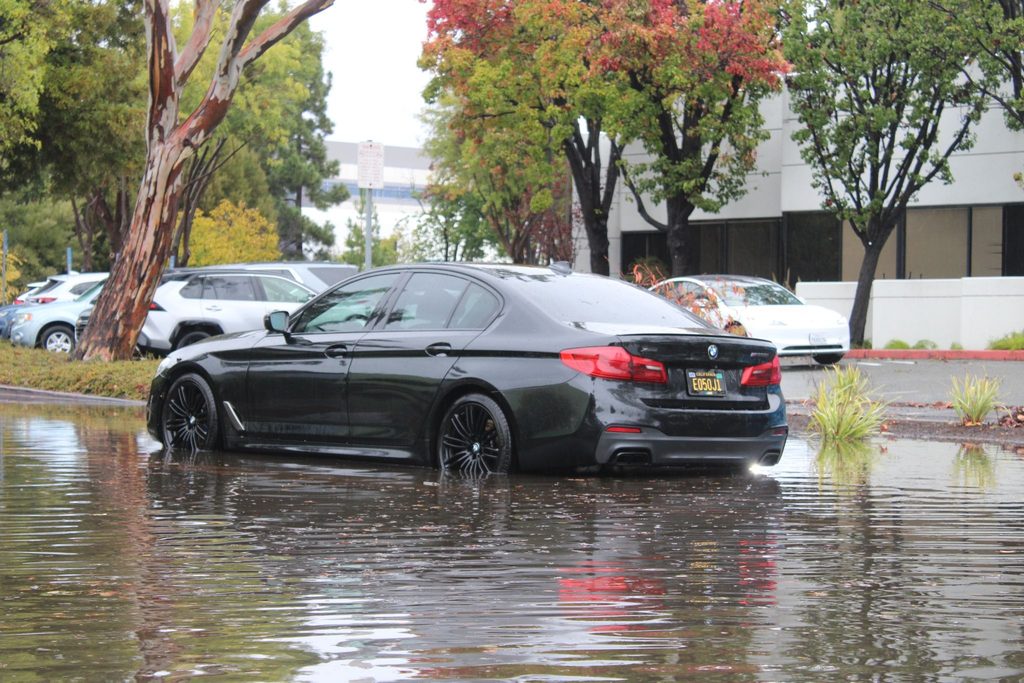
This coastal flooding is already occurring in Marin County. “We’ll see these coastal flooding events continuing throughout the winter as we have persistent thermal expansion from El Niño,” Rachel Kennedy, a meteorologist with the National Weather Service’s (NWS) Bay Area office, said.
Similar to EPA, parts of Marin County sit at sea level. However, EPA has the additional challenge of being at the bottom of the watershed, increasing risks of potential flooding. Marin County is also one of the wealthiest counties in the nation, while EPA recorded one of San Mateo County’s highest poverty rates in 2024.
Coastal flooding from El Niño is expected to be exacerbated by king tides, the highest tides that emerge each year. According to Kennedy, these king tides are expected around Christmas and New Year’s, all times when the San Mateo County Department of Emergency Management (SMCEM) is closed.
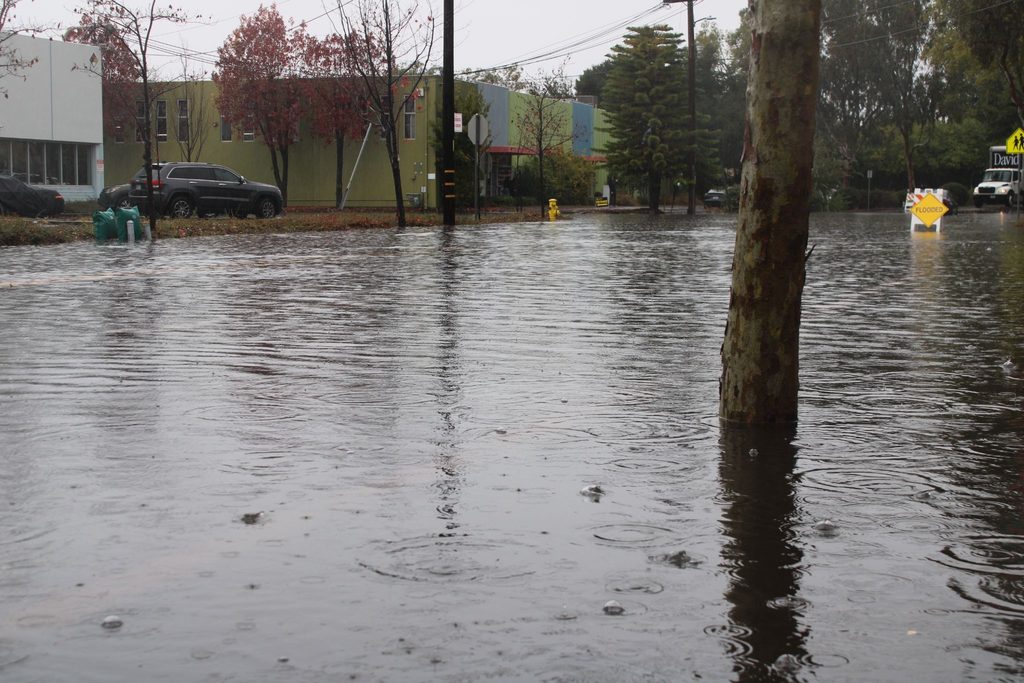
Underdeveloped infrastructure in EPA poses an additional major problem. “It costs a lot to update your roads and the storm drains, and [EPA] is long overdue for those kinds of things. Other cities that are more well funded, like Palo Alto, have had the opportunity to update their storm drains,” Lang said. “[EPA’s] storm drains just aren’t prepared for this. Their power grid is also not prepared for an El Niño. Not having resilient infrastructure is really scary.”
Historic contamination issues are likely to resurface during El Niño. There are over 150 registered hazardous sites in EPA, the key ones being the former Romic Environmental Technologies waste facility and former landfill Cooley Landing.
Nidhi Baid, a climate data lead and environmental resources engineer, conducted a study with CRC concerning the impact of flooding on contamination in EPA.
For Baid, the number of contamination sites is disturbing. “I would have the concern about the number of sites in such a close proximity,” she said.
Contaminants can spread through urban runoff, water that flows over impervious surfaces instead of reaching sewers. “Runoff is created when the sewer system is not able to handle the rainfall, and most of the time, that [water] may contain pesticides, per- and polyfluoroalkyl substances (PFAS), and other contaminants as it goes through,” Baid said.
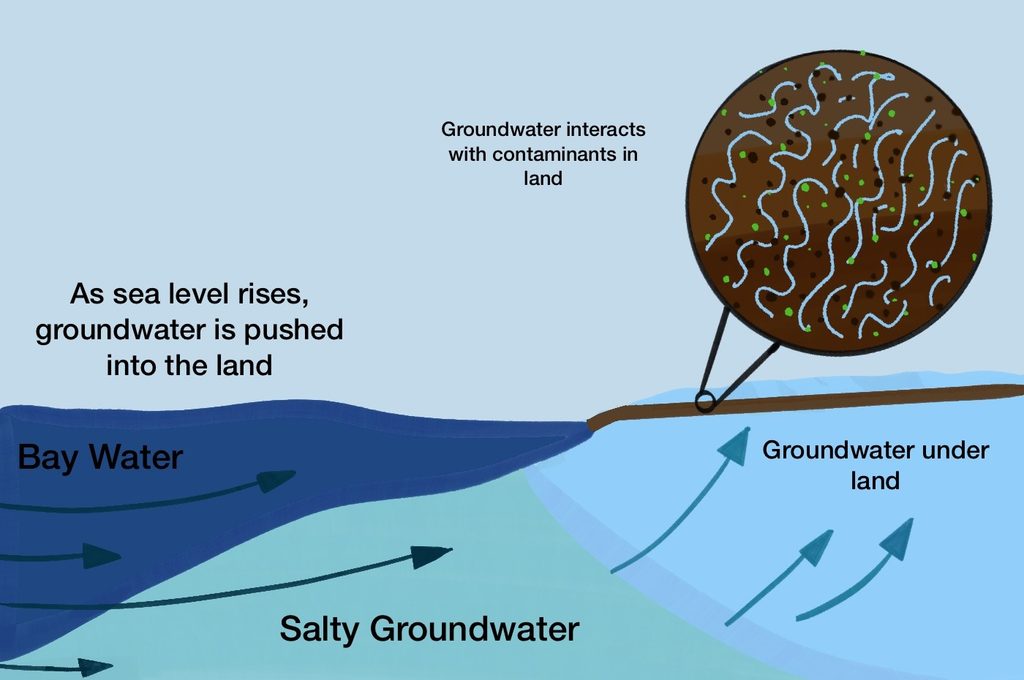
Groundwater, water trapped in small pockets of land, can rise and disperse contaminants in the surrounding area. This phenomenon is often triggered by water level rise. “Those layers where we had kept those contaminants, they may be exposed to water,” Baid said. “Water is a transport mechanism. It can take those contaminants and transport them around.”
Environmental damage risks contributed heavily to the historic redlining that pushed minorities into living in EPA. “Redlining is a systemic infrastructure decision that was made over 100 years ago, where communities of color were assigned to live in places where the land was not going to be valuable,” Lang said. “This made it illegal for Black families to own homes in the upland areas of San Mateo County, where it’s physically safer and further removed from San Francisco Bay.”
“That has historically set the precedent for why there’s more communities of color in EPA and in a lot of places between Highway 101 and the San Francisco Bay,” Lang added. “A lot of those communities are relatively low income and cannot be financially preparing for this El Niño or any other climate disaster.”
Preparation is a concern all across the county, so the SMCEM is changing its process to prepare for the strong weather. “Most years, we may wait until September or October. This year, we started [preparations] in July,” Ryan Reynolds, Assistant Director of SMCEM, said.
One of the most important things SMCEM stresses is the importance of preparing a go bag, which should contain items like a change of clothes, medications, and water. “The go bag is designed to make you more comfortable in a chaotic and uncomfortable situation,” Sandra Firpo, Emergency Management Coordinator for SMCEM, said. “It’s not going to solve all your problems, but it is going to make you considerably more comfortable, and that’s the key.”
Despite the challenges, Lang sees community activism as a way for EPA to ensure a comprehensive response to El Niño. CRC hosts a Climate Change Community Team (CCCT) in EPA every second Thursday of each month, where they discuss disaster preparedness. “There’s a lot of organizing going on,” she said. “This is something the whole city needs to be a part of.”