Canning season has arrived, and class, club, and sports rivalries are in full swing.
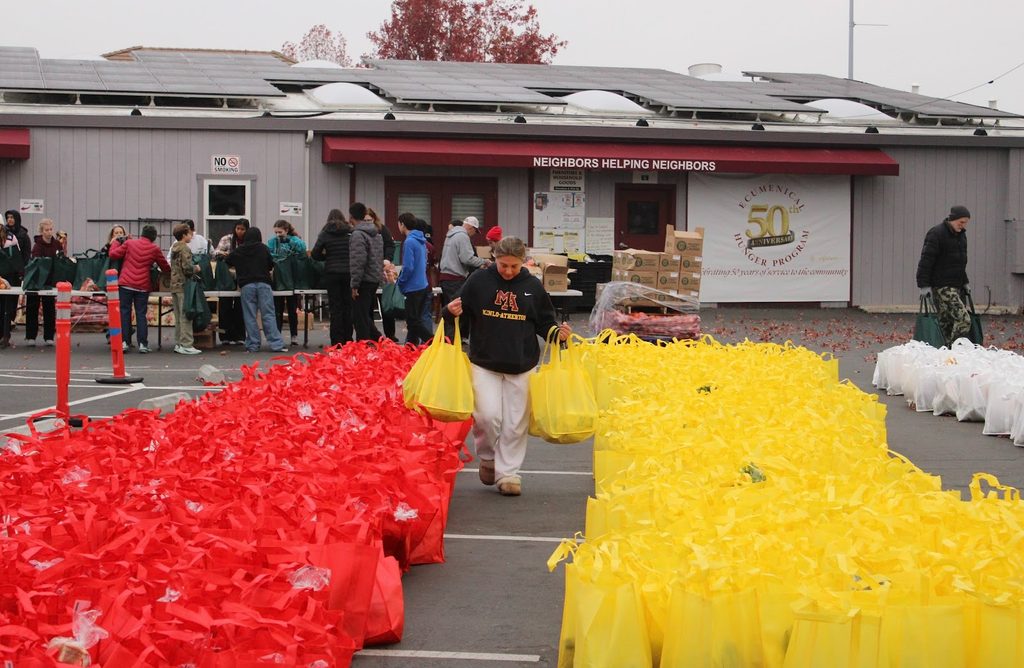
Since Coach Ben Parks started the Canned Food Drive (CFD) 27 years ago, it has been a monumental school tradition. Throughout November, students collect cans and monetary donations from shoppers at local grocery stores and later distribute food to hundreds of families on Distribution Day in partnership with the Ecumenical Hunger Program.
When students bring in cans, they choose between donating to their fourth-period class, a sport, or a club. The winners receive a catered lunch, M-A merch, and other prizes.
In 2025, the CFD brought in a record-breaking 420,336 pounds of food, exceeding the goal by 40%. This year, however, it is unclear whether the goal of 450,000 cans will be reached. 28 days in and with just five days remaining, only 167,464 cans—37% of the goal—have been collected.
Classes
The class competition and catered lunch are additional motivators to collect donations. Many teachers reward students’ canning efforts with extra credit points or notecards, while others simply encourage students to go canning to help reach the school goal.
AP Computer Science Principles and Pre-Calculus teacher Tomiko Fronk is in the lead for the class competition with 9,549 pounds of food collected as of Nov. 25. Fronk’s class, as well as Pre-Calculus teacher Laurel Simons’ class, receive a notecard on their final, with the size based on Fronk’s class’s placement. If they place first, the classes are allowed a full sheet; second place gives half a sheet, and with third place they receive three-fourths of a notecard.
AP Computer Science A teacher Cindy Donaldson, whose fourth period class is currently in second place with 5,022 cans, excuses one homework assignment for every 100 cans that her students collect. “The reason that I feel that’s appropriate is because school is not just for learning about academics; it’s also for learning about community and society. So, by putting yourself out there to advocate for other people and help other people’s lives be better, you’re learning a lot about the world,” Donaldson said.
Even without an incentive, Chemistry and AP Environmental Science teacher Lance Powell’s fourth period class has had success this canning season, in third place with 4,634 pounds of food. His main motivation in the canning competition is trying to reach the goal his class set. “When we say something, you got to do it, and so that was the one thing I really emphasized this year. Don’t say something if you don’t mean it,” Powell said.
“I feel that the best part of America is the way that our schools encourage community and collaboration, and that this is one way that our school engages with that and helps people understand that it’s not just about the individual; it’s about society,” Donaldson said.
Clubs
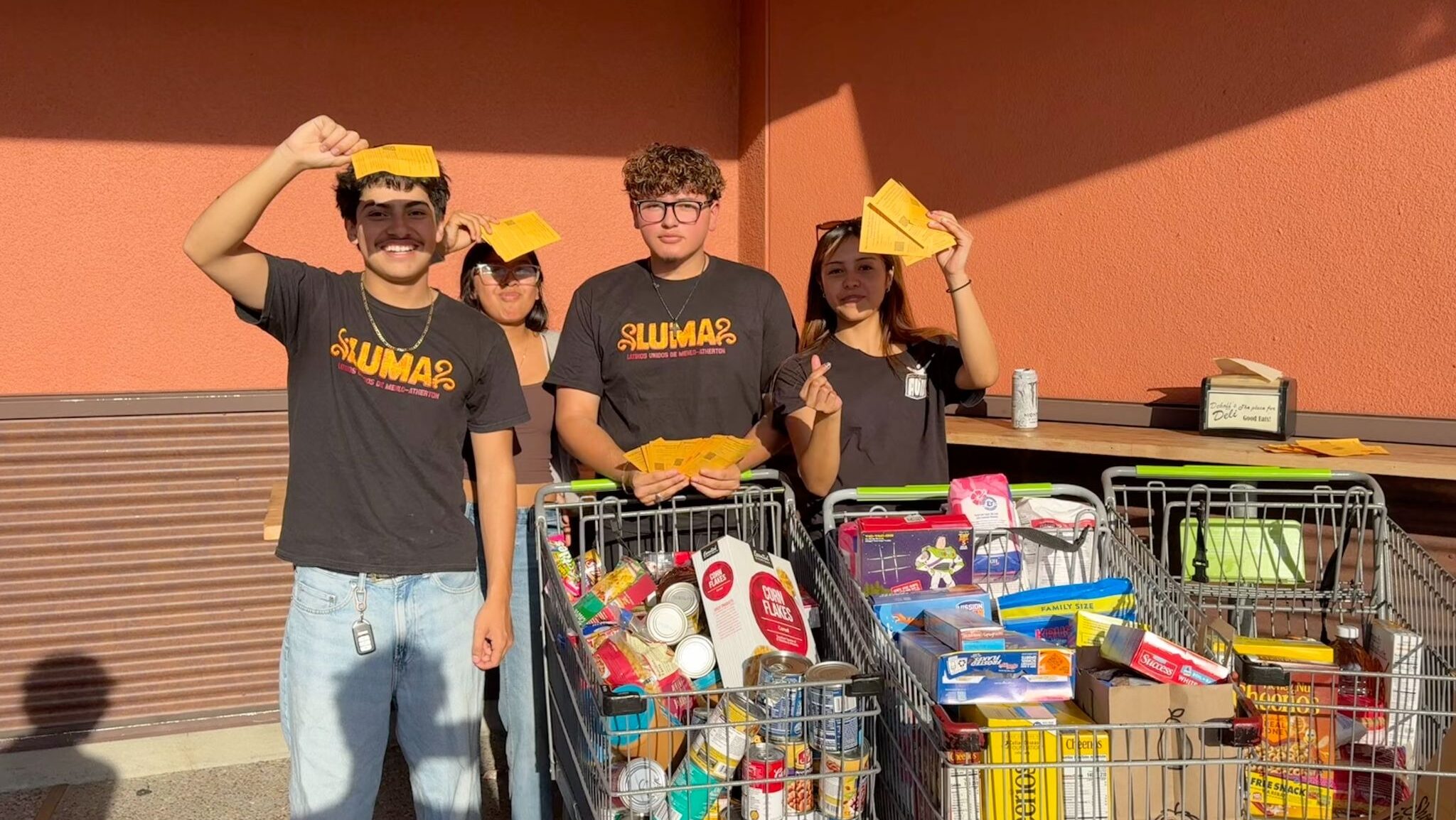
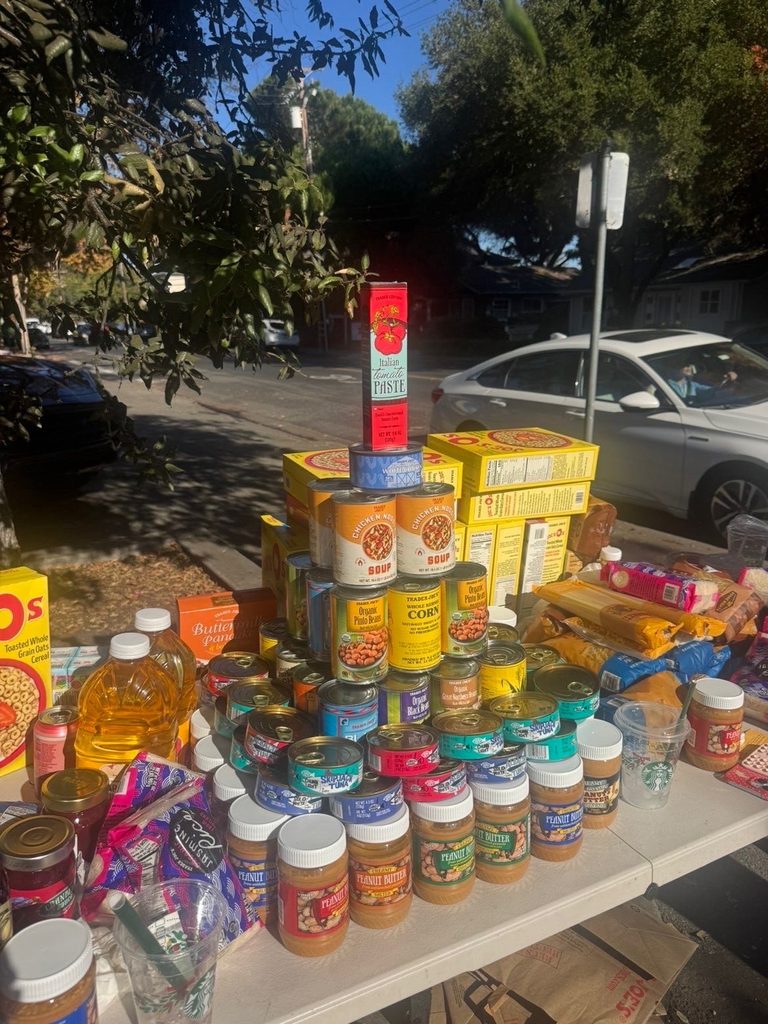
Spirited clubs go head-to-head in their competition, with many using their meetings to encourage members to go canning. The Asian Culture Club is leading the club competition with 3,958 cans, followed closely by the Pickleball Club, History Club, and Latinos Unidos de M-A (LUMA) with 2,952, 1,592, and 1,294 cans, respectively.
“A couple of our board members who are in Leadership, we went on Veterans Day to Key Market, and we did 13 hours of canning. So in that one day, we got about 1,800 cans, so that definitely contributed a lot to our success,” junior and Asian Culture Club Co-President Colin Chien said.
For Chien, canning’s importance spreads far beyond the competition. “It’s really just a great way to learn how to use your time. I think every hour that you spend canning, you have to start to realize how important every second is. You get to help someone, you get to talk to new people,” he said.
LUMA also encourages its members to go canning to support the community. “It’s the community I grew up in, and a lot of people in LUMA grew up in. So it’s really nice to continue a cycle and just help out,” senior and LUMA Vice President Jose Guzman said.
Sports
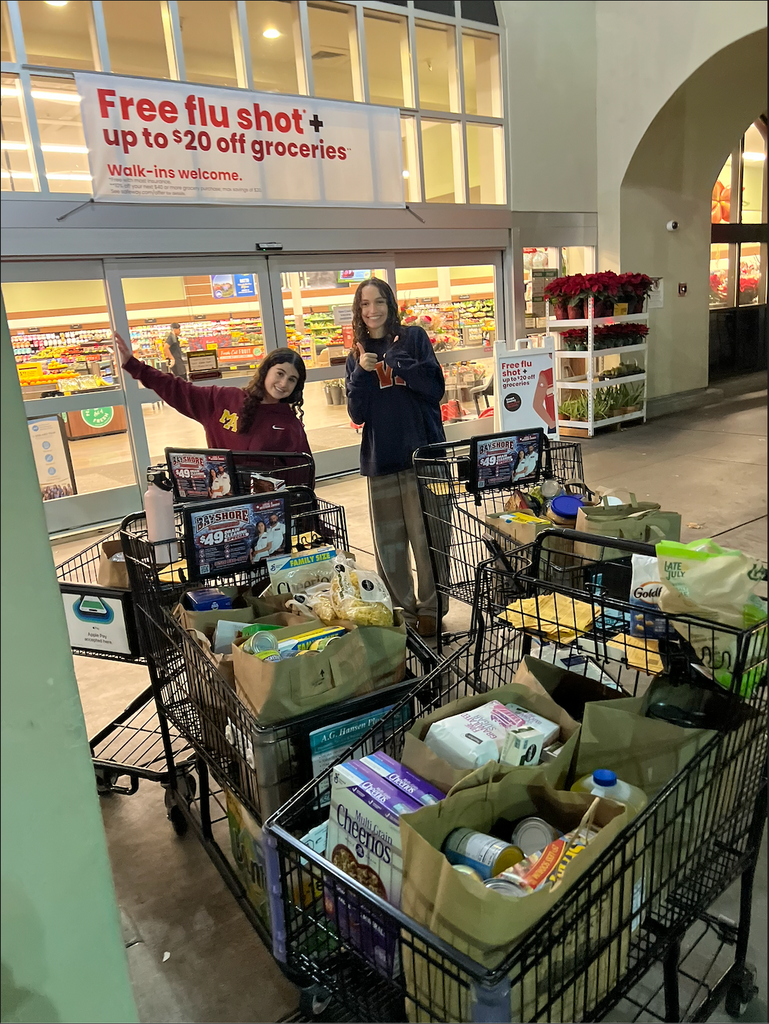
The cross country team is leading the sports competition with 18,480 cans, followed by the dance team with 13,398 cans.
The dance team’s coach and captains encourage them to go canning each year. “We usually all try to can just for the love of the game and so we can bond with our teammates, but our coach also likes to give us an incentive to do so,” junior and dance team captain Sara Martinez-Fernandez said. This year, winning the sports competition means the team won’t have to run laps.
Martinez-Fernandez sees the competition as more than just winning. “Students get involved to try and have their team, club, or class win, but the competition is truly much bigger than who wins. [The competitions] push people to try their hardest to collect more and really impact the families in need,” she said.
The cross country team, who won the competition last year, has continued to be exceptional in their canning, holding first place by more than 5,000 cans.
The last day for students to go canning is Dec. 3, and Distribution Day will be held on Dec. 5 at 8 a.m. at Ecumenical Hunger in East Palo Alto.