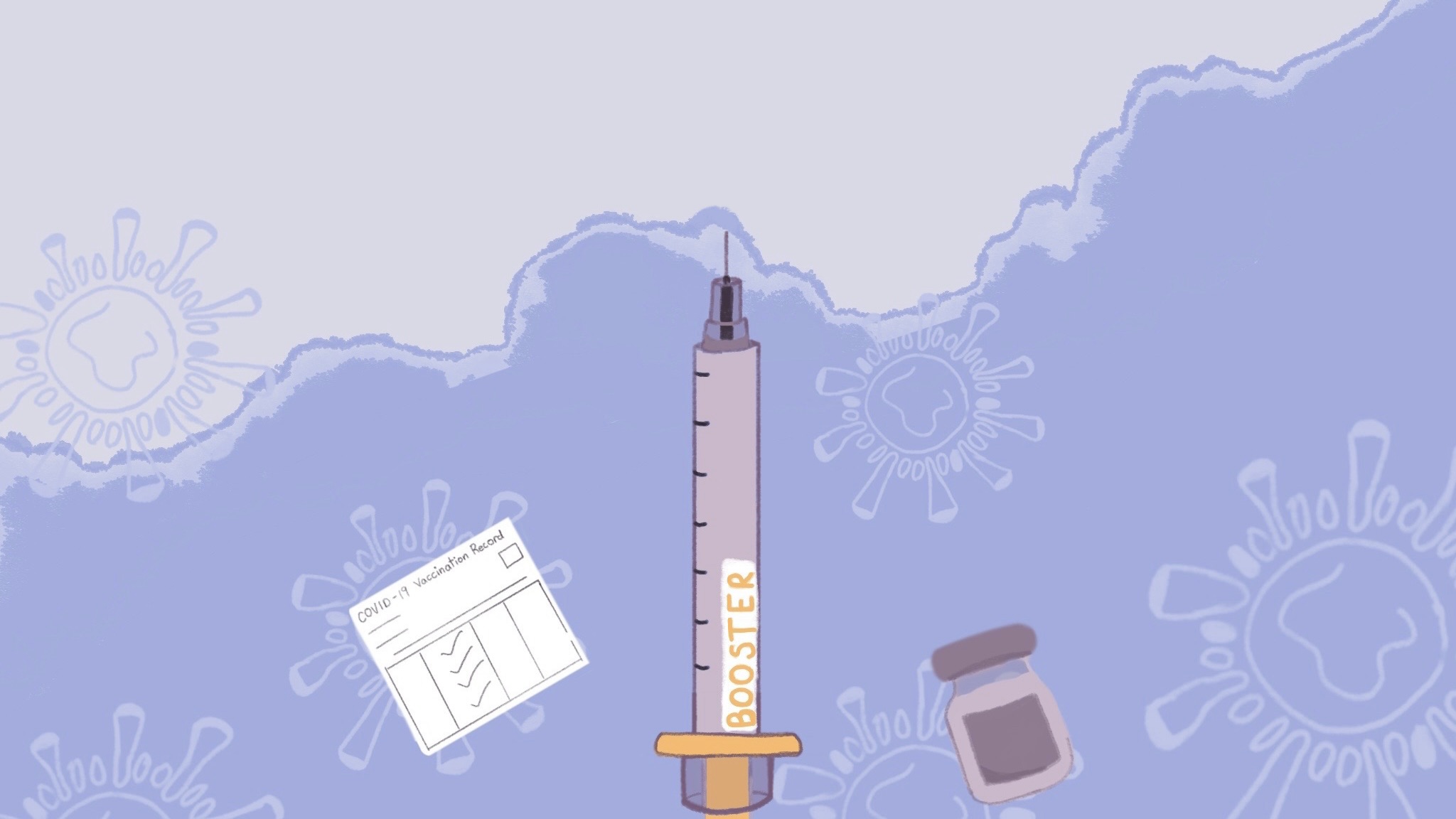
“I didn’t know that it existed,” senior Rosia Yu Ya said about the newest COVID-19 booster. This sentiment is not uncommon at M-A, or in the United States at large.
As of Nov. 2, only 8.4% of the eligible U.S. population had received this booster, and while there is no data on the percentage of boosted students at M-A, the school seems to be following this trend.
The newest COVID booster, the “bivalent booster,” became available to Americans ages 12 and older on Sept. 1. This booster protects against both the original strain of the virus and the more recent Omicron variant. The FDA authorized bivalent formulations from Moderna and Pfizer-BioNTech.
“People should know that the COVID booster is very safe and effective at preventing severe disease and hospitalization or death,” Michelle Sandberg, an urgent care pediatrician at Santa Clara Valley Medical Center, said. “They should also know that it is important to stay up to date on boosters because immunity from vaccines/boosters wanes over time.”
The bivalent booster is the fifth COVID-19 vaccination shot available to Americans ages 50 and older and the fourth to Americans between the ages of five and 49. Prior to the bivalent booster, both age groups could have received two initial vaccine doses and one original variant booster, plus an additional original variant booster for Americans over the age of 50.
The bivalent booster is available and free at local pharmacies, doctor’s offices, and county vaccination sites. Find a nearby location here.
“I knew that it existed but I didn’t know that it existed for our age, so I just never got it,” junior Ian Oden said.
So, what is causing this lack of awareness? There is no certain answer, but declining attentiveness towards the pandemic and poor media communication seem to be contributors.
“Either kids aren’t caring about it, or they just aren’t keeping up with what’s available,” Oden said.
Sandberg cited flawed communication to the public: “I think there could be improvements to clearer and more robust public health messaging. In addition, we unfortunately have a problem with disinformation on social media that has made many people afraid of a very safe, effective, and life-saving vaccine.”
Despite these issues, many M-A students have received the bivalent booster. Both junior Sienna Aylaian, who was boosted at the Santa Clara Community Vaccination Site, and sophomore Kate Barker, who was boosted at a Walgreens, described the process as easy and fast.
While Aylaian experienced no side effects, Barker felt nauseous and hypersensitive after receiving her booster. Still, she would “encourage people at our school to get the booster because it helps you not have as many bad symptoms if you get COVID.”