Across YouTube, Snapchat, TikTok, Instagram, and Facebook, 36% of teenagers report using at least one of these platforms “almost constantly,” according to a recent Pew Research Center study of 1,458 U.S. teens ages 13 to 17. Among the teens surveyed, 61% say they use TikTok daily, and 55% report daily Instagram use.
In a separate survey, 45% of teens involved confessed they spend “too much time on social media.”
There’s no doubt that excessive use of social media can harm teens’ mental health. Constant content consumption increases stress levels, fuels unhealthy comparisons, and perpetuates the “loneliness epidemic” deeply ingrained in society today.
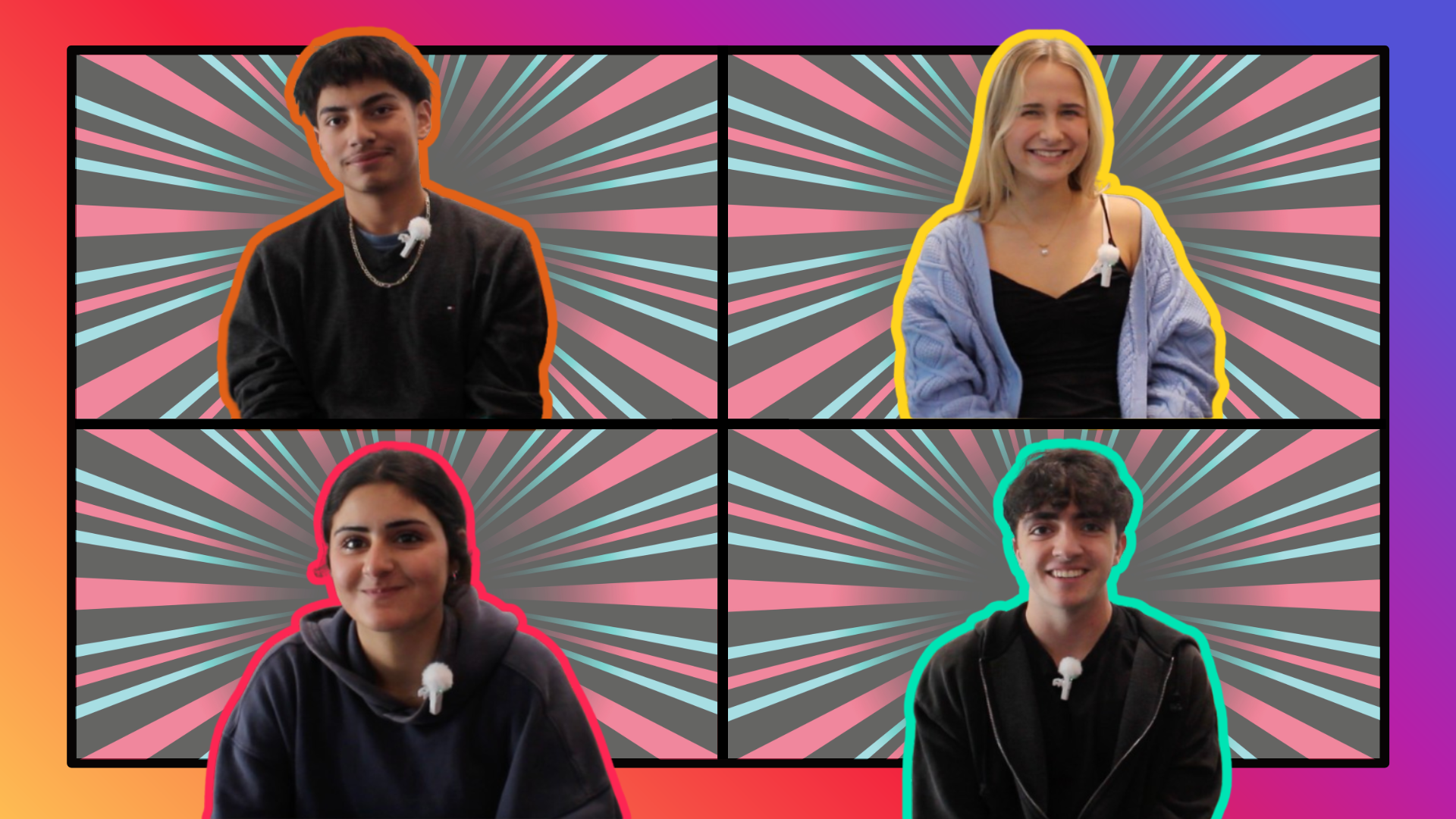
As a high school publication, we are alarmed by these jarring statistics, and our generation’s dependence on social media. In response, The M-A Chronicle conducted a two-week social media detox involving four students. We wanted to understand what eliminating social media does to teens’ daily lives—including how it impacts their routine, focus, stress levels, and sense of connection with friends and family.
Our participants deleted all social media apps, including YouTube, Snapchat, TikTok, Instagram, Facebook, and X, sent nightly screen-time check-ins, and completed written forms and a video interview to track their progress. Here’s what we found.
Daniel Matloub
Senior Daniel Matloub decided to participate in the social media cleanse after having long been interested in reducing his screen time. “I’ve always thought a detox would be a good idea, I just never had a large enough reason,” he said. “I want to make it so that social media is not a habit, not something I consistently use every day.”
“I think leading into this, I didn’t think I could just function without social media. That sounds a little sad, but it felt like something that was almost a necessity, and I didn’t really have a reason to get rid of it,” he said.
In the week leading up to the cleanse, Matloub spent a daily average of four hours and 42 minutes on his phone. His most used apps were Google, Instagram, Clash Royale, and Snapchat. “I often go to social media to relax or feel more connected, which definitely works. However, I do think it takes me a while to move on from it as a distraction afterwards,” he said.
In preparation for this cleanse, Matloub was most concerned about losing a sense of connection and communication with others. “I have [the fear] of not being able to see what everyone else is up to,” he said.
With social media eliminated from his daily life, Matloub wanted to focus more on his academics, living in the moment, and filling his time with more meaningful activities like exercising and reading.
On the first day, Matloub’s phone screen time went down to one hour and 36 minutes. He felt, for the most part, the same. “I think I feel pretty normal,” he said. “I do feel like something is off, and I can’t tell what. It was a pretty stressful day, and I don’t really have social media as a tool to relax, which is annoying. I think I use social media to distract [myself] from annoying realities of my life, but I have to face it right now, which is uncomfortable.”
By the second day, Matloub found it easier to focus on his homework. While he experienced occasional withdrawal-like feelings for the first couple of days, he noted they resolved faster as the challenge continued. “[I noticed] general increased happiness and satisfaction, though occasional, infrequent moments of frustration,” he said.
In his first week, Matloub averaged two hours and 51 minutes of phone screen time per day. His most used apps were Safari, Messages, Spotify, and Notes.
About a week and a half into the challenge, Matloub noticed a shift in his communication with others. “Before I was communicating with a lot more people. For example, Snapchat, I would mass snap everyone once a day and Instagram, I would just scroll on stories, but now it’s more meaningful connections,” he said. “People actually reach out, or I can reach out to [them], and those are the people that I actually have in-depth conversations with.”
Despite the benefit of an increase in more genuine communication, the fear of missing out has remained Matloub’s greatest challenge. “I really miss being able to see what is going on in specific people’s lives, but I don’t miss the time drain that it is,” he explained.
“It’s not that bad compared to all of the good that I’ve had come out of this detox,” he added. “I’m on top of my homework, [and] my grades are improving, so I think overall everything is going a lot better than it was before.”
As checking social media platforms becomes a routine behavior for teenagers, the urge to pick up their phones—even during a detox—is inevitable. “This is an everyday thing for me where I’ll get home, I’ll lay on my bed, and then I’ll reach for my phone, because that’s a habit that’s instilled in me,” Matloub said. “Now I open my phone and I don’t have it on my phone, so it’s not really something I can do anymore.”
In place of using social media to relax, Matloub has embraced healthier alternatives. “I’ve started making to-do lists of what I can do instead,” he explained. “I think at moments that I’m like ‘I just really need to take a break,’ I’ll listen to music to just clear my head instead of scrolling.”
With a week and a half left to go, Matloub aimed to recommit to the strict discipline he had at the beginning of the detox. “I almost want to go back to how I was at the beginning, because I feel like as this challenge has gone on further, I have started shifting into some old habits where I’m like “okay, let me hop on my phone’ and then I’ll just try to scroll on Spotify,” he said. “I don’t think that’s as productive as the beginning where I was actively trying to stay off my phone.”
In the last five days, Matloub averaged three hours and six minutes of phone screen time. His most used apps throughout the cleanse were Safari, Messages, and Spotify.
Matloub noted that the experience has forced him to rethink how social media fits into his daily routine. “It’s made me consider how I can get these social media apps back while also maintaining the balance of work and productivity that I have right now,” he said.
A few days after completing the challenge, with social media reinstalled, Matloub felt more “controlled” in his usage. “I often will be scrolling on my feed on Instagram and scroll onto a reel that forces me into scrolling [more],” he said. “I think Instagram is designed like this, to literally seamlessly transition you into doomscrolling. However, it has become unbelievably easy to stop myself, usually after five reels at most.”
“I think I’ve developed a newfound confidence in my ability to have [social media] but stay off of it,” he added.
After reintroducing social media, Matloub noted that his focus and productivity have remained steady, and that he feels less stressed overall. He also has been reading more than ever before.
The hardest part of adding social media back into his life, Matloub discovered, was feeling overwhelmed by the amount of content he had missed—though he quickly understood its insignificance. “[I realized] how very little actually happened on social media those past two weeks, or at least, how very little actually mattered,” he said.
In reflection, Matloub believes that the real issue with phone use isn’t our access, but how routine it has become for teenagers. “I would say the biggest issue isn’t that we have it, it’s more that it’s become built into our habits. Most kids nowadays when they sit down they just turn to their phones and start scrolling, and I think that’s the harmful aspect of it,” he said. “I don’t think having the connection with other people is harmful, I think relying on it as a way to relax or as what you do with your free time, rather than turning to more productive methods, is what’s actually hurting kids right now.
Matloub’s advice for students interested in participating in a similar cleanse: “Have other people hold you accountable. I think this challenge has really helped with that, where it’s a matter of I have to report my social media everyday, and so other people get to see my social media.”
Atessa Gholamy
In the week leading up to the detox, junior Atessa Gholamy averaged ten hours and 31 minutes of phone screen time per day, with approximately 59% of that time spent on TikTok, Snapchat, and Instagram.
“Typically I’d consistently use social media several times a day, mostly on my phone. I would regularly check and be active on several platforms daily,” she said.
Gholamy joined the cleanse to see how it would affect her daily life and help her become more focused. “I thought that it would be interesting to see how it impacts my life and I felt as if I was spending more time than I’d like on my phone and on social media especially,” she said. “I guess it’s something I’ve always thought about doing, but I’ve never took any action.”
Similar to Matloub, Gholamy was most concerned about losing connection with her friends—including sending messages, sharing videos, and being up to date on “cultural references.” She also noted a fear of missing out, specifically from not being able to see her friends’ “Spotify Wrapped” on Instagram.
Ahead of the detox, Gholamy hoped to reduce her reliance on her phone and spend more time focused on school and her personal well-being.
Gholamy explained that the first day was difficult, spending a total of six hours and 17 minutes on her phone. “There were times where I’d go to where the apps were before I deleted them to open them as muscle memory and it sucked not being able to open the app whenever I had the urge to,” she said. “Overall, it hasn’t been extremely terrible. There are moments that are better than I expected and moments that are worse.
Two days in, Gholamy felt calmer, though she still experienced stress. “I think I feel less anxious overall, however there are still stressors in my life like school or tests,” she said.
“My sister texted me saying she noticed my absence on Instagram because I wasn’t sending her anything, but I think overall it hasn’t been drastically that different,” Gholamy said.
With social media absent, Gholamy redirected her time toward homework, Netflix shows, mobile games, cooking, and baking. In the first week, she averaged seven hours and 11 minutes of phone screen time per day. Her most used apps were Netflix, Messages, Candy Crush Saga, Spotify, and Tetris. “I think the hardest thing was just getting out of the routine of opening the apps and checking my notifications, and I think the easiest thing is I feel like I have a lot more time,” Gholamy said.
“At the beginning I felt really dependent on it, and I would open my phone and I just wouldn’t have half of the notifications that would normally be there, but over time, now that it has become a lot more normal. I feel like I’m not as dependent on it as I thought I was,” she added.
In regards to her communication with others, Gholamy was pleasantly surprised. “Before the detox, I didn’t really use Snapchat as my main form of communication, and a lot of my closer friends knew that if they wanted to reach me, they would text me,” she said.
In the second week, Gholamy spent an average of seven hours and nine minutes on her phone per day. Her most used apps were Flow Free, Messages, and Netflix. “I think I miss just being able to mindlessly scroll sometimes, but, at the same time, not being able to scroll has forced me to do a lot more of the things I need to do and has for sure made me become more productive,” she said. “There’s nothing new that would be on my phone, so it kind of forces me to actually start an assignment.”
Gholamy noticed her mood changing for the better. “Not being online feels like my head is clear, like it’s one less thing I have to worry about. I’m able to focus on homework or things that are more important,” she said.
Following the two-week cleanse, Gholamy kept her social media apps deleted until the end of finals, extending the detox by three days. Once they were redownloaded, she noted her attention had shifted and she wasn’t as occupied with mindless scrolling. “I’ve enjoyed being able to see what my friends are up to, especially ones I don’t see often or on a daily basis, but random people on my FYP don’t really grab my interest right now,” Gholamy said.
“I learned a lot about what I get from being on social media and how much or how little I really need it,” Gholamy said. “There were times where I wanted a distraction, but overall it was never extremely difficult, especially after I got used to being off of it.”
Looking back, Gholamy believes the biggest issue with social media use is information overload. “Now that I’m not scrolling every day, my head feels a lot clearer and it feels like I have less things to think about,” she said. “It’s a lot easier to concentrate on things.”
Gholamy’s advice for students interested in participating in a similar cleanse: “Start a few shows or find a new form of entertainment that is not short form like TikTok. It’s something you can get invested in.”
Jose Guzman
Junior Jose Guzman wanted to participate in this cleanse out of a mix of curiosity and concern. “My friend told me to do it, but I also really wanted to do it because I realized how much time I’ve been on social media and how much it wastes my time,” he said. “It affects me both in school and around my friends.”
The week before the cleanse, Guzman averaged 10 hours and 57 minutes of total screen time across all devices, with about five hours and 38 minutes per day spent on TikTok alone. His other most-used apps were Instagram, Messages, and Youtube. “I would be active on social media almost every hour,” he said.
The day before the detox began, Guzman recorded a total of nine hours and 12 minutes of screen time, including about two hours on TikTok.
In joining the cleanse, Guzman hoped to improve his focus in school, and pay more attention to his family and friends, although he was primarily concerned with missing out. “Something that worried me was keeping up with stories and what people are doing,” he said. “I’m gonna miss out on some stuff and not be with the times.”
On his first day, Guzman spent three hours and 23 minutes on his phone. His most used apps were AI homework helper Gauth, Messages, and Prime Video. “It went better than I expected,” he said. “I did try going back on [social media] as a reflex and realized it was gone and wasn’t in the usual spot on my phone, which gave me weird vibes.”
Two days in, Guzman felt “100% boredom,” but replaced his usual time on social media with activities like walking, practicing for track, and studying. “I have been cleaning more, going ahead in homework, studying more often, talking to friends more, spending more time with family, and creating new things so I’m not bored,” he said.
While Guzman missed the entertainment and humor of TikTok, he did not miss how it used to distract him. Instead, he has noticed a shift in how he experiences distraction. “I still get distracted, but it’s not from my phone. If I’m getting distracted it’s because I realize I have other work I have to do, so it’s more beneficial,” he explained.
In the first week, Guzman averaged six hours and 20 minutes on his phone, consistently using Messages, Apple Music, and Prime Video the most. “So far it’s been going great actually, way better than I expected,” he said. “What surprised me about this cleanse so far is how calm I am now. I thought I would be more anxious about missing social media.”
Guzman also observed a change in how he communicates with others. “I noticed I talk more with friends and family and go out with them and call them more often,” he said.
He added that simplifying how he communicates has also made the detox less stressful. “It’s been less stressful because now people who have my number are the only people who I need to text,” he said. “Friends that text me ‘oh did you do the homework’ don’t text me anymore because they don’t have my number, which makes me less worried.”
His mood is more energetic and steady, yet naturally, still contains some stress. “I’m happy and proud mostly that I made it and that I’m spending less time on social media and on my phone,” he said. “My stress is kind of the same, but it’s changed on why I have stress. Now I just focus on my room and school, but before it was on my phone and what’s on social media right now.”
In the second week, Guzman averaged about five hours and 45 minutes on his phone, reducing his screen time by 35 minutes from the previous week. “Overall, this social media detox has shown me how much I do not need social media. I realized how much time I have wasted and I have so much better things to do,” he said.
Guzman plans to limit his future social media use. “After this challenge I don’t think I’m gonna redownload TikTok, I think I’m only going to redownload Instagram and YouTube, because Instagram I can text people, but TikTok is pure videos that don’t really help me,” he said.
Following the challenge and reinstalling some of his social media platforms, Guzman primarily used them to communicate and share updates rather than to consume endless content. “After ending the detox, I’ve used social media only to text or post about my life, but I haven’t watched videos or doom scrolled like I have before,” he said. “I have noticed zoning out once I got on social media, and ignoring anything around me, but I’m able to catch myself and stop.”
“The biggest benefit I see from taking a break from social media has to be having more time on my hands. It really showed me what I could be doing instead of being on social media,” Guzman added.
Ultimately, Guzman believes the biggest issue with social media consumption stems from how endlessly consuming content affects users’ time and attention. “The biggest issue is dopamine and the doom scrolling,” he said. “I don’t think Instagram and posting stories or texting affects people as much, but TikTok and doomscrolling wastes time and is not really great for us.”
Guzman’s advice for students interested in participating in a similar cleanse: “See what takes a good chunk of your time and replace that with something else that will affect you more than social media, because social media can’t do anything in the end.”
Penelope Chapman
“I feel a lot better than I thought I was going to be. I’ve had all my social media since sixth grade, but I’ve honestly felt a lot calmer and less anxious than I thought I would,” senior Penelope Chapman said.
Chapman joined the challenge to help improve her mental well-being. “I wanted to see if it would help my anxiety,” she said. “I also know people that don’t have social media, and I feel like a lot of those people are some of the coolest people ever.”
In the week leading up to the cleanse, Chapman averaged 11 hours and 33 minutes of screen time across all devices. The day before the challenge began, she spent four hours and 31 minutes on her phone, with about one-third of that time on TikTok. “I used social media every day, but TikTok has always been my leading app by far,” she said. “I usually gravitate towards it because I feel like it’s much more personal than Instagram and I enjoy making collections of my interests but I often end up overusing it.”
“I always go on social media right when I wake up or right before I go to bed, which I think affects my subconscious regardless of how much I use it during the day,” Chapman added. “I post on TikTok sometimes, but I excessively post on my private story on Snapchat for pretty much everything that comes to mind, and I want to change that impulse.”
In anticipation of the cleanse, Chapman was worried about managing stress without the distraction of her phone. “I am definitely worried because college decisions are about to come out. I know my stress levels will be higher, so I might have to find something else to distract me if I suddenly get really anxious because my phone is so accessible,” she said.
Chapman spent 48 minutes on her phone on the first day, followed by two hours and 17 minutes on the second day. Her most used apps were Google, Messages, Photos, and Pinterest. “I scroll on Pinterest sometimes when I can’t scroll through Instagram. I definitely think it’s a lot better for my mental health in general,” she said. “I just love Pinterest and it’s more inspiration based, but it’s not impulsive and I don’t feel like I need to be on it for a certain amount of time.”
Without social media, Chapman reintroduced reading in her daily routine. “I read every night before bed, which was a habit I used to do a lot when I was younger, but I fell out of it,” she said. “I just blamed it on being busy or having more school work, but I picked it up again even though I have a lot of work.”
Chapman noted that Snapchat was what she missed most during the detox. “I usually text all my friends on Snapchat and I post on my private story a lot, so I haven’t been able to do that,” she said.
“I miss my niche interests and videos about writing and fashion that I am passionate about. I really like the youth culture behind sending your friends Instagram reels back and forth and I genuinely think it’s something to cherish,” Chapman added.
She also noticed a shift toward more intentional communication. “I’m texting everyone on iMessage, which I honestly like a lot more. I posted something right before I deleted my Snapchat saying ‘Hey text me I’m not gonna have social media for a while’ and everyone kind of reached out,” she said. “It’s lower maintenance, it’s nicer, and it just feels more genuine as well.”
Halfway through the challenge, Chapman found herself communicating more effectively with her parents. “I’ve noticed that I talk a lot more to my parents or I want to have more conversations with them,” she said. “We have longer conversations at the dinner table, and I feel myself wanting to slow down more and listen to people more. I feel like I can listen to people a bit better and respond more genuinely.”
In her first week, Chapman averaged two hours and 47 minutes of phone screen time per day and described feeling a clear shift in her mood and overall well-being. “I genuinely feel happier and calmer,” she said. “I feel like a lot of people say social media causes over-comparison which I always knew to be true but I didn’t think a lack of scrolling would make me feel this relieved.”
Prior to the challenge, Chapman used TikTok Shop to make purchases. Now, she is more mindful of her spending because she doesn’t have access to the app. “I really don’t miss a lot of the advertising. I’ve saved so much money, which is so scary to think about how easy it is to give into that. Every other video on TikTok is for TikTok Shop, and I bought so much stuff,” she said. “I obviously don’t have access to that right now, and I’ve saved a lot of money.”
In her second and final week, Chapman averaged three hours and three minutes of daily phone screen time. While her average slightly rose from the first week, Chapman continued to feel the positive effects. “The biggest difference is I’ve felt a lot less anxious,” she said.
After reinstalling social media, Chapman found herself using it more intentionally. “My screen time is definitely higher than when I was on the detox but less so than before it,” she said. “My Instagram and Snapchat time specifically are around 15 minutes each per day, which is a huge step for me.”
The best part was having a clearer mind, and the worst part was how hard it was at times,” Chapman said. “I thought overall it was pretty good and I would do it again but at certain times it took more discipline than I thought it would.”
Chapman believes the main issue with society’s social media consumption is its impact on attention spans and how young people engage with offline life. “I think the biggest issue is the reward system it has created for young people, where normal hobbies are now seen as a form of discipline and that it is now out of the ordinary or above and beyond to read books, paint, and have offline hobbies,” she said. “I think this is dangerous and will have long term effects on our capacity for attention in the future and as adults that will take a lot of work to break away from. I worry about our capacity for long-term relationships and remaining satisfied with a long-term job because the idea that we can always have more is instilled into our brains.”
Chapman’s advice for students interested in participating in a similar cleanse: “Don’t pressure yourself into being productive all the time or trying to change your entire routine. I think the harm around traditional offline cleanses comes from a pressure to be hyper-productive which is why we avoid it but it doesn’t have to be the case. In the first few days when I was first adjusting I filled a lot of my social media time with just watching movies, which kind of tricked my brain into experiencing passive entertainment but without the dopamine hits.”
Initially, we expected this experiment to be challenging for all participants, regardless of their initial social media use or amount of free time. Given how much these dopamine-driven apps are ingrained in teens’ daily lives, we predicted that completely abandoning all apps would be no easy feat.
All four students involved come from various backgrounds, take different classes, and balance numerous extracurriculars and out-of-school commitments. Still, each completed the two-week challenge successfully.
In Google Form check-ins and an in-person interview, participants reported similar experiences in the first few days, including minor withdrawal symptoms such as relentless and habitual phone-checking, as well as a lingering concern about losing touch with friends. However, as the challenge continued, many noted these feelings gradually faded away, suggesting only a brief adjustment period rather than lasting distress.
By the end of the week, students shared that they now maintained more meaningful relationships with their friends and family, positive shifts in their habits and mindset, and a newfound appreciation for the time they had lost to scrolling.
While our experiment was conducted with guidance, its results open up a new perspective on social media usage: it is possible to live without it, and you can too.