


“Whether we’re charging our cell phones, a computer, or a dishwasher is plugged in, it is drawing electricity,” AP Environmental Science teacher Lance Powell said. Through the nighttime, the weekends, and vacation days, energy continues to be drawn through M-A’s electronics even when they are switched into sleep mode. Projectors, microwaves, clocks, and cables pull power while shut off, quietly adding to M-A’s electricity bill.
This concept, known as “phantom wattage,” emerged as worldwide electronic use increased. Professor and Senior Scientist Alan Meier studied electricity use in homes and found that appliances kept using power while switched off, or idle, calling the idea “standby power.” This phenomenon later became more commonly known as “phantom wattage.”
A device called a Kill A Watt is used to measure phantom wattage. Teachers can plug turned off appliances into the Kill A Watt, which measures the amount of energy being processed, even when the appliance is off. An unplugged microwave at M-A draws two watts. A computer charger disconnected from a computer but plugged into the wall, two watts. A printer, 2.5 watts. Assuming these devices are used for around 10 minutes per day, power use by idled electronics during the remaining time adds up to approximately 60,800 watt-hours per year.
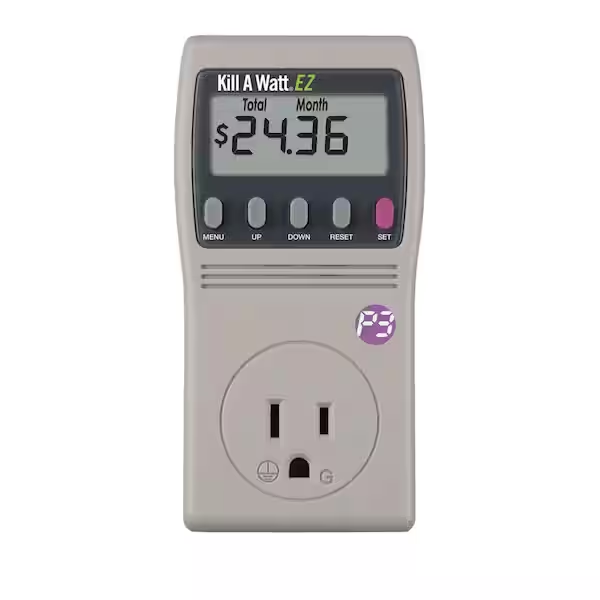
“It’s not a lot [of power], but if you take a little and you multiply it by a big number, it starts to become significant,” Powell said. Across hundreds of classrooms and offices, this small, steady drain adds up to significant energy use and costs for the school.
The U.S. Department of Energy shows that devices in standby mode can use energy equal to five to 10% of a typical building’s total electricity use, simply because they remain plugged in or inactive.
“The last [PG&E] bill I saw [for the school] was around $36,815 a month,” Powell said. Of this total cost, Powell believes a meaningful portion of this bill is due to phantom wattage. If controlled, the likely thousands of dollars being used by phantom wattage could be used to fund the school being in other, more productive ways.
What happens at M-A reflects a much bigger pattern of wasted electricity around the world. “When we’re thinking about trying to reduce our fuel usage and reducing our carbon footprint, we want to make our appliances more efficient, and we want to use them less if we can,” Powell said. For M-A, simple changes can lead to real savings.
Turning off power strips at the end of the day, unplugging unused chargers, and setting clear rules for outlet use over breaks would cut wasted energy. These steps cost little to start and would lower M-A’s electricity bill over time. Reducing phantom wattage would free up more money for classroom advancements, programs, and resources students use every day.


Spot on. Very well researched and written. There is no buffer for electricity waste at a time when electricity demand is skyrocketing due to multiple factors. Thanks for shining a light on this phantom, Piper.