

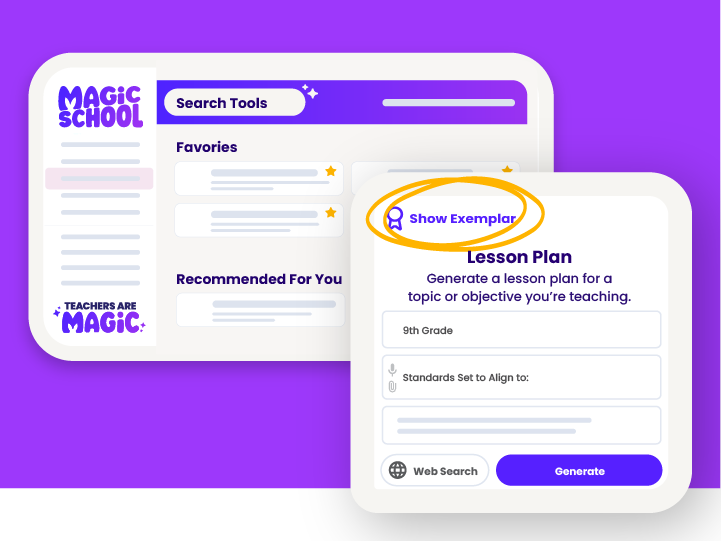
After two years of uncertainty surrounding AI, the District is cautiously adapting to it this year, with administrators encouraging teachers to embrace and explore AI tools that can help create class materials. Last year, the District launched a pilot program at its high schools, where teachers were asked to try out two AI platforms: MagicSchool and Brisk.
By the end of the pilot on Nov. 18, teachers found MagicSchool’s features more useful, and in January, the District decided to adopt MagicSchool across the district. Since then, there has been a gentle nudge on teachers to experiment with the various features on MagicSchool to make lesson plans, provide feedback, generate different versions of problems, and perform other classroom tasks.
As technology coordinator John Giambruno noted, there is no general guidance, but teachers should approach AI with the same scrutiny they apply to any other tool, ensuring transparency and accountability. “Treat it as a new hire, be skeptical, and doubt almost everything,” Giambruno said. He added that Principal Karl Losekoot is also encouraging staff to explore AI in the classroom.
Spanish teacher Michael Mueller said MagicSchool initially caught his attention because of its creative features. “The way I used it first was by using what they have called a song generator,” Mueller said. The song generator helps students turn their class notes into parody songs they could perform in front of the class. It lets students turn their notes into songs based on familiar music. “You can upload any PDF, any slides, document that has, like, say, class notes,” Mueller said. From there, students can prompt MagicSchool to rewrite the material into new lyrics set to the beat of a well-known song. “It was fun to change the lyrics to something that you actually need to study,” Mueller said.
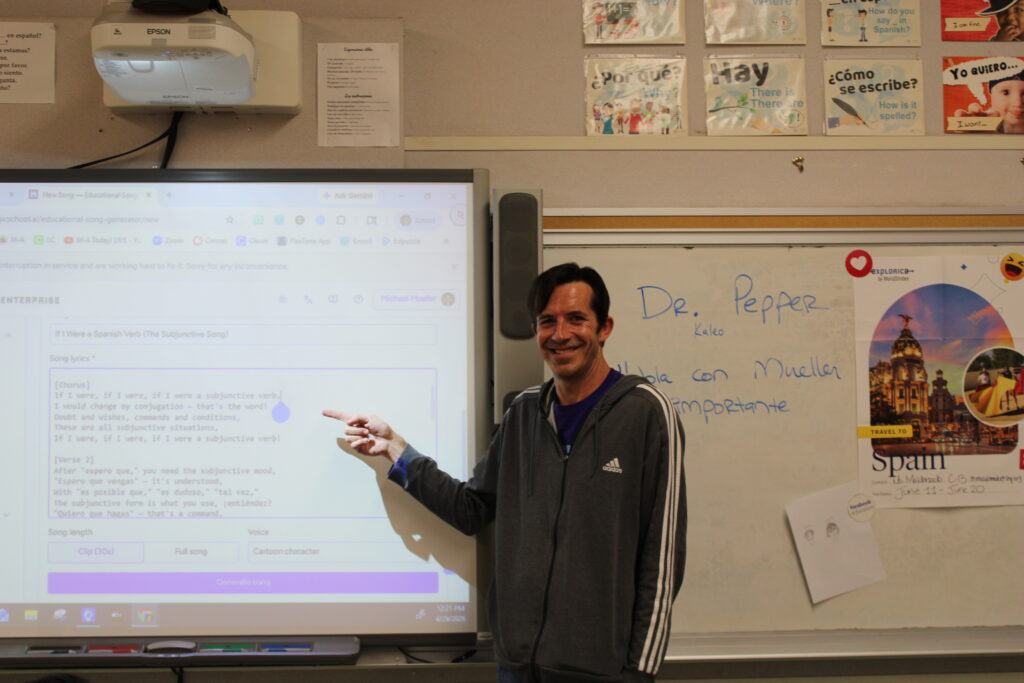
But while Mueller has almost become an enthusiastic user of AI in teaching, MagicSchool no longer felt like the best fit once he realized he could do similar activities more quickly through ChatGPT or Gemini. “The MagicSchool platform became a little bit less attractive to me,” Mueller said. “A lot of times it’s just quicker and easier to go with these two.” He explained that MagicSchool requires an extra setup when teachers want students to use specific tools on the platform. “We have to create a separate type of assignment within the MagicSchool platform,” Mueller said. AI has still been a major help for Mueller overall, especially for refreshing old tests, generating lesson ideas, and brainstorming more interactive class activities.
English teacher Erin Walsh takes a very different view. She has chosen not to use AI tools in her teaching this year and is not very supportive of MagicSchool rolling out district-wide. Rather than seeing AI as a helpful shortcut, Walsh argued that teaching depends on human judgment, experience, and relationships that AI cannot replicate. “I think it’s leading us down a road of relying on tools that don’t know our students or our curriculum at the level that we do,” Walsh said.
Chemistry teacher Randy West has a more neutral take on AI, bearing some skepticism about the tools. He initially tried AI for more straightforward tasks, such as creating answer keys for tests and writing questions for small MCQ quizzes.
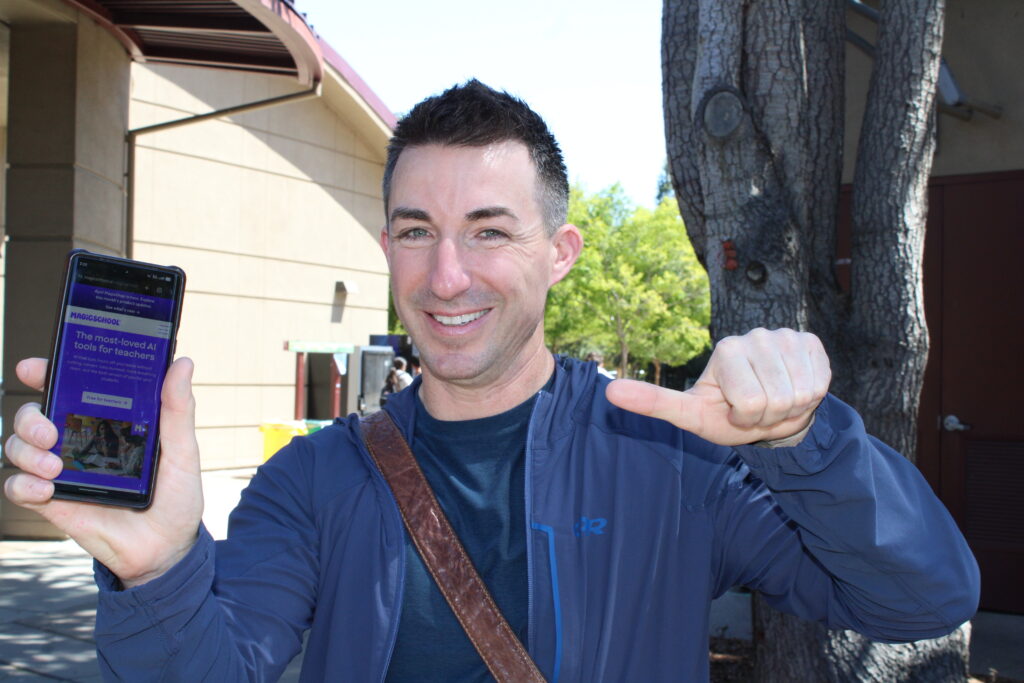
Instead of making his workload lighter, the tools often produced flawed results that he then had to spend extra time fixing. For instance, West’s attempts to generate a multiple-choice quiz with MagicSchool quickly went south. “It was a disaster,” West said. “I tried it out a couple of times, and it just wasn’t really working out for me.”
In one case, he used AI for a task he hoped would speed up the process, but eventually it took far longer than expected. “It was something I ended up probably spending about four hours with just trying to make it to work,” West said. “I could have done [it], just written on my own, [in] about an hour or so.”
While the District encourages teachers to experiment with AI in the classroom, the turnout has become less of a revolution and more of a question mark. Rather than a fully unified response, the AI push is producing a mix of curiosity, resistance, and skepticism. As AI becomes more present in schools, the question may be whether it can fit into classrooms without changing what teachers value most about teaching.




Interesting to see teachers grappling with AI in the classroom. How do you think it will affect student engagement?
I’m inclined to agree with Ms. Walsh.