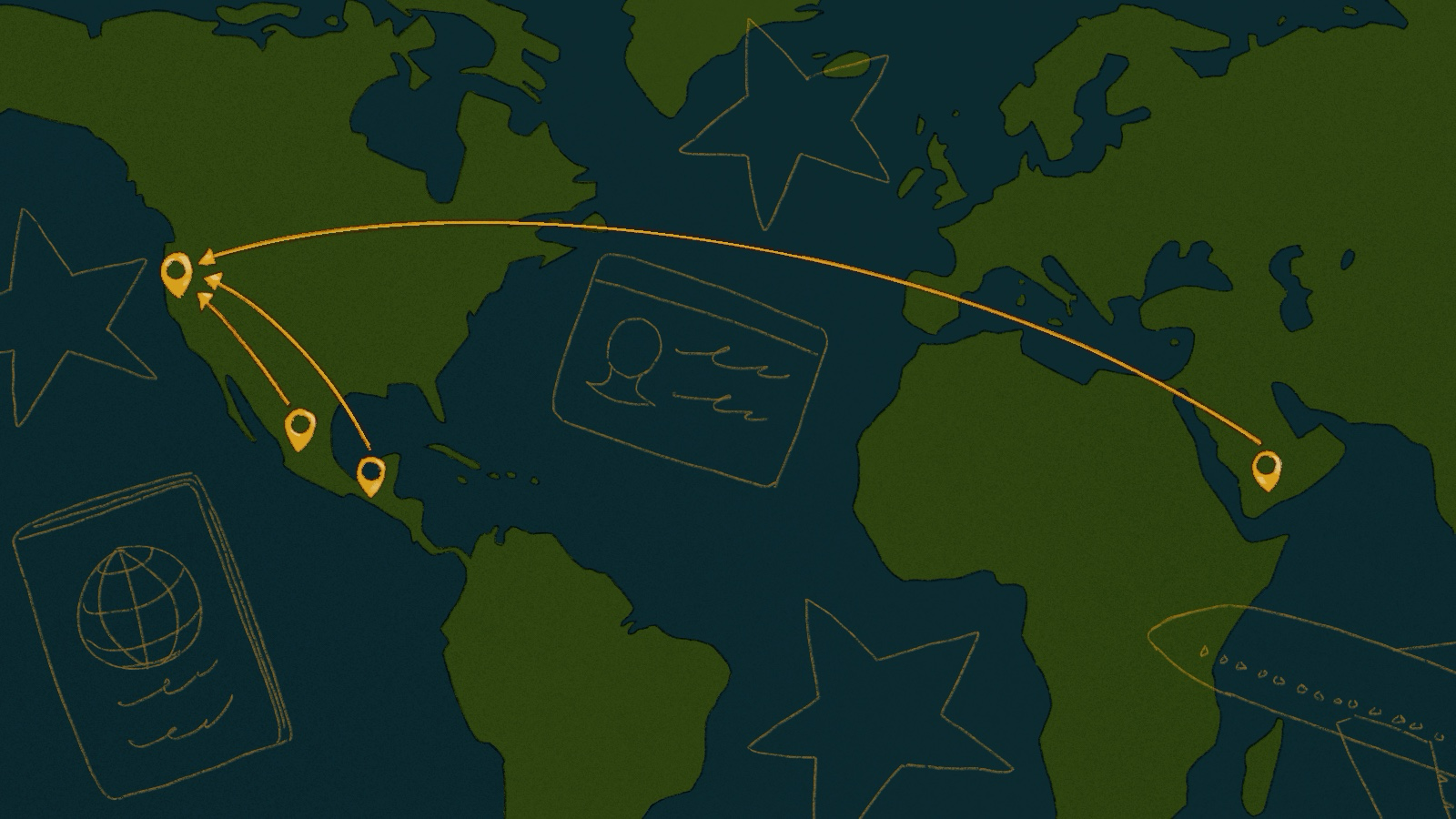
Carlos, Muhammad, and Manuel were all children when they left home: Carlos to escape poverty in Guatemala, Muhammad a war in Yemen, and Manuel cartel violence in Mexico. Now teenagers at M-A, they recall the journeys that brought them here.
Carlos*
Carlos* is a migrant who came to the U.S. from a small town in Guatemala. His journey was intense, trekking through Guatemala and Mexico before crossing into the U.S.
Carlos met his parents when he was 5. Before moving to live with them in the United States, he lived with his grandparents in Guatemala. “My parents moved to the United States [as soon as I was born], and they left me with my grandpa,” he said. “[I was] 5 years old when I left Guatemala. My hometown was very broke. Very poor.”
His hometown, San Marcos, Guatemala, is quite different from California, with straw houses and unpaved streets. “The houses were not good material, they were built from straw houses,” he said.
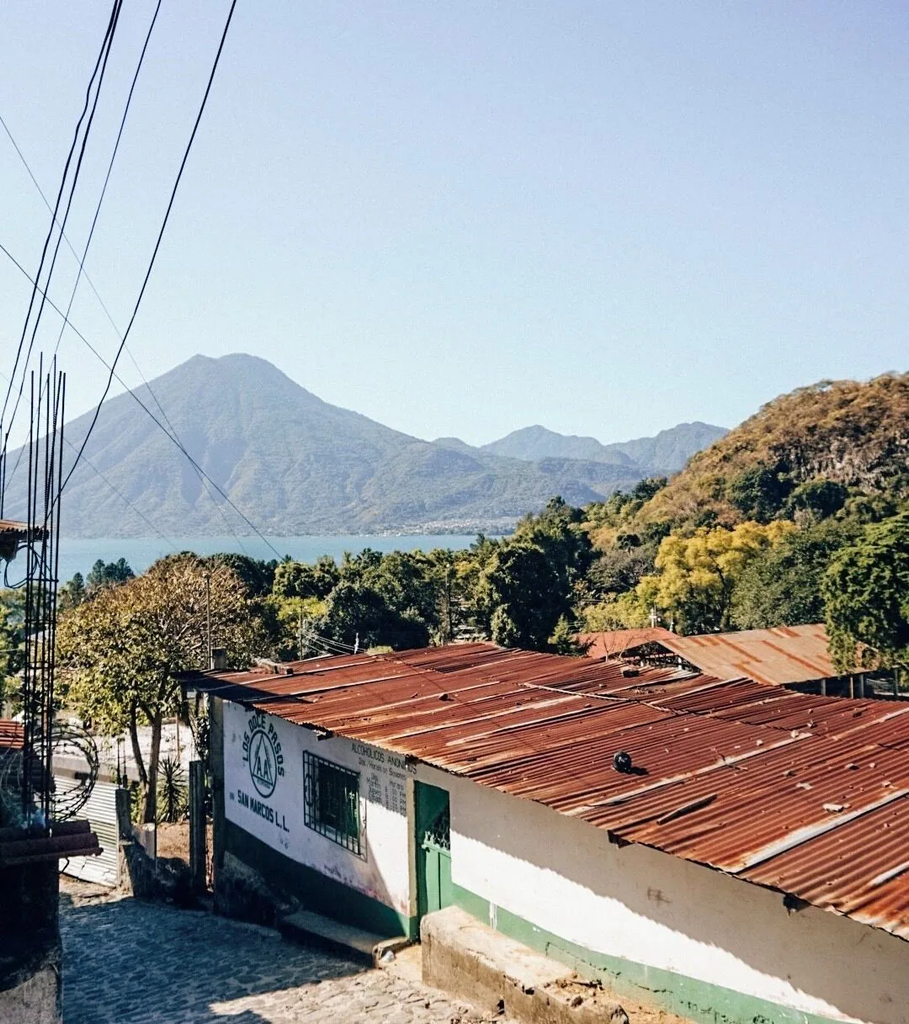
Carlos said his life in Guatemala centered on spending time with his family and eating Guatemalan comfort food. “I always used to play with my cousins and used to go to church [with my grandparents],” Carlos said. “[We ate] lots of food, and soup with chicken. Caldo de Pollo and Caldo de Res.”
His family emigrated to America because of little economic opportunity in Guatemala. “They wanted [opportunity], so my parents left Guatemala to come here because they wanted to make some money, and then after making money, they wanted to send me here so I can have a better future,” Carlos said. “They wanted a better life for us.”
When he was 5, his mother returned to Guatemala to bring him to the U.S. Carlos didn’t recognize her. “At first, when my mom came, I was confused because I didn’t even know her,” he said. “I remember when my mom came to Guatemala to visit me, then after like one month, take me to the United States. I didn’t have emotions. [I was just] confused.”
“At first, when my mom came, I was confused because I didn’t even know her.”
Carlos
Shortly after, Carlos and his mother started their journey to California. “[There was] lots of trouble. Buses, walking [in] mountains and fields. It was very hot. I remember, I think we were in like a place [with] a lot of people. To keep us safe,” he said.
Some migrants pay smugglers, known as “coyotes” or “polleros,” to cross.
“There’s [immigration authorities] there. And then we paid a smuggler to cross, so he can cross us over to Mexico, and then after that, cross over here to the United States. I think we paid for another smuggler,” Carlos added.
Carlos said things changed when he crossed the border into Mexico. “There was a lot of people helping us [in Guatemala]. By telling us where to go, and what places to go, and what places to not go, telling us to be careful. When I crossed [into] Mexico, it was way different. People from Mexico were strangers,” he said.
The two-week journey left them exposed to the heat, the cold, and thirst. “We traveled [from] place to place. Too hot, and too cold when it was dark. And we didn’t have nothing to cover ourselves from the cold. [We didn’t have] water either. I suffered a lot. Me and my mom suffered,” he said.
Looking back, Carlos remembers mostly confusion. “I was confused and sad because I left my country,” he said. “I was little, I [didn’t] know what was happening in that moment, and also scared, because there was a lot of people.”
Asked what he’d tell other kids in his position, Carlos said, “Be proud of your parents, of all of the things they do for you.”
Muhammad*
Muhammad* grew up on a mountain in Yemen, and remembers his childhood fondly. “It was pretty fun, because I had friends,” he said. “I used to go to my grandma’s house, and my friends would meet me there. … We’d get a big platter with rice and chicken, and me and my friends used to eat.”
His family lived far from the nearest town. “We had to walk a long time to go to a town, because we lived far away. It was a big mountain,” he said. “If you go to a town, you’d just see people walk with weapons. They wouldn’t hurt you, though. There used to be a lot of stores with toys and food.”
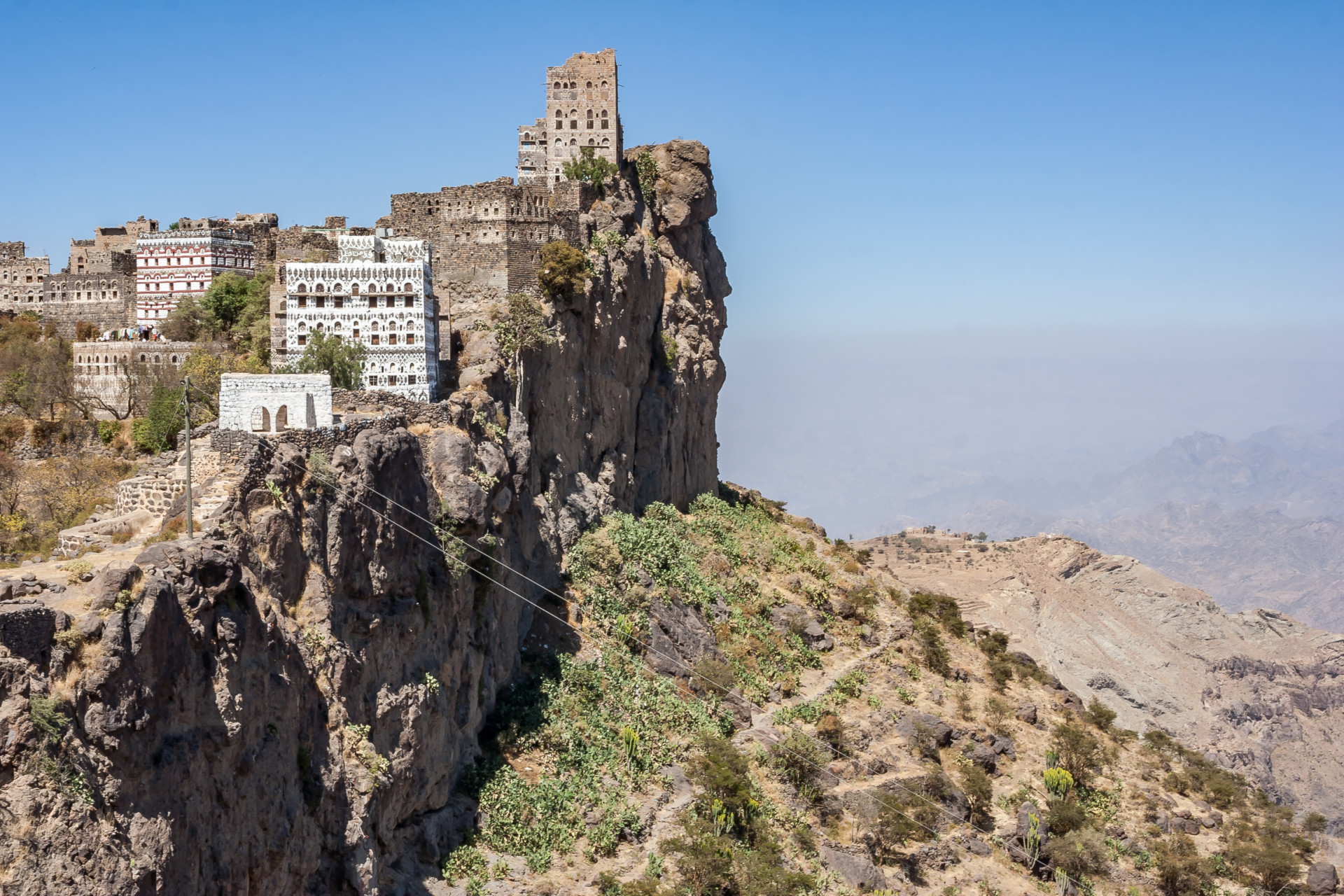
Muhammad described a culture built on taking care of others that stays with him even today. “If you see a homeless person, you should invite them to come eat with you guys if you have food,” he said.
Yemen’s pool is one of the places he misses most. “The water was blue, and you can see what’s inside it. There’s always a guard to help you if you sink,” he said. “It’s always calm, and a lot of family members take their children and swim.”
He also remembers the call to prayer. “When it’s afternoon, the prayer starts, and you hear a lot of people in the mosque going to pray. It’s super loud, and my grandpa used to do the prayer call,” he said.
School was very different from school in the U.S. “Schools are pretty rough there. If you get a wrong answer, they slap your hand so hard,” he said. “Women go to a different spot; men, kids, and boys go to a different spot.”
Yemen’s civil war began in 2014, and a Saudi-led coalition joined the fighting the following year. The fighting never reached Muhammad’s neighborhood, but it came close enough to hear. “At night, I [would] always hear airplanes flying, bombs,” he said. “After we saw that, my parents decided to move out of Yemen, because it was getting really dangerous.”
“At night, I [would] always hear airplanes flying, bombs.”
Muhammad
The family first moved to a neighboring country, and later decided to come to the U.S. Muhammad’s grandmother stayed behind. “I feel pretty sad, because a lot of people I knew, I’m not gonna see them for a long, long time,” he said. “My grandma was not coming with us… She wanted to stay in Yemen, because family [was] also in Yemen. I didn’t want to [leave either].”
“I was 5. I traveled with my mom, my dad, and my brothers and sisters,” he said. “I carried my toys and my clothes, that’s it. … On the flight, I was sitting at the window, and I used to look out and see a lot of different spots, and I thought where we’re going to live at, and how’s the people over there.”
The U.S. wasn’t what he expected. “I thought America would be full [of] nature, mountains, like Yemen,” he said. “What surprised me is how people act, the cars were different, and different language people—Chinese, Mexican, different race[s].”
His father had already worked in the U.S. for years. The family lived in Chicago, then spent three years in San Francisco before settling near Redwood City and Menlo Park.
“I was nervous. I was thinking, who am I going to talk to if I go to school?” Muhammad said. “But I had cousins in America, so I was pretty excited to meet them. It was worth it. Don’t be nervous or scared—you are going to [meet] different people that are going to be your friend.”
Manuel*
Manuel* came to America from Mexico when he was 9 years old. “My [town] is small, I know a lot of people there. They are family. [We sold] cars and fish,” Manuel said.
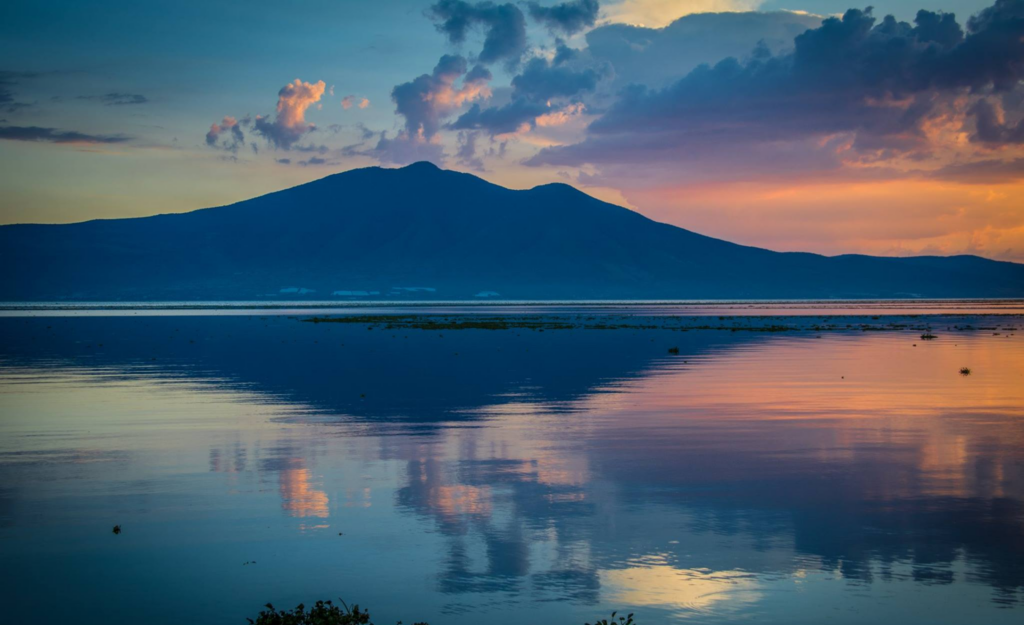
His hometown sits on a mountain in Jalisco, overlooking a lake. “My town is [on one] mountain, so you can see the montaña, and [a lake],” he said.
Manuel’s family left Jalisco because of the cartels and for better opportunities in California. “The cartel, if you do something bad, they kill you, and the family can know nothing about you. My family, they don’t have problems with the cartel, but I know people have problems with [the cartel],” he said.
Manuel’s journey to the U.S. was complicated and tiring. “First, I [flew] from Guadalajara to Tijuana, and after that, I crossed walking in the front [of the border] and after across to San Diego. I’m from Mexico, so only once we crossed states. I don’t remember the border. Just walking,” he said.
Getting through the border crossing took hours. “There was one [line] for residents and the other for visa [holders]. There were a lot of people, waiting for passing. Other [people] had the same problem like me, but in the night, finally, I crossed,” he said.
Immigration agents searched him before letting him through. “The [agents talk to and search me]. They check my backpack. I felt kind of nervous because that was my first time,” he said.
Manuel’s first memories of America include luxury cars speeding past on the freeway and a McDonald’s, where a stranger helped him and his mother. “So when I cross, my mom, [we] don’t got money. [That made it] more difficult. I go to McDonald’s, and when [we crossed], In McDonald’s one person, [had] $5 for [food]… [and gave the] money [to] my mom, and my mom [bought] me chicken,” he said.
“When [we crossed], in McDonald’s, one person [had] $5 for [food]… [and gave the] money [to] my mom. And my mom [bought] me chicken.”
Manuel
Manuel and his mother eventually settled in East Palo Alto to be near family and his mother’s work. “My [whole] family’s here in EPA. They pay better, so my mom came here. [We] live with my aunt and my mom [working at] night in the restaurant,” he said.
Manuel spoke little English, which made school hard at first. “I don’t speak English, and all my classes spoke English, so when the teachers speak, I don’t know what I’m doing. That [was] hard for me. I learn one part for school and Duolingo. Not too easy. That [made it] hard for me to have friends,” he said.
As his English improved, he started to feel he belonged. “My first friends are Latinos and Black people. When I speak more English, [then] they ask me if I want to play basketball with [them],” Manuel said.
Middle school was the turning point. “First, I [didn’t] like it here. [But at Ravenswood Middle School] because I know my [counselor] that’s from my city [in] Mexico, and I [met] my friends here. That was more comfortable for me,” he said.
Now, Manuel enjoys M-A for its size and environment. “I know [people and others] who speak Spanish. It’s different because it’s like the school and I like the teachers, [M-A has] two fields, and I never see that in Mexico,” he said.
Manuel is grateful for his mother, who supported him throughout the journey. “[I am grateful] for my family. My mom support[s] me,” he said.
He hopes to work in cybersecurity. “The future [for me is] go to college. I want to be [in] cybersecurity. I wanna learn hacking,” he said.