

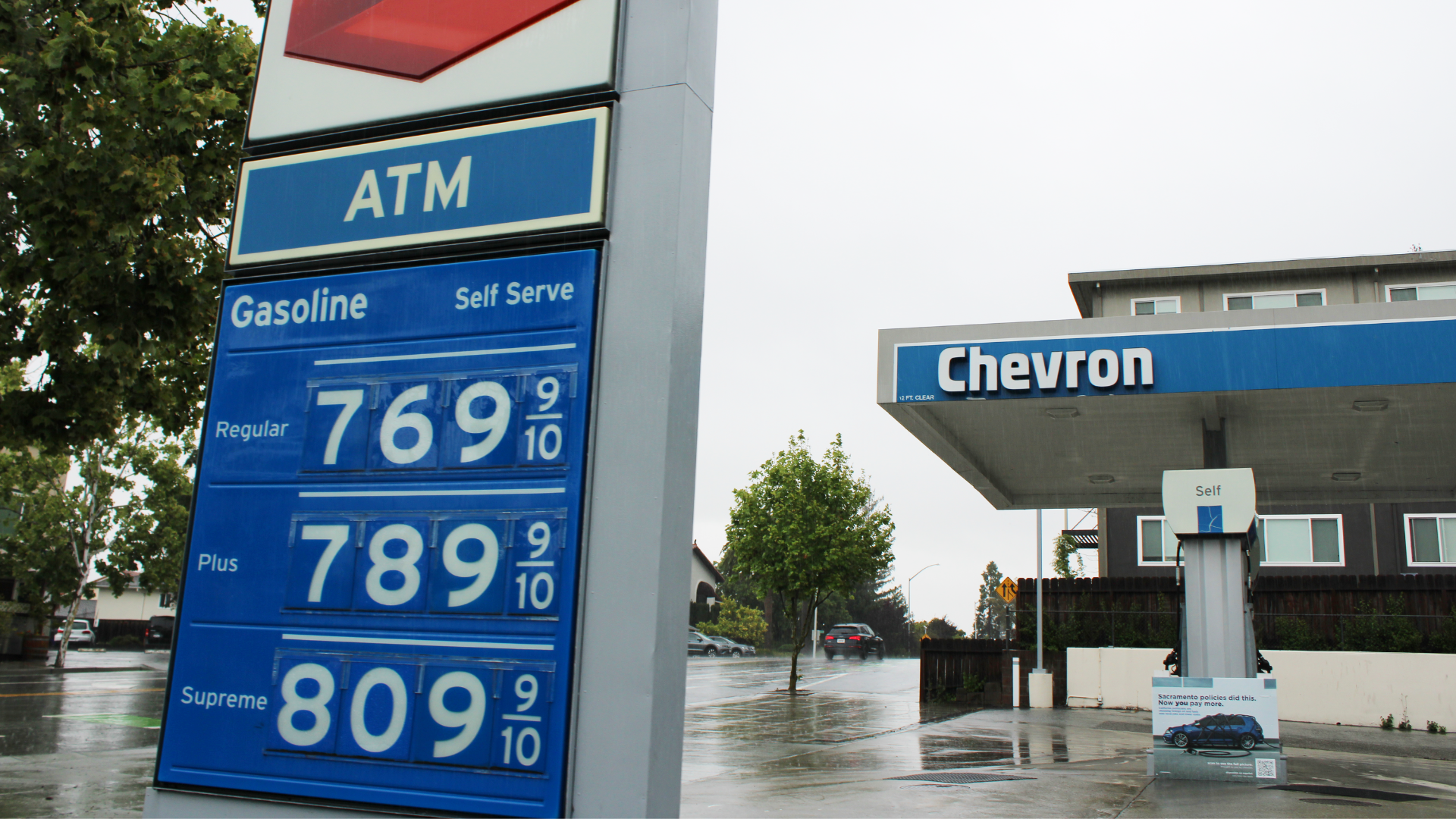
The well-known Chevron gas station on Alameda de las Pulgas and Avy Avenue holds an unfortunate Bay Area record: the most expensive gas station, with prices routinely in excess of $7. The location has been called out by consumers for its notoriously high gas prices since 2017, but a recent price spike has generated new buzz, leading to appearances on CBS, NBC, and ABC7, in addition to a flurry of mentions on social media. Gas at Chevron costs $7.69, 86.4% higher than the national average of $4.125.
Community Discourse
In busy hotspots such as Los Angeles, gas is expected to be high. However, in the community cornerstone of Menlo Park, home to several gathering places like Dutch Goose, Starbucks, LuLu’s on the Alameda, gas prices such as these are unacceptable for the community, notes senior Masataka Shudo. “If the gas prices are too high, then a lot of people probably can’t really pay for it,” Shudo said. “So then there’ll be a problem for people getting places.”
With a rating of 1.3 on Yelp, the station isn’t necessarily beloved by the community. One of the station’s few five-star reviews is worded sarcastically. “Looking to pay $2 more than every other gas station in the Bay Area? Then today is your lucky day! This place is very consistent and rest assured you will always pay $2 more per gallon than every place else,” Yelp reviewer Hesperian C. wrote.
For students, the impact of gas prices is especially significant. Sophomore Shahar Litvak, who drives to school daily and helps his family run errands, feels the pinch. “As a student, it’s pretty important because you can’t make that much money, and gas is really expensive,” Litvak said. “And it’s only going up.”
In a Reddit post titled “This Chevron in Menlo Park is a complete rip off. AVOID,” users warn each other of the high prices. “A solid dollar more than the Chevron down the street from it that’s even closer to the freeway,” one user wrote.
“This is a notoriously expensive Chevron due to location,” another Reddit user said. “It’s not catering to the average person–it caters to the person who’s so rich they don’t care if it’s cheaper a mile away.”
Beyond Chevron, Menlo Park already holds a reputation for high gas prices. As of early April, the lowest price per gallon was $5.79, offered at Royal Gas at 275 El Camino Real, which is still 41% higher than the national average.
Why is it so expensive?
Per the AAA (American Automobile Association), the average regular gas price in California ($5.893) is nearly $2 higher than the nation’s average of $4.125 per gallon.
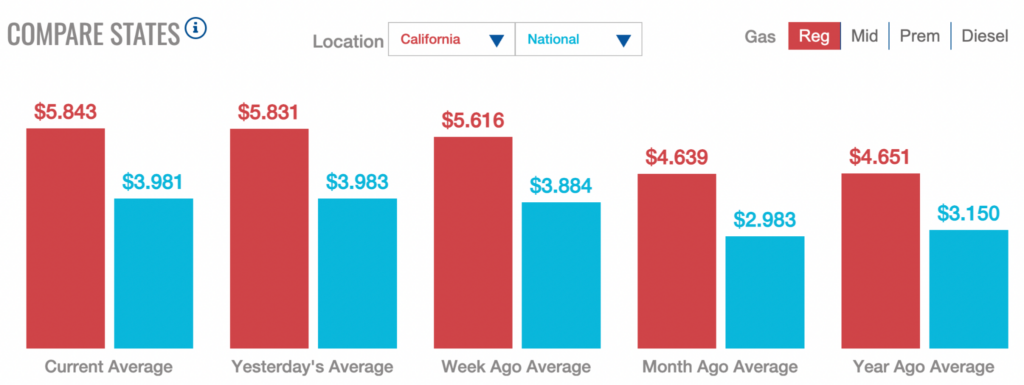
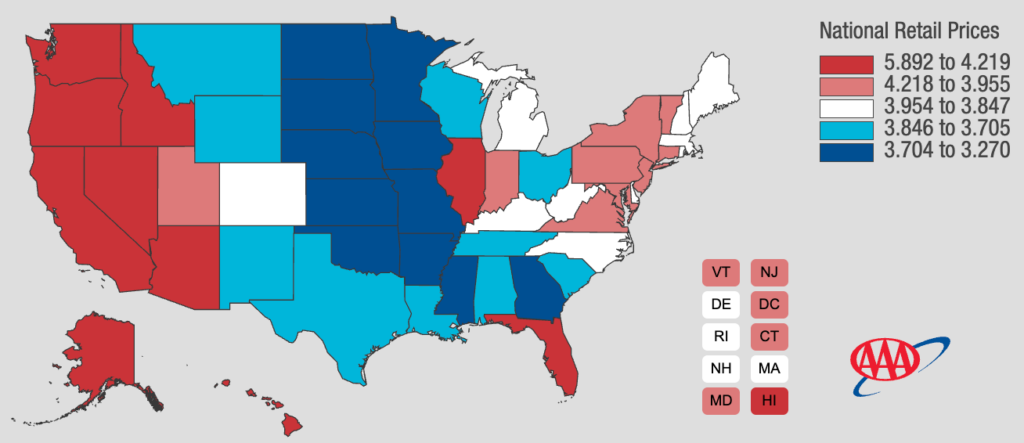
There are five primary culprits for California’s exceptional prices: fuel taxes, requirements for a special eco-friendly type of gasoline, an overall high cost of living, a reliance on imports, and the recent escalation of the war with Iran.
The state requires a unique low-emissions gasoline blend under the California Air Resources Board rules and also has an additional tax of about 61.2 cents per gallon. The costly taxes are largely used for state projects: “Taxes on California gasoline remain relatively stable and are reinvested in California to fund road repairs, highway maintenance, bridge safety, public transit, bicycle and pedestrian projects.”
California is also considered a “gasoline island” because of its limited pipelines to other parts of the United States and reliance on imports. The California Department of Justice explains that California is “cut off from other supply from states east of the Rockies.” Thus, replacement fuel must arrive by ship, which is slower and more expensive.
West Menlo Park is also deemed one of the most expensive places to live nationally, with housing costs averaging $2,319,000, a full 586% higher than the national average of $338,100. Though higher gas prices align with these high costs, many in the community continue to express astonishment and disapproval.
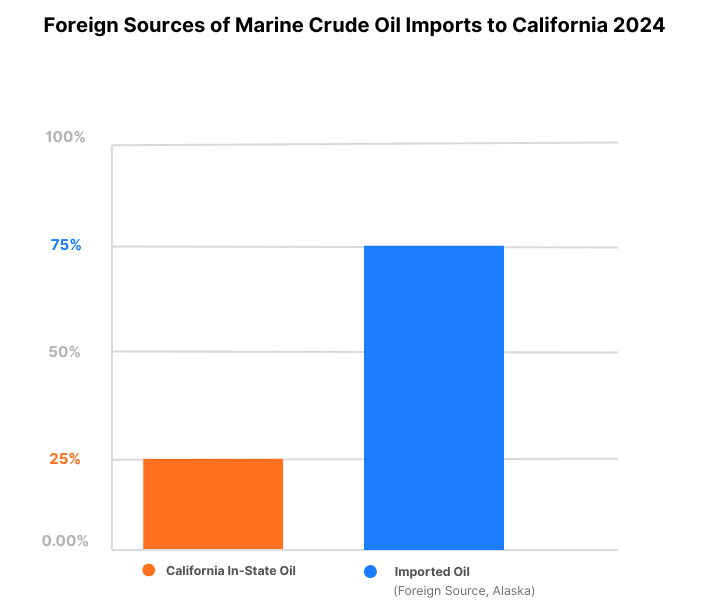
More than 75% of California’s supply of crude oil is supplied from outside the state, with a majority of the imports originating from regions fraught with political instability or prone to economic disruption. “[This increases] the risk of supply interruptions due to conflicts, trade disputes, or natural disasters in those regions,” according to the CFCA.
More recently, geopolitical tensions in the Middle East have spiked gasoline prices. On February 28th, when the United States attacked Iran, oil markets were completely disrupted, sending fuel costs even higher.
Although California’s high cost of living will certainly stick around for the foreseeable future, many analysts still predict gas prices continuing to rise in the long term.





Weird to compare any California price to the national average. It would be much more interesting to know what those prices compare to average Bay Area gas prices (and average CA prices)