City Council seats for Districts 1, 2, and 4 are on the ballot in the upcoming Nov. 3 election. Current council members in Districts 1 and 4 have decided not to run again, leaving District 2 with the only incumbent running.
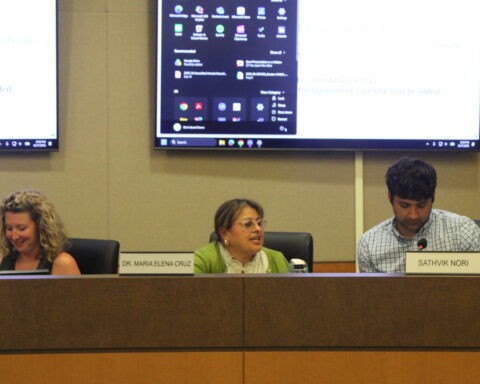
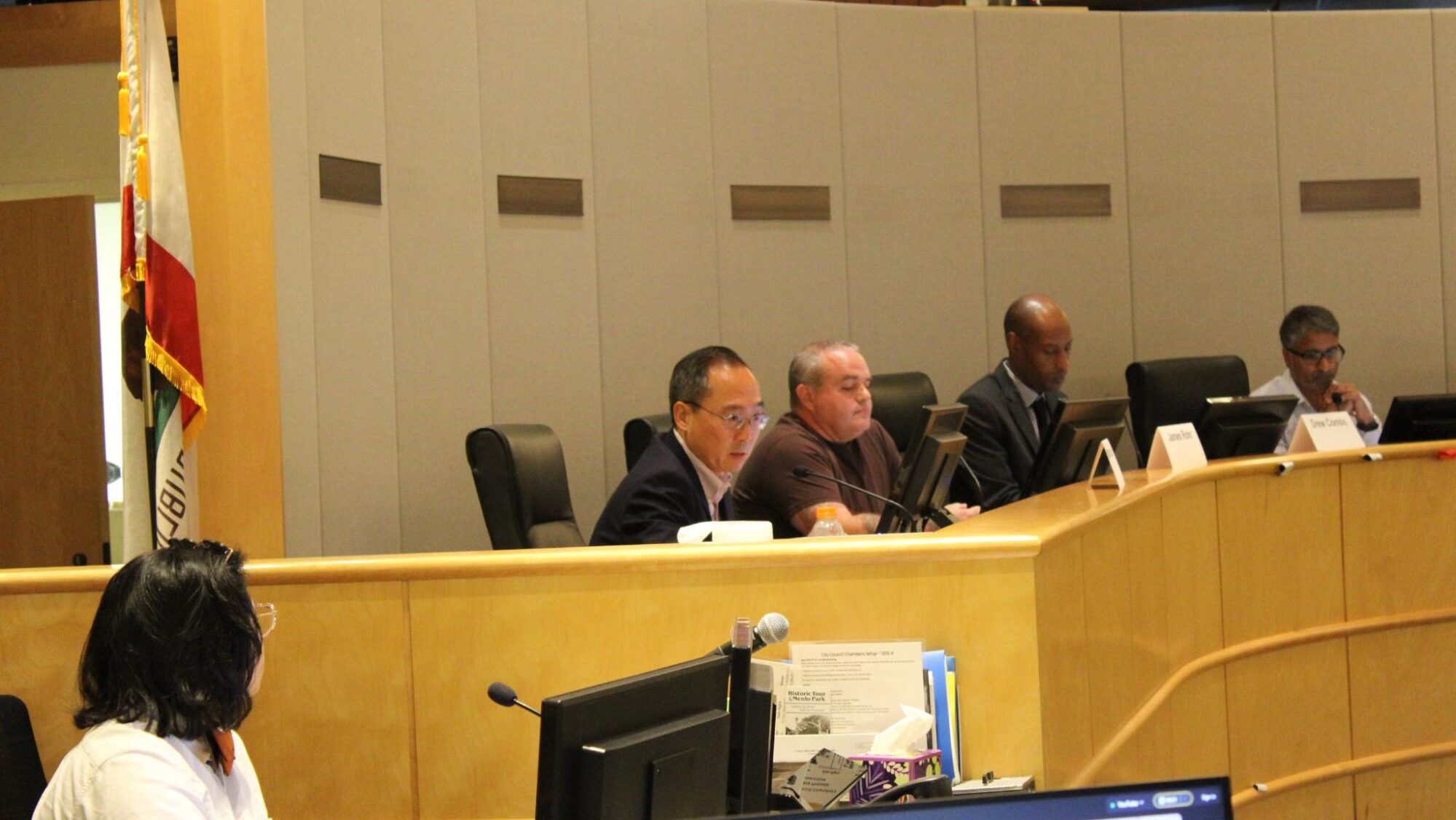
The Almanac hosted a forum for all Menlo Park City Council candidates on Thursday night. The forum addressed contested topics for Menlo Park, including affordable housing construction and fiscal responsibility, and offered voters a chance to hear from the candidates. Here’s a deeper look at some of their stances.
District 1:
District 1, which includes Belle Haven and the Bayfront area, has no full-service grocery store, pharmacy, or bank. Meta’s Willow Village project, which was supposed to bring a grocery store and pharmacy, is on hold. With council member Cecilia Taylor stepping down, the seat is open for the first time since 2018. The intensity of the upcoming El Niño season is also a concern to District 1. Its geography puts around one-third of all homes in the area at risk of flooding with exacerbated weather conditions.
Wonman Lee:
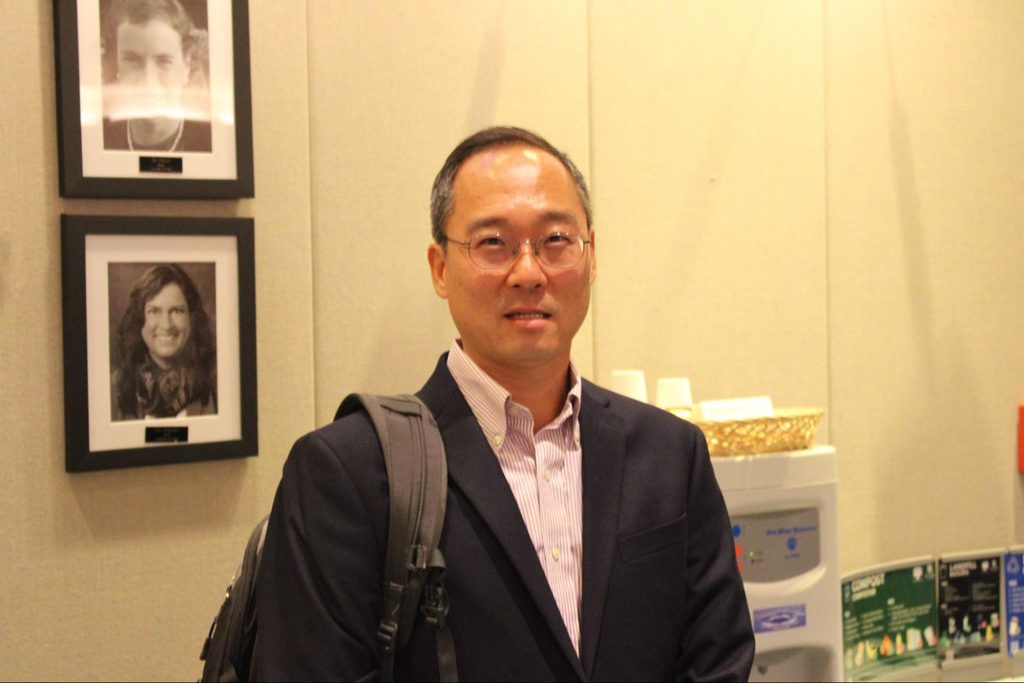
Lee is a software engineer and was previously on the staff of two U.S. senators in Washington, D.C. He has also served as the chair of the Menlo Park Parks and Recreation Commission and continues to participate as a commissioner.
Lee’s campaign emphasizes his hope that residents of Menlo Park can have equitable access to upward mobility. As the son of Korean immigrants, Lee was the first in his family to graduate from college. “I’m a product of the American Dream, and I want that same dream within reach for every family in Menlo Park,” Lee said.
To bolster families’ access to these opportunities, Lee centers his platform on giving District 1, which is currently considered a food desert, a substantial commercial center. “My overall goal is for District 1 residents to be able to walk to a grocery store, a pharmacy, a bank, and to go to a sit-down restaurant with their family,” Lee said. While Meta has already taken initiatives to build Willow Village on Willow Road, Meta halted this progress. Lee has communicated with Meta about the development in hopes of moving forward with the Willow Village project but is also open to alternative locations.
To address El Niño’s impact on District 1, Lee has resources on his website for how to deal with the potential flooding in the area and has also identified a longer-term solution through Strategy to Advance Flood protection, Ecosystems and Recreation (SAFER) bay. The project would implement levees, floodwalls, and marshes along the shore to curb flooding risk.
Lee also takes pride in the thoroughness of his website and the research he’s put into the history of the district. “I’ve learned from speaking to folks directly, learning about their histories, how they got here, what they endured,” Lee said. “Our district is very storied in that respect.”
James Rohr:
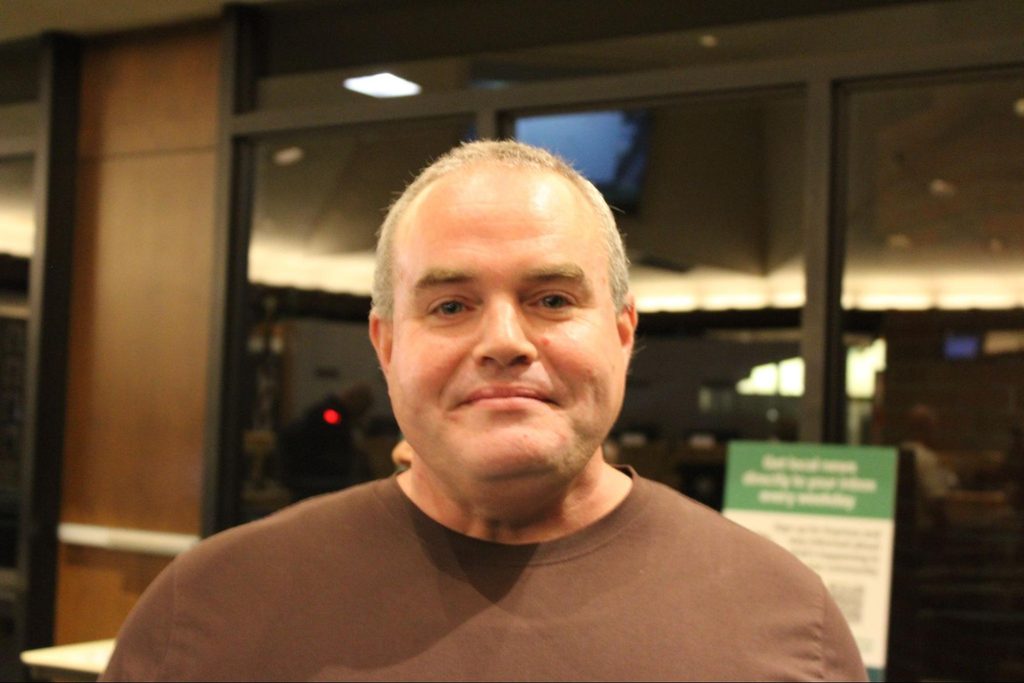
Rohr is a retired cybersecurity professional who also served in the U.S. Army. His campaign centers on his position as a regular citizen, and he hopes to advocate for the issues that he has observed in his own community.
After being invited to a community meeting, Rohr now attends the events and communicates with its members regularly. “It’s been made so that we can hear their issues, we can see exactly what’s happening and we’re speaking to people who have lived there for 60, 70 years,” Rohr said.
Rohr mirrors Lee’s sentiments about the lack of accessible food in District 1, and suggests introducing a grocery store and pharmacy, or at least a farmers market if no permanent space is established for the former. Rohr claims senior residents feel this gap the most. “We have elderly people right now. They have to take a bus to Redwood City to go to Kaiser,” Rohr said.
Rohr is also focussed on the state of the Belle Haven Community Campus. He described the issues regarding the center, indicating his firsthand connection to the District 1 community. “I would trip over something, but we have elderly that are 70, 75, 80 years old that are doing these same events, and it was a health and safety hazard, so we had to complain for a long time to have that change,” Rohr said.
As Rohr is not involved heavily in policy, he frequently discussed using the support of other city programs to help run things efficiently. “I’m exactly what I say. I’m just a volunteer. I’m just an average person. I want to make things better for my district,” Rohr said.
On El Niño, Rohr expressed concerns with Lee’s SAFER Bay solution. “The SAFER Bay solution is going to be wonderful once it’s actually put in place, but that’s going to be years from now,” Rohr said.
District 2:
District 2, which includes the Willows, has the only race with an incumbent and the city’s biggest talking point: a proposed 39-story tower at 80 Willow Road. After the council rejected the tower, the developer sued, arguing that the city illegally stalled the project. The project is further complicated by the fact that the tower was funded by a Russian oligarch. Several candidates warned that losing the lawsuit could bankrupt the city.
Vamsi Velagapudi:
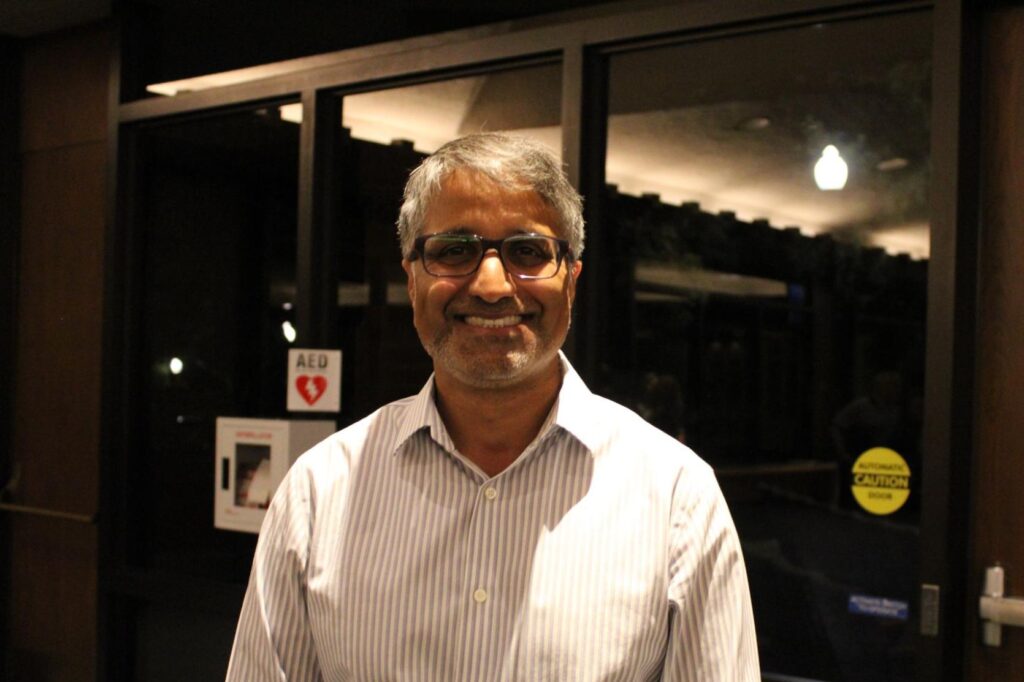
Velagapudi is building his campaign around a case against incumbent Drew Combs’ eight years in office. “We need a fresh start after eight years,” he said. Velagapudi argued that the council’s mismanagement caused the Willow megatower controversy and went after a flyer that implied Combs’ biggest vision is opposing skyscrapers. “Perhaps if he had that vision four years ago, we wouldn’t be having to deal with that mess,” Velagapudi said.
Velagapudi suggested Combs failed to support the city’s housing plan. “Most of city council actually did get a housing element across the line. I’m running against somebody who didn’t,” Velagapudi said.
Combs voted against the city’s housing element in 2023 and again in 2024. Combs defended this position by saying that the city should spread affordable housing more evenly instead of having it concentrated in Belle Haven.
Velagapudi also argued that Combs’ job at Meta, the city’s largest employer, hinders how well he can represent his constituents because Combs must recuse himself from council decisions involving the company. “I think there’s a deal to be had, and that’s why it helps not to be recused from that conversation,” Velagapudi said.
Velagapudi pitched a per-employee business tax to close the city’s projected deficit and rebuild reserves. Similar to how Mountain View charges Google, the tax would apply to Meta and other large companies. He estimates it would raise $3 million a year. He also wants to leverage Meta’s recent pitfalls for the good of the city. “Meta has obviously had really bad PR very recently. They’ve had to pay $18 billion in child privacy lawsuits to settle those. They need good PR, and I’m happy to give them good PR. We need third spaces for kids in Menlo Park, and they can actually help fund it,” Velagapudi said.
Drew Combs:
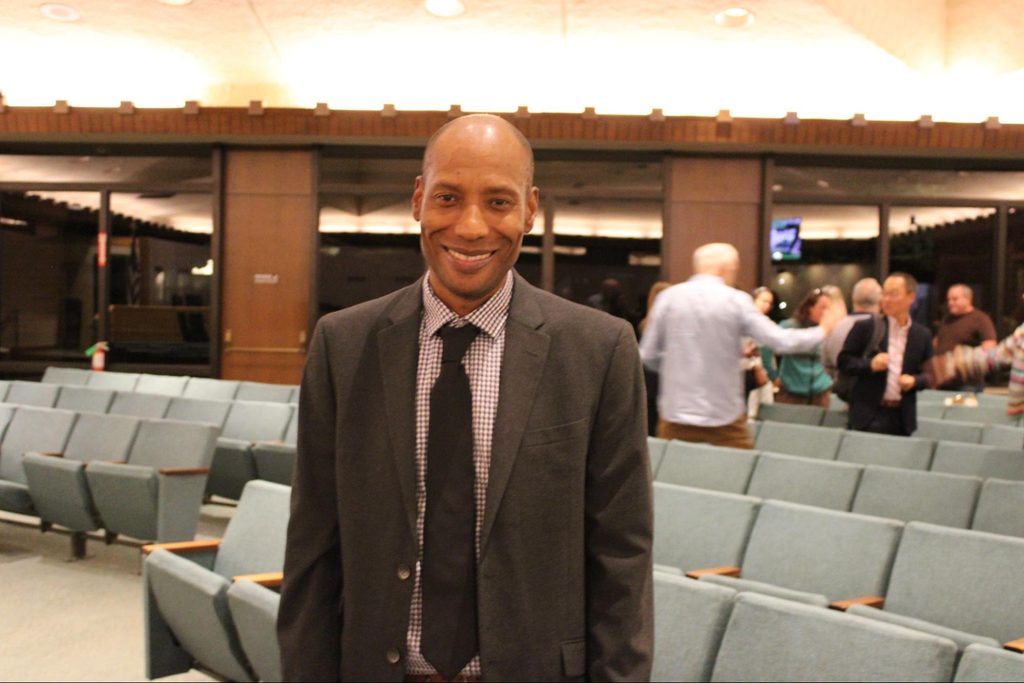
As the incumbent, Combs centered his case around trusting the initiatives of the current leadership. He noted his actions over the past eight years, from repaving Willow and Bay roads to renovating Willow Oaks Park, and leaned hardest into his openness to residents.
Combs cited his open office hours, and a monthly newsletter with thousands of readers, as examples of his community outreach. “These are ways in which I have reached out to the community and made myself available,” Combs said.
Combs defended his stance as an incumbent. “I’m running because I believe Menlo Park benefits from experienced and independent leadership,” Combs said.
He also asserted that withdrawing himself from Meta-related decisions has not hurt his ability to represent the district. “I don’t think that District 2 residents are diminished by the fact that I didn’t get to comment on the color scheme in Meta’s lobby,” Combs said, adding that any major new tax would be voted on by the public anyway.
Combs also mentioned that Menlo Park should focus on its sustainability measures. After electrifying his own home took a year, Combs says he aims to streamline the process to increase families’ accessibility to green energy. “If this is something on one end that we say is a priority of the city, it shouldn’t take a year for a family to electrify their home,” Combs said.
District 4:
District 4 covers downtown Menlo Park and Allied Arts. The District 4 race centers on Measure P, a citizen initiative that would require voter approval before the city sells, leases, or changes any of its eight downtown parking lots in a way that reduces parking. The measure would also put the city’s plan for at least 345 affordable homes on three of the lots to a public vote.
Charlotte Reed:
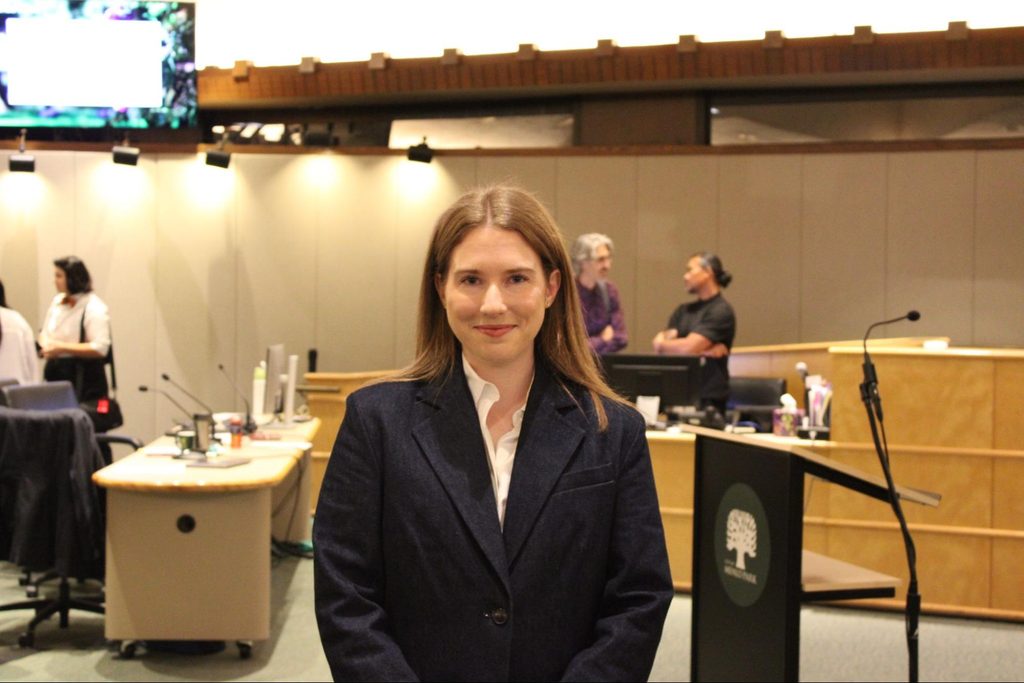
Reed is pointing to the strength of her coalition. The communications professional at an AI marketing company, started by listing endorsements from state Sen. Josh Becker, Assemblymember Marc Berman, council members Jeff Schmidt and Jennifer Wise, all seven members of the city’s Planning Commission, and the San Mateo County Democratic Party. “Leadership is about showing up, doing the work, and having a real coalition to back you up. And I have all three,” Reed said.
She has made Measure P central to her campaign. “I’m opposed to Measure P, but I respect your right to vote on it,” Reed said. She asserted that passing the measure would cost the city local control over housing and open it to lawsuits and penalties from the state.
Reed also suggested enacting a business improvement district to address the numerous empty storefronts in downtown Menlo Park. “We need going shopping in downtown to no longer be a political statement. Everybody deserves to benefit from our downtown,” Reed said.
Reed said that many downtown business owners oppose building on the lots because the city failed to communicate with them years ago. In her closing statement, she focused on her opponent, Laura Melahn. “My opponent has abstained from taking a position, but has been publicly endorsed by the Yes on P campaign, and the Measure P ballot signatories have financially contributed to her campaign,” Reed said.
Melahn’s Sept. 24 campaign filings show $250 from Henry Riggs and $200 from Benjamin Eiref, who both signed the ballot argument in favor of Measure P. Eiref also co-founded the Downtown Menlo Fund with Melahn. Save Downtown Menlo, the campaign behind Measure P, endorsed Melahn on Oct. 5, along with Combs, who said he would vote against the measure.
Laura Melahn:
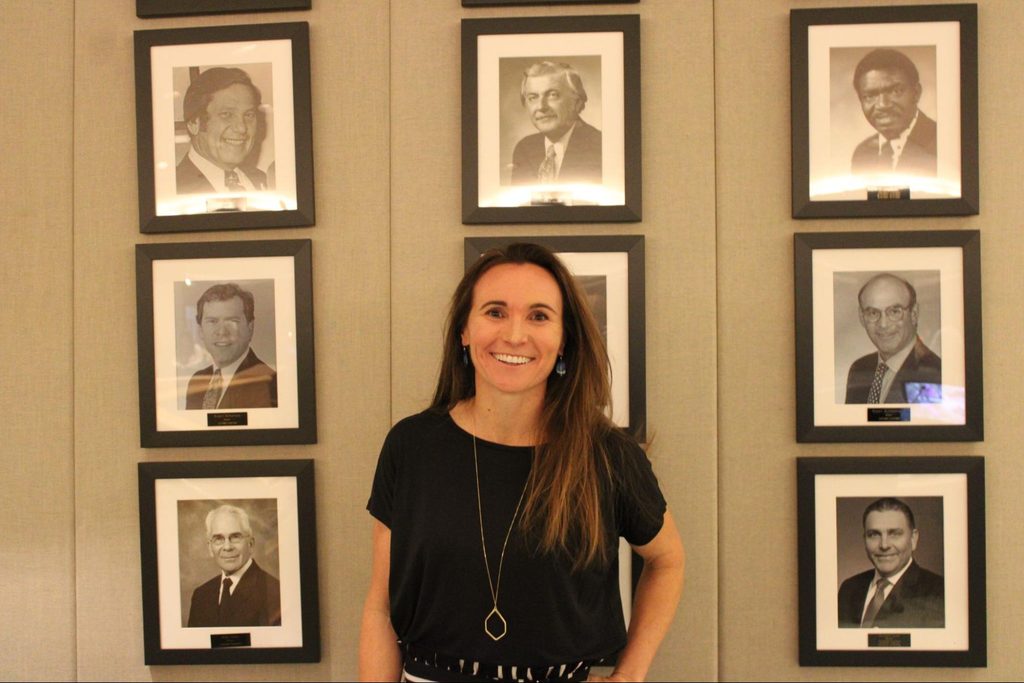
Melahn is the chair of Menlo Park’s Finance and Audit Commission, the managing partner at a health investment firm, and the co-founder of the nonprofit Downtown Menlo Fund. Melahn has worked to establish Fourth Fridays, a music event that occurs every fourth Friday of the month in various locations across downtown Menlo Park. She vows to continue efforts to revitalize downtown if elected.
One of Melahn’s main focuses is finding an effective way to build affordable housing. She is the only candidate who has not taken a position on Measure P. “I am on team Menlo Park. That is my answer to where I stand on Measure P,” she said.
Instead of the downtown project, Melahn has pushed for putting more resources into locations proposed for construction at the SRI International and U.S. Geological Survey (USGS). “For the downtown parking plazas, we made a plan that unfortunately doesn’t work. And we were told it wasn’t going to work […] and then we said ‘But let’s keep trying,’ and then we were told it doesn’t work,” Melahn said.
Still, Melahn argued that voters should support her regardless of their position on Measure P. “If a person is voting yes on Measure P because they believe the plans on the table are not economically viable for the city, those people should vote for me because I acknowledge that that is true,” Melahn said. “If someone is voting no on Measure P because they desperately want more affordable housing in Menlo Park, they should also vote for me because I am the only candidate who has published a plan that will get housing built in Menlo Park,” Melahn outlines her housing ideas on her website.
Melahn is adamant about the health risks of Menlo Park’s climate, and noted that she would weigh city programs by both their emissions and their health effects. She pointed to household food waste as a major source of methane the city can control, and said air quality can be improved by growing the tree canopy and measuring pollution more closely.
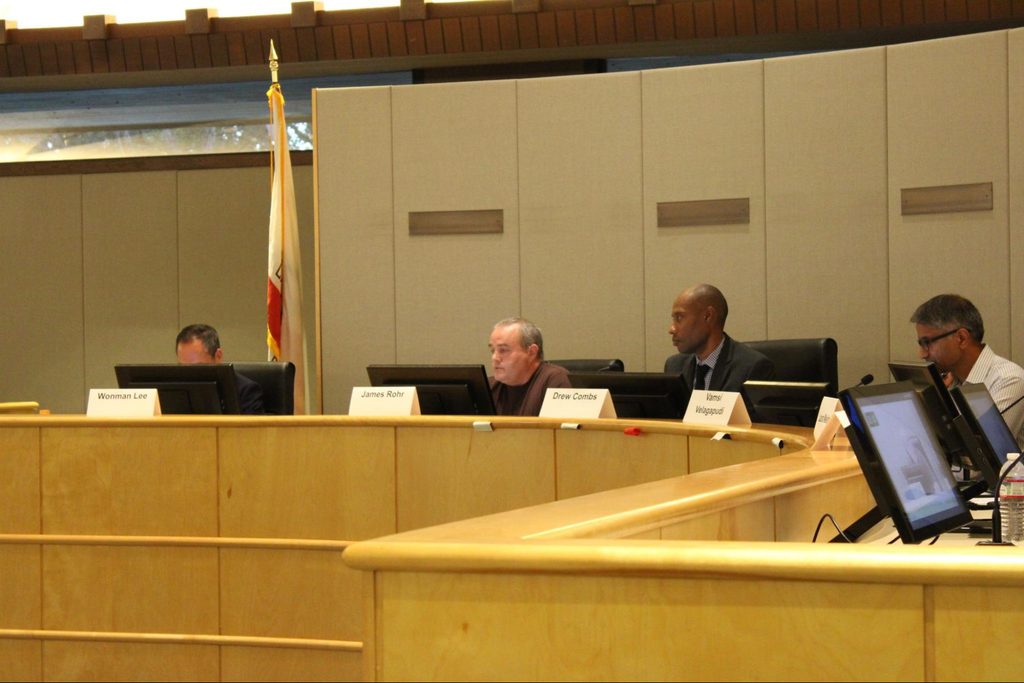
Watch the full forum recording here.