

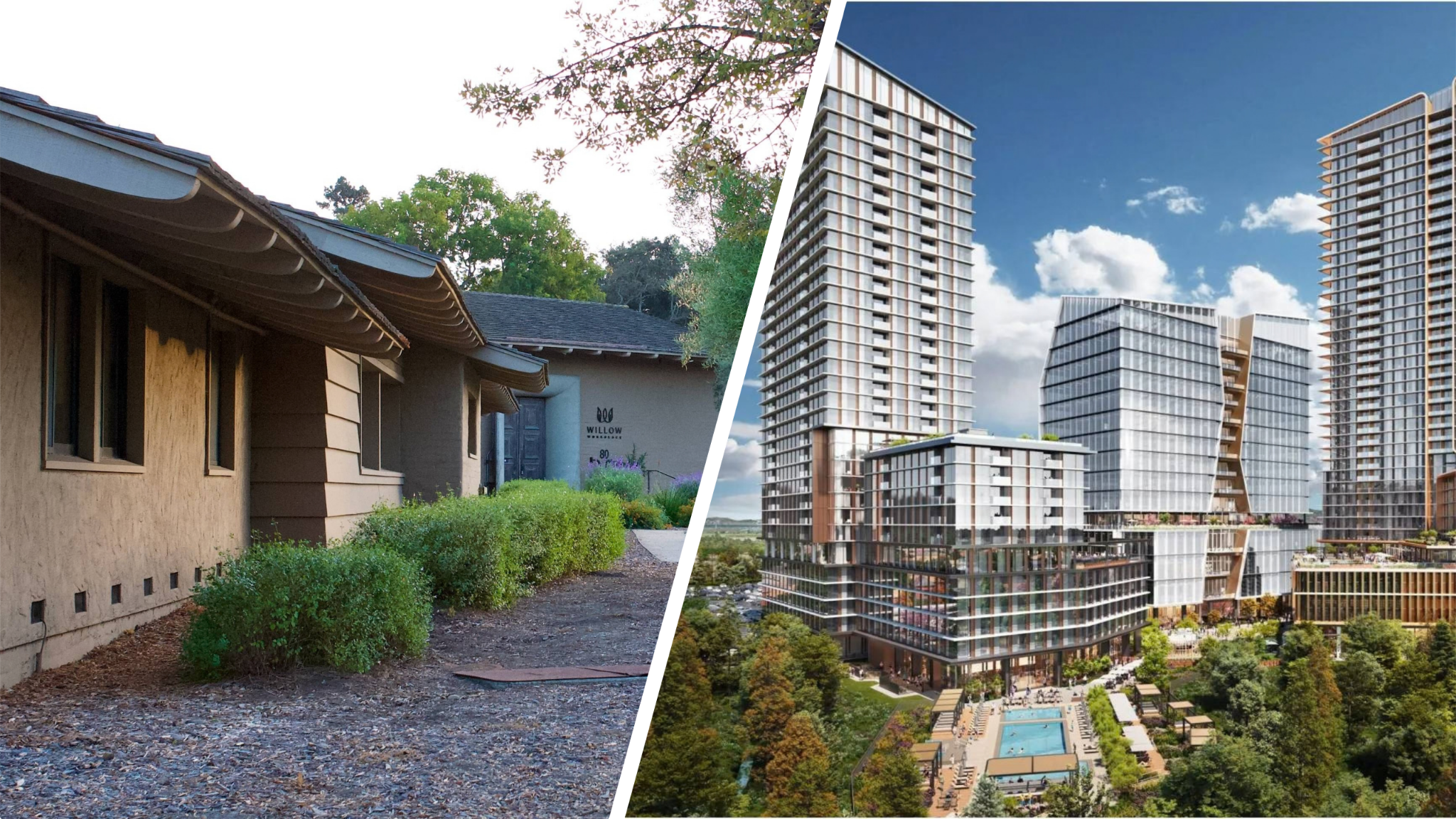
The developer of the disputed Willow megatower project officially filed a lawsuit against the city of Menlo Park that could be worth up to $6.65 million on Oct. 2.
The lawsuit came in response to the Menlo Park City Council’s refusal to approve the development, despite pressure from California Attorney General Rob Bonta, in a Sept. 29 meeting. It alleges that Menlo Park violated multiple housing laws by refusing to approve the construction of a mixed-use development containing residential units, a preschool, a five-star hotel, and hundreds of thousands of square feet of office space.
If built, the complex’s 39-story tower would be the tallest building between San Francisco and Los Angeles.
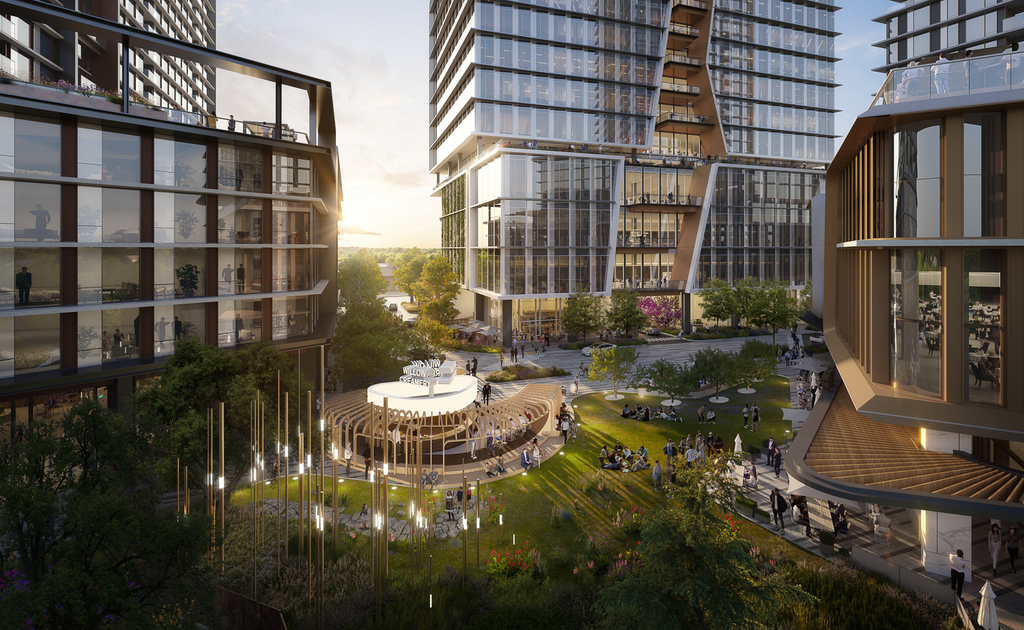
The development was enabled by builder’s remedy, a 1990 provision of state housing law that allows developers to bypass city zoning and density regulations if the city has not adopted a state-approved housing plan (Menlo Park did not have one at the time of development). Builder’s remedy requires at least 20% of housing units to be for lower-income residents, a requirement the Willow Park project meets.
“Theoretically, according to a combination of state laws, any developer could have pitched a project at us that did not align with our city standards, and we would have had to basically approve it,” Katie Behroozi, vice chair of the Planning Commission, said.
“Any developer could have pitched a project at us that did not align with our city standards, and we would have had to basically approve it.”
Planning Commission Vice Chair Katie Behroozi
Some city officials wonder whether the megatower complex would actually get built even if its construction were approved.
Behroozi said the developer may be trying to execute an “entitlement flip,” a strategy where a developer gets approval for a project with special permissions—like 39-story height limit or California Environmental Quality Act (CEQA) exemptions—and then resells it to a different developer for profit.
Housing Commission member Kevin Kranen noted that the developer’s decision to build hundreds of thousands of square feet of office space is an unusual one; commercial office space in Menlo Park has a vacancy rate of about 22% right now, while residential vacancy is under 5%.
“[This] traditionally means that developers should be looking at housing rather than commercial,” Kranen said.
He pointed to another developer’s plans to convert a single-story office building into 50 townhouses at 68 Willow Road, just two doors down from 80 Willow, to illustrate how the Willow Park development seems out of place in the current housing market.
According to real estate firm Kidder Matthews, Menlo Park contains 18.8% of San Mateo County’s office space but only 4.4% of the county’s population.
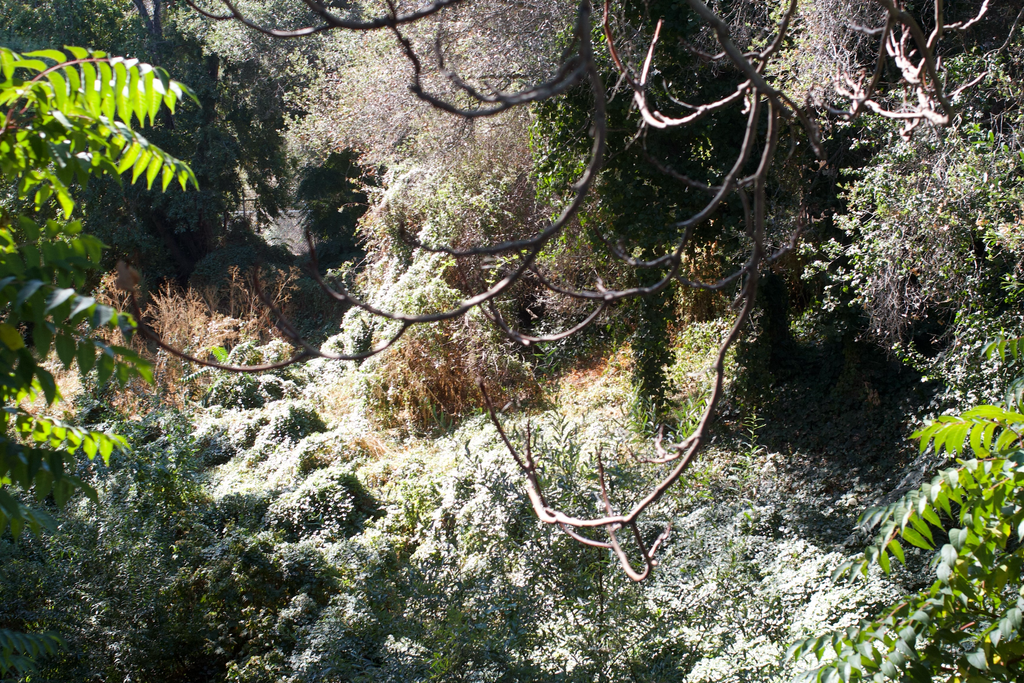
The proposed development is directly next to San Francisquito Creek, the home of the most viable native steelhead population in the South San Francisco Bay and an important stronghold for aquatic diversity.
This would typically subject the developer to the CEQA’s stringent regulations, including a requirement to disclose the environmental impacts of their projects. But in May 2024, N17 requested an exemption under Assembly Bill (AB) 2011, a piece of legislation that enables developers to bypass CEQA compliance standards if enough of a project’s housing units are affordable.
Menlo Park refused N17’s AB 2011 request, saying that because 40% of the site’s perimeter borders the creek, the development fails to meet AB 2011’s threshold of 75% “urban use.”
However, N17 has argued that because the portion of the creek its development touches borders Timothy Hopkins Creekside Park, and parks are counted as “urban use,” the development does meet the AB 2011 requirement. Bonta later sided with N17, saying Menlo Park was required to grant the exemption.
Additionally, the development’s proximity to the creek raises potential safety concerns. The property is in a liquefaction zone, meaning that the water from the creek has made the surrounding soil loose and significantly less stable.
“If there’s ever an earthquake, there’s a good chance the sides of that are coming down at some point in time,” Kranen said. “If you’re trying to build a 39-story building, what do you need to do in order to deal with liquefaction? I’m not sure, and the city’s never had anything that big built, especially right on the creek. So who knows?”
“The city’s never had anything that big built, especially right on the creek. So who knows?”
Kevin Kranen, Housing Commission
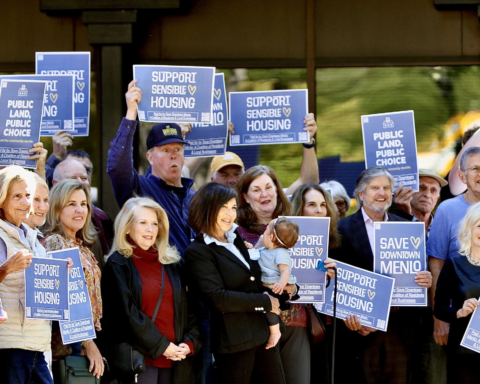
The development also faces strong opposition from groups like Menlo Forward, a citizens group formed to push back against the 80 Willow development, as well as concerned residents.
“I feel like it would just cause so much traffic and make commuting so much harder for everyone,” senior Elena Kunze Briseño said. “No one wants to stare at huge megatowers outside of Grace Dental.”
In September, Rep. Sam Liccardo called for a federal investigation into the property’s owner, Vitaly Yusufov, the son of former Russian Energy Minister Igor Yusufov. In a letter to the Treasury Department, Liccardo cited Yusufov’s alleged ties to organized crime, including a figure linked to dozens of contract killings.
Liccardo also warned that the proximity of the Russian-owned development to Silicon Valley defense and AI companies could be a threat to national security, further complicating the future of the project. N17 founder Oisín Heneghan told KQED the letter was based on “false reporting.”
Behroozi also said the uproar over the 80 Willow development has diverted attention from infrastructure plans and other affordable housing projects in Menlo Park, which could cause the city to miss its state-mandated housing goals.
Missing those goals could also lead the state to decertify Menlo Park’s Housing Element, exposing the city to even more builder’s remedy projects. Additionally, losing compliance with the Housing Element could increase state fines, which can reach $600,000 per month under AB 101.
On Sept. 29, Councilmember Drew Combs announced that another “well-resourced” party had expressed interest in purchasing the 80 Willow property.
Combs noted that the potential buyer is “very familiar with the property and values its historical significance” and only planned to make “minimal interior modifications,” leading him to call the potential purchase a “promising possibility” for the future of the Willow Road property.


This sounds like a great addition to our beautiful city. Keep up the good reporting.
According to Mr. Sundeyev’s biography: “Since 1994, he has lived in San Francisco, where he publishes and edits the weekly newspaper “Kstati.”