Phoebe Bridgers’ most recent tour, The Lost Tour, the live show for her August album, Lost Weekend, has gained attention from both fans and strangers for its unconventional policy: absolutely no phones or other electronic devices allowed inside the venues unless locked away in Yondr pouches.
Though Bridgers’ prior tours have not had technology restrictions, the phone-free policy for The Lost Tour wasn’t unsurprising. Starting in May, Bridgers held a series of phone-free pop-up shows to debut the regulation. She played fan favorites and premiered songs from her then-unreleased album.
The phone policy initially received mixed reactions from fans. Many found the idea of a completely electronic-free concert exciting and intimate, while others raised safety concerns and disliked the attendees’ inability to take photos or videos. Bridgers stood firm on the policy and openly admired her fans’ cooperation despite their unease.

“The no-phones policy made it feel so much more intimate than other concerts,” sophomore Milena Stoyanov, who attended Bridgers’ concert, said. “It truly felt like Phoebe was singing to all of us, and we were all there together, which made it so much more magical.”
“I really liked how people became really present without access to their phones,” sophomore Sophie Lin, another attendee, said. “At other concerts I’ve been to, I’ll look at the crowd, and all I see is people recording or just not paying attention to the singer because they’re on their phones, but at her show you could see everyone was engrossed.”
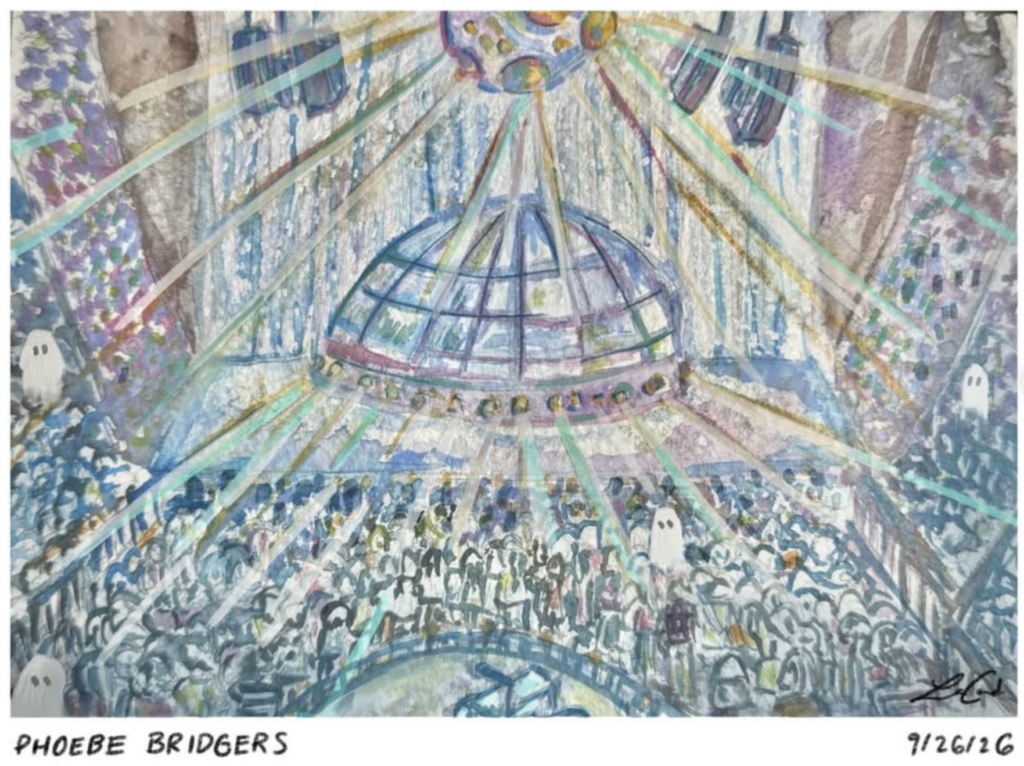
To memorialize the tour, fans have drawn sketches of the shows as they remember them. Drawings posted online have united thousands of nostalgic fans and given them a way to preserve the experience without photos or videos.
“I think it very positively affected the concert experience because it all seemed more real and it was a really special experience,” senior Juliet West, who also attended the concert, said.
Despite the celebrated benefits, the policy does come with downsides. “It made it difficult to communicate inside the venue,” Stoyanov said. “When I was trying to meet up with a friend, we couldn’t really see if anything had changed or gone wrong.”
“Some drawbacks were not being able to tell the time,” West said. “If someone had an emergency, you wouldn’t be able to contact them.”
Since phones were locked away in magnet-sealed Yondr pouches upon entrance to the venues, misplacing your pouch was also a concern. “All the Yondr pouches look the same, and not all had a lanyard, so I was very scared I was going to lose my phone,” Lin said.
While fan sketches are fun and creative, some say they still can’t replace photo documentation. “I do wish I had videos to look back on from the concert,” junior Lauren Molnar, another attendee, said. “I wish I could’ve taken pictures with my friend for memories.”
Bridgers is not the first artist to impose technology restrictions at her shows. Bob Dylan and Alicia Keys have pioneered phone-free concerts over the last decade, though their efforts have flown more under the radar than Bridgers’. Whether this policy will gain popularity among touring musicians is yet to be seen, but people are clearly inspired by the unity it fosters.