The District Board of Trustees convened for its monthly meeting on Wednesday. The Board commended the M-A girls flag football team, heard Measure W Bond updates, held a comprehensive discussion on District cellphone policy, addressed M-A construction projects, and updated District protocols.
Girls Flag Football Team Recognition
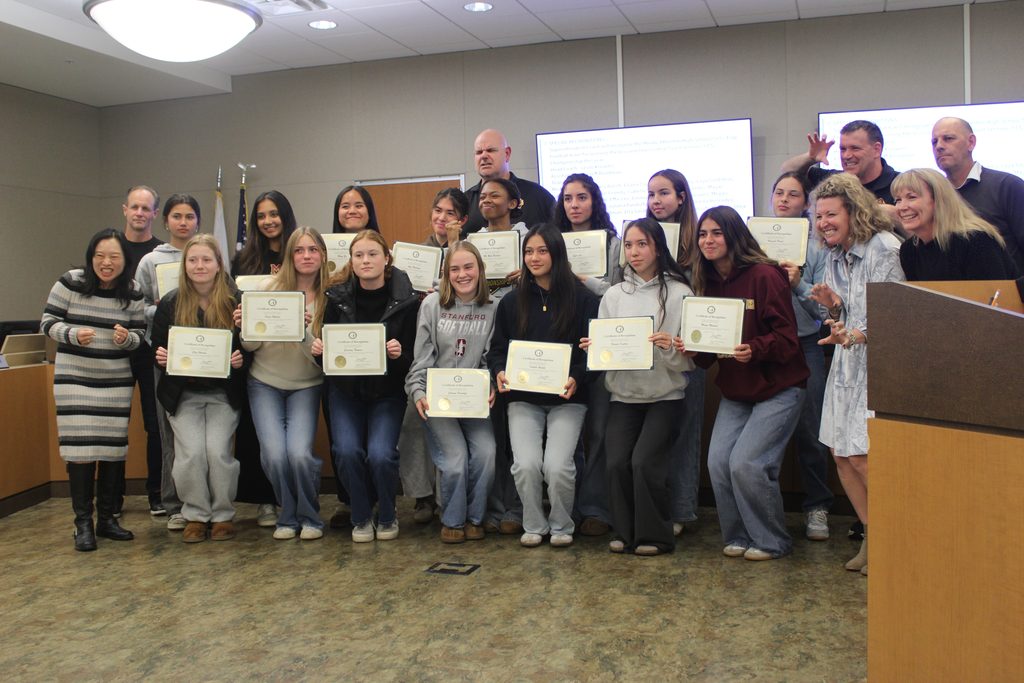
The Board opened its public session by recognizing the girls flag football team, which recently won the CCS Division I championship. Superintendent Crystal Leach recognized and gave a certificate to each of the players, along with the Head Coach Jason Knowles and Assistant Coach Jeff Roodman.
Principal Karl Losekoot highlighted the team’s collaboration and dedication. “The team came together, not only for themselves but for our community. We appreciate the camaraderie that you built amongst yourselves,” he said.
“It wasn’t that long ago that we were at a Board meeting talking about having a flag football team at M-A,” Losekoot said. “It’s only been three years, and here we are three years later, and we just won the CCS Division 1 Championship.”
Public Comment
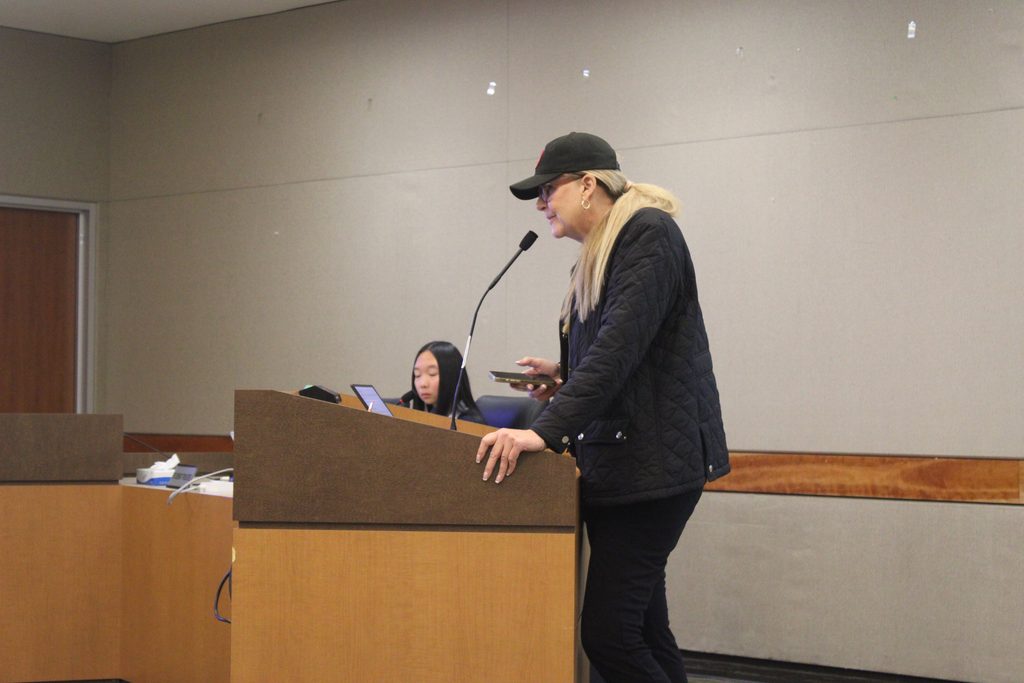
Woodside High School parent Johanna Mahal expressed disappointment with Trustee Amy Koo’s reelection and welcomed Michael Dekshenieks’ win. She emphasized the importance of transparency from the Board.
“Accountability starts at the top,” Mahal said. “No leader should be exempt from meaningful oversight. The superintendent reports to the board. The board answers to this public.”
Phone Policy
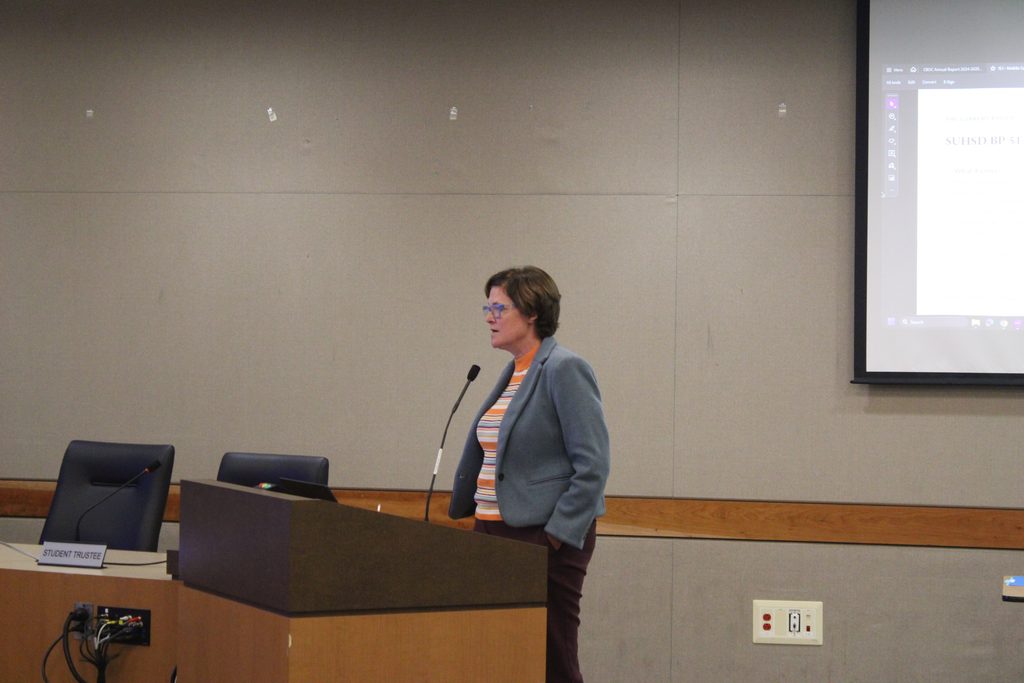
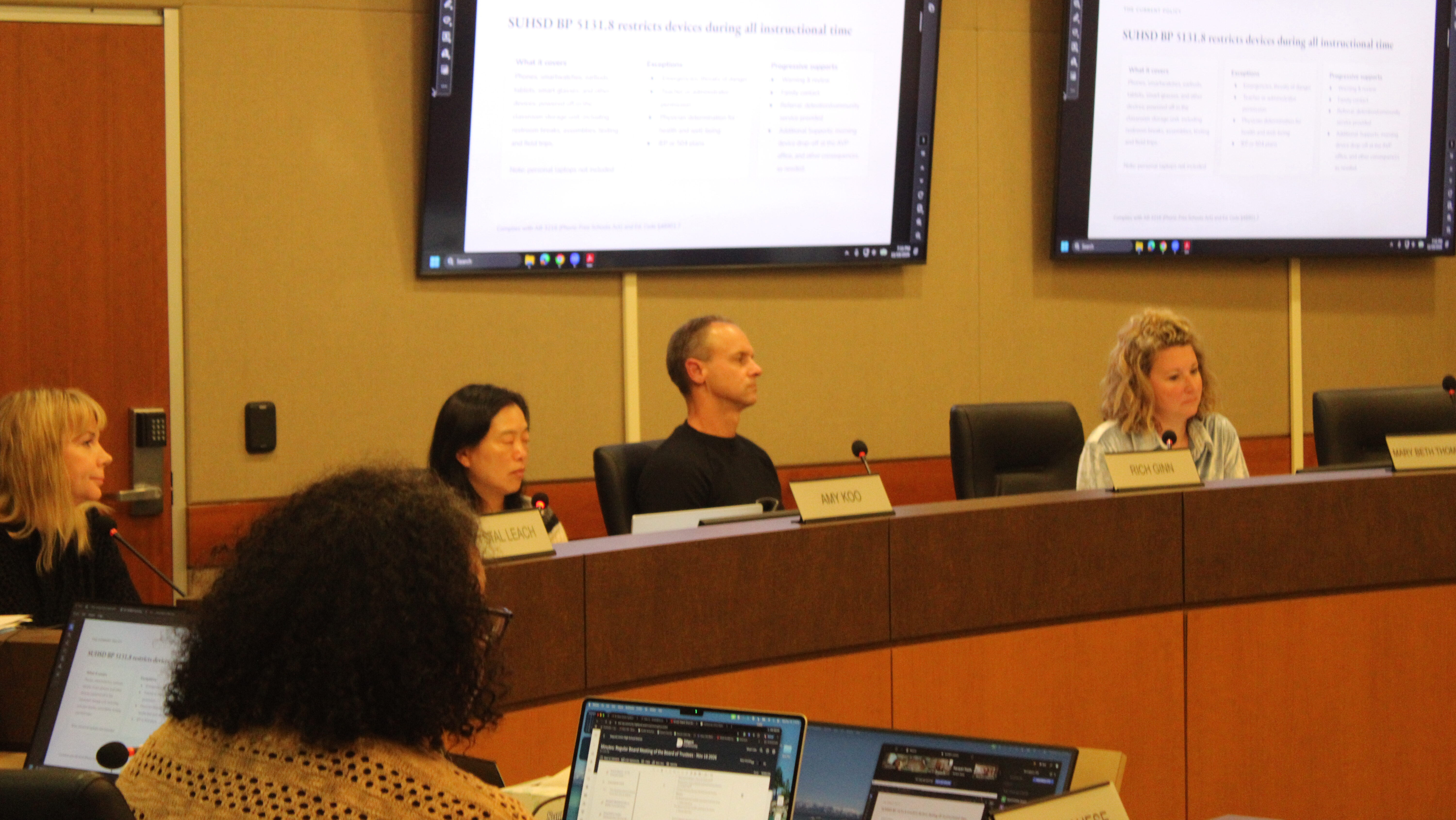
Associate Superintendent Bonnie Hansen proposed maintaining the current cell phone policy for the next school year. The current district wide policy requires students to put away their phones during all instructional time, but allows for students to use them during breaks. “Our students are going to be independent in one to four years [a full day ban] takes away teaching them how to use the devices responsibly,” Hansen said.
In a September 2026 districtwide survey, only 6% of 1,267 students said they would support a full-day ban, with 62% of 1,077 parents and 76% of 273 staff saying they would support the “bell-to-bell” ban.
Hansen went on to explain a three-step plan, should the Board decide to maintain the current policy. The first is to keep devices stored during instructional time; second, to strengthen implementation by resolving any problems reported; and third, to continue to monitor and track outcomes for future review.
Many of the Board members visited schools during the day to observe student interactions. Trustee Maria Cruz and former Trustee Sathvik Nori visited M-A during brunch and lunch. “I was super happy to see kids socializing without looking at their phones,” Cruz said. “90-95% of these students were not glued to their phones like I thought they would be.”
Trustee Rich Ginn shared a similar sentiment when visiting Woodside.
President Amy Koo noticed San Mateo High School’s slightly different policy while visiting. “San Mateo High School focuses on banning smartphones, not necessarily all personal devices,” she said.
“They have had alumni come back to school and, upon reflection, appreciate that they learn not to rely on their phones all the time. The phone is still in their pocket, ready to use, but they don’t have that compelling desire to use it,” Koo said.
“I want to tighten the existing Board policy first and then actually have the measurements to show that this is not working on these aspects,” Trustee Mary Beth Thompson said.
The Board has agreed to keep the current cell phone policy for the 2027-28 school year. The issue will be brought up again at the 2027 January retreat when new data is available.
SHUSD Policy Modification:
The Board reviewed a long list of updated District policies. Hansen walked trustees through more than 50 revised Board policies and regulations. Most changes came from new state requirements passed along by the California School Boards Association.
Here are some of the highlights:
Complaints
Complaints under the Uniform Complaint Procedures will receive a response within 60 days instead of 30, the full time the state allows. This was the District’s own change, not a state requirement. The District will have its own complaint form for Williams complaints—complaints about textbooks, facilities, or teacher vacancies—for the first time.
Staff and volunteers
All volunteers are now mandated reporters. They must complete mandated reporter training and, starting this year, be fingerprinted. Board members are now also mandated reporters of child abuse. Before hiring someone, the District must ask the person’s past employers whether they were found to have committed egregious misconduct.
This rule already covered teachers and now covers classified staff too. Teachers and other certificated staff must complete annual LGBTQ+ cultural competency training and behavioral health training, such as recognizing warning signs of suicide.
The District cannot give employee personnel files to immigration enforcement. The rule covers all District employees, including teachers, classified staff, and administrators. It is one of several updates this cycle that address immigration, including new requirements to notify parents about immigration enforcement procedures.
Students
Students are permitted one excused absence a year for civic engagement. Discipline must be consistent across the District’s schools.
An update to safety policy now covers e-bikes and electric scooters alongside bicycles, scooters, skateboards, and roller skates. The update also reinforces students’ access to crisis and mental health resources.
A new weather safety policy limits strenuous activity, like long runs at practice, during extreme heat or heavy rain.
Parents and families
Several updates affect parents and families. Families requesting interdistrict transfers will now hear back by June 1 rather than within 30 days, which Hansen said gives the District time to review class sizes while still answering families before summer.
If a student uses different pronouns with a teacher than their family, the teacher must address the discrepancy when asked. This includes names or pronouns, and parents can object to their child being treated in a way that does not match the child’s sex, such as being called by a different name.
Parents can also opt their child out of sexual assault prevention education, psychological tests, and lessons they say interfere with their child’s religious development.
The District must notify parents about immigration enforcement procedures and unexcused absences.
Parents who want to visit a classroom must ask in writing and agree with the principal on when they’ll visit, which classes, and for how long.
The Board will reconvene on Dec. 16.