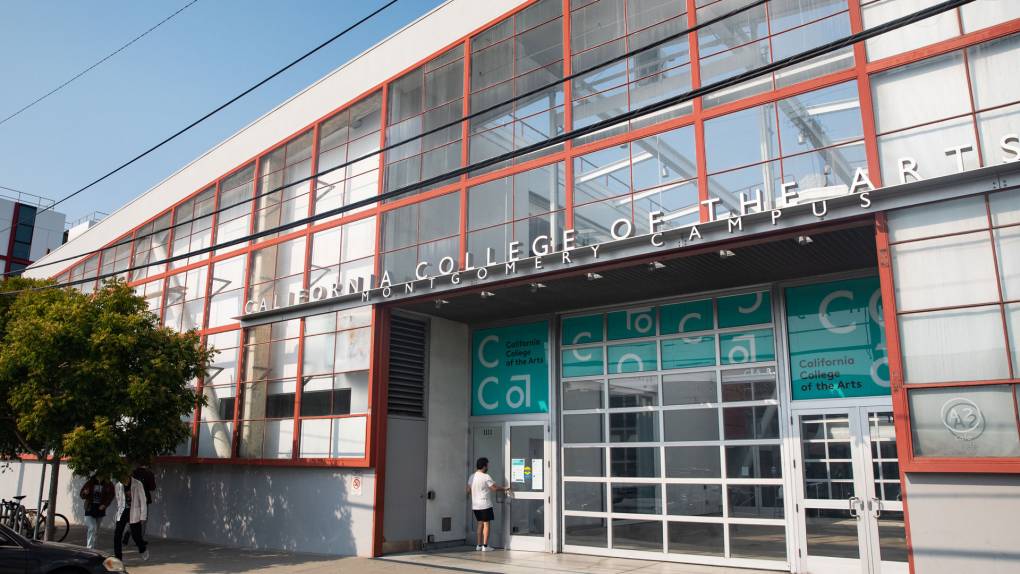
The California College of the Arts (CCA) announced on Jan. 13 that it will close in the 2026-2027 school year, sparking shock within the arts community and beyond. The CCA will be replaced by Vanderbilt University, based in Nashville, Tennessee, building its second campus in the heart of Silicon Valley.
CCA is a private, non-profit arts and design college in San Francisco, founded in 1907. It was previously called the California Guild of Arts and Crafts before adopting its current name. CCA offers a wide range of programs, allowing students to specialize in fields such as animation, industrial design, graphic design, fine arts, architecture, and more. Vanderbilt will preserve CCA’s history by continuing to operate a CCA institute, the Wattis Institute of Contemporary Arts, while also maintaining CCA’s archival materials and continuing to serve alumni.
The decision to close CCA was made for various reasons, most notably declining enrollment. “Demographic shifts and a persistent structural deficit remain significant burdens on our ability to sustain current programs or grow new ones,” CCA’s president, David Howse, said in a statement published on the CCA’s website. With 1,080 students currently enrolled at CCA, those on track to graduate by Spring 2027 are able to complete their degrees, while other students will have to transfer to other institutions.
California Governor Gavin Newsom allocated $20 million to the CCA in last year’s state budget, making the closure even more surprising. While the CCA faced financial struggles over the years, it relied on donations from supporters to continue functioning. However, these funds ultimately proved insufficient to sustain its future. “These measures have proven to be temporary and not sustainable if we are to serve our community effectively,” Howse said.
Community response
The news has shocked many in the M-A and arts community. Among the few art schools in the U.S., the CCA has been a staple art school in California. Digital Photography teacher Dawn Irvine Tower has been teaching art for the past 13 years and attended the school for her undergraduate degree. “I actually shed tears when I read [the news]. CCA was never just a school, it was a creative anchor that helped shape the cultural identity of this region and the lives of generations of working artists,” she said.
Tower worries about the future of the arts due to the CCA’s closure, especially due to the rise of technology and AI. In Silicon Valley and elsewhere, it’s difficult for many artists to find a job. “I worry what this loss signals for the fate of the arts in the city increasingly defined by technology, especially at the moment when human-made creativity feels more vital and vulnerable in the face of AI and rapid innovation,” she said. “Its loss makes the arts feel less accessible in a city that is already difficult for working artists to remain in.”
Similarly, John Giambruno, who teaches Digital Filmmaking, Digital 3D Modeling and Animation, and Digital Communications, has concerns about how the closure will impact students’ interest in the arts. “There are often times when all art forms are less valued, and we want to just be more productive, and we kind of forget how much art is intertwined with our lives, whether it be movies, design, writing, dance, music, etc,” he said.
Giambruno noted how students are oftentimes pushed not to pursue art fields due to money or job issues. “It is very strange [that] as a culture we value art, movies, video games, and we value students to take extracurriculars in arts with music and acting on stage, but when it comes to majoring or focusing a career in those fields, students are often discouraged to pursue those fields,” he said.
Design Tech High School senior Celeste Lauzeral took a summer program at CCA, where she discovered that she was interested in pursuing the arts. “I think it could impact students here in the Bay Area who are looking into art school after high school and wanting to do a pre-college program in the city to try it out. That’s what I did, and it proved to me that I wanted to be an artist and go to art school,” she said. “The fact that the CCA is closing can make it harder for students to find these resources and ultimately could prevent them from pursuing the arts as a career.”
Despite this, required art electives and funded programs are crucial to keeping students engaged in the arts. “Everybody should explore their creativity in one way shape or another. Everyone should take more elective classes and more art classes and appreciate the work done there,” Giambruno said. “This is part of the reason why I am a teacher in this pathway, just to expose students to doing things outside of high school that aren’t just becoming a lawyer, doctor, or an engineer.”
“While a major university arriving may bring prestige and investment, it doesn’t replace the role that an independent art school plays in nurturing creativity, community, and prestige. A name brand college coming in can definitely be bought, but culture has to be grown,” Tower said.
To support M-A art programs, attend the Battle of the Bands on May 15, the Spring Concert on May 19, the Art Show and Guitar Concert on May 21, and the Film Festival on May 22.