2/10
From the eccentric world of Taika Waititi, Klara And The Sun, based on the acclaimed novel by Nobel prize winner Kazuo Ishiguro, was released with a whopping 26% critics score on Rotten Tomatoes. The film had its theatrical releases shortened worldwide, and completely pulled in Spain—it’s not difficult to tell that this film did not live up to its expectations.
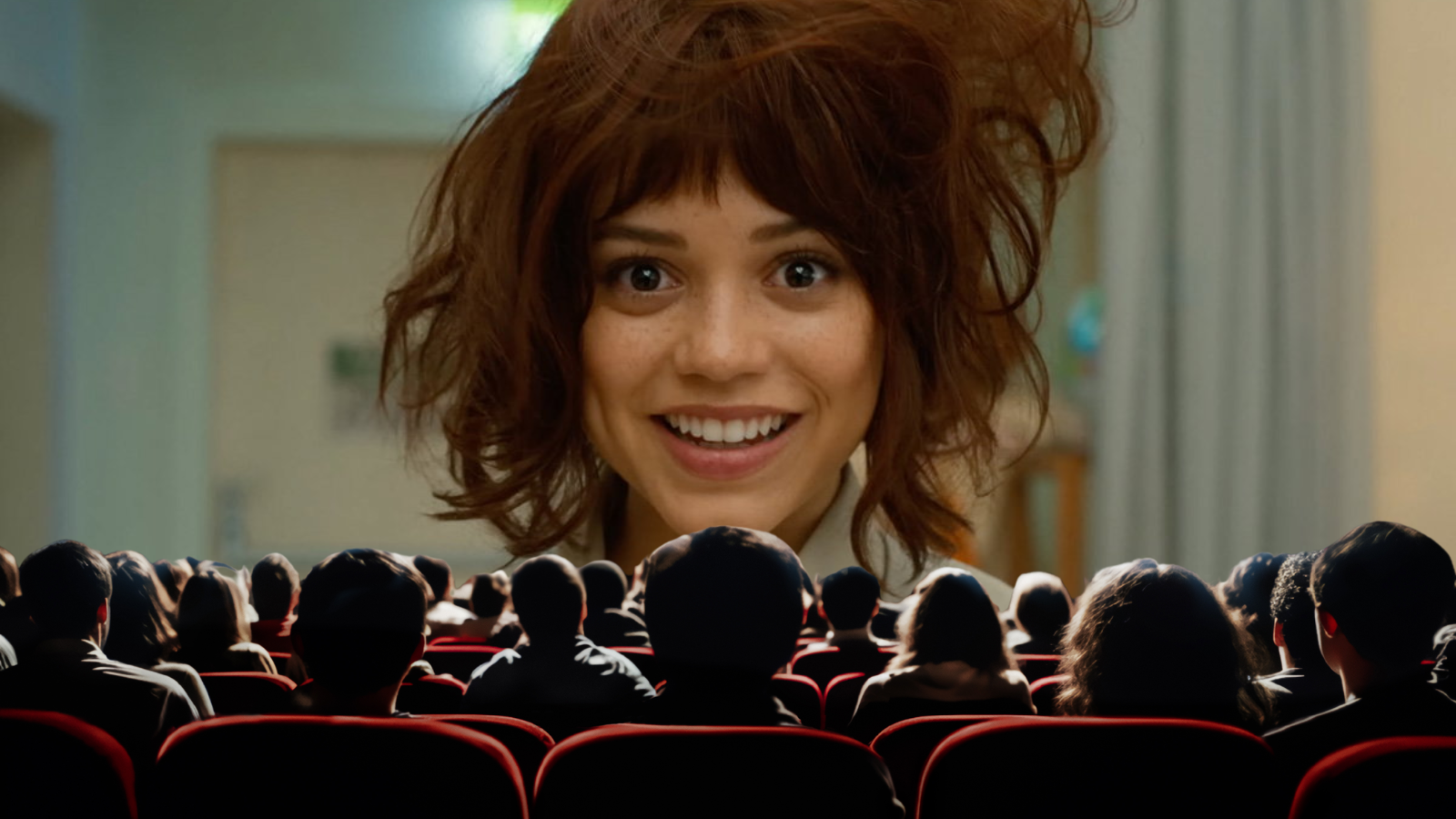
Its pathetic attempts to convey alleged deep ideas on grief and love make the film quickly fail at any meaningful or cohesive message. Between its painfully uneven pacing and emotionally unconvincing storytelling, the movie struggles to make audiences care about the most critical relationships. Even with a promising cast and Jenna Ortega’s memorable performance, Klara and The Sun is more interested in appearing profound and unconventional than actually earning its emotional moments.
Set in a future where artificial companions are purchased to provide teenagers with friendship, Klara (Ortega) is an older model robot waiting for someone to choose her. Her chances are pretty slim since her quirky personality (she’s not like the other girls), seems to get in the way of job.
This existence changes, however, when she is purchased by Josie (Mia Tharia), a teenage girl living with her exhausted and uptight mother, Chrissie (Amy Adams). Chrissie is extremely skeptical and annoyed with Klara at the beginning, but don’t worry, she has a painfully predictable change of heart later. Klara soon discovers that Josie’s family is hiding a complicated history involving illness, grief, and a desperate attempt to prevent another loss. Josie’s older sister, Sal, passed away, and Josie herself is suffering health complications after being ‘lifted’: a procedure which enhances a child’s intelligence.
Determined to save her new friend, Klara places her faith in the Sun, a power that she believes can heal her companion and answer her prayers. What follows is a rollercoaster of alleged explorations on love, humanity, and sacrifice. Spoiler, every nuanced and interesting idea throughout the film is flattened into a glossy fairytale targeted towards ten year olds.
The savior of this film is Ortega as Klara. It feels as though she descended straight from heaven. Dramatically flaunting her angel wings before rescuing the people on board of this trainwreck of a movie. Ortega’s movements and expressions give Klara an almost childlike quality without making her feel entirely robotic. Her portrayal of a character whose innocence makes even the most ordinary human interactions seem extraordinary allows Klara to feel authentic even when she doesn’t have the right to be.
Tharia provides a decent performance as Josie, bringing vulnerability to a character whose circumstances are considerably more complicated than they appear. However, the relationship between Josie and Klara never becomes as emotionally convincing as the film seems to believe it is. Josie is unbearably kind to Klara, but, for the sake of the viewers, that is painfully boring. The only point of conflict within their relationship happens when Klara leaves Josie for hours to go talk to the Sun to help “save” her from her illness. Josie gets angry for two minutes. It’s never addressed again.
Despite her considerable talent, Adams is particularly underutilized as Chrissie. Adams effectively captures the desperation and emotional exhaustion of a mother whose love has become tangled with fear and guilt, haunted by the loss of her eldest daughter. However, she is trapped by the script. It seems like she knows that too, looking extremely uncomfortable in most of her scenes. She carries an enormous amount of grief, yet is never given a satisfying opportunity to express it.
As for world building, welcome to a post WWIII America in which the federal government has banned the internet for a reason we’ll refuse to address, and has separated society by surgically changing children’s intelligence for which the societal implications we will also refuse to address.
The film continuously introduces several introspective ideas on human existence and grief but never expands on them. When Josie hosts a party for other lifted children that she will be soon going to school with, she brings her ‘unlifted’ friend Rick. Rick makes robot birds, and when Josie mentions this in front of the lifted children, they begin to pester Rick with questions about the purpose of said birds. What’s the point of making birds if they can’t do anything except just be birds?
Although Josie quite literally tells them what they could be used for, like surveillance, she is quickly dismissed. While these lifted children act like cartoon villain characters, Klara speaks out. She says that birds can just be birds, with no inherent purpose. The lifted children are in shock, and Josie stays quiet. Klara is set up as the heroine who says something so earth shattering that the humans could not have ever imagined themselves. The robot knows more about existence than the actual humans. AI saves humanity once again. You can’t help but think we’re doomed.
It also feels like the most interesting parts of the source material, namely the fact that Chrissie tried to make Josie’s dead sister a robot to deal with her grief, are spoken about for hilariously little amounts of time. There is approximately one conversation about this insane plot, and not a single part of their final reconciliation seems natural.
If you think that jumped out of nowhere, you’re not the only one. The main part of the story doesn’t kick in until more than halfway through the movie, and even then it prances around the same concept over and over again.
But don’t worry, it’s not just the start of the movie that feels all weird. The pacing of the ending conflict is genuinely ridiculous.
The only thing this film succumbs to is an incoherent mess. One thinks Josie is destined to die, but instead she miraculously survives after Klara destroys a farming machine which she believes is stopping the Sun’s power by releasing smoke, blocking its light. She does so by stabbing herself and releasing parts of her robot blood into the machinery until it malfunctions, her final wish being to save Josie once and for all.
The ending leaves you confused, as Josie and her mother have a final reconciliation during the time Klara performs her self-sacrifice, which she survives anyway. Did Josie’s robot make her and her mother confront their struggles and grief which inevitably saved Josie from her sickness? No one is sure. Does Klara finally understand human emotions or is she just following her code? No one is sure, and frankly, this movie gives you very little reason to want to find out.
The cinematography attempts to liberate this movie from complete catastrophe. The sets, costumes, and coloring makes this movie feel more alive than it is. It’s engaging, and better yet, distracting. You’ll forget all about the film’s lack of substance.
In response to negative reviews and poor box office numbers, director Taika Waititi referred to film critics who poorly rated the movie as “those sad lost souls who couldn’t achieve their dreams of becoming artists, and thus settled, and became critics.”
There’s a reason why it’s only showing at 9:15 a.m. on Wednesdays.
“Irrelevant. Out of touch. Obsolete,” Waititi also called the critics. Funny, I was thinking the same thing.