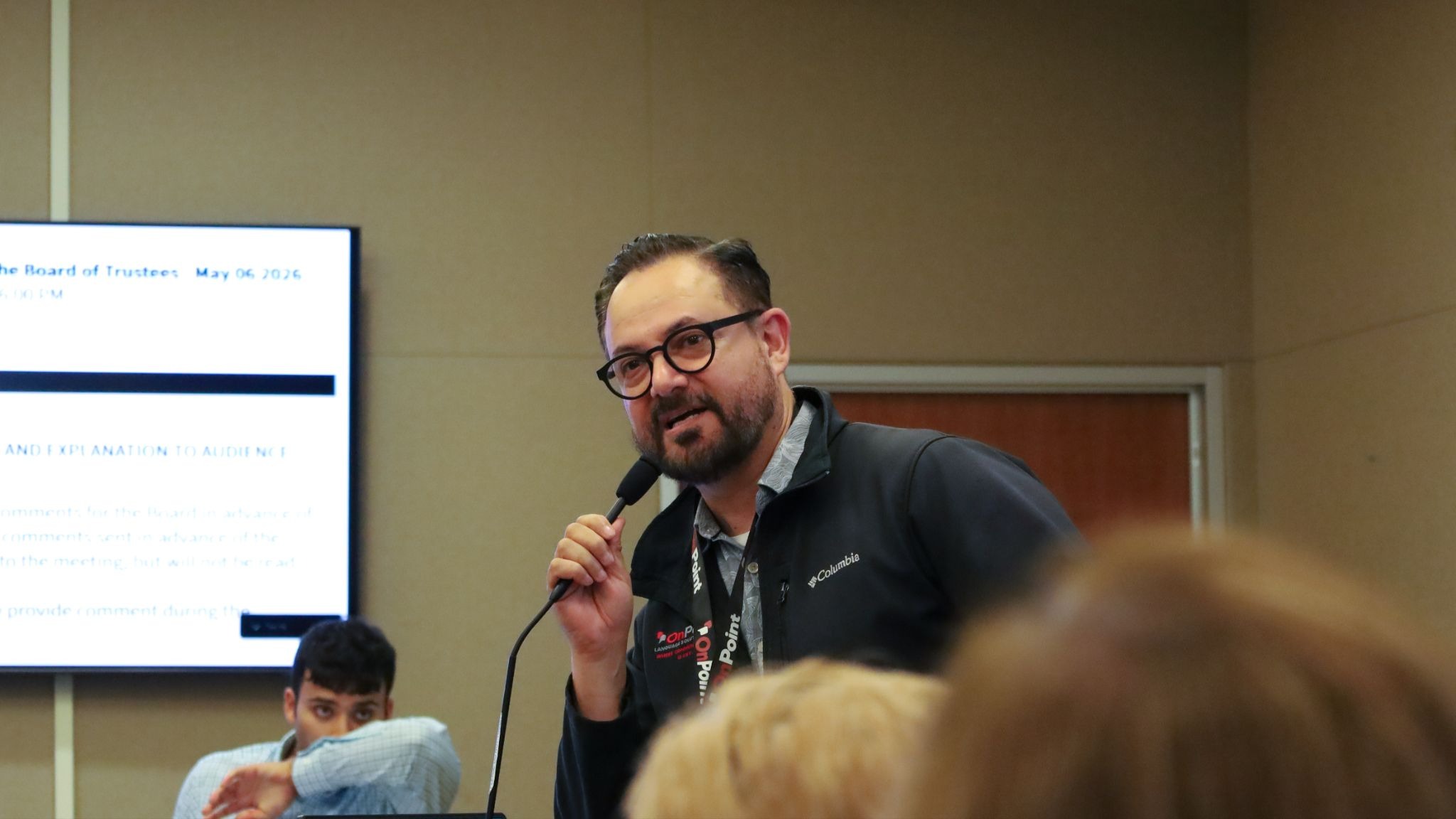
The District Board of Trustees convened for its monthly meeting on Wednesday night. The Board held a lengthy discussion about the District’s cell phone policy, recognized the reclassification of English learners, and heard concerns from prospective East Palo Alto Academy (EPAA) students.
Cell Phone Policy
The Board heard a presentation and public comment on the topic of phone-free schools to address AB 3216, which requires all California school districts to adopt a policy that limits phone and device use during the school day by July 1, 2026. Plans for phone policies next year include option A, which would require a bell-to-bell phone ban, or option B, which would resemble the current policy, where students would have class-time phone restrictions but retain the ability to access their devices during breaks.
During the public comment section of the discussion, multiple community members voiced concerns both surrounding the potential drawbacks and benefits of the implementation of a full-day phone ban.
“Some students have difficult home situations, long commutes, jobs, or responsibilities outside of school, and being able to submit work or communicate during the school day matters more than people realize,” Carlmont freshman Katya Chicanov said, arguing against a full-day ban. “Carlmont High School already shows that a balanced policy still works. In most classes, when teachers ask students to put their phones away into a phone pouch, students still do it.”
Other commenters argued in favor of a full-day phone ban. “I actually find it almost heartbreaking when I see my students the minute they walk out of my class putting their faces directly into their phones,” Sequoia English teacher Stacy Wenzel said.
The presentation, given by Jarrett Dooley, outlined the timeline for the board’s decision, considerations, and resources, and survey data around student, staff, and parent opinions on phone policy.
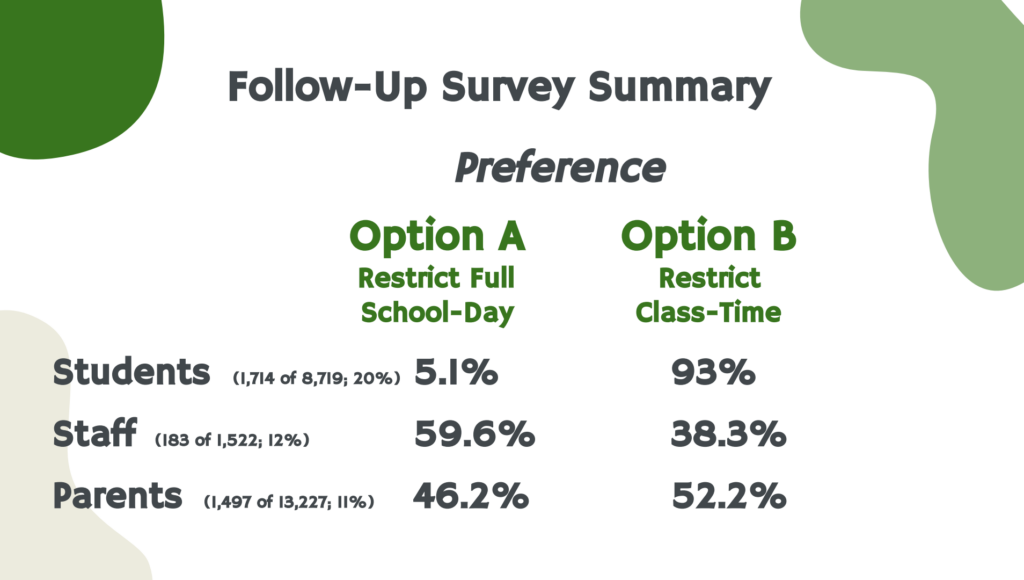
Following the presentation, the Board discussed its current thoughts on phone policy for the next school year. Trustees Richard Ginn, Dr. Maria E. Cruz, and Sathvik Nori all favored option B and stricter enforcement of current class-time bans. Trustees Amy Koo and Mary Beth Thompson expressed a slightly different opinion, favoring initially implementing option B before transitioning to option A and having a full-day phone ban.
The Board will continue to discuss phone policy and will make a decision by July 1, 2026.
English Learners Recognition

The Board celebrated the reclassification success in the District, as this year, 100 students District-wide changed their status from English Learner (EL) to Reclassified Fluent English Proficient (RFEP). This reclassification may happen at any time in the school year if students meet the requirements laid out by the district. Students put in tremendous effort and determination to master not only one language, but two.
Sequoia senior Diana Maganda addressed the Board on behalf of the reclassified students. “When I came to Sequoia High School, I continued ELD 3, and I decided to challenge myself by enrolling in IB English class,” she said. “It wasn’t easy, but I was determined to grow, improve, and push beyond my limits.”
These achievements mark the continuation of the District’s success in helping provide support to English learners. In the 2018-19 school year, the reclassification rate was only 2%, but by the 2024-25 school year, it had reached 10%.
EPAA Student Concerns
During the public comment section of the Board meeting, multiple community members spoke about concerns that prospective EPAA were denied entry due to the school’s inability to accommodate their Individualized Education Plans (IEPs).
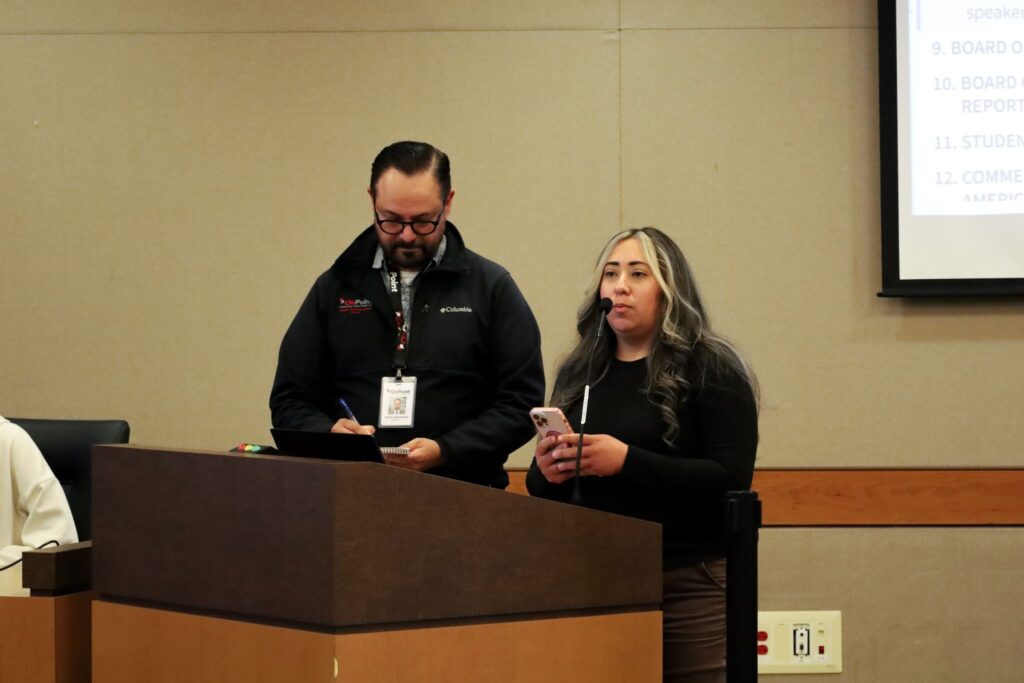
“This is not just one family, but in our conversations with the community, it appears to be over 10 families,” EPAA teacher Marilyn Travis said. The prospective students received a letter from the District indicating that they were denied enrollment because EPAA did not have the resources to accommodate their IEPs.
Jocelyn Alvarado is a parent of a student at Cesar Chavez, who applied to EPAA and was denied. “It was pretty devastating for her because she couldn’t attend the school that she always wanted to for high school with all her friends that she grew up with,” Alvarado said.
The parents and EPAA community members urged the District and Board to ensure that all students, including those with learning accommodations, get fair and equitable access to education so they can succeed.