

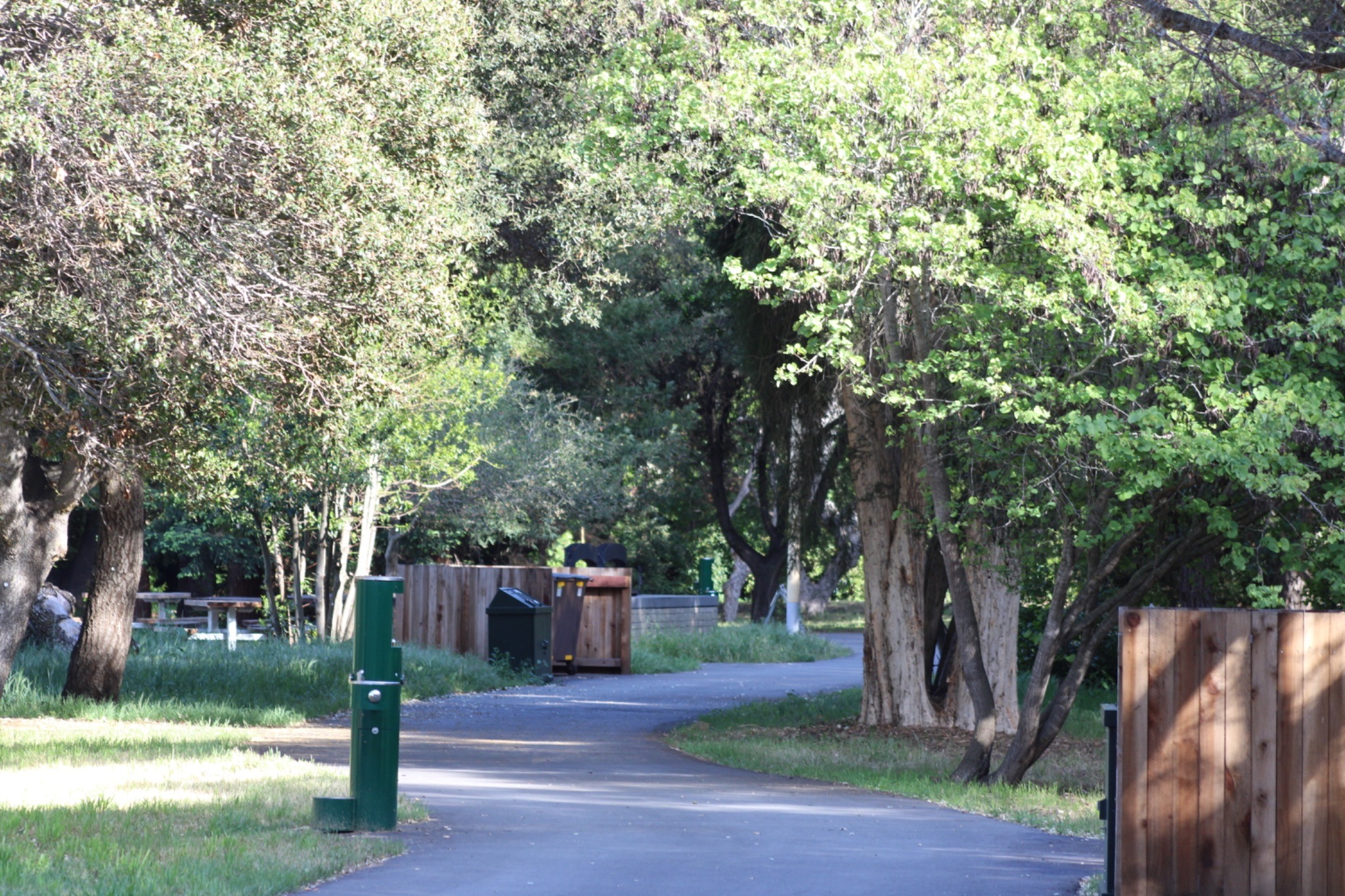
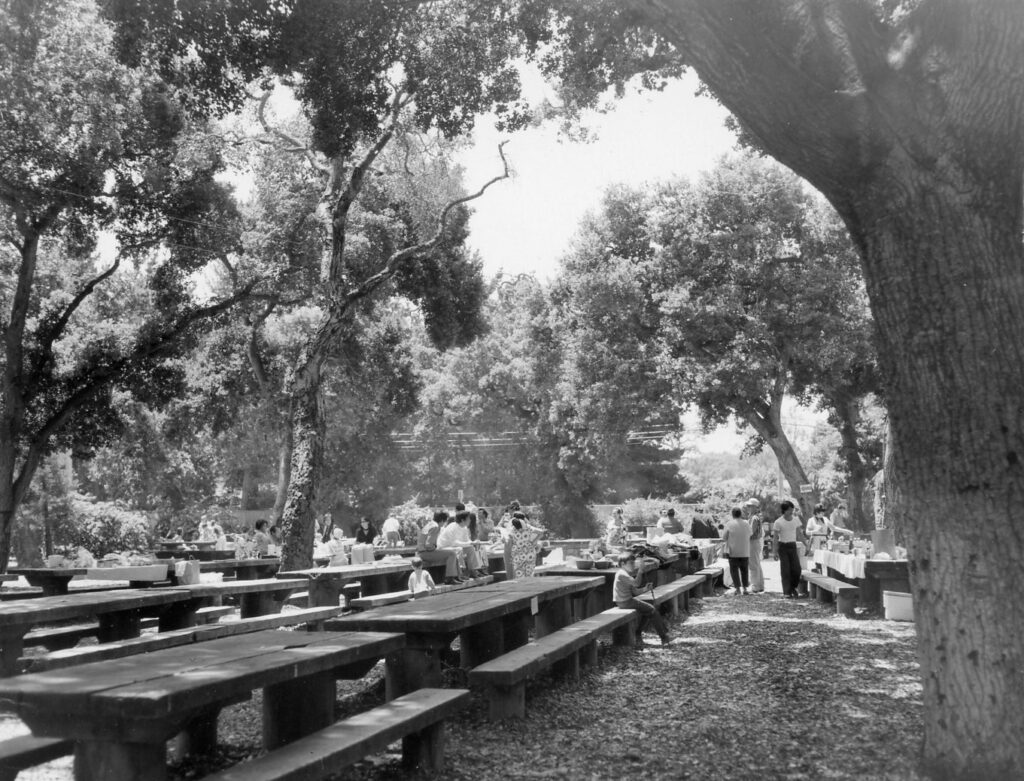
Flood Park has hosted family picnics, pickup games, and community gatherings since it opened in 1937. Even as many new amenities like tennis and basketball courts, a drop-in picnic area, and a pump track are being added, the San Mateo County department of Parks and Recreation has kept its long history intact.
Prior to European settlement, the area that is now known as Flood Park was in the territory of the Ohlone people, an indigenous tribe that inhabited the Bay Area. However, no evidence of inhabitants was found within the 21 acres of land that would go on to make up Flood Park. Under Spanish rule, the land became part of Rancho de las Pulgas in the California mission system.
The park takes its name from James Clair Flood, who bought the 600-acre tract of land that was once called the Carroll Property. There, he built his estate known as the Linden Towers, near the present-day park grounds.
Once a saloon keeper in San Francisco, Flood was an Irish American businessman who made his fortune in silver mining in Nevada. He would eventually establish the Nevada Bank and invest in Bay Area real estate to solidify his financial power.
Flood spent years building the estate, which he intended to outshine every other property on the Peninsula. His mansion was meant to look like a castle, with its fine exterior woodworking, and massive towers. In fact, the property was even nicknamed “The White Castle.” Construction was finished in 1878.

Flood would only live in his estate for a short time, as he died on Feb. 21, 1889, while visiting the city of Heidelberg in Germany. The estate would then fall into the hands of his daughter, Jennie Flood, who then gave the property to UC Berkeley. Later on, Flood’s son, James Liry Flood, bought back the property and held it until his death in 1926.
Following the demolition of the estate in 1934, the land was subdivided in the 1930s and the contents of the mansion were auctioned off publicly. Later on, a special tax was levied by San Mateo County in 1936 to fund park facilities. The tax allowed the County to purchase the subdivided land and convert it into a park that same year.
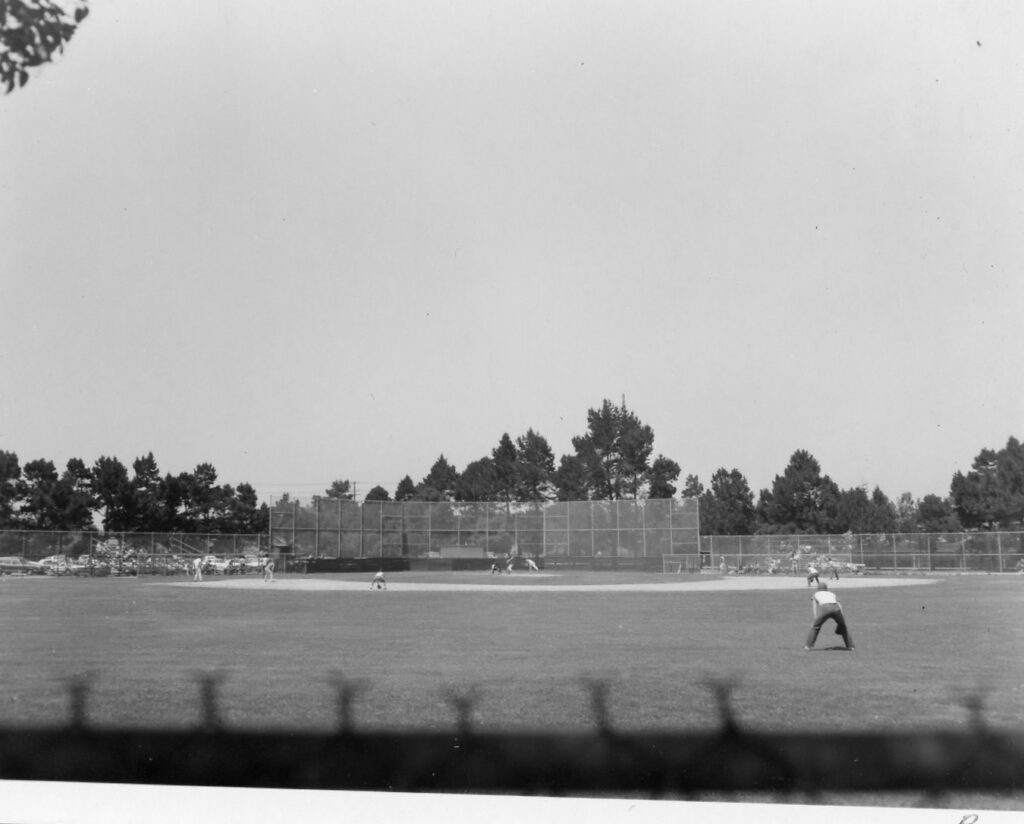
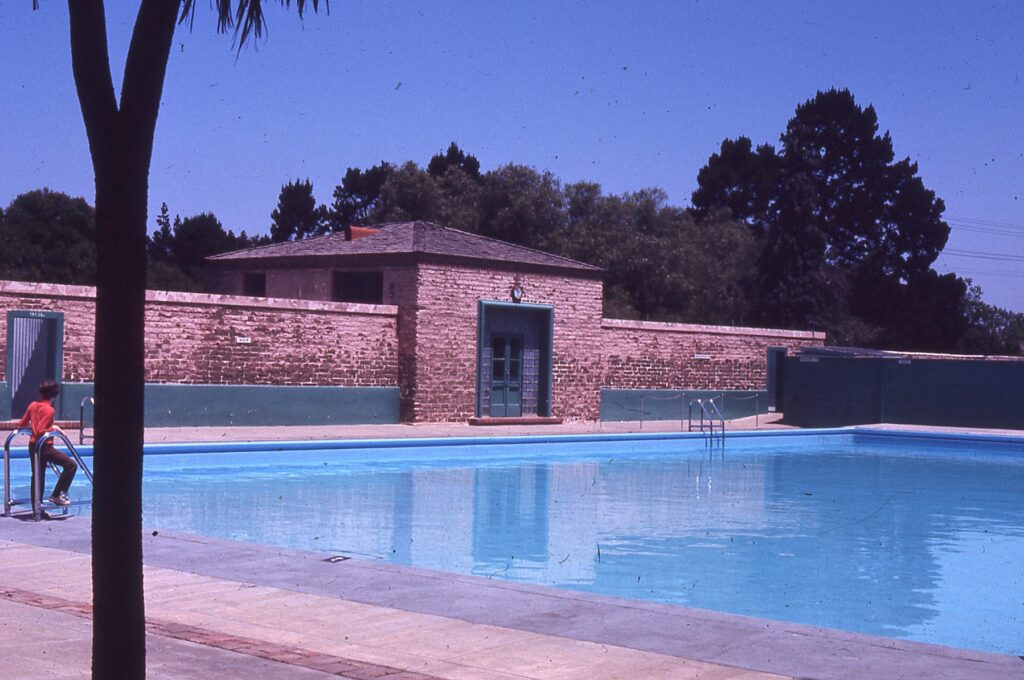
With the help of the Works Progress Administration (WPA), an administration building, community swimming pool, and public restroom were added. Later additions in the 1950s would include a baseball diamond and tennis courts. Flood Park is the second park ever built under the San Mateo County park system, only after Memorial Park in Loma Mar.

Further renovations of Flood Park and the San Mateo County Park system would be the triumph of a few community members. One major contributor to Flood Park was Phyllis Cangemi, a woman diagnosed with Hodgkin’s disease, who led a $800,000 modernization of Flood Park in the ’80s. Cangemi’s efforts resulted in increased infrastructure that made the park more accessible for physically disabled people.
The playgrounds were adjusted to accommodate disabled individuals, water fountains were designed with the physically disabled in mind, and benches were fitted with better railings to help people mount and dismount wheelchairs.
“An obviously proud Cangemi notes that since the park’s modern renovation, it has attracted people from all over the world who visit to see exactly what can be done for people with disabilities,” Michael Svanevik and Shirley Burgett wrote in their book, San Mateo County Parks: A Remarkable Story of Extraordinary Places and the People Who Built Them.
Another notable name in Flood Park’s history is Kendall Simmons, who paved the way for diversity and inclusion among San Mateo Country park staff.
Simmons was a recreation director in East Palo Alto from 1966-1973 and was hired as an area manager by San Mateo County Parks director Jack Brook, who was looking to introduce more diversity to his department. Simmons was the first Black American to serve on the park’s staff. Eventually, Simmons became responsible for the park’s manpower, safety, and entry-level hiring. In 1973, Simmons hired Dewayne Austin, the first Black American park ranger, to protect Flood Park.
“Unquestionably, as a result of his efforts, this department is today more receptive to both women and people of color,” Supervising manager of Flood Park Pam Noyer said in an interview for Svanevik and Burgett’s book.
More than 85 years in, Flood Park is still being rebuilt. San Mateo County’s Realize Flood Park Project plans to keep adding amenities in the coming years. To check in on the progress of the project, you can look for updates here.



Thank you for this; what a quite remarkable history.