5/10
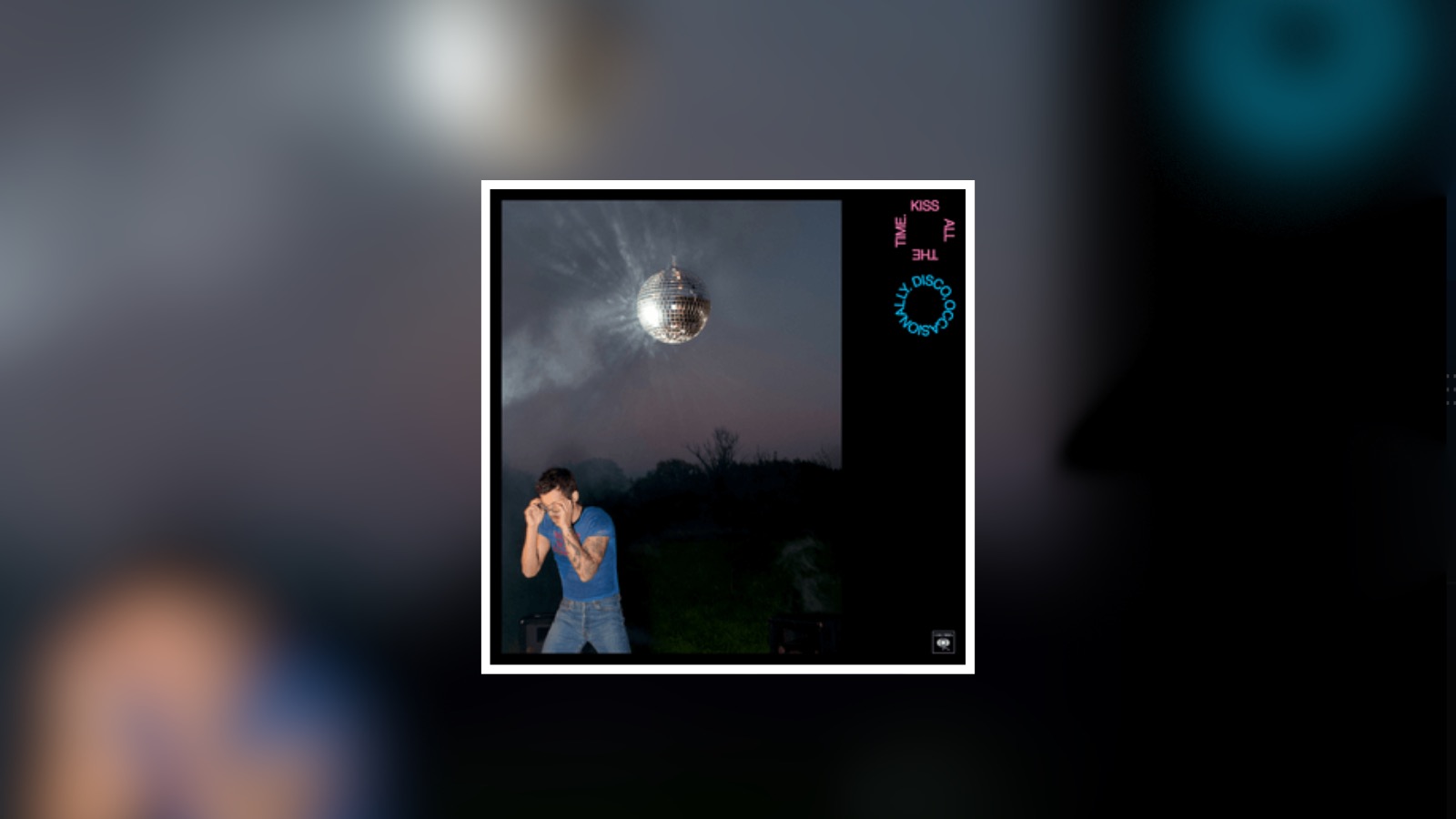
It’s been nearly four years since Harry Styles’s Album of the Year winner, Harry’s House, was released. Now, he’s finally returns with Kiss All the Time. Disco, Occasionally., a 12-track album that sells itself as a bold pivot into electronic dance music. Inspired by nights at European techno clubs, Styles promises to embrace bolder, less-mainstream genres.
While “Aperture,” the album’s lead single, delivers on that promise when it dropped in January, the rest of the album doesn’t exactly follow suit. For an album that advertises itself as a reinvention of Harry Styles’ traditional flair, it feels shockingly like the Styles we’ve always known. Kiss All the Time. Disco, Occasionally’s strongest moments are on its ballads, where Styles returns to the sounds he seems most comfortable with. It’s a little underwhelming, to say the least.
“Aperture” remains one of the album’s genuine highlights. It’s five minutes long, and although stylistically similar to the rest of the album, it’s far more complex in its lyricism and shifting chord progressions. The track also captures the album’s admittedly simple thesis: let light in, acknowledge faults, and move forward. “Aperture lets light in / It’s best you know what you don’t / Aperture lets the light in,” Styles sings, using a simple, yet effective camera metaphor to discuss vulnerability, selling the album’s thesis that confronting what you don’t know lets you grow. For once, the electronic flourishes feel purposeful rather than decorative, and the chorus lands exactly where it should. It’s the sound of an artist who understands what he’s trying to do.
It’s a pretty steep fall-off from there, though. “American Girls,” the album’s second track, runs for three minutes and 33 seconds too long. The two verses—if they can even be called that—are compiled with postcard-level observations and poetic phrases that sound like they were written by a 6th-grader who thinks they’ve just discovered love.
“American Girls” is supposed to capture the loneliness of surface-level relationships—Styles himself called it “quite a lonely song.” Its main flaw, though, is in its songwriting. Its most philosophical lyric can only be described as profoundly uninteresting: “Her sweet lies / Your temptations / Don’t deny / Her frustrations / Just spend your life / With those American girls,” he sings. Wow. How unique.
The lyrical weakness only slightly lets up across the album’s midsection. “Are You Listening Yet?” builds momentum but fizzles out without any payoff, burying Styles’ legitimately good vocals under a half-finished wall of techno-sounds and production. “Dance No More” shoots pretty high, aiming for something like a Mark Ronson “Uptown Funk”-style groove. It lands closer to a cruise ship DJ set.
“Taste Back” and “The Waiting Game” aren’t half-bad either, but they pass without leaving a lasting impression. It’s all great background noise, though.
“Season 2 Weight Loss,” Style’s self-described mission statement, gets to the crux of Kiss All the Time. Disco, Occasionally.’s problems. It tackles an interesting concept: Styles’ maturity and artistic evolution, suggesting he has outgrown the version of himself the public knows. Yet the song ultimately settles for a familiar “coming back stronger” narrative—the kind of message that many artists lean on at some point in their career. It doesn’t tell us how he’s changed or what he’s leaving behind, just that he has. Still, it’s a glimmer of good lyricism in an otherwise unsophisticated album. It’s truly a shame Style’s writing is buried beneath muffled vocal mixing and reverb.
The irony is that when Styles strips away the electronic additions, his album comes alive. “Coming Up Roses” is easily one of the record’s best tracks—a waltz with an orchestra that Styles co-arranged himself. It’s emotionally intelligent and varied, coaxing the listener through the lyrical story Styles wants to tell about vulnerability, insecurity, and learning from relationships, even when they don’t last.
“Paint By Numbers” follows a similar thread. It’s musically astonishing, and thematically sound. Styles wrestles with the disconnect between his public image and who he really is—the personal cost of celebrity status. “They put an image in your head and now you’re stuck with it / You’re the luckiest, oh, the irony, holding the weight of the American children whose hearts you break,” he sings. Although the song’s themes feel foreign to most, a clever metaphor and some hard-hitting honesty make the song feel universal.
“Pop” rounds out the album’s bright spots. It’s catchy, while still actually pulling off the electronic elements that Styles was going for throughout. It’s a total rethinking of the traditional, smooth pop Harry Styles style that shone in Harry’s House, in favor of percussion-heavy, techno beats. Even here, Styles buries some of his strongest vocal moments under effects that soften the impact—a frustrating pattern for a singer who is so individually talented.
Kiss All the Time. Disco, Occasionally. isn’t a total disaster. It contains a few great songs and a handful of solid ideas. But with Styles’ resources, talent, and almost four years of development, avoiding disaster is a low bar. Maybe the dance floor was never the move—Harry’s House was phenomenal because it leaned into what Styles does best. Kiss All the Time. Disco, Occasionally. doesn’t prove that Styles has changed. It proves he probably shouldn’t try to.