

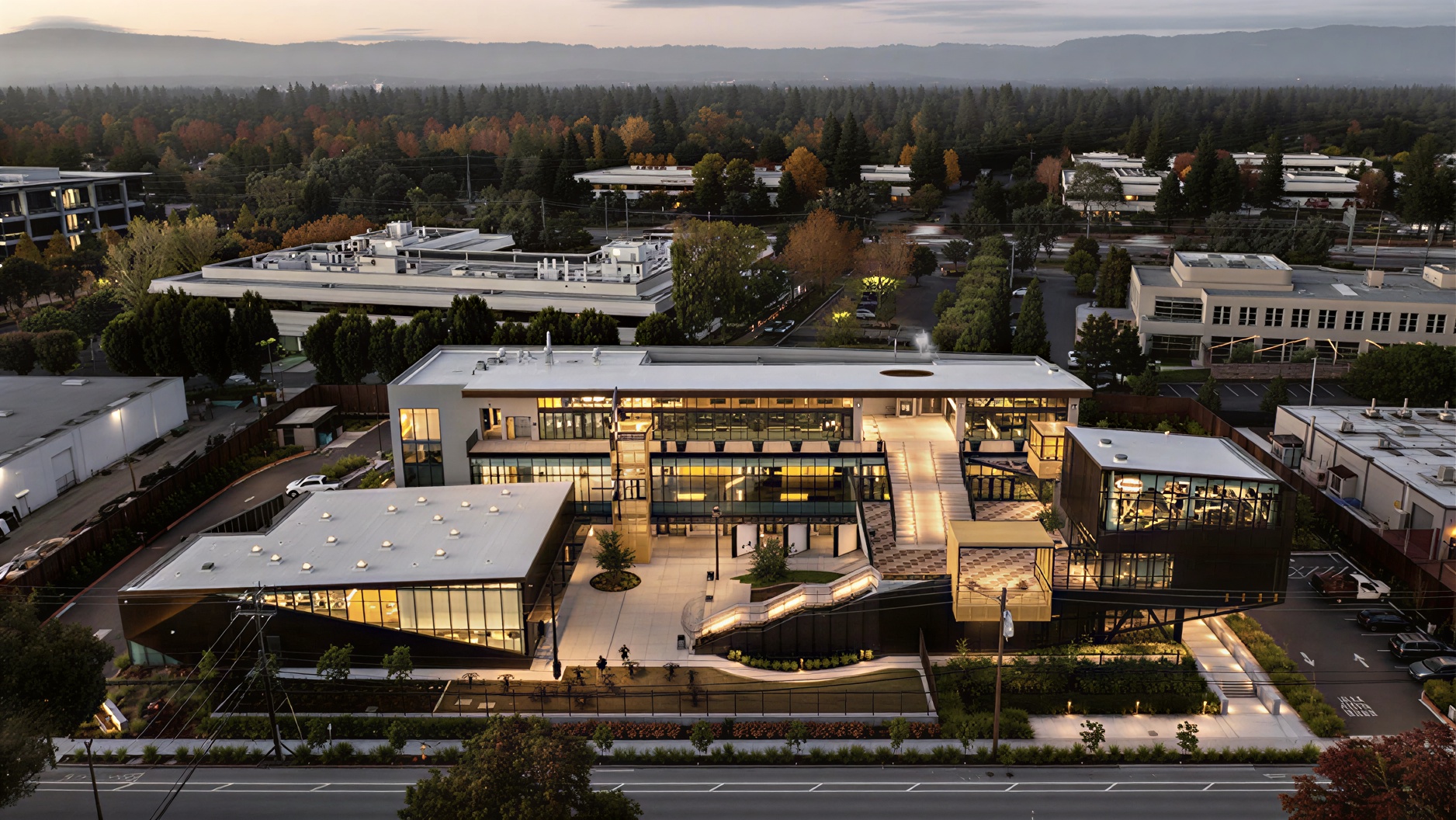
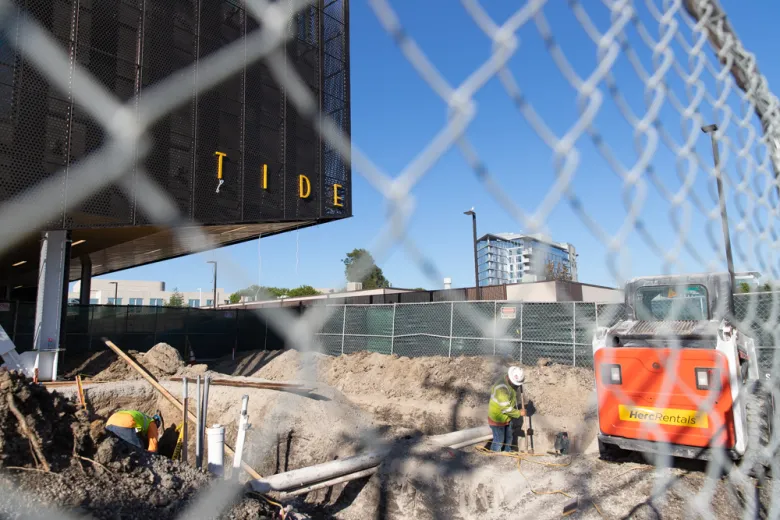
On Aug. 14, 2019, TIDE Academy’s first 106 freshmen showed up to a brand-new $50 million campus in Menlo Park. As wires hung from the giant TIDE Academy sign and noise from the construction workers digging a trench at the front entrance echoed throughout campus, classes met for the first time.
By the time TIDE opened, two of its founding teachers had quit, its founding principal had been demoted and then resigned, and the principal hired to replace him had walked away two weeks before the first day.
Six and a half years later, on Feb. 4, 2026, the District Board of Trustees voted unanimously to close TIDE. The District’s decision is now the subject of a federal lawsuit, a Brown Act complaint, and a recall campaign against three trustees.
An Unusual Beginning
By 2019, enrollment was projected to climb past 10,000 students, and the District didn’t have the acreage for a traditional new high school. As a result, in June 2014, voters across the District approved Measure A, a $265 million bond to expand and modernize its high schools.
The District spent $9.3 million on a roughly 2-acre lot at 150 Jefferson Drive in Menlo Park, the future TIDE site, and $3.4 million on a second site in San Carlos the same day. The second purchase triggered immediate outrage from residents who feared the District would encroach on Laureola Park, the only city park east of El Camino Real in San Carlos. The San Carlos City Council passed a resolution opposing the District’s acquisition of the site, and also noted the irony of the District having closed San Carlos High School decades earlier. By 2016, the District abandoned plans to build on the San Carlos site and leased it to private tenants for commercial and industrial use.
However, the Menlo Park site came with unusual environmental and safety concerns. The Phase I environmental survey for 150 Jefferson called it “an area where volatile organic compounds from an unidentified source are present in ground water.” In fact, groundwater on adjacent properties had tested for trichloroethene—a highly toxic carcinogen—at concentrations far above the California drinking water limit. On TIDE’s soon-to-be campus, contractors detected petroleum hydrocarbons, another highly toxic substance, in soil, which triggered a large-scale scientific investigation before construction began.
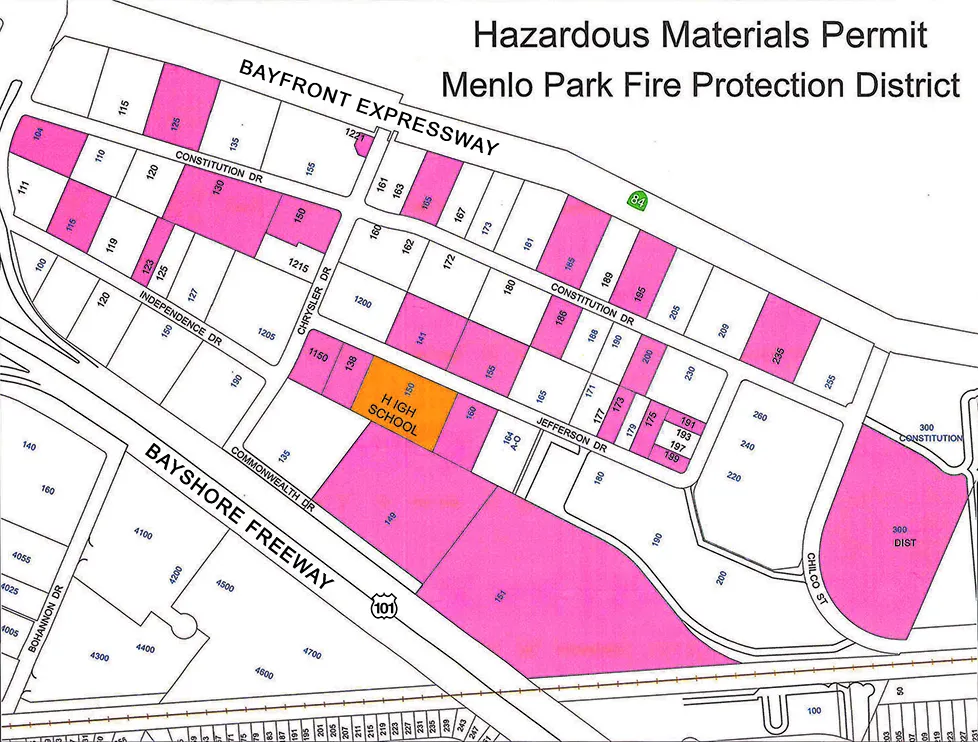
The previous tenant of the Menlo Park property was Bay Associates Wire Technologies, which operated on the site since the late 1970s. The company contaminated the land with chemicals known to cause irreversible neurological and reproductive toxicity, alongside significantly increased risks of inflammation and cancer.
Public officials objected bluntly to TIDE’s creation. “We may not be able to stop this school from occurring. But I certainly won’t endorse it because it’s a fundamental life safety issue,” Menlo Park Fire Chief Harold Schapelhouman told the Almanac. However, after two years of testing, the California Department of Toxic Substances Control finally cleared the site for construction.
These disproportionate environmental health burdens were certainly not a coincidence. TIDE is located in East Menlo Park, bordering Belle Haven, a historically redlined and neglected community. TIDE was the first new district-run high school in this area in 60 years, since the closure of Ravenswood High School in 1976.
The Failed Model
In late 2016, the District commissioned a Menlo Park studio, Personify, to develop a brand for TIDE Academy. The studio presented 21 candidate names, and the Board picked TIDE—Technology, Innovation, Design, and Engineering. A 2019 District mailer sent to voters described the school as “a new alternative small school to meet the diverse needs of our incoming student population.”
The ultimate educational vision was Silicon Valley. Meta’s headquarters sat only a mile and a half away. The precedent was there—Oracle had paid $43 million to build Design Tech High School inside its corporate campus and leased it back for just $1 a year. TIDE’s model was heavily designed around the charter school, but ultimately never received support from Meta.
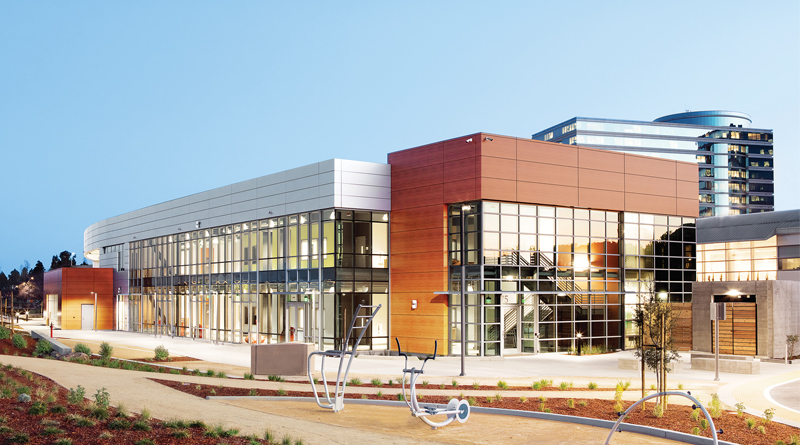
In reality, TIDE became a pseudo-extension of Foothill College. Through dual enrollment, students could take community college classes during the school day. Some Foothill faculty taught at TIDE directly, and seniors graduated, on average, with 42 college credits: nearly a full year of college.
Four Principals
By the time those first students arrived on Aug. 14, 2019, the school’s third leader was running it. Mike Kuliga had been TIDE’s founding principal since March 2017. But by summer 2018, he had been demoted, and by 2019, he had disappeared. Additionally, two of his founding teachers, David Lai and Steven Wong, left before opening. The specific reasons for these sudden departures were never officially confirmed by the District.
Kuliga’s replacement, Shamar Edwards, resigned on July 31, 2019, two weeks before the first day. The next year, Edwards ran for the District Board and finished third in a three-way race for Trustee Area C. The winner of that race was Rich Ginn, the same trustee who, five years later, would co-author the recommendation to close the school Edwards had been hired to open.
The third principal, Allison Silvestri, took over weeks before opening.
By spring 2020, Superintendent Mary Streshly faced a no-confidence vote drawing more than 300 active members of the Sequoia District Teachers Association, and a July 31 letter from 22 District administrators calling for her removal. The signatories included the principals of all four comprehensive high schools, but did not include Silvestri. Streshly resigned in September 2020, and Silvestri resigned the next year. Simone Rick-Kennel, a former M-A administrator, replaced Silvestri as TIDE’s fourth and final principal in 2021.
TIDE’s Power
In the seven years TIDE operated, its student body was the most diverse in the District. By 2025-26, 61% of students were socioeconomically disadvantaged, twice the District average. About 22% had individual education programs (IEPs), and another 14% had Section 504 plans. That was the highest concentration of disability-related accommodations among the District’s non-charter campuses.
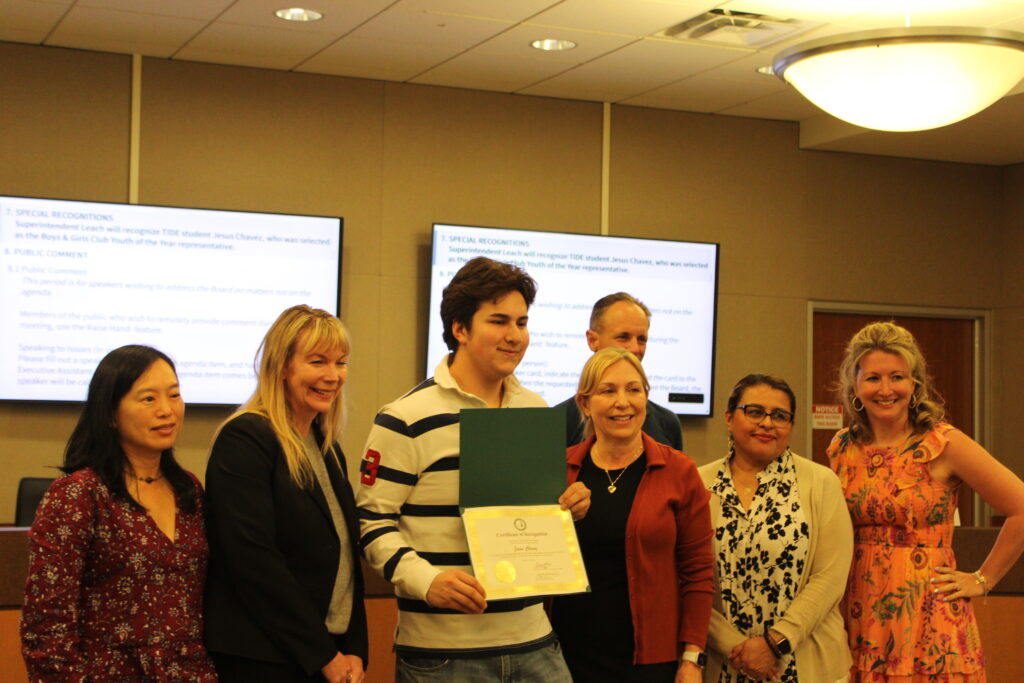
TIDE was a refuge for students. “TIDE didn’t just educate me. TIDE changed my life,” senior Jesus Chavez, TIDE’s student body president, told the Board. Eliaz Kahn, a TIDE student, told trustees he had transferred from W oodside after being bullied for having autism. Hector Cornejo, TIDE’s P.E. teacher, polled his 49 students on whether they would be willing to go to Woodside High School if TIDE closed. Only nine said yes.
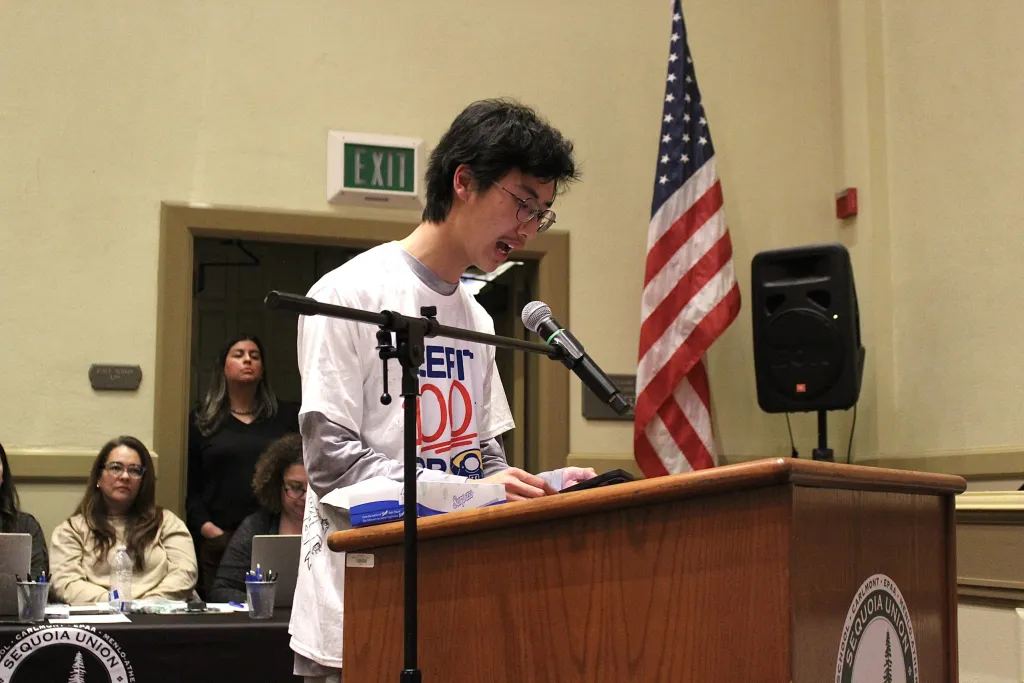
The District’s main argument that TIDE’s closure would save money received pushback. Lead counselor Lara Sandora and Special Education Department chair Karen Cortez told the Board that under federal law, when a comprehensive campus cannot accommodate a student’s IEP, the District must fund a private placement, which can run upwards of $75,000 a year, nearly double TIDE’s per-pupil cost. “Our per-pupil spending may look disproportionate,” Cortez told the Board, “but it aligns directly with the needs of our students.”
Secret Meetings
Despite TIDE’s promises, many never materialized. The 2014 demographic forecast that justified the massive spending bond peaked at 10,238 students in fall 2019 and then fell. By 2025-26, the District served 9,187 students, its smallest enrollment since 2011. By winter, the enrollment crisis had become so self-fulfilling that families were being asked to attend TIDE.
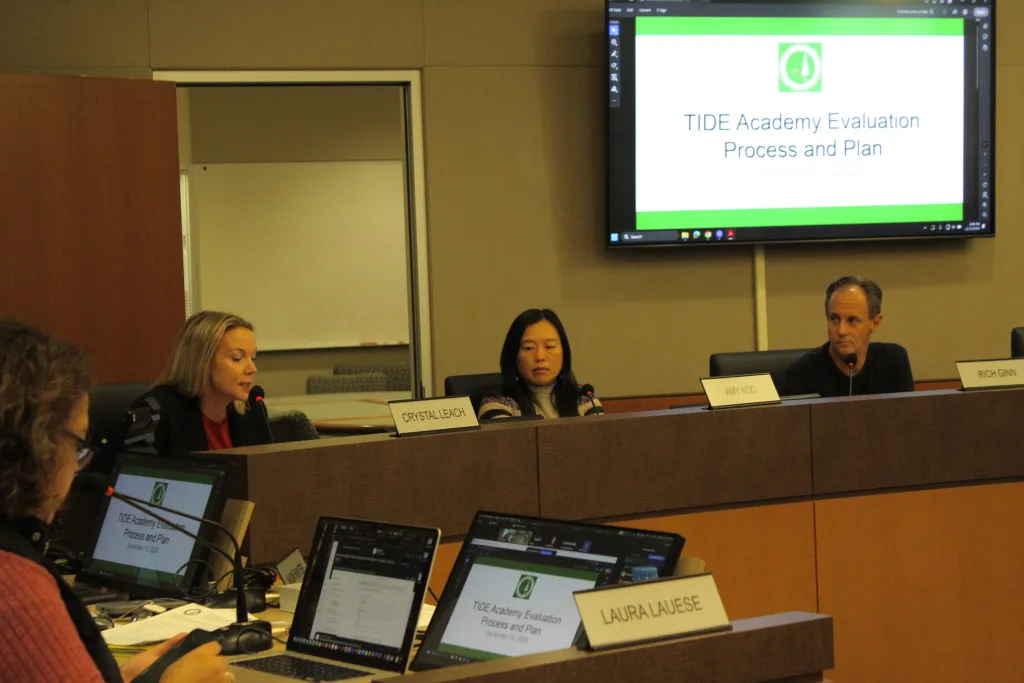
In November 2025, trustees Mary Beth Thompson and Ginn asked Superintendent Crystal Leach to develop a plan to consider closing TIDE. Within the District, a committee had been formed two months before the public learned of it. The Sept. 10, 2025 board minutes show the trustees voted to approve a “Temporary Superintendent’s Committee,” but the District’s TIDE Information Page initially described it as a “Board Committee.” In February 2026, the District added a correction notice to the page, changing the description to match the official action. The distinction matters: Board committees are subject to California’s Brown Act, the open-meeting law, whereas advisory committees with fewer than a quorum of board members generally are not. Whether this committee qualifies for that exemption is at the heart of the pending Brown Act complaint.
California Attorney General Rob Bonta’s 2023 school-closure guidance recommends, and for financially distressed districts requires under AB 1912, both “an equity impact assessment before school closures, mergers, or consolidations and provid[ing] the public with the set of metrics or criteria proposed for closure decisions so that the public can provide input.” The District is not legally bound by the requirement because it does not meet the statute’s narrow definition of financial distress, though Bonta’s guidance encourages the practice for all districts. When the public requested internal District communications, documents arrived only on Feb. 9, five days after the Board’s vote.
Even a month before the secret committee was formed, in August 2025, the District had hired a professional strategic communications consulting firm, McGowan Impact. Documents obtained through the Public Records Act requests later pulled back the curtain on this mysterious hiring. As parents emailed trustees, trustees forwarded the emails to Leach, McGowan drafted the emails, and trustees sent the consultant’s drafts back as their own replies. After one TIDE parent emailed Thompson about her child’s success at the school, Thompson forwarded it to Leach with a note: “FYI. I’ll see what the consultant writes and then use it to draft something here, then send that along.”
On Feb. 4, the Board unanimously approved TIDE’s closure.
What’s Left?
TIDE Rising, a coalition of TIDE parents represented by attorney Jay Jambeck of San Francisco’s Leigh Law Group, filed a federal civil rights lawsuit on Feb. 13, 2026, alleging TIDE’s closure violated Title II of the Americans with Disabilities Act and Section 504 of the Rehabilitation Act. In one court filing, parents compared TIDE to “a wheelchair ramp for students with neurological conditions” and accused the District of preparing to demolish that ramp.
Even though the federal lawsuit against the Board was dismissed on April 20 after Judge Trina Thompson ruled the parents had failed to “plausibly allege” that TIDE’s services could not be replicated at another campus, significant complaints against the District persist. The Brown Act complaint, filed in San Mateo County Superior Court alleging the entire engagement process was pre-scripted, remains in court. The recall campaign targeting Trustees Ginn, Thompson, and Cruz is growing in momentum and collecting signatures for the November 2026 ballot.
In March, the District released the first numbers on where TIDE students had actually chosen to go. Of the 187 current and rising TIDE students who had submitted enrollment forms, 84 chose M-A, 46 chose Woodside, 41 chose Sequoia, 12 chose East Palo Alto Academy, and four chose Carlmont. Fewer than a quarter chose to attend the new TIDE program at Woodside.
After June 30, 2026, every Sequoia Union school will sit on the west side of Highway 101. The District is back to the geography it had described as the disparaging problem TIDE was built to solve. “The superintendent in 2018 shared that part of the vision of TIDE is to disrupt historic patterns and draw students across the 101 freeway from west to east, instead of east to west,” Cat Cole, a TIDE founding teacher, remarked. “TIDE has made this happen.”
The District has not yet announced what it plans to do with the old TIDE building.
However, one thing is certain: whatever the District decides, the students it was built for won’t be there.



This is a very important article for many to read. So pleased you let the people understand the impact and the failing of our children while they make decisions that will be with them for years to come.
Of the students given a choice of where to attend after Tide’s closure, any students on an inter-district transfer were denied the opportunity to stay in SUHSD and forced out of the district back to their home schools. Now my daughter has to start over as a Junior. The district wasn’t open about this and denied approximately 80 transfers.
Thank you for honest and fair facts and description of main figures, their actions and timeline. It is heart breaking to see what is really important for people that are in charge of School education in our district. TIDE was a rare gem giving our public school system a chance to compete with very advanced private schools in the area. It gave the best chances to so many kids and families: but never again. It’s hard to create and grow something really decent, but so easy to destroy it. And our community deserves to know who is responsible for killing it and why.
TIDE Academy was supposed to be a STEM school, not a special needs institution. While I support catering to the needs of those students, the money simply wasn’t there anymore. Part of it is mismanagement by the district but the larger part that people seem to always miss is demographics working against schools. Fewer people are choosing to have kids and this shows in the enrollment numbers:
Between the 2021-2022 and 2025-2026 school years, enrollment decreased by almost 1000 kids. 10% is not a small number in regards to funding. Add prop 13 (property taxes helped fund education) to that and you can start to see why more and more schools need to close and consolidate students.
Why people aren’t having kids is due to many factors including the cost of living and people moving away from the bay area due to the aforementioned reason. This is just the start, many teachers will have to find new work.