There are bombs under Menlo Park. And no, I am not kidding.
There are live World War I artillery shells, dug out of backyards as recently as 2015. These shells are the only physical reminders of a Menlo Park Army base that sent 5,000 soldiers abroad to fight a catastrophic war in Siberia that most people never know about.
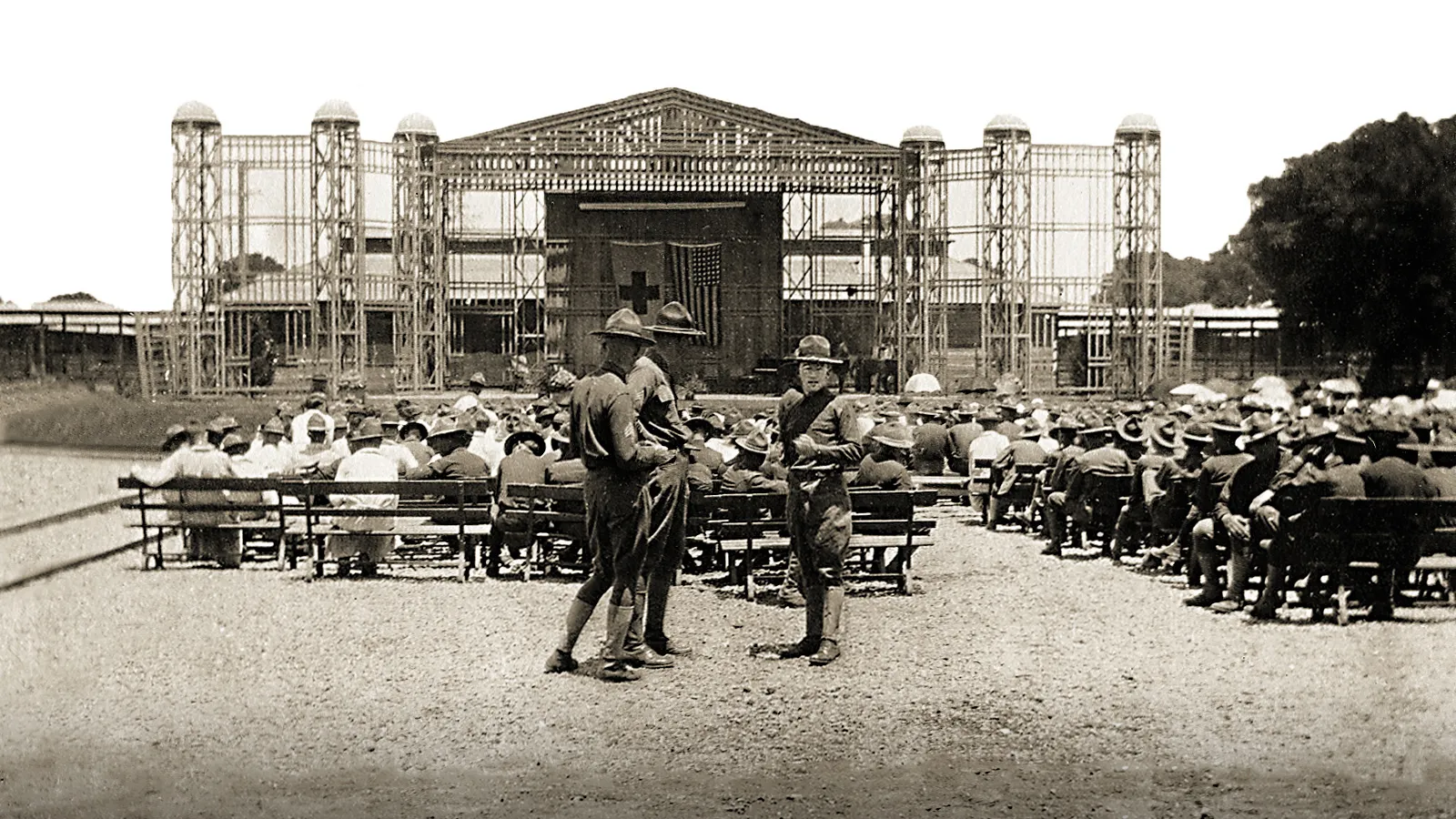
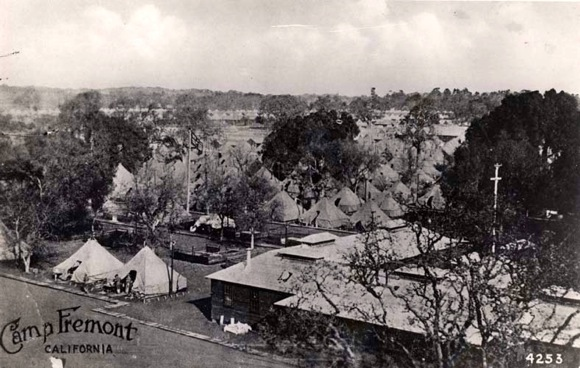
Camp Fremont was founded on July 24, 1917, three months after the U.S. entered World War I. By spring 1918, the Army had transformed Menlo Park: they built 1,125 buildings, gridded the foothills with trenches, and packed 27,000 soldiers and 10,000 horses into the camp. Soldiers practiced trench warfare on land that is now the SLAC National Accelerator Laboratory, and children continued to play in these dugouts well into the 1940s.
On Aug. 2, 1918, Secretary of War Newton Baker delivered the most bizarre order to the camp’s commanding officer, William Graves. As Graves sat on packing crates inside a Kansas City train station, Baker handed him a mysterious sealed envelope. As Graves unfolded the seven pages inside, his stomach dropped.
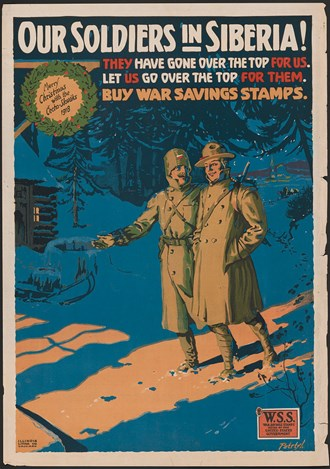
President Woodrow Wilson had decided to invade Russia to secure over $1 billion in American supplies and rescue stranded Czechoslovak troops once there. The soldiers selected were from Menlo Park’s very own Camp Fremont. “Watch your step; you will be walking on eggs loaded with dynamite,” Graves recalled Baker saying. The upcoming intervention would be the first and only time American troops fought on Russian soil.
And with that, the secret mission commenced. Within weeks, 5,000 men had been stripped from Camp Fremont’s 8th Division, dressed in buffalo-skin coats, and shipped out through the Golden Gate. Most of the soldiers had no clue where they were headed. “We didn’t know where we were going until we got on the train at Fremont to take us to the boat. I never heard of Siberia until I got over there,” draftee Fred Niemeier said.
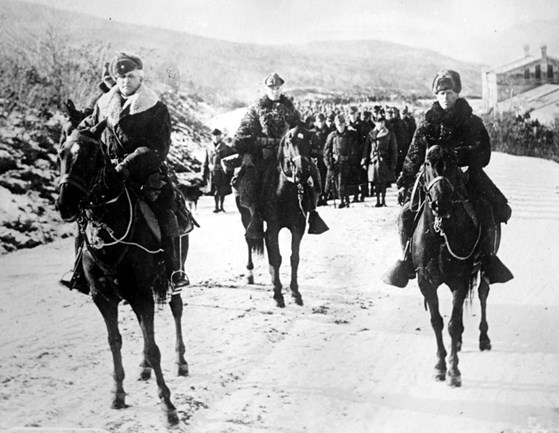
The 19-month expedition was a complete disaster. American horses died in the cold as machine guns froze in the bitter Siberian weather. The Bolsheviks, having seized power in 1917, easily outgunned and outmaneuvered the Americans, laying fire on the sleeping U.S. garrison. By the time the last American left Vladivostok in April 1920, 189 U.S. soldiers were dead.
If you thought the fate of the soldiers who were sent abroad to Siberia was tragic, the ones who never left home didn’t fare much better. Spanish flu reached Camp Fremont on Sept. 28, 1918, and within six weeks, 2,418 soldiers were hospitalized. Of those, 147 died, according to the Menlo Park Historical Association.
The Army ultimately abandoned the camp in September 1919, selling off the 1,125 buildings at an auction. Since 1938, a small plaque has commemorated the camp in downtown Menlo Park.
But perhaps the camp spirit never really left. The camp’s hostess house is now home to the MacArthur Park restaurant in Palo Alto. The Veterans Affairs hospital on Willow Road is the very same base hospital where the flu killed those 147 men. El Camino Real—the same bustling avenue you traverse to get to Kepler’s Books or Cafe Borrone—was the camp’s eastern wall.
So next time you walk to Downtown Menlo Park, read the plaque at the Fremont Park memorial. Remember that somewhere out there in the foothills, in a backyard that hasn’t been dug up yet, a bomb is waiting to be found.