Today, it is common knowledge that people learn new behaviors from watching others. Most people have also heard of growth and fixed mindsets. But where do these studies come from? How were they conducted? And who, exactly, were these experiments being conducted on? The answer is surprisingly local.
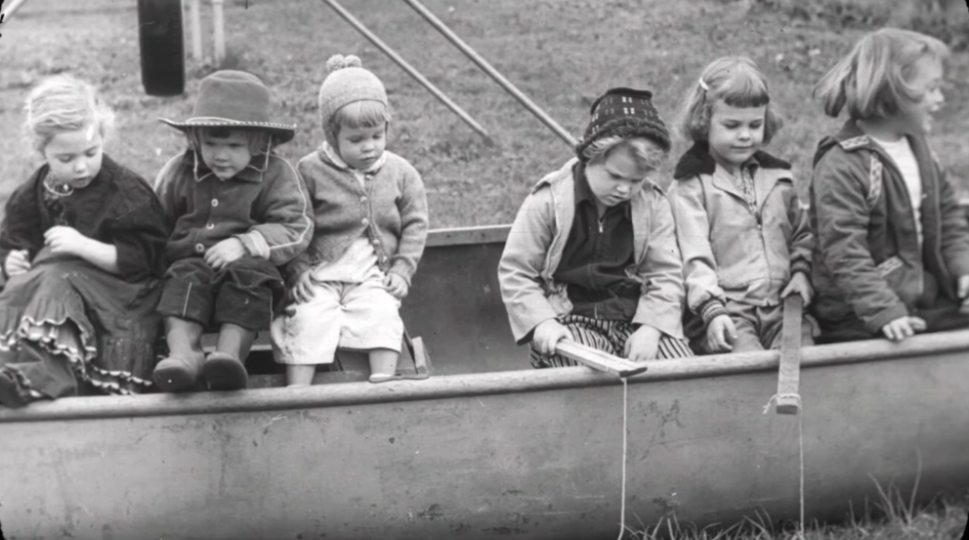
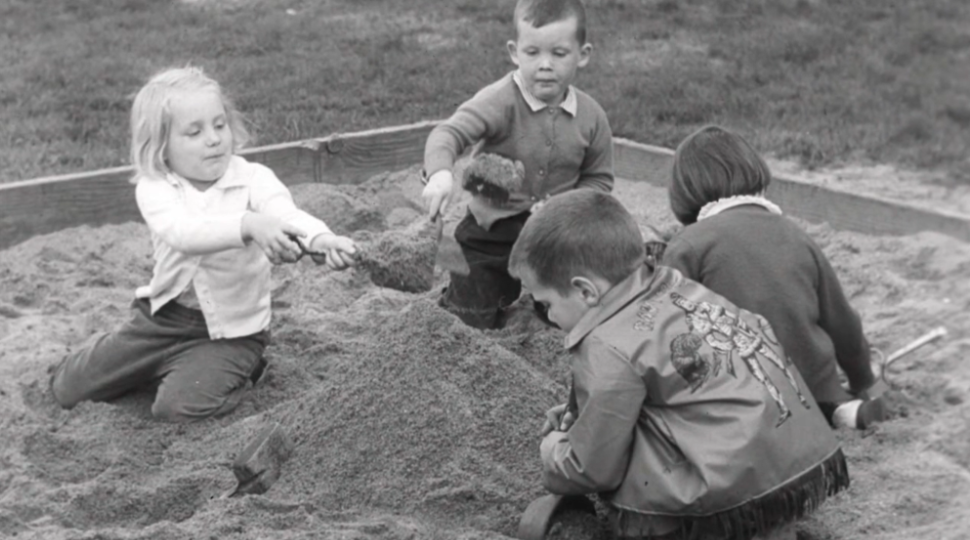
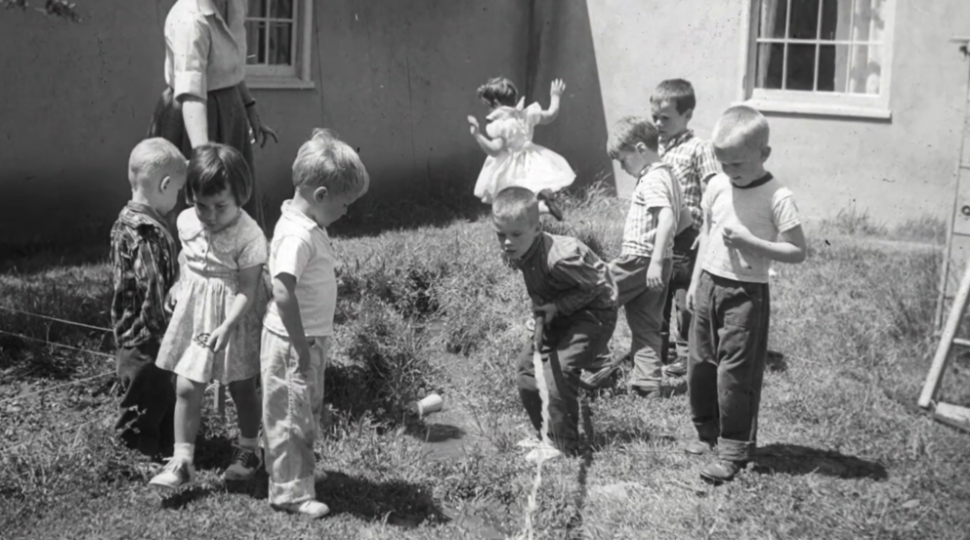
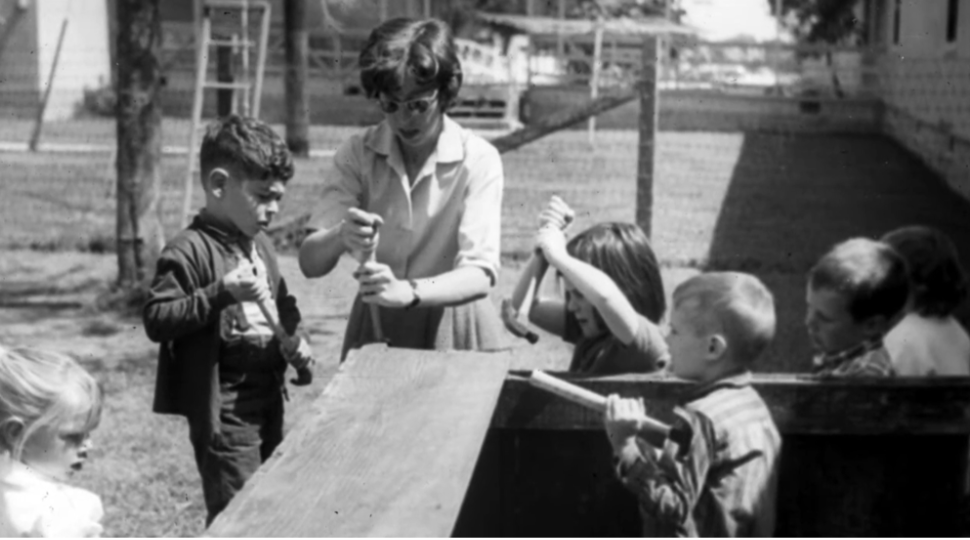
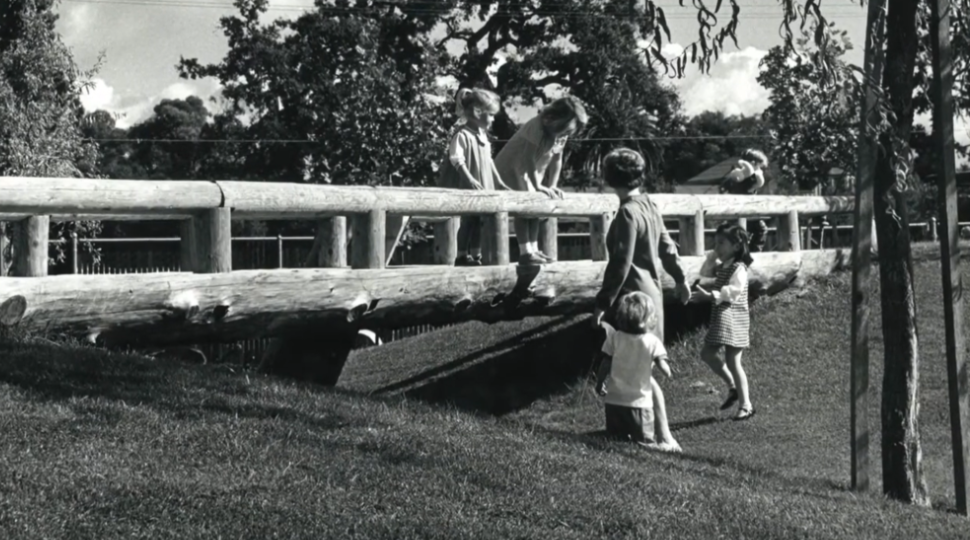
Responsible for these psychology concepts and more is Stanford Bing Nursery School, located in the corner of Stanford University. Founded by Edith Dowley, the campus occupies a four-acre plot of land that features sprawling hills, rabbit hutches, fruit trees, and play structures built specifically to accommodate the attending students, the participants in many experiments.
Funded by the National Science Foundation, Peter S. Bing, and his mother, Anna Bing Arnold, the school was founded in 1966 to facilitate quantitative research. It continues to function as a laboratory nursery school today.
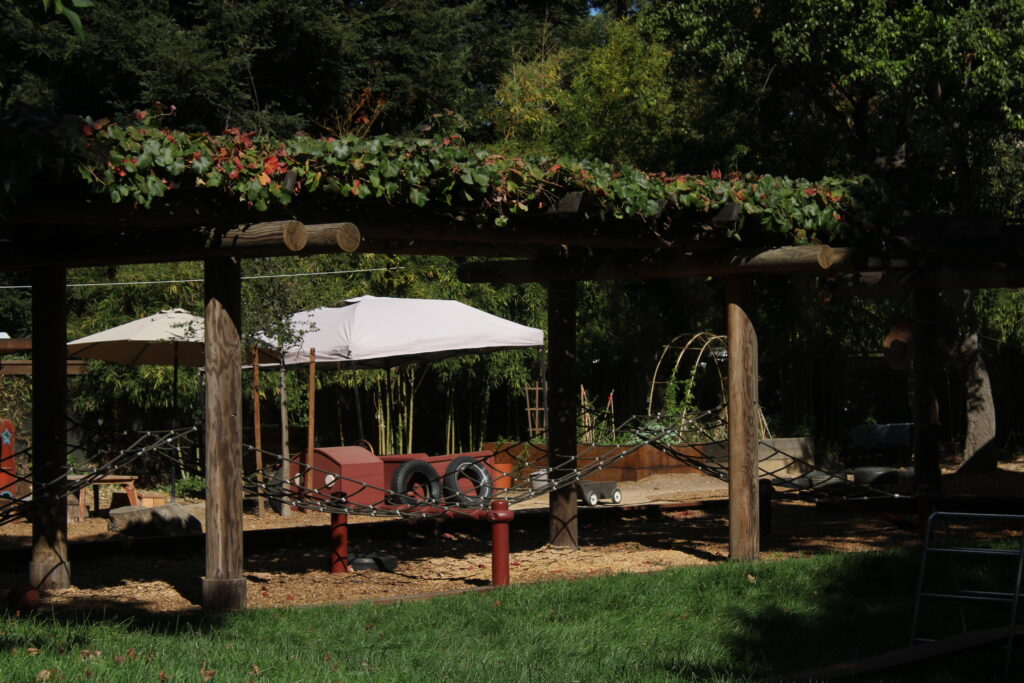
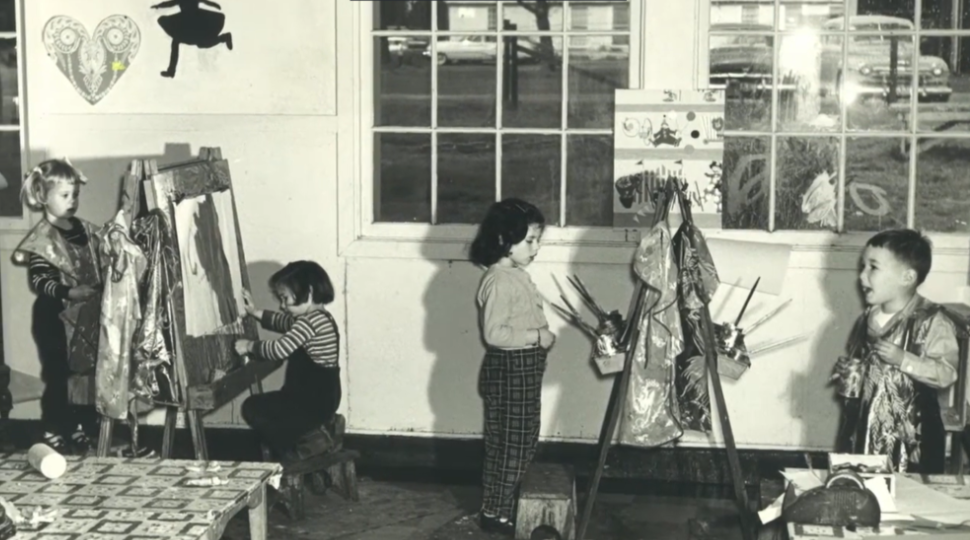
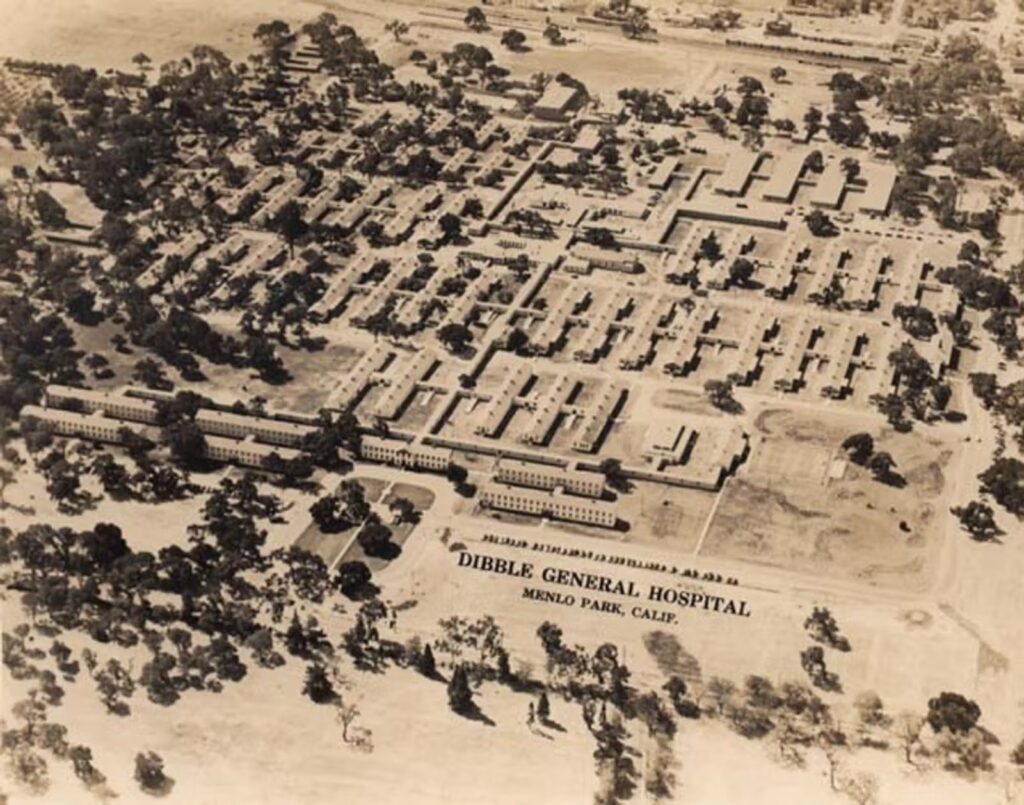
Stanford Bing Nursery School’s history did not start on the Stanford University campus—it began in Menlo Park. Before relocating to its current location, Bing Nursery School operated at the Stanford Village housing complex as Stanford Village Nursery School.
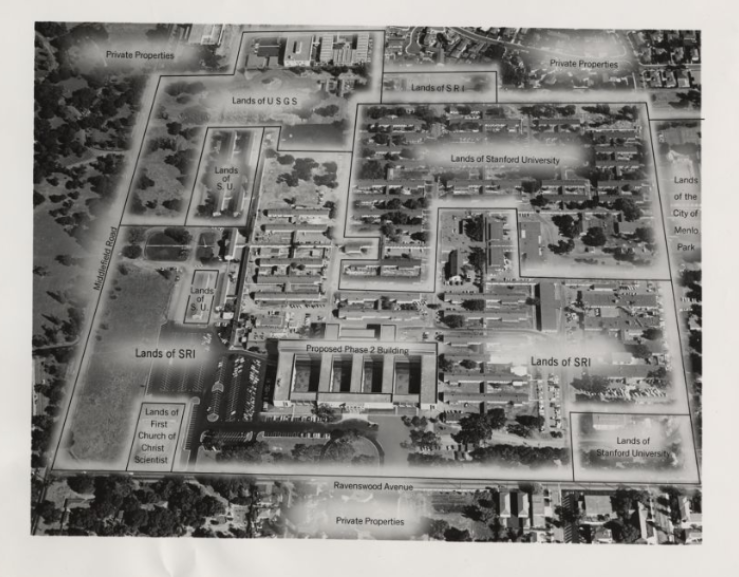
The specific site of the Stanford Village housing complex has served many purposes throughout the decades. During World War II, it functioned as an army hospital. From 1949 until 1966, it served as the Stanford Village Nursery School; currently, it is a part of SRI International, headquartered less than 10 minutes from M-A.
Research
After World War II, the GI Bill provided college tuition and living allowances for returning soldiers, enabling many married veterans to attend university while living with their families. To accommodate this surge of students, the Stanford Village was built. The influx of households in the area, combined with the psychology department’s research needs, created demand for a local laboratory nursery school.
Since 1949, a number of groundbreaking studies have been conducted at Bing Nursery School and its predecessor, the Stanford Village Nursery School.
Walter Mischel’s delay of gratification (the ability to resist immediate rewards in order to gain more valuable ones in the future) marshmallow experiment and John Flavell’s studies regarding metacognition—the most famous of them being the sponge-rock task—were both carried out at the nursery school.
In the marshmallow experiment, Mischel tested children’s self-control and delayed gratification and its correlation to future success. The participants were given two options: they could eat one marshmallow immediately, or wait until the researcher—referred to as game room teachers at Bing—returned for a second piece.
Initial results suggested that children who waited tended to have better life outcomes later on. Such outcomes included higher SAT scores, lower levels of substance abuse, stronger social skills, and more.
Although modern psychologists agree that the test was flawed in several ways, most notably in how it failed to account for significant external factors such as socioeconomic status or trust, the study continues to shape current-day discussions about willpower and self-restraint.
On the other hand, Flavell’s most famous experiment, the sponge-rock task, tested children on metacognition—the idea of reasoning through one’s thoughts. The children were first shown a painted sponge that had the appearance of a rock, then given the opportunity to handle the object. Then, they were asked two questions: what does this look like, and what is this really?
The study found that the 3-year-olds frequently failed the test. If they know it is a sponge, they will often claim that it looks like a sponge; if they think it looks like a rock, they will say that it is a rock. However, the 4-and 5-year-olds were more likely to pass the test, successfully separating appearance from reality.
The sponge-rock task contributed to Flavell’s theory of metacognition by highlighting the baseline for when humans begin to monitor their own thoughts, understand misrepresentation, and more.
Even Carol Dweck, the psychologist who pioneered the psychological concepts of the fixed and growth mindsets—the popularized idea that one’s success can be heavily influenced by one’s own beliefs, views, and attitudes—ran experiments at Bing Nursery School. For example, Dweck carried out a puppet roleplay study that tested people versus process praise.
But perhaps the most famous study to have come out of the nursery school is American Psychologist Albert Bandura’s Bobo doll experiment.
In Bandura’s first study, he divided 72 children, aged 3 to 6, into three groups: one that watched an adult model act aggressively toward a large Bobo doll, one that watched an adult play peacefully, and a control group that saw no model.
The children were then led into a room filled with a variety of toys. They were allowed to play, but after a short period of time, the experimenter would stop them. This stage was known as the aggression arousal phase, meant to frustrate the children.
Lastly, the children were taken into a room containing toys and a Bobo doll, and their behaviors were observed through a one-way mirror. Those who witnessed aggressive behavior from an adult were more likely to exhibit the same aggression on the doll, while those who did not were much more likely to take out their frustration peacefully.
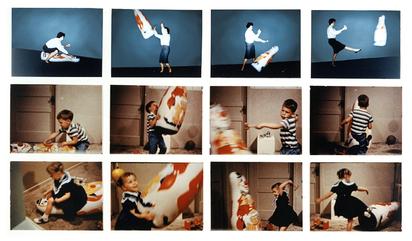
This study, along with Bandura’s second Bobo doll experiment, helped to cement his place in the psychology world. Although the study’s results may seem like common knowledge nowadays, in the mid-twentieth century, his development of what is now known as social learning theory—the theory that people learn new behaviors, values, and attitudes by observing others—was groundbreaking.
Children-Centered Learning
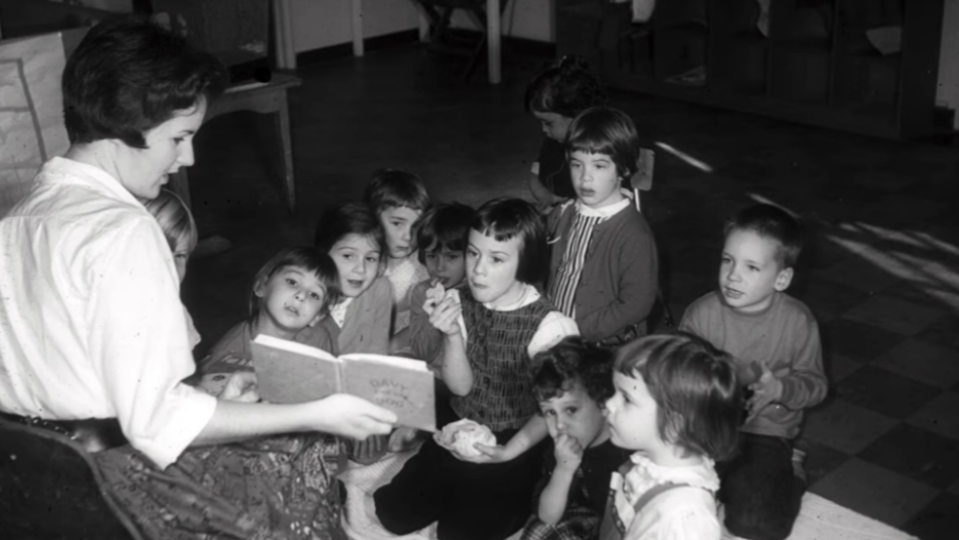
Although Bing is a laboratory nursery school, it still claims that its top priority is the children. Unlike many nursery schools, Bing emphasizes four philosophies in teaching their children that are not often seen in other facilities. The first is respect. The children at Bing Nursery School are treated as “honored guests.”
“[Dowley] did have this great, profound respect for children and what they are capable of. Our program director, who has kind of worked with someone who worked right under her, said she talked about having faith, hope, and trust in children,” Bing administrator Adrienne Lomangino said.
“They’re whole, complete, competent human beings, and we just need to slow things down and really listen and honor them, respect them, give them the time to play, to discover the world at their own pace versus rushing them,” Bing teacher Parul Chandra said. Chandra started teaching Bing in 1993 and also works as an instructor for psychology classes at Stanford.
Bing staff emphasize being particularly careful about the language they use and the way they present themselves, hoping to treat children positively and respectfully.
Lomangino, who is also a Bing alum and a former teacher for around 12 years, says that using respectful language around children is paramount. Instead of telling the children what they cannot do—for example, don’t run—the Bing staff focus on language that highlights what they can do. This practice is most commonly known as positive phrasing and helps children better process and follow guidance.
“We’re here to just stand by your side and help you with scaffolding that learning, versus teaching directly and being directive about the lesson, [we’re] asking curious questions, asking open-ended questions, showing concerns, talking about verbal accompaniment of what they’re doing, and then getting them to really meet their needs and their goals,” Chandra said.
The second philosophy valued at Bing is freedom, specifically of choice and movement.
“That agency and being able to move through space, so that choice and being able to move, that is fundamental,” Lomangino said. “There aren’t that many programs that allow children to move this freely.”
The third idea Bing prioritizes is what Dowley described as the gift of time. Because the students stay in the same classes for all 3 years, they get to remain with the same teachers and peers during that time. This setup offers the children two distinctive experiences: when they first enroll in the nursery, they start off as the youngest, looking up to older peers; by their third year, they’re the oldest of the children—they become the responsible classmates others admire and learn from.
“Too many transitions are very anxiety-provoking, and also it takes away from a child who wants to stay with something and really learn and go deeper into something that rocks their boat,” Chandra said.
The final major philosophy Bing encompasses is the importance of play. “Play is children’s natural way of learning about the world at this age. They don’t learn sitting behind desks and being taught lessons. It’s about immersing the whole body in play to understand what sand can do, what water and sand does together,” Chandra said.
“There’s more and more research coming out saying we are wired to play, and that is how we are meant to make sense of the world,” Lomangino said. “That’s also when we’ll take risks, when we’ll challenge ourselves, when we’re not worried about being evaluated.”
For decades, Bing has been the site of dozens of pioneering research projects. At the center of all those studies are the children themselves. While the experiments conducted at Bing have fundamentally shaped the way psychologists understand childhood, the nursery school’s legacy is also rooted in its commitment to creating an environment in which children are respected, given agency, allowed time to grow, and encouraged to learn through play.
It is this balance between groundbreaking research and child-centered, play-centered learning that has allowed Bing to remain a laboratory for psychological studies and a place where children can explore and discover the world for themselves.
“If you want to have a place for doing research, first and foremost, you have to have an excellent program for children,” Lomingano said.