

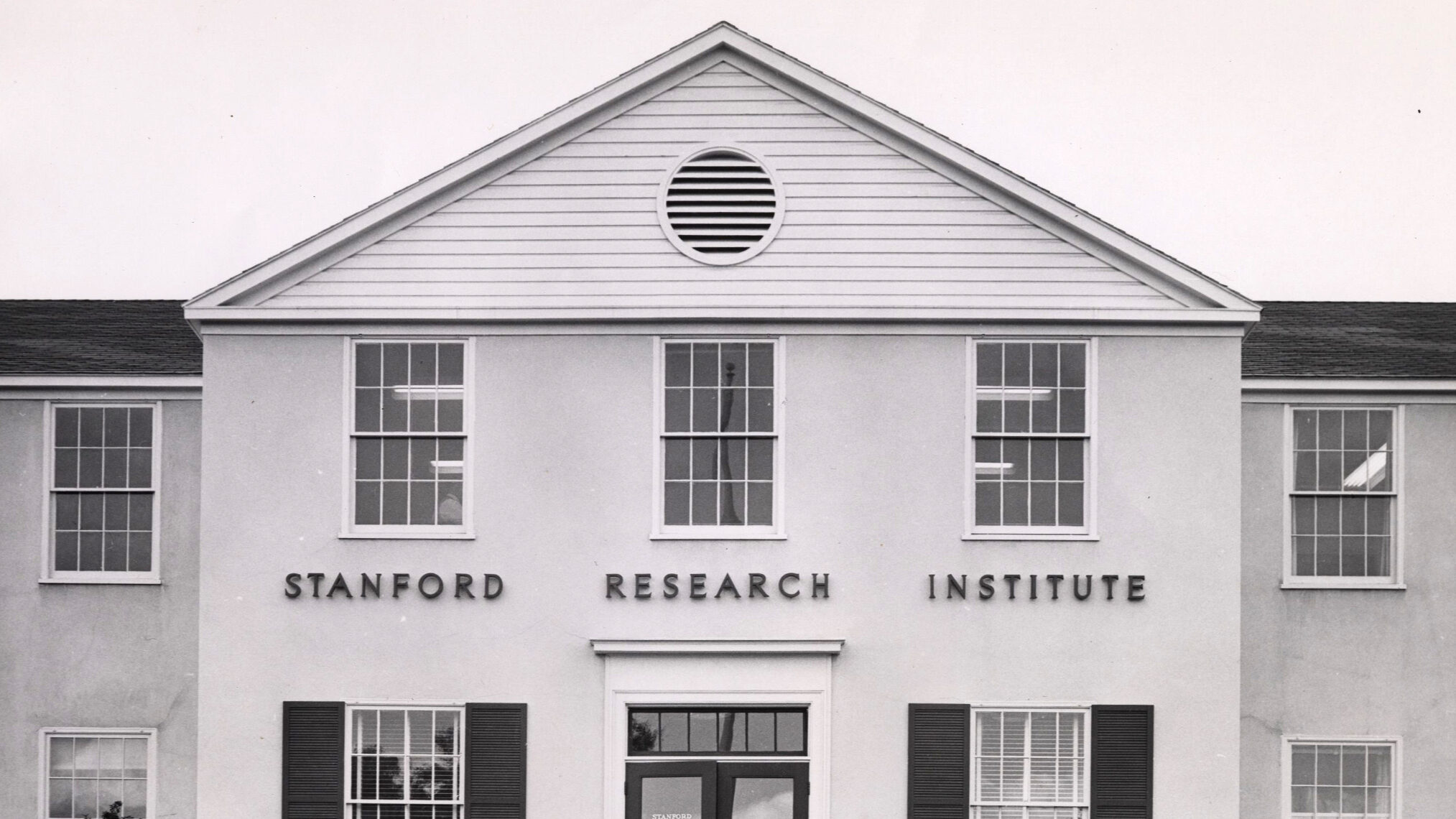
In an unremarkable brick building just down the road from M-A, tucked behind oak trees off Ravenswood Avenue, the CIA paid two physicists to run experiments on psychics. It was 1972.
What followed was 22 years of some of the oddest taxpayer-funded paranormal research the CIA ever ran: spoon-benders sealed inside metal cages, a retired police officer sketching Soviet nuclear facilities from across an ocean, and an Army officer predicting the launch of a submarine that didn’t yet exist.
The building belonged to the Stanford Research Institute, then a Stanford-affiliated nonprofit. Today, it operates unaffiliated as SRI International. From 1972 until 1995, it was the hub for the longest-running paranormal research program in American history.
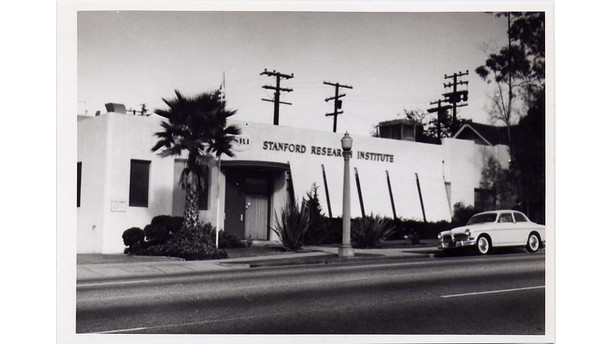
The program ran under several names—SCANATE, GRILL FLAME, CENTER LANE, SUN STREAK, and finally Stargate—and cost upward of $20 million in taxpayer dollars. It was built around a single idea: that ordinary people could close their eyes in a room on Ravenswood Avenue and describe Soviet nuclear facilities 10,000 miles away.
The program’s most famous test subject still lives, still gives interviews, and still insists it was all real.
Before the CIA
Stanford Research Institute opened in 1946 as a nonprofit branch of Stanford University. By the late 1960s, the majority of its work became governmental, not commercial—contracted research and development for clients like the Department of Defense.
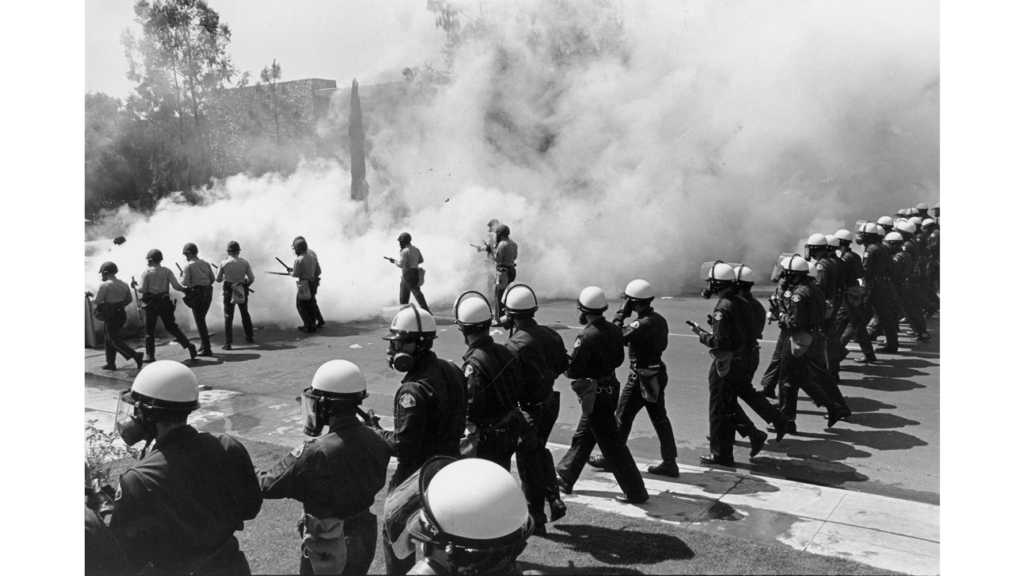
Student protests over SRI’s classified work on chemical weapons and the Vietnam War had built for years. The result was the April Third Movement—a faculty-and-student coalition that demanded an oversight committee to vet the ethics of SRI’s research.
SRI’s leadership rejected the oversight demand. In 1970, two years before the CIA’s Stargate contract, the institute officially separated from Stanford, resulting in no restrictions on what they could research. Two years later, the CIA called.
The Psychic Gap
By 1970, CIA analysts began receiving reports that the Soviet Union was spending the equivalent of $1 billion a year on “psychotronics”—research into telepathy, psychokinesis, and mind control. The figure was alarming on its own. More troubling, intelligence indicated the Russians were achieving promising results. One Leningrad woman claimed to have torn apart a frog’s heart using only her mind.

The CIA didn’t even have to fully believe the claims to fund a response. It only had to believe the Soviets believed them. “It seems to me that it would be a hell of a cheap radar system,” Congressman Charlie Rose said on the House floor, defending the program. “And if the Russians have it and we don’t, we are in serious trouble.”
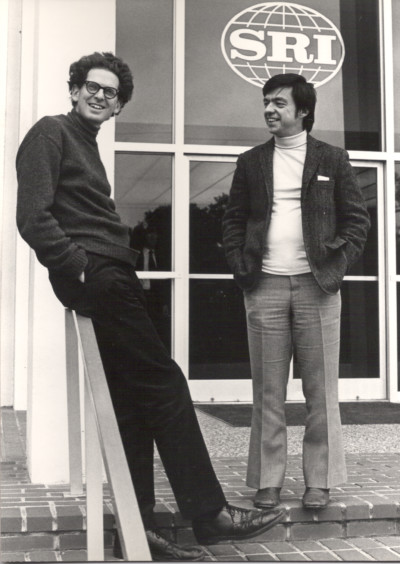
In April 1972, Russell Targ, a laser physicist from Columbia, met with the CIA’s Office of Scientific Intelligence. Targ and his colleague Harold Puthoff, a fellow physicist, were granted a contract to test whether civilians could locate hidden military targets through remote viewing, “the ability to describe remote or concealed data without the use of known sensory systems.” The pilot program was small and ran out of SRI’s Radio Physics Lab in Menlo Park. The codename was “SCANATE.”
It would not stay small.
Uri Geller in the Faraday Cage
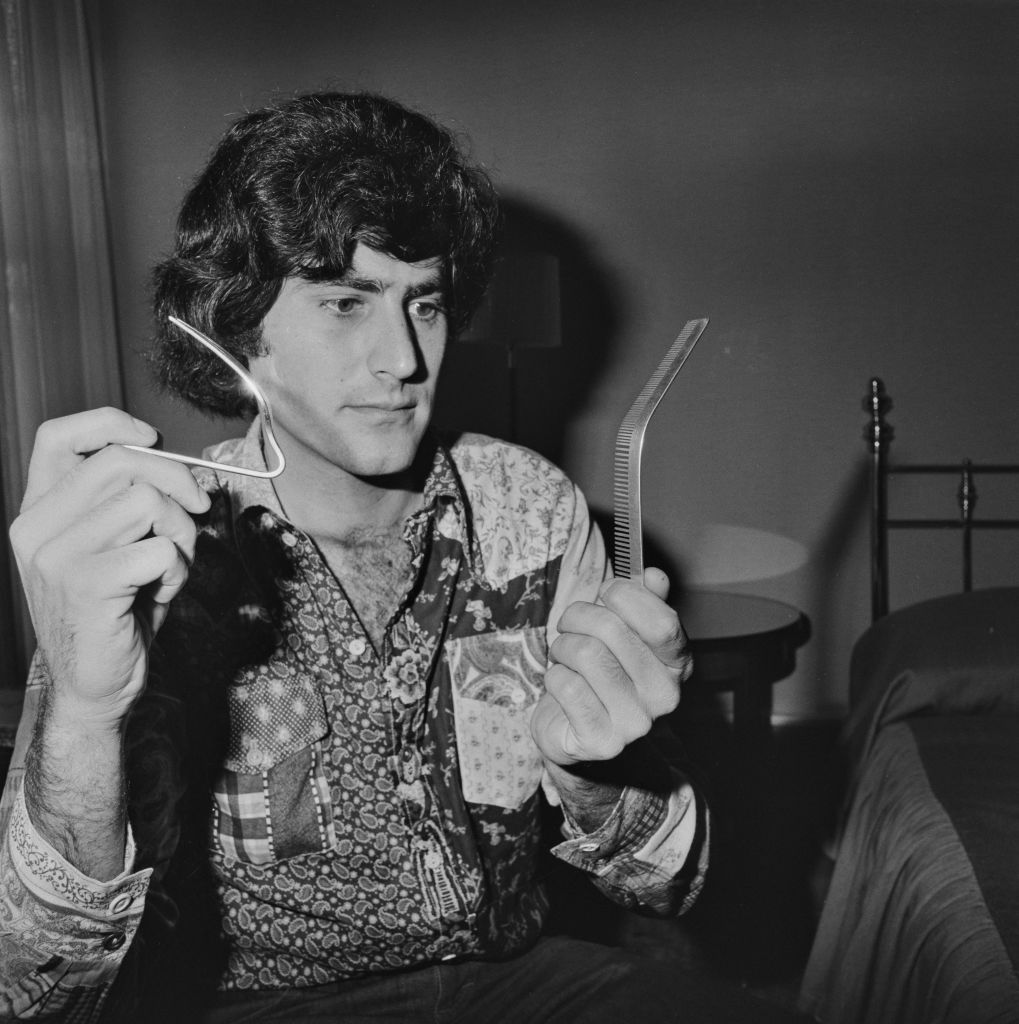
The first of SRI’s famous test subjects was a 25-year-old Israeli stage performer named Uri Geller. By 1972, Geller had built an international reputation bending spoons on television and identifying drawings sealed in envelopes. The CIA wanted to know if his abilities were genuine.
Geller has told the same story about his powers for fifty years: when he was 3, he was playing in a walled garden across from his mother’s apartment in Tel Aviv when he looked up at the sky.
“Suddenly, between himself and the bowl in the sky, there was the shadow of a huge figure like the shadow of a man with a long cape, because there were no arms or legs to be seen,” Andrija Puharich wrote in a 1974 biography of Geller. “As he stared at this figure, a blinding ray of light came from its head and struck Uri so forcibly that he fell over backward and into a deep sleep.” When he woke up, he was psychic.
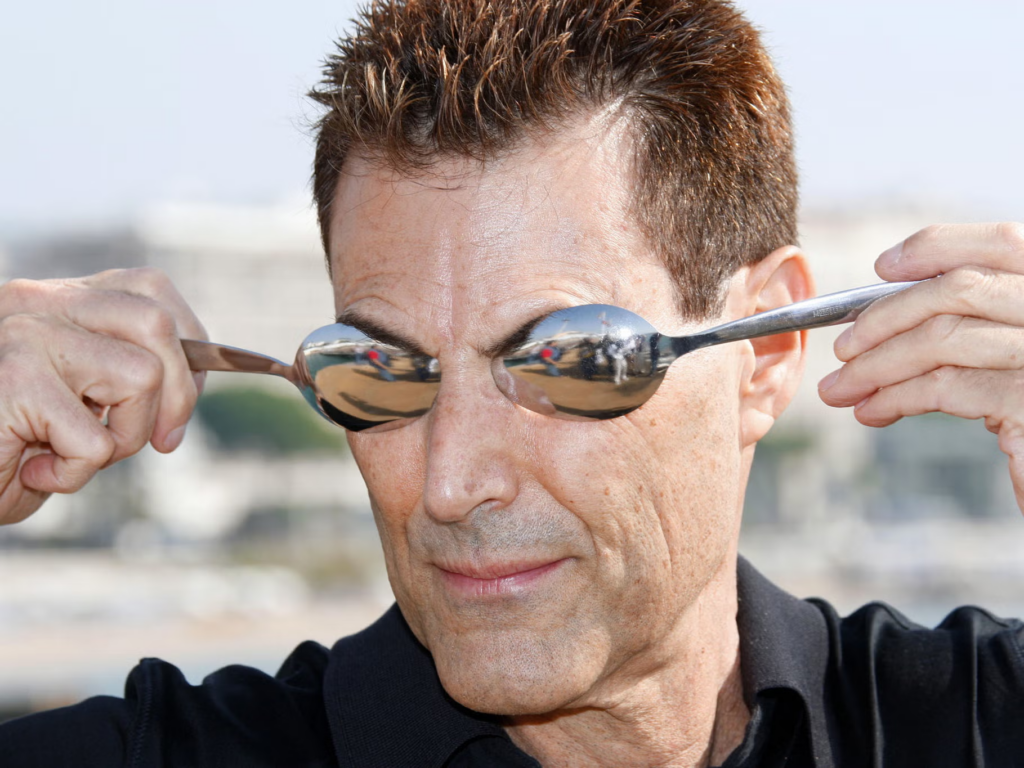
“It’s really remarkable, you know,” Geller told the M-A Chronicle in an interview. “Scientists looked at my brain scan recently, and they’re like, ‘I don’t believe it.’” Geller also describes a “new element” in his brain that has dumbfounded scientists.
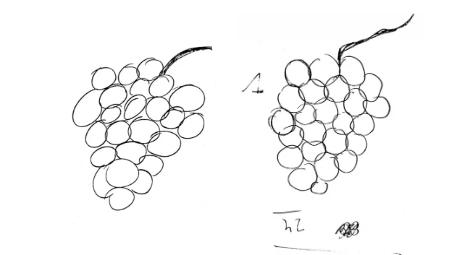
At SRI, Targ and Puthoff sealed him inside a Faraday Cage—steel-walled, electrically shielded room designed to block all signals. Researchers outside the room selected target images—including a firecracker and a bunch of grapes—at random from a dictionary and posted them on a wall Geller could not see. He was asked to draw what he sensed.
Statistically, he did pretty well. For the “firecracker,” he drew a cylinder with sparks. For a “bunch of grapes,” he drew a bunch of grapes with uncanny similarity. The researchers calculated the odds that he could produce such accurate results randomly as one in a million.
In 1974, the results of the experiment were published in Nature, one of the most prestigious scientific journals in the world. Targ and Puthoff were optimistic. “We feel we have a repeatable phenomenon that doesn’t depend on Geller,” Targ later told the New York Times. Soon after, the House approved a new round of funding for the program. Excitement was growing.
Nature’s editors, in a long disclaimer printed alongside the paper, were less enthusiastic. “There was agreement that the paper was weak in design and presentation,” the editors said. “Perhaps the most important issue raised by the circumstances surrounding the publication of this paper is whether science has yet developed the competence to confront claims of the paranormal.”
Skeptics
The skepticism in Nature was the first of many. In 1980, two psychologists at the University of Otago, David Marks and Richard Kammann, published The Psychology of the Psychic, the first major academic critique of the SRI program. Marks and Kammann systematically deconstructed the validity of the experiments.
They ran 35 of their own remote-viewing experiments, and recorded only failures. Then, when they requested the original SRI transcripts from Targ and Puthoff, they were refused. Marks and Kammann eventually obtained the documents from another SRI researcher, and what they found could only be described as fraud.
Beyond statistical biases in the scientific process, little action had been taken to restrict Geller’s access to the surrounding building. Further, Shipi Strang—a longtime friend of Geller and whose own sister once admitted to passing him cues during nightclub performances—was present in the SRI lab during portions of the testing period. Though Targ and Puthoff always insisted Strang was kept clear of the actual shielded-room trials, their explanation was unconvincing to many critics.
“Geller has no psychic ability whatsoever,” Marks concluded in a follow-up paper in Nature in 1986, written with British researcher Christopher Scott. “However, I believe him to be a very clever, well-practiced magician.”
This time, Nature’s editors left no disclaimer.
“[Geller’s] laughing all the way to the bank, you know,” Dr. Christopher French, a psychologist at Goldsmiths, University of London, said. “He knows that we know, but he doesn’t care. He just carries on anyway.”
French was also skeptical of much of parapsychology more broadly. “On the basis of the evidence, as I see it, I would currently bet against it,” French said. “If I had to bet my house, I would bet against it. But for me, an important part of skepticism is to always be open to the possibility that you might be wrong. Proper skepticism is about, ‘show me the evidence.’ Not about making up your mind in advance.”
The clearest test came in 1973, when Geller appeared on The Tonight Show. On live television, Geller sat for nearly 20 minutes and produced nothing. “I don’t feel strong,” he eventually told host Johnny Carson.
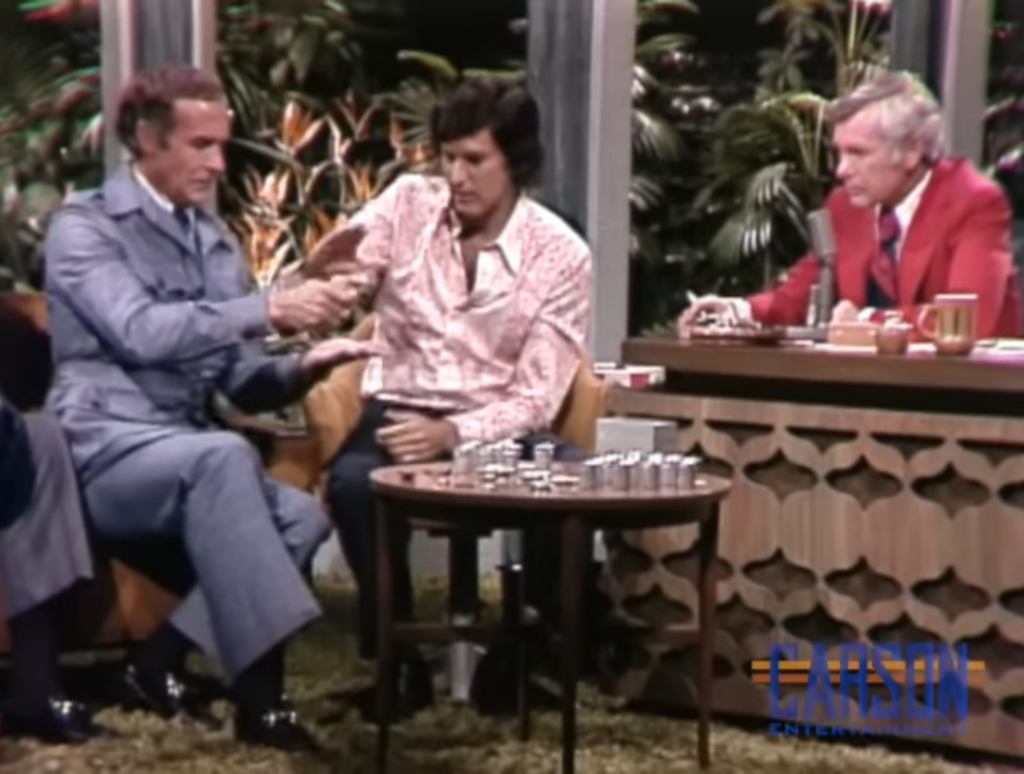
“[The Tonight Show] had been in touch with Randi,” French said, referring to James Randi, a magician and skeptic who dedicated much of his career to exposing Geller’s supposed fraudulence. “Randi told them how to prepare. Basically, don’t let him touch any of the objects in advance. Don’t let him anywhere near them. You know, keep your eye on him at all times. And yeah, [Geller] got very angry.”
French notes that many of the false positives in parapsychology are the result of confirmation bias. “Confirmation bias is the biggest and most pervasive cognitive bias there is,” French said. “We all suffer from it, believers, skeptics, everybody. It’s just a tendency to pay more attention to evidence that supports either what we already believe or what we’d like to be true.”
“What would a science look like if all you had was [statistical] noise?” he said. “Parapsychology.”
The Gantry Crane
The single most famous moment in the SRI program, however, did not involve Geller. It involved a former Burbank police commissioner named Pat Price, who had a reputation for solving cases through hunches he couldn’t explain.
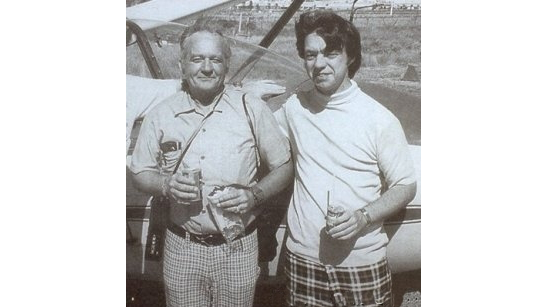
In July 1974, the CIA gave SRI a set of geographic coordinates in eastern Kazakhstan, and told the team only that it was a Soviet research and development site. In reality, the location was a suspected Nuclear Development site located in Semipalatinsk, nicknamed URDF-3. American satellites could photograph it from above.
Like Geller, Price was asked to draw what he sensed. On the first day, his drawings were a mess. He got the buildings wrong. But, he mentioned, in passing, a crane. That evening, Puthoff called him and told him to focus on the crane.
The next day, Price produced the sketch that the program would build its reputation on for decades: a massive industrial “gantry” crane with 8 wheels, drawn roughly to scale. When CIA imagery analysts compared Price’s sketch to the real deal, the similarities were unmistakable. The wheel count matched. So did the geometry.
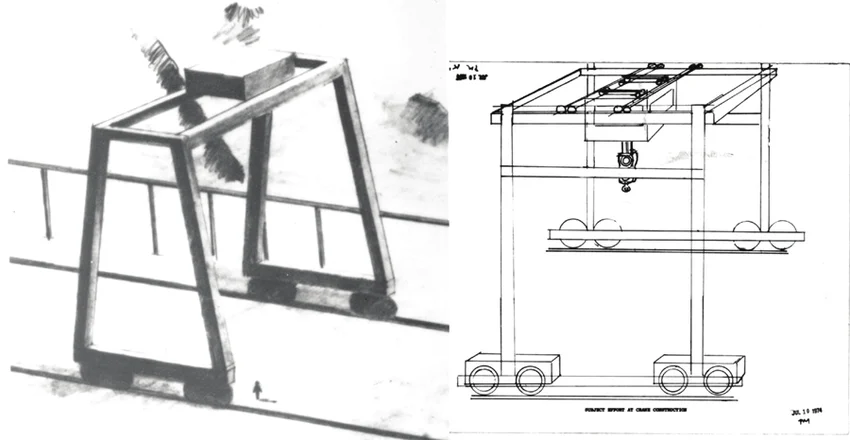
The CIA’s final assessment of the experiment, written in December 1975, was not so favorable. “The remote viewing experiment of URDF-3 by Pat Price proved to be unsuccessful,” the report said. “In general, most of Price’s data were wrong or could not be evaluated. He did, nevertheless, produce some accurate, important descriptive data.”
The CIA cut its funding to SRI shortly after.
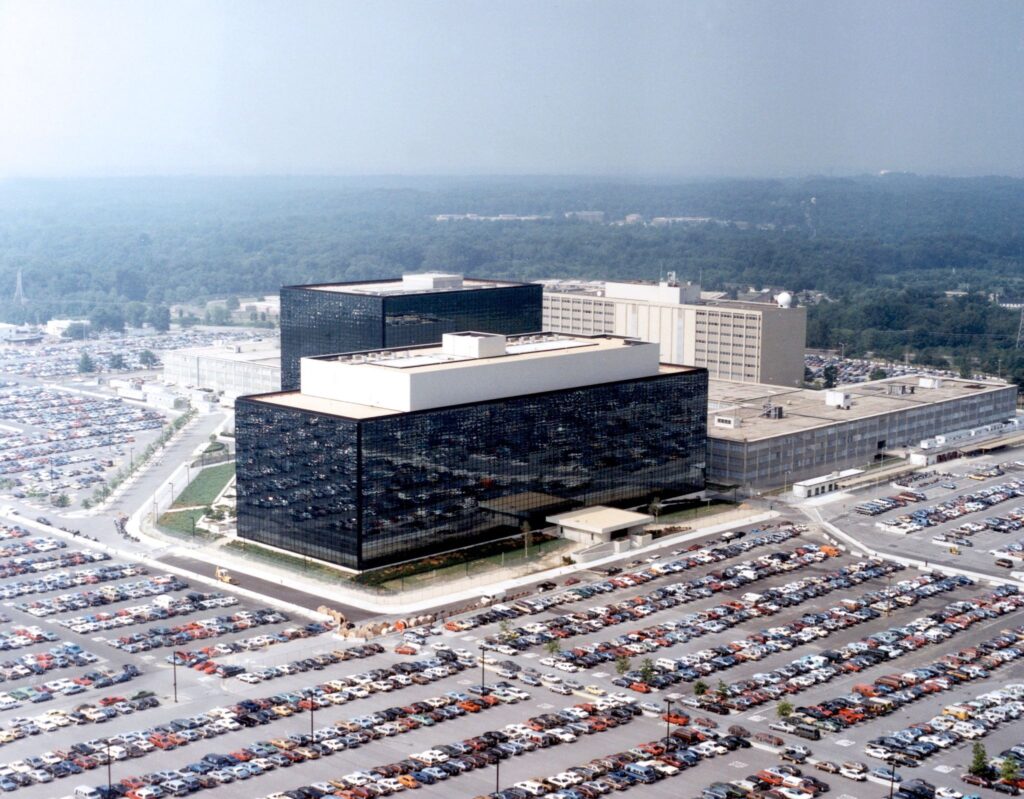
The crane survived into the imagination of the public anyway. Constant attacks by skeptics—that he’d been prompted toward drawing the crane, that most of his other details were wrong—weren’t enough. Media buzz drew attention, and within 3 years, the Army picked up a remote viewing experiment of its own at Fort Meade, Maryland, under the code name GRILL FLAME.
Why it Ended
Though GRILL FLAME had notable experiments of its own—namely, one where the release of a new class of Soviet submarine was predicted months in advance—SRI’s experiments soon tapered off. After the initial CIA contracts, SRI’s parapsychology research limped along on small Defense Intelligence Agency contracts. Then, in 1995, the CIA hired the American Institutes for Research (AIR) to evaluate whether anything in the program was worth keeping.
The AIR gave the job to two scholars: Dr. Jessica Utts, then a statistician at UC Davis, who was sympathetic to parapsychology, and Dr. Ray Hyman, a psychologist at the University of Oregon and well-known skeptic.
They reached opposite conclusions from the same data.
Utts had spent a year embedded at SRI as a visiting scholar before being appointed to the AIR panel—a connection critics jumped on. “Her appointment to the review panel is puzzling; an evaluation is likely to be less than partial when an evaluator is not independent of the program under investigation,” Psychologist David Marks wrote.
However, she told the Chronicle that her experience in SRI was an advantage, not a source of bias. “I’ve never seen an area of science that’s so well controlled as the later experiments that I saw at SRI,” she said. “Just because they have to be. Nobody’s going to take the results seriously if you can find a procedural flaw.”
After reviewing two decades of data, Utts concluded that: “Using the standards applied to any other area of science, it is concluded that psychic functioning has been well established.”
Hyman disagreed. “The overwhelming amount of data generated by the viewers is vague, general, and way off target,” he wrote. “The few apparent hits are just what we would expect if nothing other than reasonable guessing and subjective validation are operating.” Utts’ conclusion that some level of psychic ability had been proven, he added, was “premature, to say the least.”
Utts thinks that Hyman had made up his mind before he’d even reviewed the data. “We asked him one time, ‘is there any amount of evidence that could convince you that this stuff is real?’” she said. “And he said, ‘no, probably not.’”
The CIA sided with Hyman. The program was declassified and shut down within months.
Utts maintains that the shutdown wasn’t a verdict on the science. By 1995, the Cold War was over. The Defense Intelligence Agency was no longer interested. “Their whole thing is defense intelligence, right? So they’re not really interested in the science. They’re interested in, ‘can it be used for intelligence?’” she said. “My response was, I think there’s really strong evidence, but I don’t know how useful it is for intelligence work.” Utts now hopes the topic gets funded by the National Science Foundation, or another open science organization. She currently serves on the executive board of the International Remote Viewing Association (IRVA).
Why Belief Persists
The CIA shut down the psychic spy program over three decades ago. Belief in psychic ability has not budged. A 2025 Gallup poll found that 26% of Americans believe in clairvoyance and 24% in telepathy—numbers essentially unchanged from 2001, before the CIA had released any of its findings about Stargate.
This is the part that interests French. “Whether or not paranormal forces actually really do exist, we can learn a lot by studying those situations where people think that paranormal forces are operating,” he said. “It might be that the most important thing that we learn is the insight into human psychology.”
Geller, now 79, is exactly the kind of subject French is talking about. He owns an island off the coast of Scotland that he says contains buried treasure. He appointed Trump the honorary president of it. In 2019, wrote Prime Minister Theresa May a letter announcing he would telepathically stop Brexit. He has since claimed credit for her resignation. In April 2025, he wrote an article in the Jerusalem Post urging Trump to pull out of Iran Nuclear talks. “It is now obvious to me that my paranormal antennae knew this was about to happen and compelled me to issue the stark warning,” he wrote. His Instagram is now thick with AI-generated images of himself alongside world leaders, captioned with predictions about Iran, politics, and aliens.
SRI International still operates on Ravenswood avenue. The lab where Geller drew the grapes is gone. The campus has produced its share of breakthroughs since: Siri was developed there. So was the computer mouse. Last year, part of the property was sold off for housing.
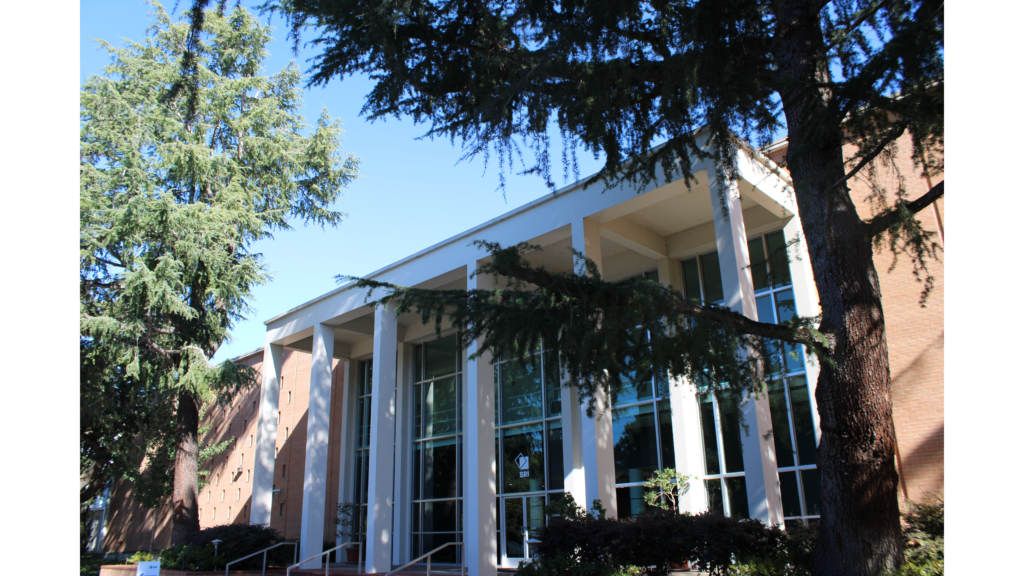
Most M-A students drive past the building at some point. Most have no idea what happened there.


My mom was one of the original test subjects. She would not tell us what she was doing, but said she needed to leave it. They tried repeatedly to get her back.She relented and then re-quit. Again, she did not tell us what she was doing, but she had PTSD over what had happened. The program affected her greatly. She died at age 72.
I had an Air Force career, then an aerospace second career with a TS/SAR clearance. I understand the black world better than most, but PTSD isn’t part of what I experienced. Something strange was going on in there.
Man , this so wild . And the fact she didn’t tell y’all makes me feel something terrible was going on .
Excellent journalism!