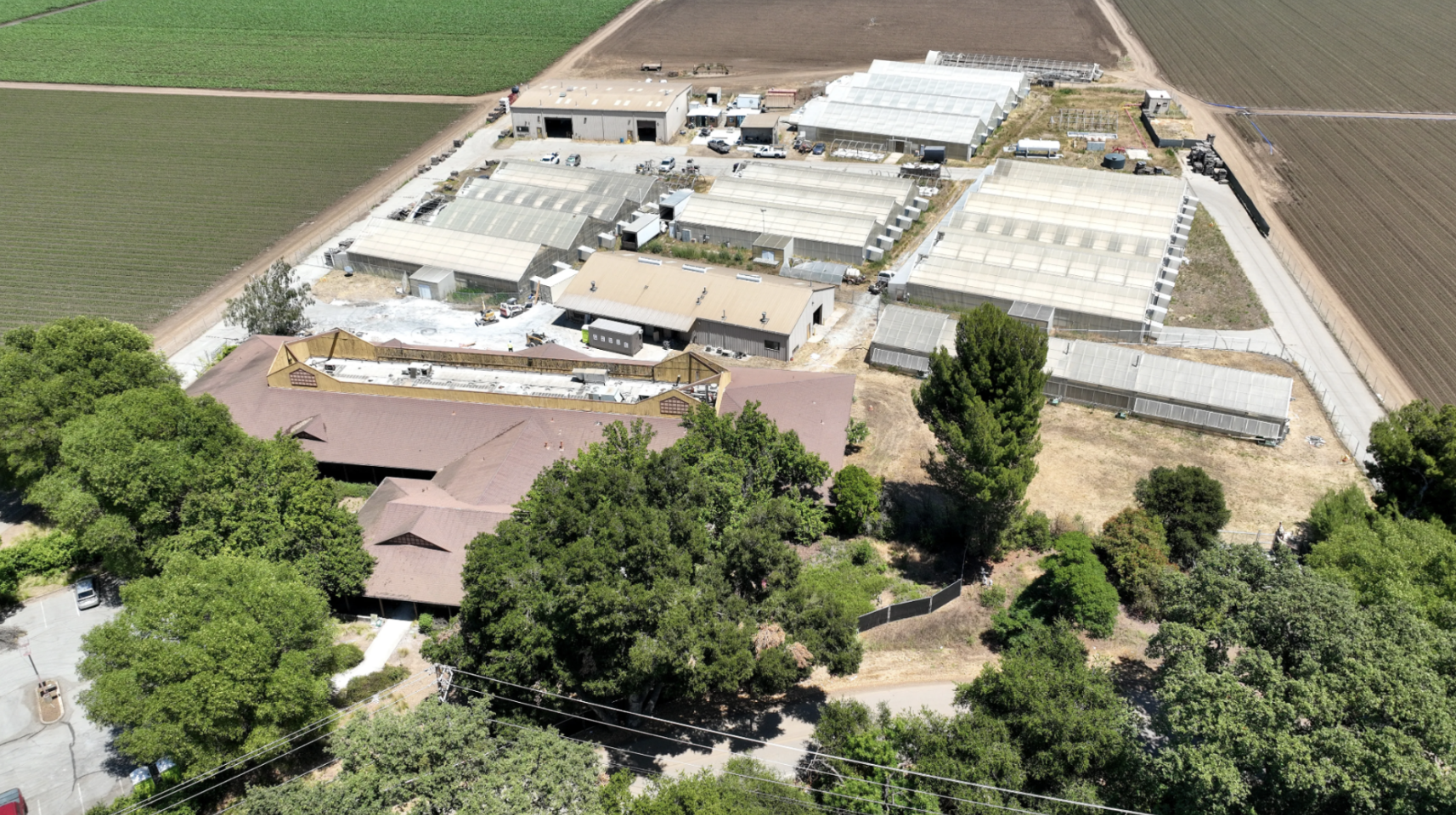
U.S. Immigration and Customs Enforcement (ICE) began construction on its first Bay Area Enforcement and Removal Operations (ERO) office in Gilroy in May 2025. Local officials suspect the agency also wants to take over Federal Correctional Institution (FCI) Dublin, a shuttered women’s prison, and turn it into a detention center that would support ICE’s San Francisco office.
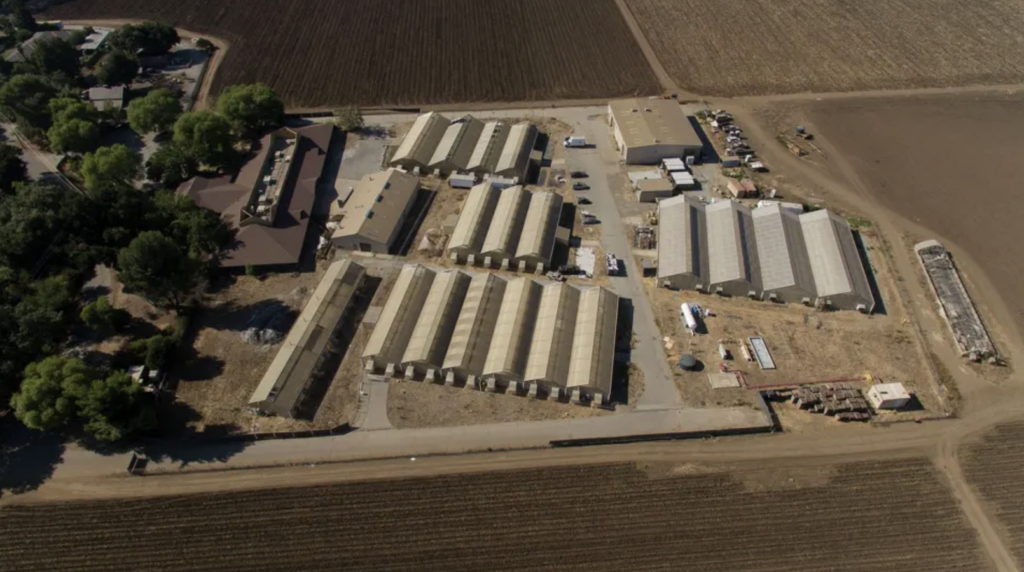
The Gilroy facility, at 7240 Holsclaw Road, is situated directly within a farming community where many immigrant agricultural workers reside. In fact, since the 1960s, the land where the facility is located has been zoned exclusively for agricultural use.
“I definitely think they’re trying to build it in locations where they think they’re going to be closer to the people that they’re forcing upon,” Santa Clara County Counsel Tony LoPresti said. “They’re trying to build them closer to the Bay Area, and we think it foretells them trying to ramp up deportation in this area.”
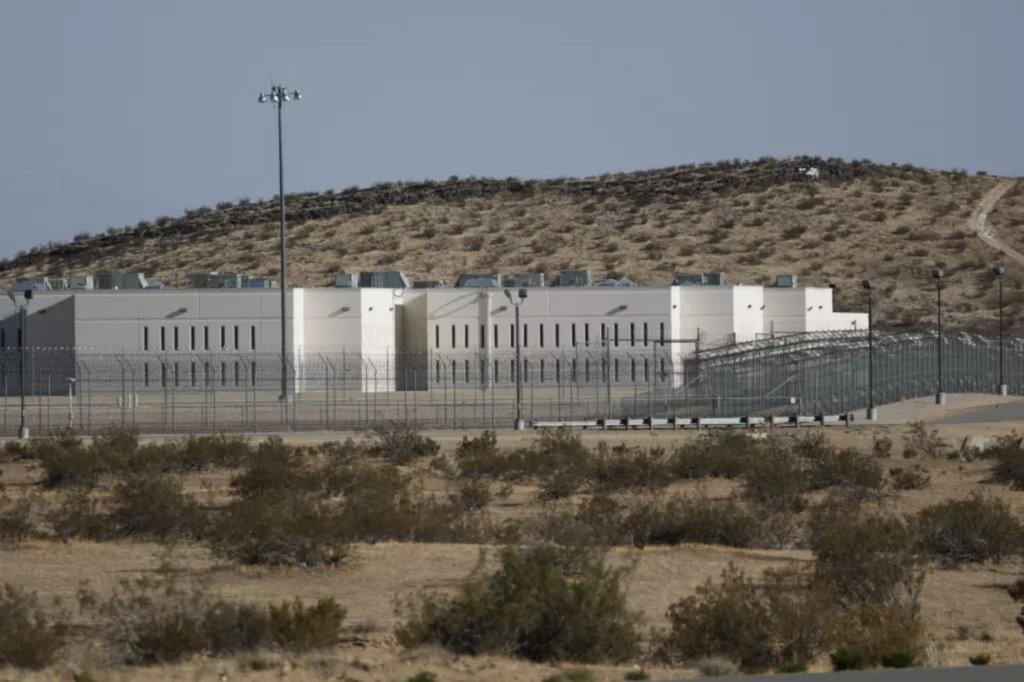
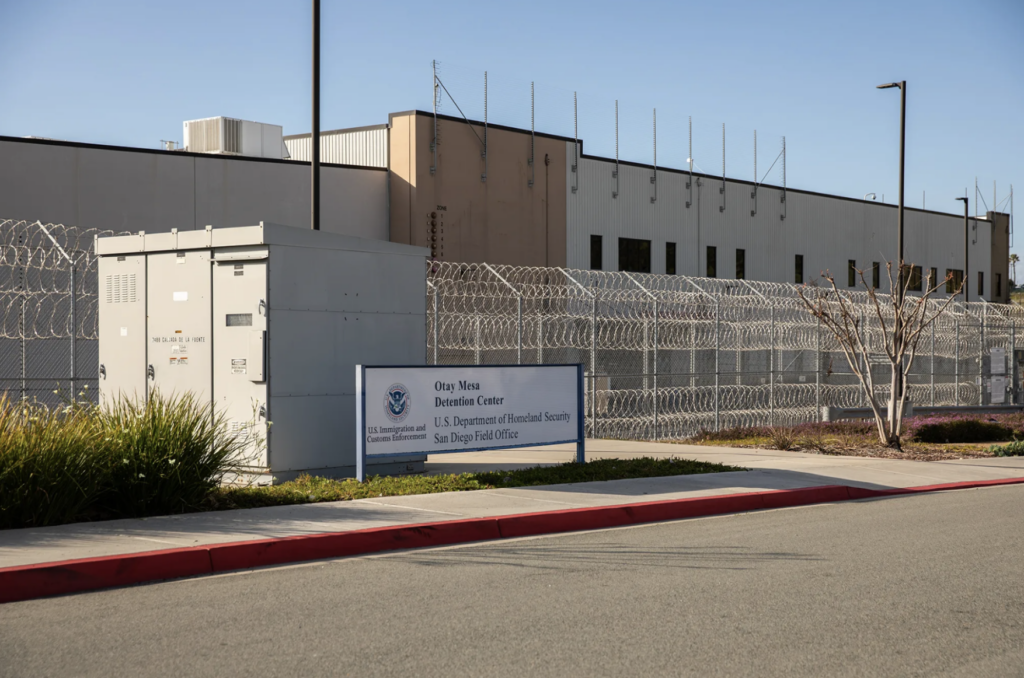
There are currently eight active ICE detention centers in California. The closest centers to the Bay Area are the Mesa Verde ICE Processing Facility in Bakersfield and Golden State Annex in McFarland.
In response to the construction in Gilroy, California Attorney General Rob Bonta and LoPresti filed a lawsuit against the Trump administration in June 2026.
The lawsuit claims that the construction violates several federal and state laws, including the National Environmental Policy Act (NEPA) and the Intergovernmental Cooperation Act (ICA).
NEPA requires federal agencies to study a project’s environmental impacts before building. The plaintiffs allege that ICE never conducted a review for the site.
LoPresti also alleged that the facility’s sewage system is not built to accommodate a large number of people. The site’s septic tanks were built to hold a maximum of 40 people’s waste. However, state and local officials believe the facility will be a short-term detention center housing up to 150 people. This would exceed the septic tank capacity, causing sewage to overflow into nearby waterways.
Aside from failing to conduct an environmental review, LoPresti argued that ICE failed to consult local and state officials on the project.
The ICA requires the federal government to solicit, consider, and coordinate with state and local governments’ views when developing a federal project. Yet, Santa Clara County officials say they received no word from ICE about the project.
“We didn’t get any consultation whatsoever from the federal government,” LoPresti said. “There was one unilateral letter sent to a mid-level staffer several years ago stating any construction by the federal government at this site is exempt from local zoning and planning laws.”
However, LoPresti argues that this one-paragraph letter did not comply with the law. “That wasn’t consultation at all. It was just a statement of what the federal government thought the law was,” he said.
LoPresti noted that the project is also causing significant concern among Gilroy residents.
“People are feeling a threat to their community, a threat to their social fabric. In the schools, they feel like there’s going to be fear about this infringing on the safety and sanctity of the classroom,” he said. “They’re worried about it impacting [workers being] able to go to work, particularly in the agricultural fields. They’re worried about it just affecting the overall sense of security in the community.”
LoPresti and Bonta’s lawsuit is specific to the Gilroy site, meaning it cannot prevent ICE from seeking out other sites in the county. A federal district judge granted LoPresti and Bonta the preliminary injunction, a temporary court order pausing construction, on Sept. 8. This halt is not permanent, and both parties were to submit a proposed order on Sept. 30.
“The federal government is violating the law, seeing whether anybody’s paying attention and holding them accountable, and only then are they considering complying with the law when their feet are held to the fire,” LoPresti said. “What we’re showing them is that we’re willing to fight, right? And we’re not going to bend a knee to the Trump administration the way so many other institutions have done.”
Across the Bay, the city of Dublin has also emerged as a target site for ICE. In February 2025, ICE agents visited FCI Dublin, but city officials have not been notified of further visits because the facility is federally operated. Since the prison is on federal land, local officials cannot directly prevent the conversion.
Dubbed the “rape club” by staff and inmates, FCI Dublin was permanently closed in 2024 by the Federal Bureau of Prisons (BOP) following a sexual abuse scandal, as well as news of the building’s deteriorating condition, mold, and asbestos.
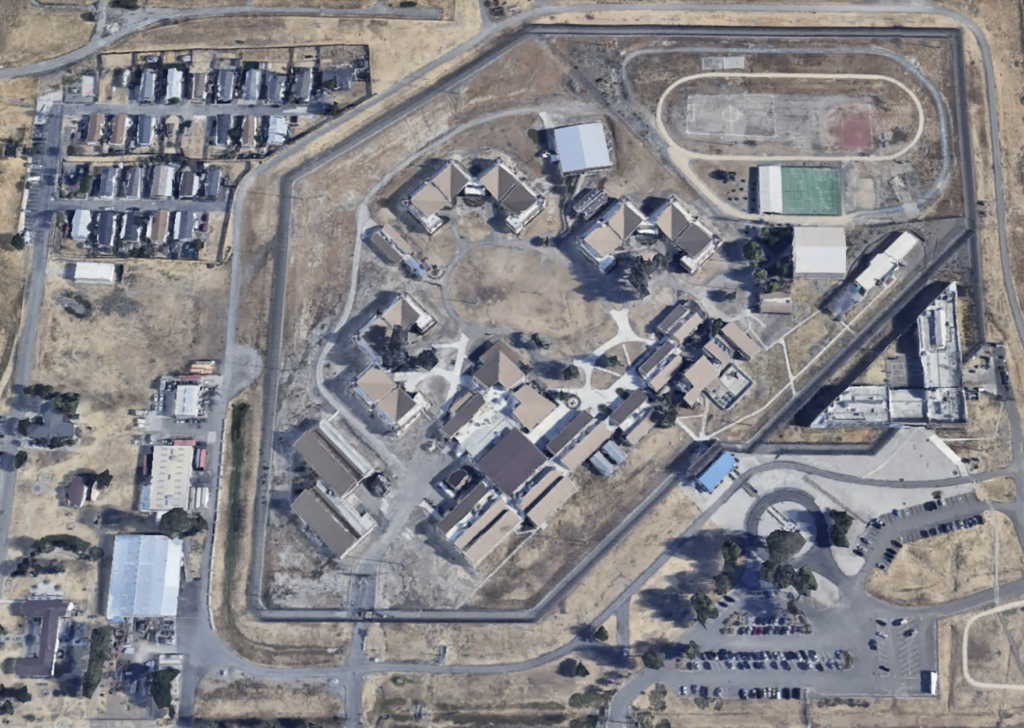
In March 2026, the Dublin City Council and Alameda Board of Supervisors passed a resolution formally opposing the reopening or repurposing of FCI Dublin as an immigration detention center or any other correctional facility.
Two months later, the BOP released an environmental review of FCI Dublin, following NEPA. This review confirmed that the prison is not up to standard.
This environmental review does not legally prevent the federal government from repurposing or transferring the site to ICE.
“Having some form of border patrol, I don’t think there’s disagreement that we need something. It’s the enforcement piece of it and the tactics that they’ve been employing that are really disturbing,” Dublin Vice Mayor Kashef Qaadri said. “They’re acting like vigilantes, masked bandits with full authority and zero accountability, and that’s really disturbing. That’s really why I’m so adamantly opposed to ICE coming to Dublin.”
As a city with a substantial immigrant population, Dublin’s sense of safety is a priority, Qaadri noted.
“While we can respect federal authority, we can also make it clear that Dublin will continue to be a city where residents can come to city government, report crimes, and access public services without living in fear,” he said.
Senior Jose Guzman, Vice President of the Latinos Unidos club at M-A (LUMA), noted how ICE ramping up detainments would threaten the community’s numerous Latino-owned businesses and residents.
“No one wants to go out worried that they might not make it back home. Shop owners are terrified that their only place of income could be affected by all these new high [security] facilities,” Guzman said.
Fear exists within the community regardless of status. “I know people who tell me ‘don’t worry, you’re a citizen,’ and I know I’m a citizen. But [ICE] doesn’t know that, and they could easily just arrest me, my family, my friends, just because of the way I look,” Guzman said.
“I know people who tell me ‘don’t worry, you’re a citizen,’ and I know I’m a citizen. But [ICE] doesn’t know that, and they could easily just arrest me, my family, my friends, just because of the way I look.”
Jose Guzman, M-A LUMA Vice President
In 2019, Governor Gavin Newsom looked to prevent the development of new detention centers through state law. However, under the U.S. Constitution’s Supremacy Clause, California law cannot override federal authority, so the state law was repealed in 2022.
As a result, local officials have taken a different approach. The key to their defense against ICE is tax policy.
To start, legislatures are working to impose heavy taxes to make private detention centers financially unfeasible. AB 1633: Private Detention Facility Tax Law is designed to tax each private detention facility operator at 25% of their income. It is awaiting Newsom’s signature and, if signed, will be effective July 1, 2028.
Additionally, tax policy is being used to disincentivize companies from making contracts with ICE. AB 1675: No Tax Breaks For ICE Contractors Act of 2026 is a bill that excludes companies in contract with ICE from receiving business tax credits. The bill would establish the California Immigrant Resilience Fund in the State Treasury, redirecting tax credits denied to the companies to instead fund immigrant services and legal defense. It is currently stalled.
In August 2026, U.S. Congressman Sam Liccardo (CA-16) introduced a toolkit for local jurisdictions that provides a model of land-use regulations to protect communities from the potential impacts of ICE detention centers. The toolkit encourages them to consider the adoption of interim ordinances, which are temporary local laws passed by a city or county to restrict certain land uses while officials study or draft new zoning rules.
“This is really intended to give jurisdictions time to do the analysis and the study of their current regulations, and to mitigate any impacts of potential detention centers,” Raania Mohsen, District Director in Liccardo’s office, said.
Many cities and counties, including San Mateo County, the City of San José, the City of Mountain View, and the City of Gilroy, have adopted the interim ordinances, modifying their local zoning regulations to keep ICE out.
This ICE expansion is not a surprise, given that ICE has received more funding from the Department of Homeland Security (DHS) to fuel its immigration agenda through the 2025 One Big Beautiful Bill Act (OBBBA). The bill provided DHS with $165 billion specifically meant to expand ICE’s detention capacity.
$45 billion from OBBBA was allocated toward the 2026 ICE Detention Re-engineering Initiative to expand detention capacity nationally by purchasing and converting industrial warehouses into detention centers that each accommodate 7,500 to 10,000 people. After legal challenges prevented this plan from proceeding, ICE shifted tactics to purchase existing facilities run by private prison companies instead.
In California, this new approach was implemented in July 2026 when DHS purchased two facilities for $1.5 billion from CoreCivic, one of the largest private corrections and detention management companies in the U.S. The deal added 4,554 beds in Kern and San Diego County.
“We’re not going to bend a knee to the Trump administration the way so many other institutions have done.”
Tony LoPresti, Santa Clara County Counsel
While Northern California currently remains without an active ICE detention center, this status quo is wavering. The preliminary injunction protecting the Gilroy site is only temporary, and the vacant Dublin prison could potentially become a future facility.