8/10
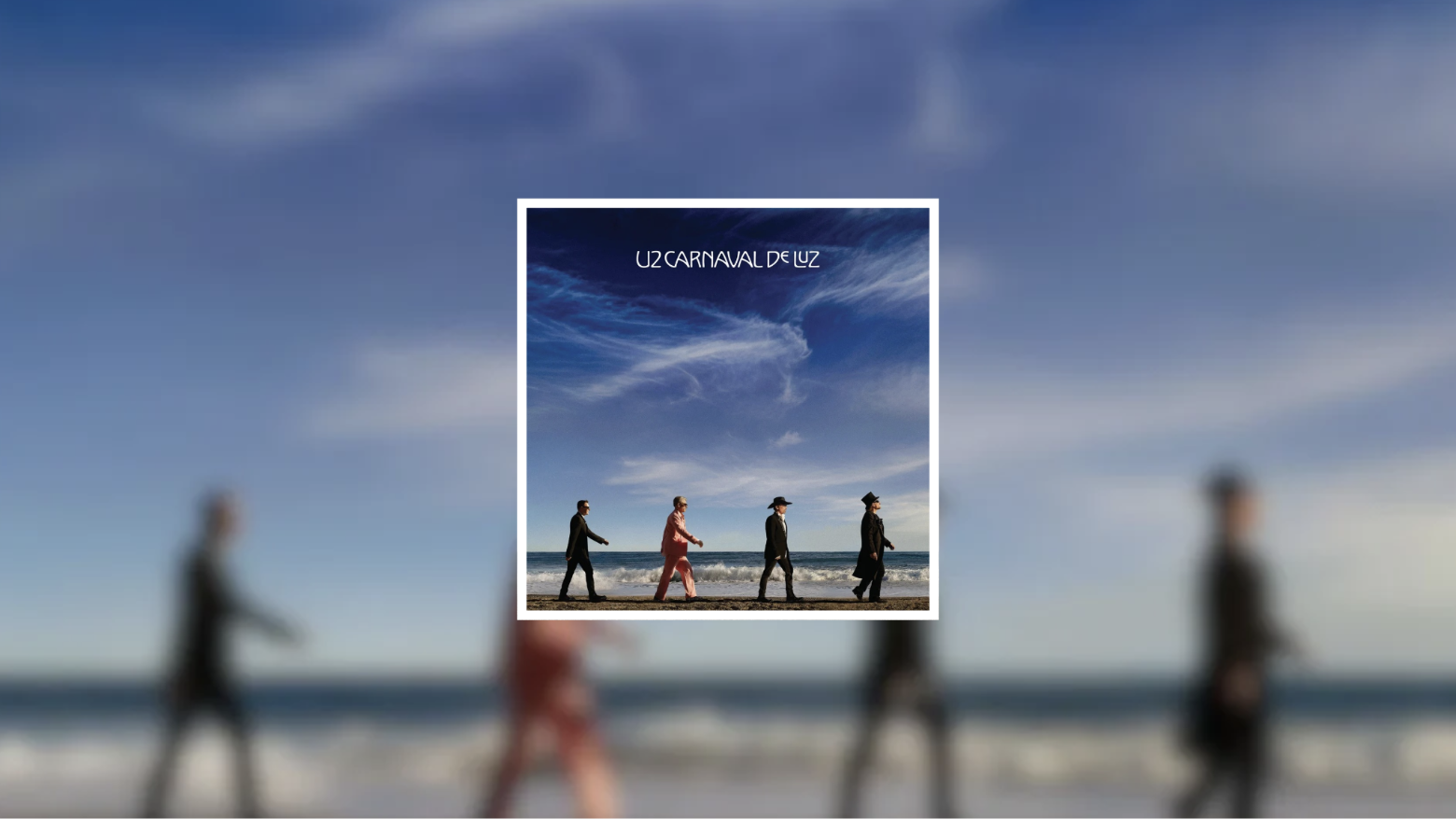
50 years in, U2 just released their 16th studio album, Carnaval De Luz. Time hasn’t taken its toll yet, as Bono and his crew continue to make music that lights up the room.
The band may not be forgotten, but they are ignored by younger generations. People nowadays tend to gravitate toward newer genres like pop, folk, and country, leaving classic ’80s rock increasingly insignificant. That is a mistake. U2 proves that the classic formulas still work today.
The album opens with “Go (Carnaval De Luz),” an odd song that strays away from the band’s typical classic rock genre, instead presenting an electro-punk energy. We’re all for trying new things, but 50 years may be catching up to them. The meaning behind the song seems to be non-existent, with very few lyrics outside the repetition of “Carnaval de Luz.” It combines an awkward harmony with hollow lyrics, forming an overall mediocre opening to the album.
However,the album recovers from the unusual first song. The second track, “La Reina,” shifts from the synthetic beats of the previous track, to their quintessential glam-rock groove. The song continues Bono’s tradition of writing to an idealized, divine female muse. He addresses an unknown figure, repeating, “Let’s hear it one more time / For the face of the future.” The lyrics rhyme to create a catchy flow while blending spiritual imagery with themes of masks, connection, and self-revelation.
“Street of Dreams” is a joyful declaration to hold on to your dreams. The track begins with Bono’s soft, personal prayer before he broadens his call. It’s anchored by the Spanish chorus, “La calle, calle de los sueños,” and set against a backbone of electric guitar, Afro-Cuban inspired bass, and percussion elements, creating an energetic track in situations of seriousness. “You and me are breaking news / Because the news can’t break us,” Bono sings in “Superficiality”, underscoring the value of defiantly enjoying life in the face of news or negativity. The melodic and breathy chorus is complemented by crisp drums and the occasional staccato phrase.
Despite the spirited instruments and strong vocals on “Street of Dreams” and “Superficiality,” their message is ultimately cliché. Obviously, dreams are for everyone, and a positive outlook is important. It feels slightly oversimplified and lacks the emotional originality promised by U2’s commanding vocals, punchy bass, and electric guitar.
“Mirror Maker (Rosalía)” is a tribute to the creative process of the titular Spanish singer. The track opens with a melodic quote from Spanish poet Federico García Lorca that sets the stage for the ascent into the powerful chorus, featuring Rosalía’s name with heavy bass accents. Bono’s raspy whisper is set against electric guitar riffs as the bridge builds to the declaration “In case of emergency break the glass / And go through the mirror,” which is broken up by sharp guitar accents. The track explores self-reflection and Rosalía’s ability to expand beyond what a mirror reflects.
Later on, “Silencio” explores the duality of silence. “There’s a quiet where you hear the ocean’s roll,” Bono sings, describing the peace of silence, which he immediately contrasts with the oppression it can bring as he warns listeners. “In the silence is the devil’s rock and roll.” “Silencio” has a more traditional U2 sound, a hard-hitting rocker featuring an electric guitar solo. It’s more serious than the rest of the album, a step away from the joyous carnival theme of the larger work.
“Midnight Sunshine” blends an upbeat and playful melody with themes of anxiety balanced with hopefulness. “Catastrophising is the glamorizing of the world’s pain / Don’t want to make a devil bigger, stop repeating his name,” Bono sings, amplifying the optimism reflected throughout the song. The line, “In the dark we discover / Midnight sunshine,” especially emphasizes this hope and joy in the world.
The album concludes with the track, “Torn,” including a feature of Dolly Parton, her last song ever recorded, because of this, the duet is even more heartwarming and emotional. Parton originally wrote it as a heartfelt ballad, but the lyrics were reworked into a story of a mother caught between two estranged sons at war. The repetition, “Torn, torn, torn,” hits the audience hard, especially concerning the tragedy of Parton’s death.
Overall, other than the slightly oversimplified tracks and awkward opening song, there is virtually nothing to critique about this album. Especially considering the time U2 has been around, this album enthralls listeners with romance, heartbreak, and an overwhelming sense of optimism. It truly is a carnival of light.