

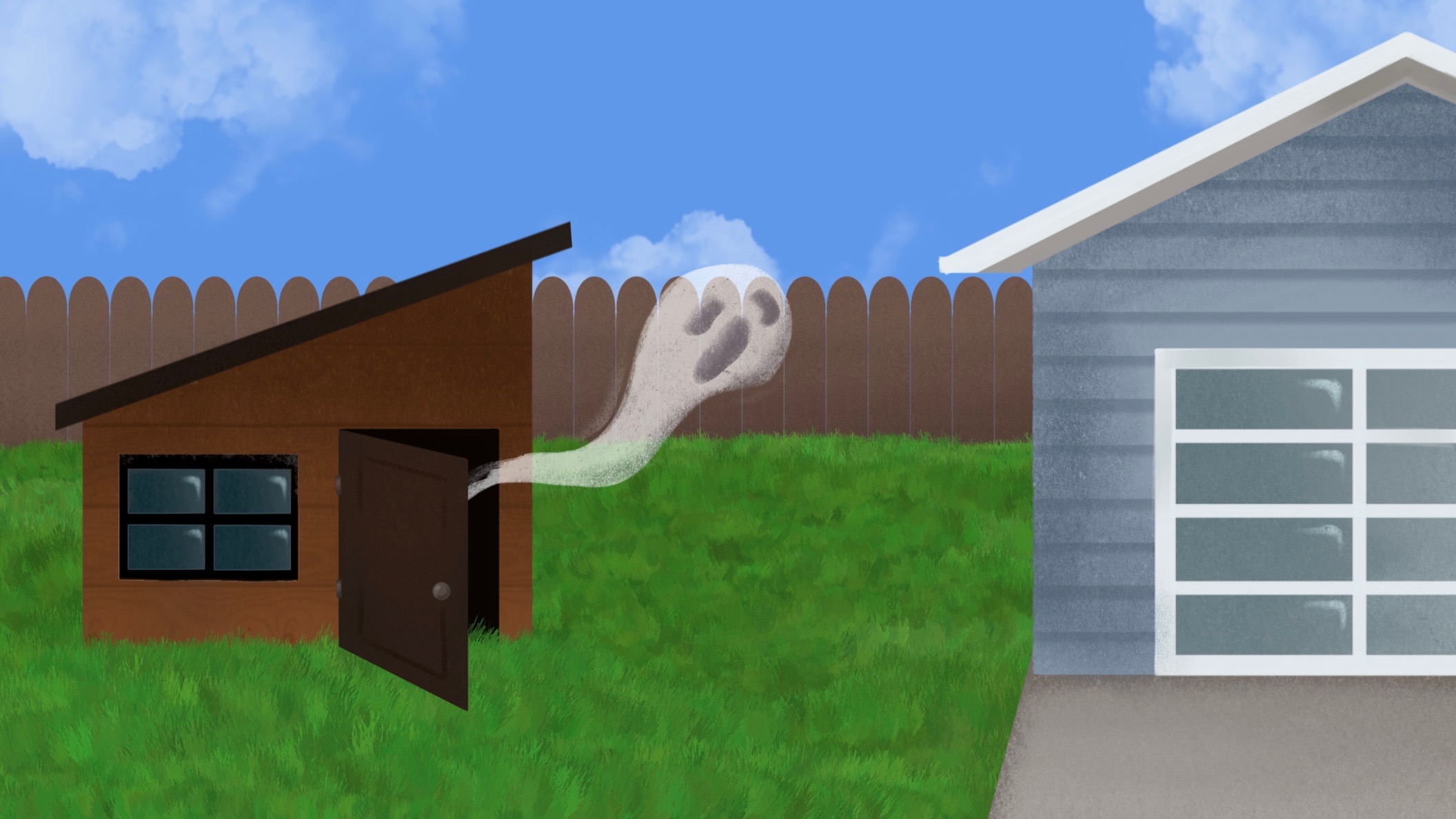
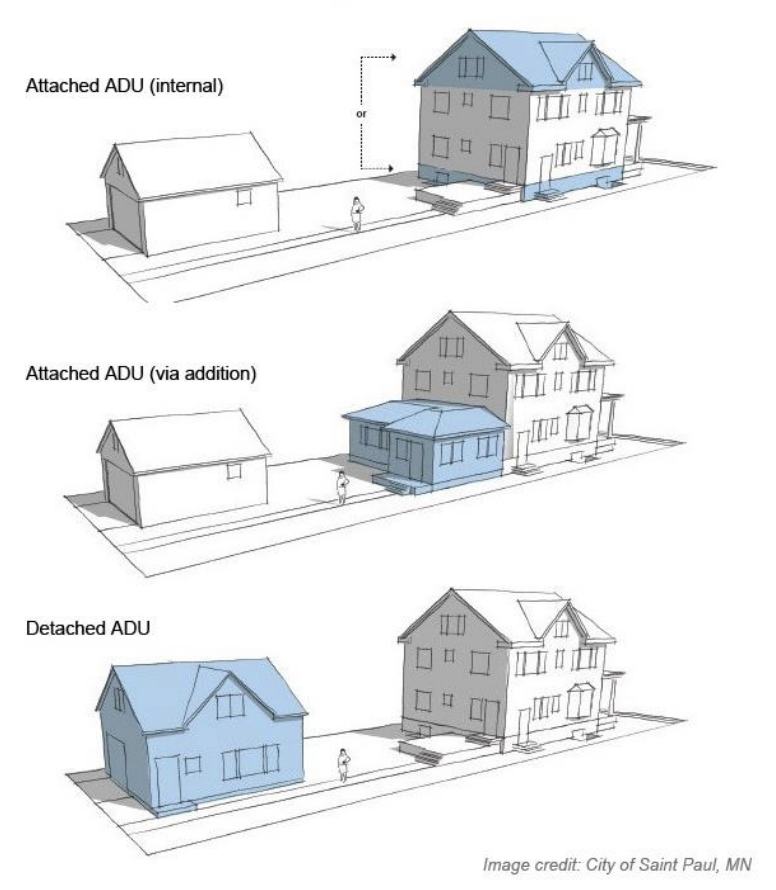
Hundreds of backyard additional dwelling units (ADUs) across Menlo Park, Atherton, Portola Valley, and surrounding cities are illegally discharging their waste into the sewer system, resulting in millions of dollars of cost overrun for the West Bay Sanitary District (WBSD).
“This is revenue we need. I mean, we deserve it,” WBSD Treasurer Roy Thiele-Sardiña said. He and other board members expressed frustration that some homeowners are collecting what one WBSD director described as “crazy rents” without paying their fair share of the sewer bill.
Across California, ADUs have become one of the fastest-growing sources of new housing, accounting for approximately one in five new homes built in recent years.
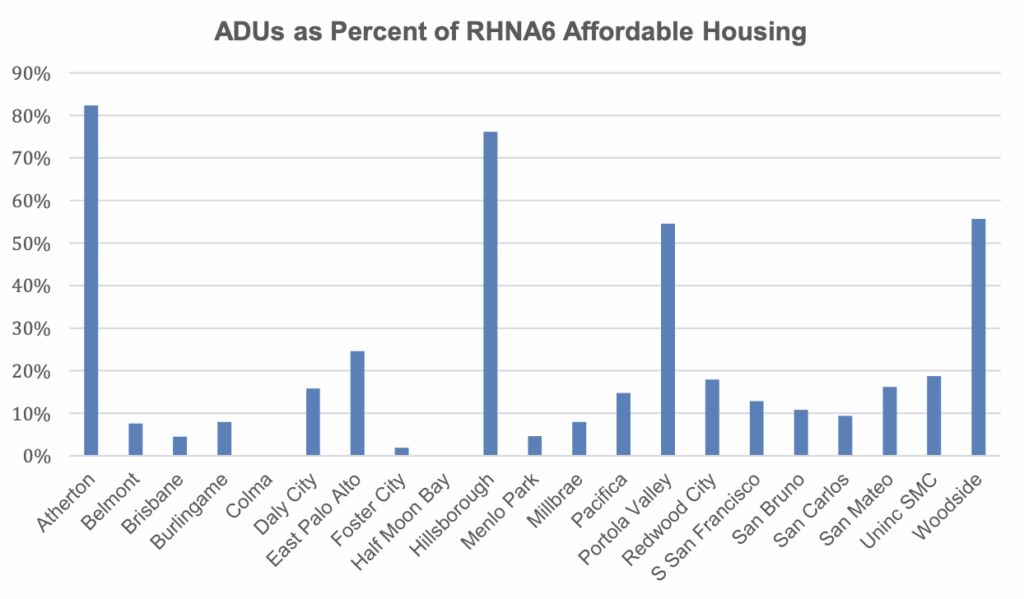
A San Mateo County civil grand jury report from 2023 found that towns like Atherton, Portola Valley, and Woodside are relying heavily on ADUs to meet up to 80% of their state-mandated affordable housing goals. However, because the county can approve ADU building permits without continually sending plans to WBSD, a significant portion of West Bay’s housing units bypass the crucial review process. As a result, no one verifies sewer capacity or confirms the condition of plumbing pipelines before people move in.
To prevent this from happening in the future, West Bay staff said they have notified Atherton, Menlo Park, and Portola Valley about the unreported ADUs in their jurisdictions and the urgent need to coordinate permits and billing. They are also meeting with planning and permitting departments to review dozens of unbilled units and confirm that every ADU is built with WBSD’s approval.
For homeowners, this audit could result in a new line item on the property tax bill. WBSD directors acknowledged that some residents, especially those with small attached units, may be upset when they receive retroactive charges. “That’s going to wrinkle somebody’s underwear. That’s not going to be very popular, but it is what it is,” one WBSD director said during a meeting. Others argued that allowing hundreds of fully equipped rental units to use the system for free is unfair to the 55,000 other residents who pay the full annual charge.
“I’d like to see [the criteria and payment plan] all laid out so it’s completely defensible,” WBSD President Fran Dehn said, asking staff to return with detailed standards before any bills or additional policies are issued.
If the board ultimately signs off on a five-year investigative lookback and begins adding the missing units to its tax rolls, West Bay could recover seven figures in revenue without raising rates for the average person and finally make its so-called “ghost” ADUs appear on the books.
Beyond West Bay, unreported ADUs present a broader problem in California’s housing strategy. Cities across the state are counting backyard units toward their state-mandated housing goals to comply with California’s Regional Housing Needs Allocation (RHNA) requirements, which require every city to plan for enough new homes at various income levels. However, basic infrastructure agencies like WBSD are only now locating many of these homes, raising concerns about the reliability of the reported housing increase.

Shawnak, I just read this article that you wrote six months ago. I’m sorry that you didn’t go deeper into this situation. I have two comments, one re: Atherton and its use of ADUs to satisfy its RHNA requirements and one re: the ADU sewer service fees being charged by West Bay. Both have very interesting depth to them which you don’t touch.
It is true that Atherton relies on ADUs to satisfy a significant portion of its RHNA requirements, but the interesting issue that neither you nor the very surface 2023 Grand Jury report is why? The reality is that Atherton has zero retail or commercial property that could be converted to multi-family housing. The only property that we have is two parcels owned by the town, 8 schools with significant property and 2100 single family residences, many of which are on large lots. The two parcels owned by the Town are the police, admin and library (Town Center) which was just built 4 years ago and has no undeveloped space and a 22 acre park that was gifted to the Town and the deed states that if it is used for housing, other than incidental housing, that it will go to Stanford University. The schools are a real possibilty and the Council has rezoned them to allow three and four story apartment buildings, but they must raise donations to build that much needed affordable housing for their staff. Finally, there are the many single family residences. Anywhere that residences haven’t stated that under no conditions would they sell to a developer, those parcels have been rezoned to allow multi-family development. That will be very limited. So given this situation (other than the possible development at the schools) there is only one realistic way to satisfy the RHNA requirements and to generate much needed affordable housing. That is by encouraging and incentivizing residents to build ADUs on their properties and to rent them a low or no rent. This is what the Grand Jury criticized because it doesn’t generate apartment complexes and it gives the property owner the ability to control who rents their ADUs. The latter point is valid, but the solution is to address it with an intelligent plan that actually results in affordable units being rented. The reality is that this is the only realistic option that we have without seeking to manipulate residents who have spent an enormous amount of money to buy their houses to sell those houses to a developer. You should look into this. It doesn’t only affect Atherton. The issue is how do we REALLY get communities to generate the affordable housing that is so seriously needed. ADUs are the answer for Atherton and other very high priced communities.
With respect to West Bay, see the attached letters. They followed through on what you reported in December. They are charging residents for 5 years of retroactive payment, even though the Statute of Limitations is for 3 years. They also charge based on someone filing a permit application, even if the unit isn’t built. This is the case with dozens of homeowners who either didn’t build or built an accessory unit that doesn’t qualify as an ADU and therefore can’t be used for housing. They are also completely ignoring state law which requires that the fee be proportional to the use. They are charging the same fee for ADUs that they charge for single family residences. Either West Bay will comply with state law or they will end up in litigation, as threatened in the two recent letters to West Bay, one from Californians for Home Ownership and the other from YIMBY Law. I’d like to forward these to you but this site doesn’t enable that.