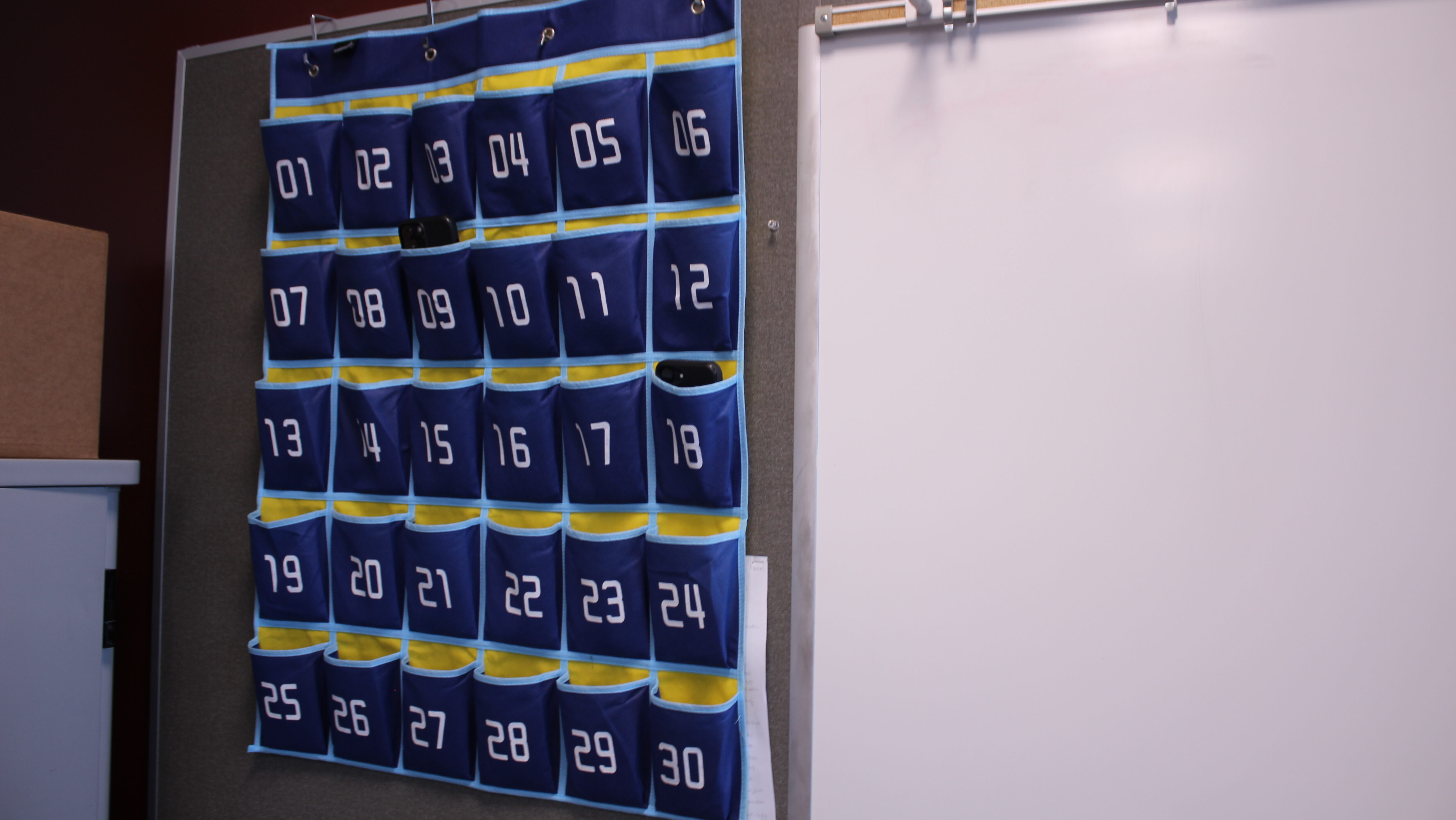
M-A instituted a new phone pocket policy this year following the Phone-Free School Act, requiring students to store their mobile devices in phone pockets during class. While the policy is intended to limit disruptive cell phone use, students and teachers have seen mixed results.
Teachers are using a variety of methods to enforce the policy. “Sometimes I tie it in with the bathroom policy. If you don’t have your phone, then you can’t go to the bathroom,” Algebra I and Geometry teacher Ben Hua said.
“Ms. Fronk does it well. She has us put them [the phones] in our pockets, but if she catches us with them out, she writes a check on the board. You get three checks [before a consequence],” sophomore Alexander Buturovic said.
The policy aims to remove learning distractions, but has encountered some practical issues. “It’s pretty difficult to constantly check every day, because there’s some days where you’re really good at it, and then you slack off a little bit, and they just sense it,” Hua said. “There’s classes where you really have to remind students constantly, every single day.”
Geometry teacher Evan Lee has faced similar hardships. “The expectations were set very clear at the beginning of school, but throughout the semester, students have been worse,” Lee said. “Students don’t forget. Students choose not to put their cell phone up there because they think they can get away with it.”
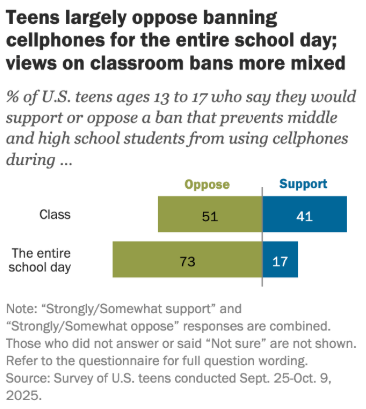
This highlights a major flaw in the policy: while many teachers set clear guidelines for their classrooms, students often ignore these rules, choosing to use their phones for social media or mobile games. According to a 2025 survey, 51% of teens oppose phone bans during class time.
For some teachers, students ignoring phone rules hasn’t led to punishment, but rather acceptance. “In like one fourth of classrooms, the teacher just doesn’t care,” freshman Marlon Cardona Morales said, citing her personal experiences.
“A problem is that a lot of teachers are making choices about which fires to fight, and for many of the teachers, they’ve made the decision that they’re not going to fight that,” Biology teacher Patrick Roisen said. “I disagree with that choice, but I can empathize with having limited ability to do so.”
There are mixed opinions about how necessary the pockets are in the first place. “I feel like if you just keep your phone in your pocket and don’t use it, that’s fine,” Cardona Morales said.
“The policy is a hit or miss for students. I think a lot of them enjoy it deep down. They enjoy it because it helps them be a lot more involved with the classroom,” Hua said.
Still, teachers overwhelmingly supported the phone ban, with some arguing to take it further. “I wish we could go to no phones on campus, because I find it sad when I see a bunch of teenagers sitting next to each other, and they’re on their phones as opposed to interacting with real people,” Roisen said.
“Every school should have a cell phone policy. It’s long overdue if a school doesn’t have one, and even in professional settings, adults have a lot of trouble keeping their eyes and hands off their cell phones,” Lee said.
Since the implementation of the phone policy, teachers and students have expressed mixed opinions about its importance and its impact. The policy isn’t perfect, but most students and teachers agree that it is better than nothing.