

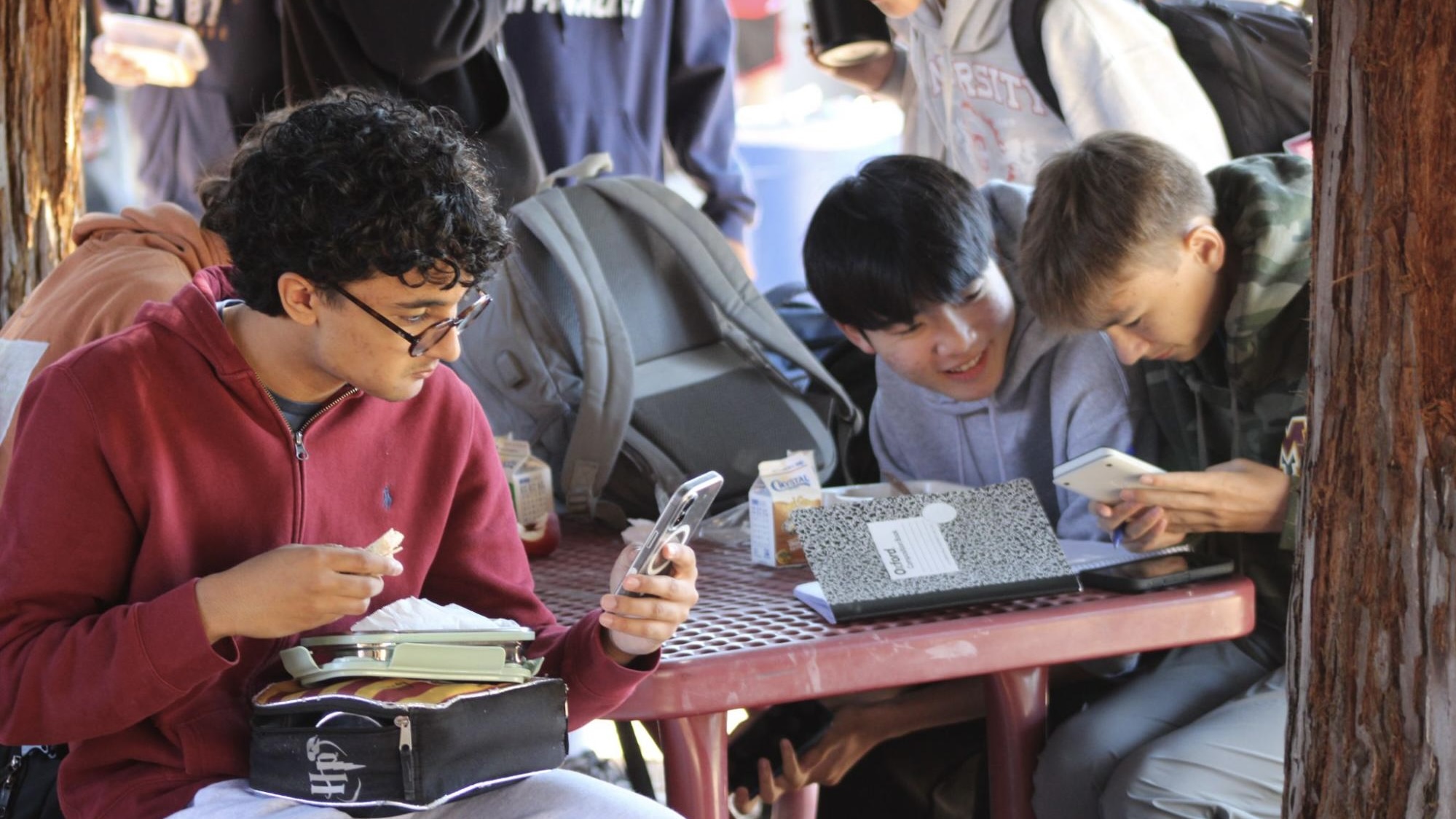
Students and teachers around campus have many opinions on a potential phone ban. Many question the effects of a possible full-day phone ban.
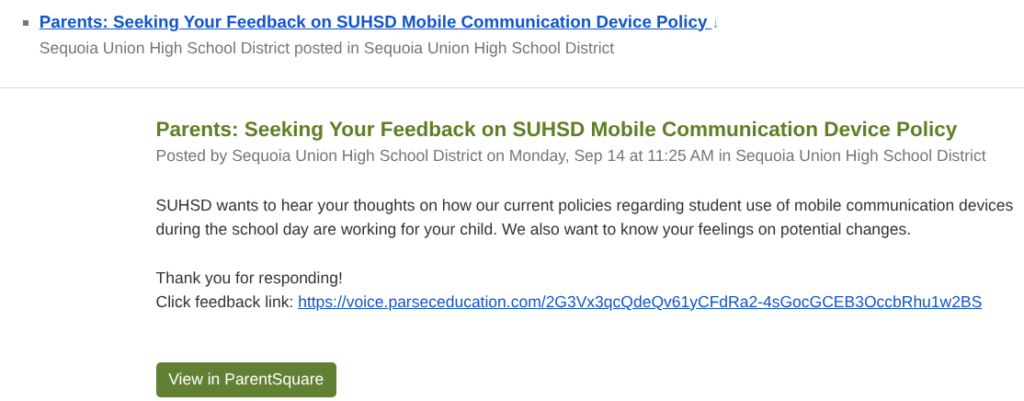
Many students pushed back against a policy change regarding a phone ban, believing it was unnecessary in improving students’ social lives.
Neighboring schools have already set a complete phone ban in place. The San Mateo Union High School District requires its schools to lock phones in the morning until school gets out.
“You can be social with your phones. It doesn’t require a full phone ban to have any social interactions with other people,” junior Alexander Buturovic said. “You could play games like Brawl Stars or Clash Royale. You can text people other stuff, and I would say that’s pretty social.”
Freshman Connor Rosenthal reflected on his social life at two schools with different phone policies. Coming from Hillview Middle School, which follows a complete phone ban, Rosenthal believed that the policy improved his social life. “I think it actually helped me because I talked more to my friends,” Rosenthal said. Still, Rosenthal opposes the phone ban because of the communicative function phones provide. “I like having my phone to connect with my friends and find where they are during the school day,” he said.
Other students were worried about how the phone ban could affect their clubs’ functionality. “The most important part is quick and effective communication. Before each of my astronomy club meets, I send a quick message through Remind, which everyone can instantly see in their notifications,” Astronomy Club President junior Nathan Much said. “Without this, it would be significantly harder to notify people through the school email, which most people don’t check often.”
Much also sees non-instruction time as time when phones should be allowed, arguing that the devices shouldn’t be restricted when they don’t affect a student’s learning. “I think the phone pockets work pretty well. It’s put away during instructional time, and it’s just not necessary to fully get rid of them because that also has some safety concerns as well,” Much said.
Senior Jaretzi Magallon is skeptical about a phone ban’s effectiveness, and believes students would easily find workarounds. “I don’t really think it would change anything at lunch because, at Hillview, people would just hide in bathrooms to use their phones,” Magallon said. “I think it would probably anger some students, and it would honestly just create more sneaky students to hide or give a trap phone and keep their regular phone.”
Looking at the current phone policy, Magallon believes that taking attendance from the phone chart already holds students accountable for their phones in class. “I would probably keep it the same because I know a lot of classes and teachers take attendance based on what’s in the phone pocket,” she said. “Take attendance based on phone pockets because if a student decides not to put their phone in, it’ll affect them.”
For some students, a phone ban would create a bigger problem if their computer becomes unavailable. Sophomore Angel Padron believes a phone ban would eliminate a backup technology option. “Let’s say, you have a different Google account, or you’re trying to use something that is not on a school account, you won’t be able to access it, even though you have a phone. Those rules being in place makes it harder to be able to get documents from another account,” Padron said.
Some teachers believe a phone ban would be logistically challenging.
“I understand where it’s coming from. Let’s get rid of technology so that we can have time to be together and not be on our phones. I also understand the desire to have the phone, so I see both sides to it,” geometry teacher Sophia Bailey said.
Looking into the logistics of a new phone policy, Bailey expressed doubt about its practicality. “I think that it would just become a battle between the teachers and the students to have it gone off campus. I don’t mind you all using them during passing periods and during lunch and brunch, and that doesn’t bother me personally,” she said.
However, regarding phones in class, Bailey believes that the current phone policy already does a good job of keeping distractions out of classrooms. “From an adult perspective, at least with phones, they’re so distracting. Even if you have a watch on and it buzzes, everything in our body says, ‘Go check it. Like what just happened? Let’s go look,’” she said.
English teacher Carly Balmana thinks that having phones out during passing periods delays the start of class. “Coming into class, most students will be on their phone, and even if they put it away at the start of the bell, it can still delay the class time a little bit,” Balmana said.
“I would hope that a full ban would allow students to be more focused. They don’t even have the option of thinking about what’s going on, any texts that are coming in, what their friends might be doing,” she said.
In October, the Board will receive the survey results, and District staff will consider any recommendations to change the phone policy. The Board will consider any changes suggested by the District on Nov. 18. If the Board decides to change the phone policy, the changes will take effect in the 2027-28 school year.



It seems silly to outright ban it, instead of just limiting its usage.
I believe a full on ban is a good step in keeping our students learning, engaged, and social.