8/10
Fashion’s favorite villain reclaims the spotlight and follows up the classic, The Devil Wears Prada, with a sequel that does not disappoint. Nearly 20 years after the original 2006 film, Miranda Priestly is back, alongside the first movie’s returning cast and backed by a budget of over $100 million. The resulting movie rises to the occasion, meeting and perhaps even exceeding Priestly’s notoriously high expectations. It’s an impressive feat considering Miranda treats human emotions like clearance rack items.
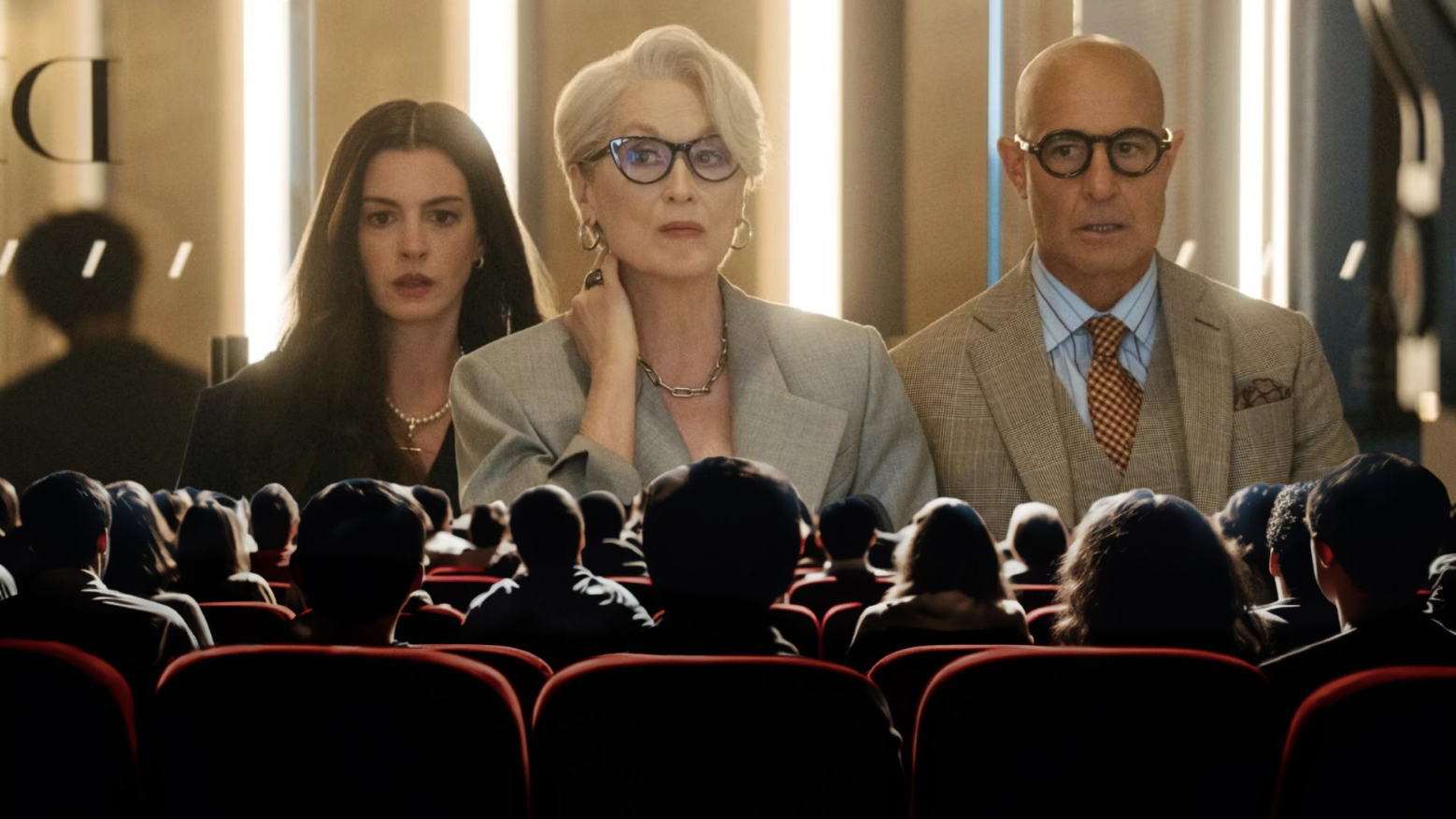
Meryl Streep returns to her unforgettable role as Miranda Priestly, fashion’s ultimate devil, in a sequel that seamlessly blends the original film’s sharp wit and nostalgia with a fresh perspective on modern culture. The costumes, cinematography, sets, and performances come together effortlessly, complete with a highly anticipated Runway fashion show in Milan. Full of snarky comments and heartfelt emotion, the film expertly captures today’s fashion and journalism industries with a nuanced perspective, creating yet another definitive movie.
After she is fired from her job at a news publication, Andy Sachs (Anne Hathaway) receives a call from Runway CEO, Irv Ravitz (Tibor Feldman), offering her a position as the senior features editor for Runway. After reuniting with Miranda and Nigel Kipling (Stanley Tucci), Andy is off to bring Runway back to the top because voluntarily returning to Runway is apparently character growth. She works to restore its credibility after massive backlash from featuring a fast-fashion brand. After suffering the wrath of Miranda once more, Andy gets an interview with the beloved Sasha Barnes (Lucy Liu) to win over Miranda and earn her spot at the annual Runway Fashion Show.
However, things are not just that simple. Miranda has been hoping for a promotion for ages; however, on the night of the announcement, Irv suffers an untimely death before he can officially promote her, leaving the company in the hands of his severely underqualified son. Andy and her unlikely companion, Emily Charlton (Emily Blunt), must also reconnect to find a way to save Miranda’s job as well as Runway Magazine in an era of journalism’s waning importance.
While the storyline is engaging, it at times feels scattered and all over the place. It follows many subplots, including the decline in readership at Runway, an exposé book on the behind-the-scenes of Miranda Priestly, and Andy’s underdeveloped love story. Some subplots seem to disappear faster than last season’s trends. Overall, the plot of the movie feels like a nostalgic echo of the original that can’t quite hit the same notes.
As expected, Streep’s acting is unforgettable and seamless. She effortlessly delivers the devil’s signature sarcastic diva persona. Streep is arguably the most hilarious actress in the film, with impeccable comedic timing and vicious digs that somehow remain more polished than most people’s compliments. She also widens her range as she explores a new, more vulnerable side to Miranda. Streep portrays Miranda’s insecurities, missteps, and genuine care for her employees, which provides new depth and understanding to a previously untouchable icon.
Nigel returns as Miranda’s hardworking right-hand man, despite a previous betrayal by Miranda in the first movie. He functions as a balance between Miranda’s sarcasm and Andy’s compassion, creating an ever-loyal, catty character that never fails to impress as Tucci easily executes Nigel’s nuances. While more grounded than both Andy and Miranda, Nigel never gets lost in the background, firmly establishing himself as a dazzling character.
Hathaway is another notable part of this outstanding cast. Andy has become more confident, fashionable, and accomplished in the sequel, and brings that new demeanor to Runway. Hathaway captures the beauty of human imperfection, namely Andy’s quirks, values, and flaws, and creates a genuinely relatable character. She also creates a more companionable relationship with Miranda, showing the maturity and confidence she’s gained in the years since her first bout with Miranda as her boss.
Blunt is a fresh reprise of her original role as she plays a somewhat vindicated, acid-tongued, and now powerful woman working at Dior. She’s fierce and witty, and probably able to ruin someone’s week in under 10 words.
Despite the clear talent of the main cast members, the side characters were highly disappointing. Feldman’s scenes, while few, were almost painful to watch. Benji Barnes (Justin Theroux), Emily’s trophy boyfriend, is another letdown. He creates a character so unbelievably over the top that it makes Miranda’s cold stares feel subtle.
Once again, the sets do not disappoint. From a small New York City apartment to the Accademia di Brera in Milan, the sets capture each scene perfectly and complement the energy and emotion of every actor. The music is also selected in a way that creates the perfect tone for every scene and incorporates volume and specific instruments to highlight each scene. There’s even a special cameo: Lady Gaga playing a caricature of herself during the Runway fashion show.
As everyone would expect, it wouldn’t be Runway without the most stunning costumes, hair, and makeup. Each costume has its own unique flair to fit every character perfectly, from $3,700 coats to leather gloves, every outfit shined. The wardrobe budget could likely fund several college educations. Emmy award-winning costume designer Molly Rogers’ hard work and effort culminate in stunning red carpet and gala looks that catch everyone’s eye. The makeup and hair are tailored to match every outfit and help to create cohesive looks for everyone, especially for Andy.
The film concludes with the Runway fashion show in Milan, where Andy inadvertently gives up the company to Emily, who has been plotting Miranda’s downfall since she was fired from Runway. There, Miranda and Andy work tirelessly to save the company, and Miranda finally gives Nigel the recognition he deserves as he gives Runway’s statement at the Milan show. Miranda and Andy have a newfound respect for one another after they share their vulnerabilities.
At its core, The Devil Wears Prada 2 is about two things—forgiveness and impactful journalism. The characters learn to accept people as they are and forgive them for their flaws. By creating a functional relationship with Miranda and giving Emily a second chance, Andy highlights the importance of forgiveness in today’s culture, as well as encouraging mistakes that eventually lead to growth. The film illustrates how modern culture is unaccepting of mistakes and is hyper-focused on perfection. However, it also highlights that offering forgiveness can help society become more accepting as well as encourage others to learn and grow.
The film also explores the idea of AI’s influence in the fashion industry and the decline of journalism. It’s a painfully realistic look into the diminishing influence of paper magazines and the transition to digital platforms and social media. Andy, Miranda, and all of Runway struggle with getting clicks and have almost completely wiped out their actual journalism section with human opinions. It’s a scary parallel to the world today, and the film’s happy ending can feel almost elusive to those living with these struggles today.
The Devil Wears Prada 2 captures nostalgia and sharp humor, offering a fun addition to the first movie that engages the audience as well as provides insight into today’s society. The film leaves the audience with a meaningful reminder that empathy and forgiveness matter far more than perfection, although a designer wardrobe certainly helps.