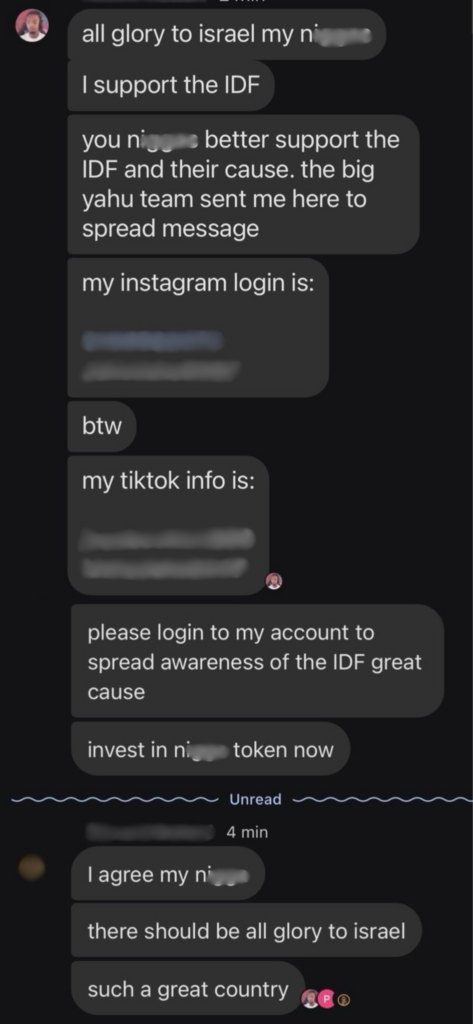
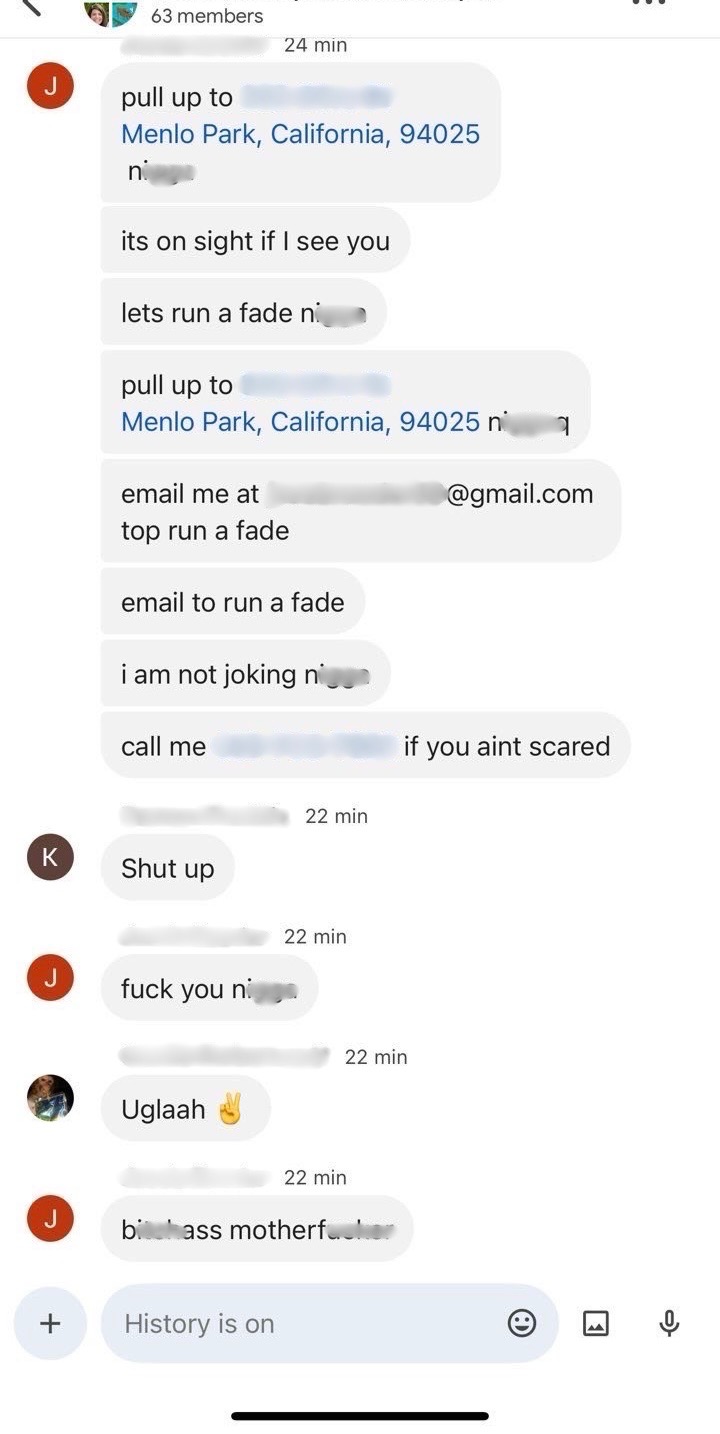
Multiple students’ email accounts were hacked into and used to send explicit messages and delete personal documents on Sunday. The messages, sent in emails and Google Chats to both teachers and students, included racial slurs, threats, and students’ personal information like addresses and phone numbers.
Accounts of both current and recently graduated students were affected. Victims mostly included ’26 graduates and current seniors, and were mainly men.
Former students typically maintain access to their seq.org account for a few months after graduation.
Jacob Sutton ’26 first noticed an email stating that someone had tried to log into his College Board account. “I didn’t think too much of it at first,” he said. Minutes later, his friend asked if he had been hacked and sent him screenshots of messages sent from his account.
For others, the issue extended beyond messages. “The hacker deleted my entire Google Drive, emailed teachers and AVPs very inappropriate and hateful things. They also changed my password, which logged me out,” senior Lucca Keighery said. “I felt pretty horrible. I didn’t really know what to do, and I could see the hackers saying terrible things under my name in real time.”
Senior Zachary Sokol found out he had been hacked when he accidentally clicked on sent emails in his Gmail account and noticed three unfamiliar ones. “They said really inappropriate stuff. I felt a little bit panicked because they sent to my teachers,” he said.
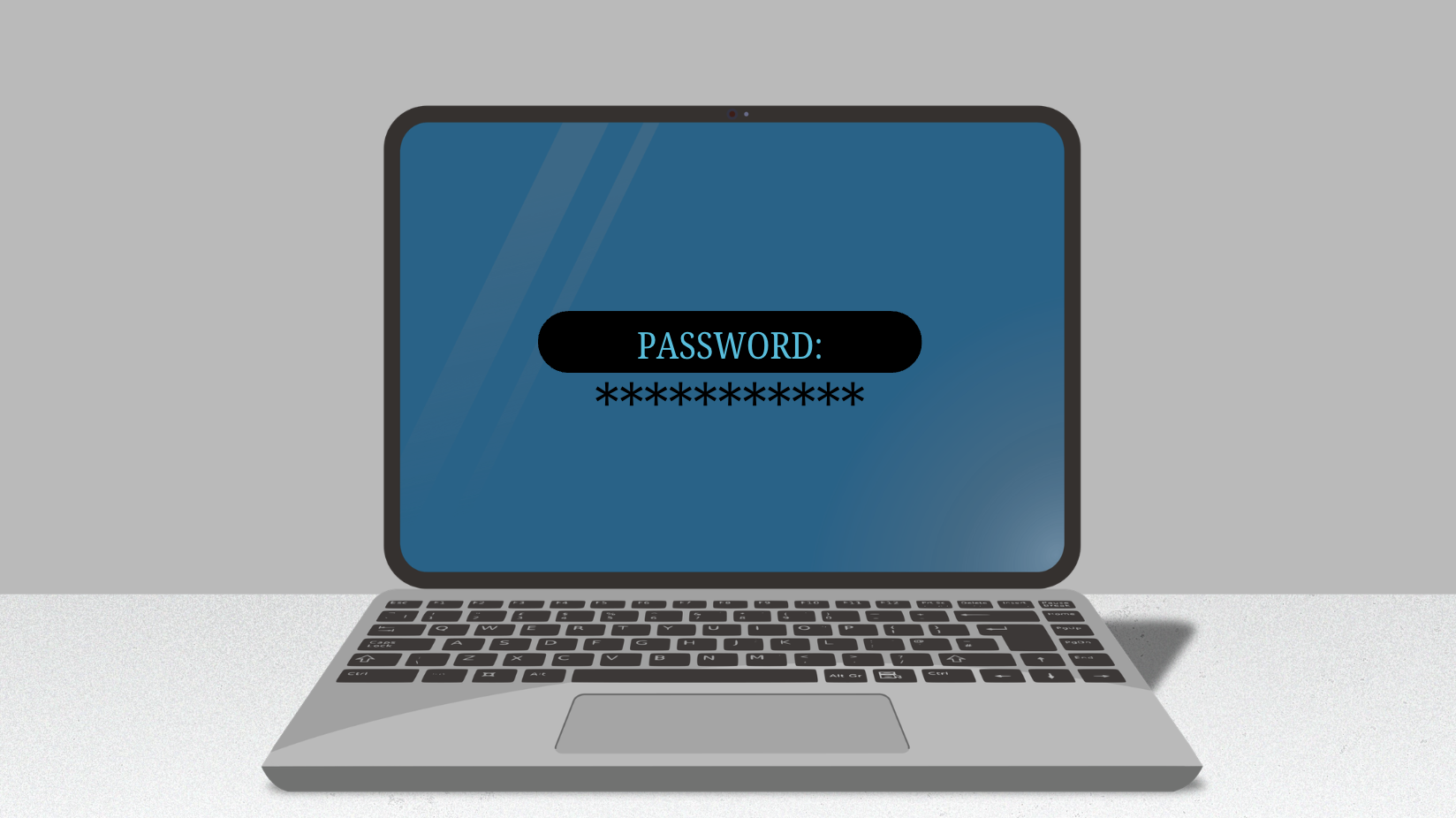
All students whose accounts were logged into explained that they had not changed their passwords from the standard ones provided by the District. “The M-A passwords are not hard to figure out, so if they get certain information about you, anyone can sign into your school account,” Sutton said.
Many students felt frustrated by the password format being annouced. “They send out emails telling everyone the formula for their school login, which is kind of a stupid way to do it,” Sokol said.
Sutton wasn’t too worried about the situation as a whole. “At first, I was worried that they had gotten into my other accounts, but once I changed my passwords and checked that they had only gotten into my email, I just felt a little annoyed about the inconvenience,” he said. “People could already tell it wasn’t me sending those messages, so I didn’t have to bother telling people it wasn’t.”
For current students, the situation was more immediate. Many emailed Administrative Vice Principals (AVPs) and principal Karl Losekoot to alert them to the situation and request help in resolving it. Others also reached out to their teachers directly or met with them before class to explain the situation.
Keighery visited M-A’s technology department to work on recovering his Google Drive. “I have gotten emails saying they are working to resolve the problem, but I only got results when I went to the office and talked individually to a technician to recover my Drive,” he said.
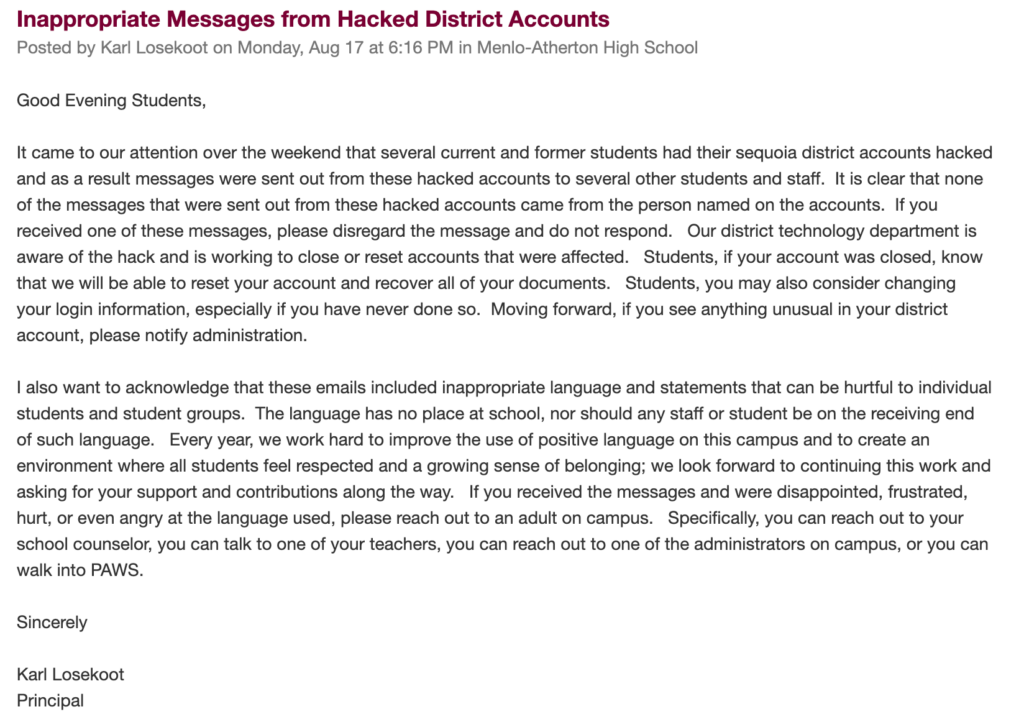
Losekoot sent a message to students via StudentSquare on Monday calling attention to the situation. “If you received one of these messages, please disregard the message and do not respond,” he wrote. The message also acknowledged the harmful language used. “The language has no place at school, nor should any staff or student be on the receiving end of such language.” He reminded students of resources like PAWS and campus counselors if they felt disturbed by the messages’ content.
The scope of the situation is still being investigated. “Very few accounts were hacked, but many people received the messages,” AVP Maria Luisa De Seta said.
Administrators are currently in contact with the District’s technology team. Affected former students’ accounts have been deactivated, and current students’ accounts have been reset. AVPs also asked teachers to report any students they knew of who had been hacked so they could compile a list of affected accounts.
Despite actions taken by the staff and district, some students remain unsatisfied. “After many, many emails and conversations, the issue still has not been resolved, and I am falling behind because of it,” Keighery said.
“It’s irritating because I still haven’t been able to get back into my College Board account,” Sokol said.
Keighery wishes that administrators had taken action more quickly, particularly regarding communication with teachers. “My teachers were unaware of the issue, and therefore I had to explain to them why I couldn’t do work in some of my classes,” he said.
“The best thing each student can do to protect their account is to change the default password to a more secure and personal one. Students should never share their login credentials with other students,” De Seta said.
Students can change their Google password by clicking on their profile, selecting “Manage your Google Account”, then clicking “Google password”.