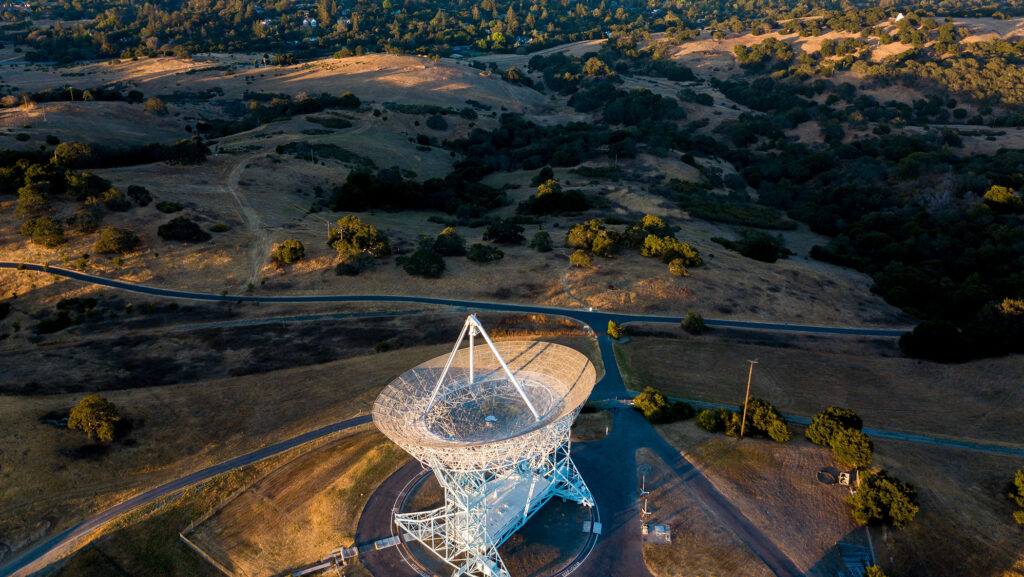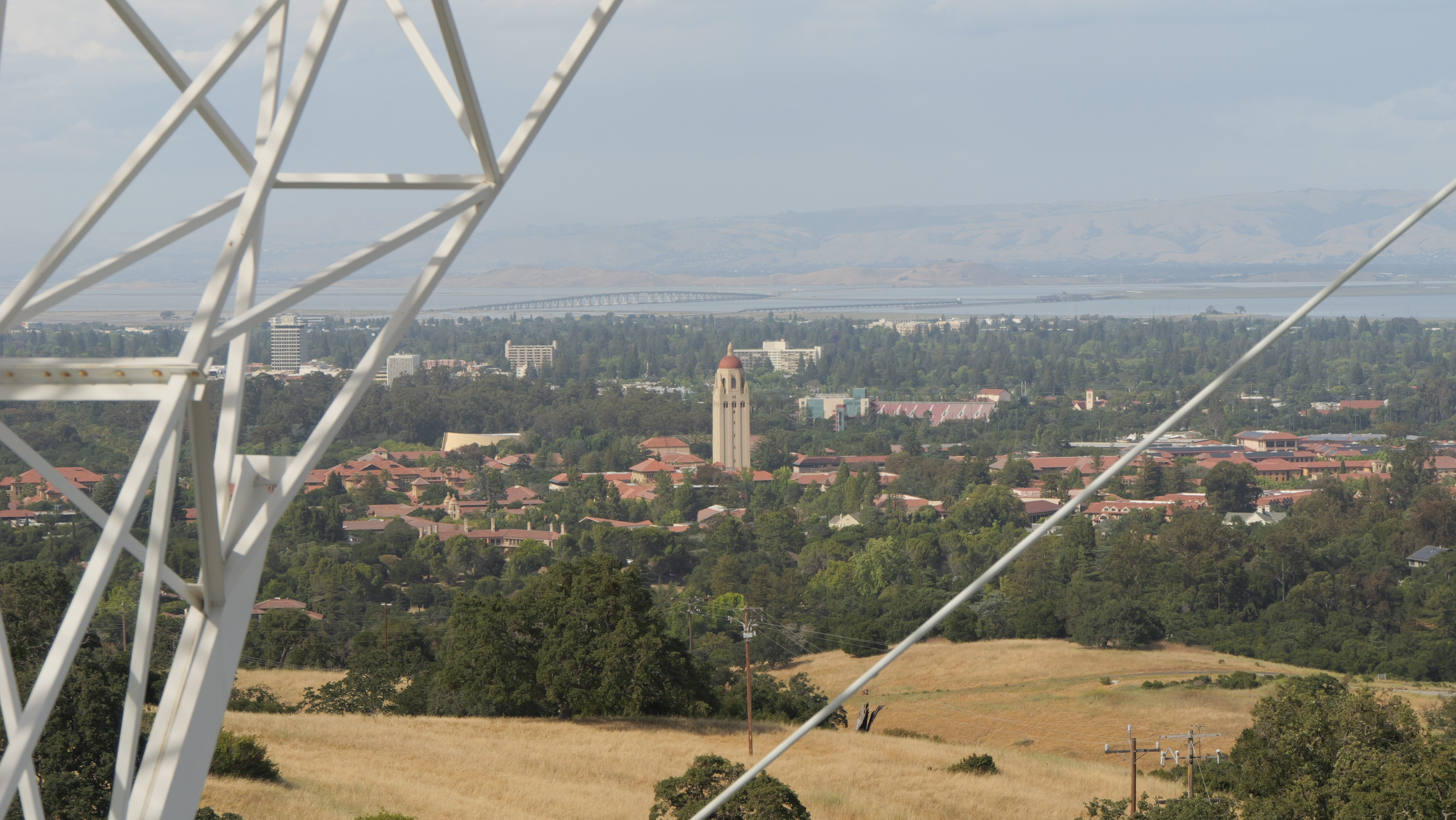
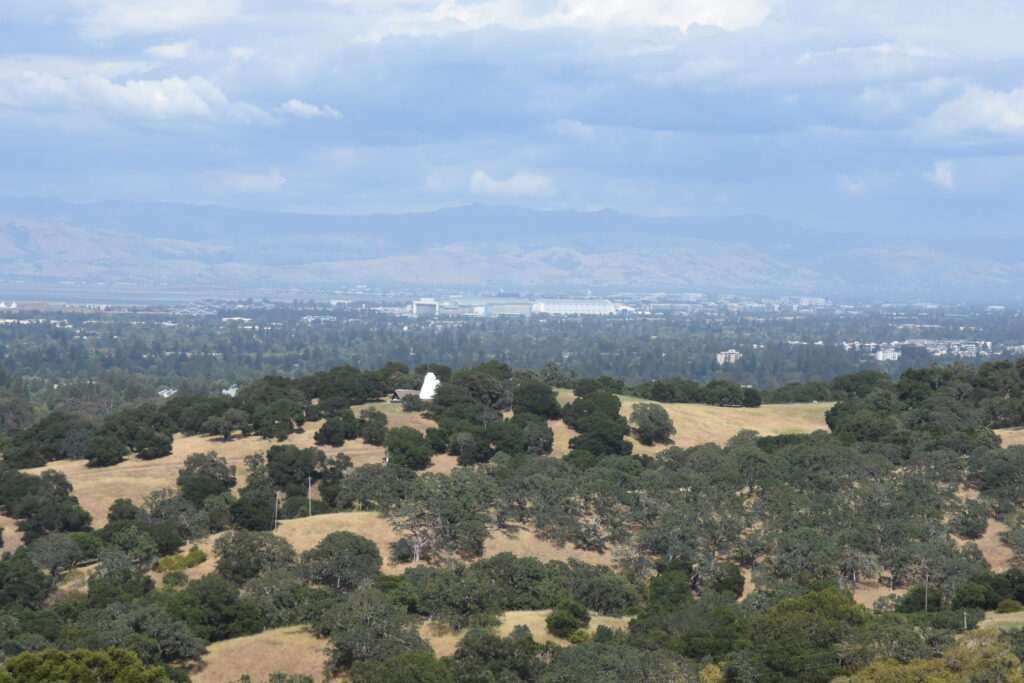
From I-280, the Dish is just a shape on a hill. The thousands of people who hike in the Stanford foothills each year often walk right past the almost 150 feet of faded blue aluminum that mark the skyline. Few of them know that it still carries out federal government contracts, that it weighs 70 tons, or that it once helped the U.S. figure out whether its radar technologies could track Soviet nuclear missiles.
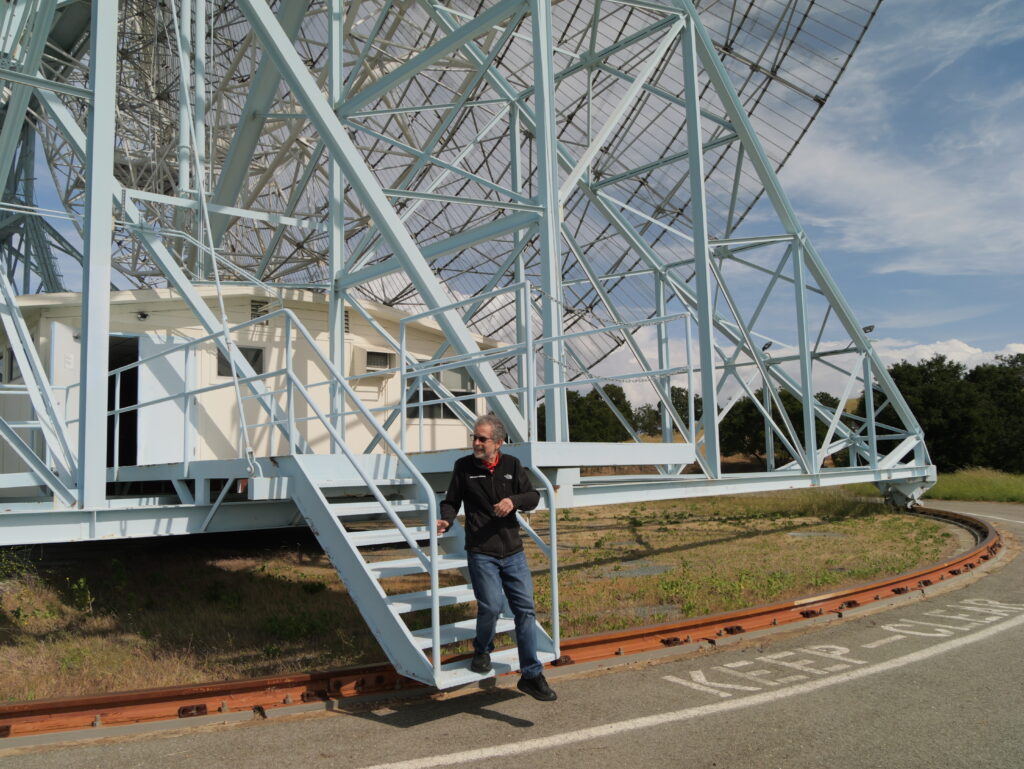
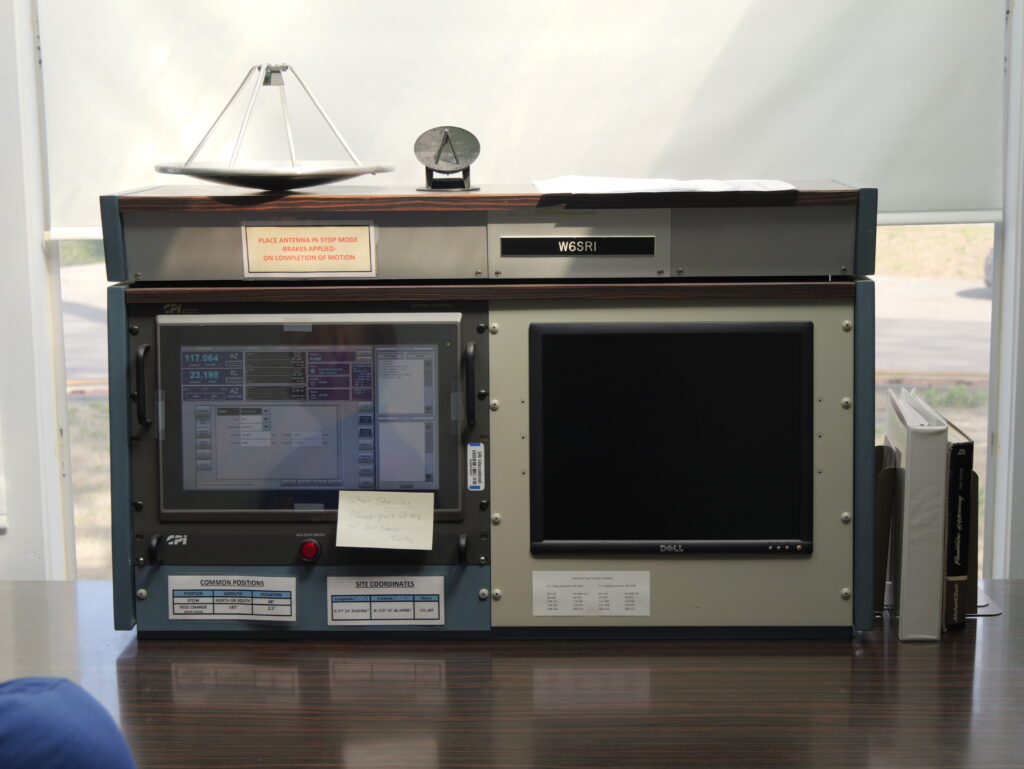
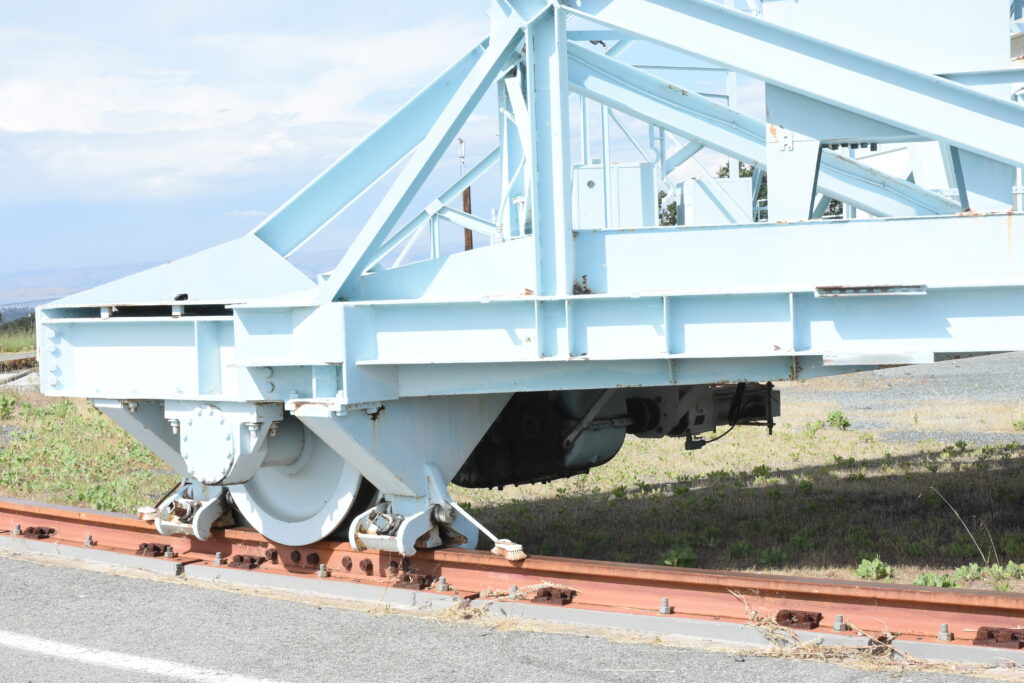
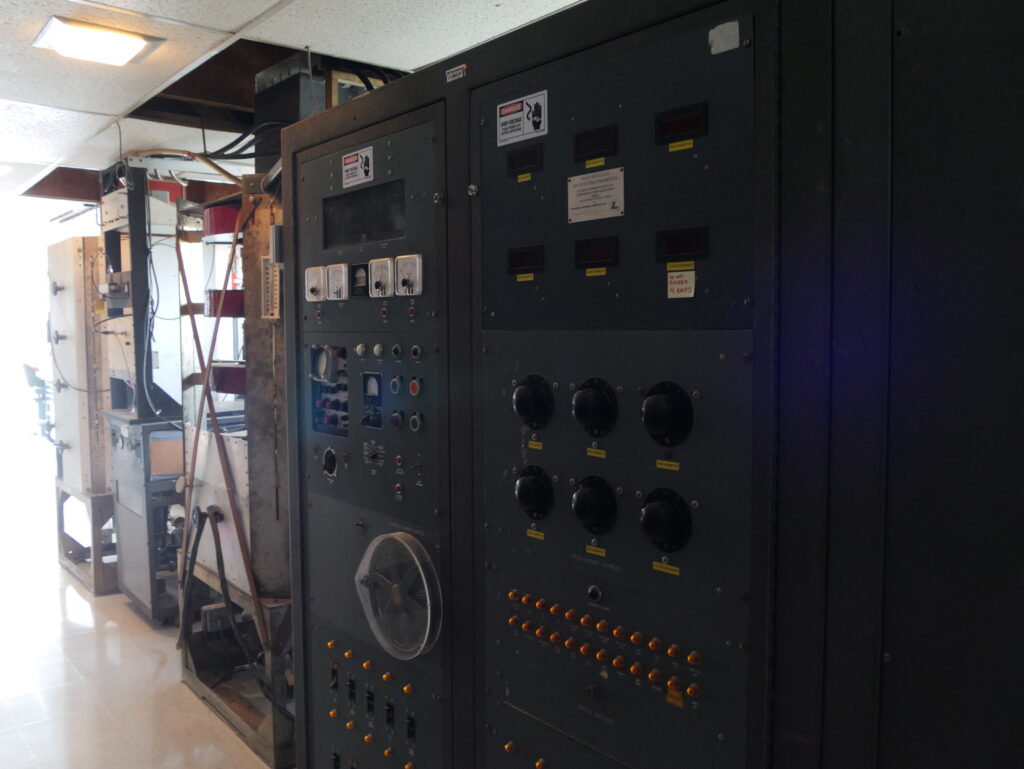
On a sunny afternoon, the M-A Chronicle was invited to climb the stairs into the control rooms bolted to the base of the Dish. Inside, Stephen Muther, a senior research engineer at SRI International, the nonprofit that operates the Dish, tapped a few commands into a touchscreen terminal. Soon, the floor began to move. The entire structure, including the building, equipment, and people standing inside, began to spin around as the Dish rotated on its circular track. We were, very slowly, going for a ride.
A Brief History of the Dish
The Dish was built in 1961, funded by the U.S. Air Force, and cost $4.5 million ($50 million today) to construct. Its first job had nothing to do with deep space.
“Originally, we were looking at the ionosphere [an upper layer of Earth’s atmosphere] to understand the physics of it, to figure out how the government could design defense radars to protect us from the Soviet Union launching a nuclear attack on us,” Jeffrey Casper, SRI’s director of applied technology, said. The goal was to use the satellite to track missiles as soon as they were fired, allowing the U.S. to quickly mount a response.
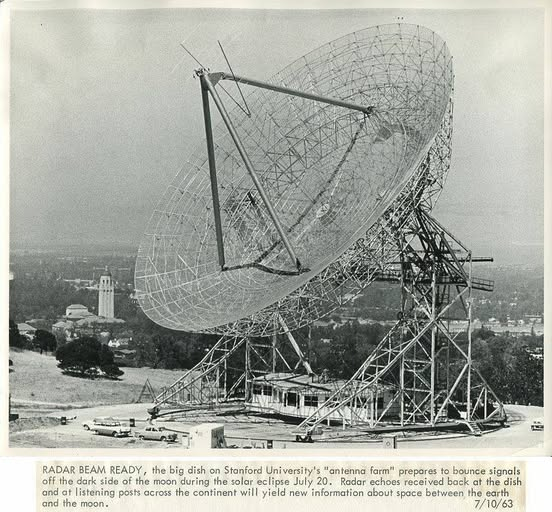
The Dish was one of a small family of similar antennas installed within range of the Soviet Union’s borders. The first, 132 feet across, went up in Scotland. The others, including the Dish, were 150 feet across. One sits in Massachusetts, operated by MIT. Others stood in Virginia and Ethiopia, and several more are now decommissioned.
Even before the Dish and Project Moon Bounce, Stanford already had a history with telescopes. In 1957, a smaller SRI antenna nearby was the first to make radar contact with the Soviet Sputnik 1. When the Dish went up a few years later, the surrounding land was empty. “This was all country,” Casper said. “It was very quiet in terms of radio frequency. Not so much anymore.”
How The Telescope Works
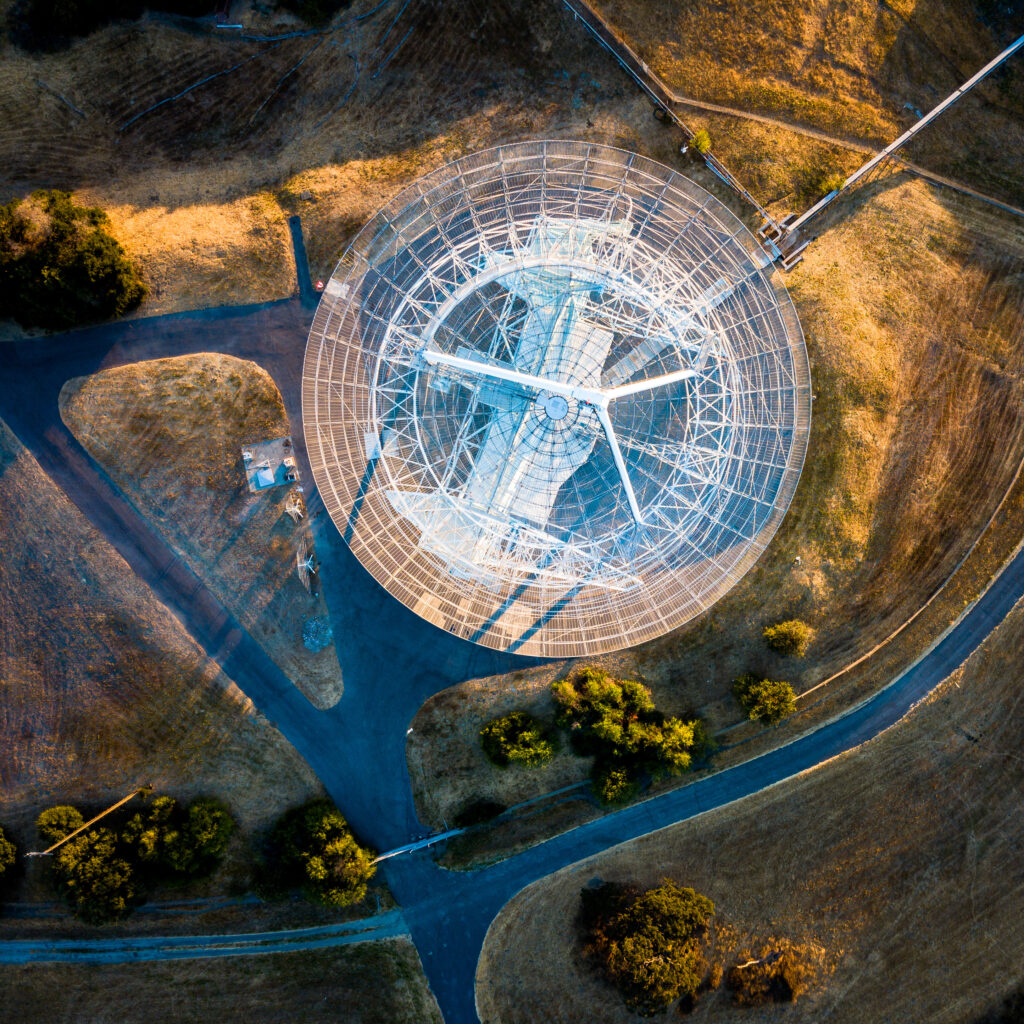
A radio telescope works much like a normal optical one. However, instead of seeing and focusing light, it listens for and focuses radio waves. The bigger the dish, the more waves it can pick up, and the further it can hear. “Big telescopes can see really distant things,” Casper said. “[In the same way], we can hear very distant things.”
The Dish’s size lets it “talk” to faraway objects, sending radio waves out to satellites, probes, or other spacecraft. “We can talk to anything, too,” Casper said. When it was finished, the Dish was the third-largest movable antenna in the world. More than six decades later, SRI claims it still ranks among the top 12.
Interestingly, the Dish isn’t solid. Its surface is a wire mesh with ping-pong-ball-sized holes in it. Nonetheless, the surface still reflects radio waves and focuses them towards its receiver, since radio waves have long wavelengths and struggle to penetrate the mesh. Casper explains the mechanism as similar to a microwave, whose waves can heat the food inside, but struggle to escape through the mesh in the microwave door.
The reason for the mesh is wind. “You saw how gusty it got [by the Dish], and that was nothing,” Casper said. “Up here, gusts are common. We’ve even seen things up there like 70 or 90 miles per hour. With a solid surface, it would start ripping this thing apart.”
The whole 70-ton structure pivots around a single axle. “We’re moving around the same thing that the Navy’s 5-inch gun rotates on,” Casper said. “We got one from a ship that was decommissioned, and that’s what we rotate around.”
Project Moon Bounce
SRI’s Cold War radar work soon gave way to the space race. The first satellite the team worked on was Pioneer 8 in 1967. The probe helped confirm the existence of solar wind, the stream of plasma coming off the sun that drives phenomena like auroras in the Earth’s upper atmosphere.
The Dish’s strangest contribution to the Apollo program was eavesdropping. During some of the space expeditions, the team listened in on the astronauts at the same time as Houston. But they were also recording something subtler: the astronauts’ radio signal as it bounced off the lunar surface and came back to Earth, a fraction of a second behind the direct transmission—sort of like an echo.
That faint echo carried a shocking amount of data. With it, physicists were able to calculate properties of the moon, such as characteristics of its surface, how resistant it was to the solar radiation, and how solid the ground was.
“We actually analyzed the surface of the moon before anyone ever tried to land on it,” Casper said. “We did the same thing for Venus, and then we did the same thing for Mars.” The work, he said, helped NASA conclude it could “likely land things there safely.”
A Million Miles Away
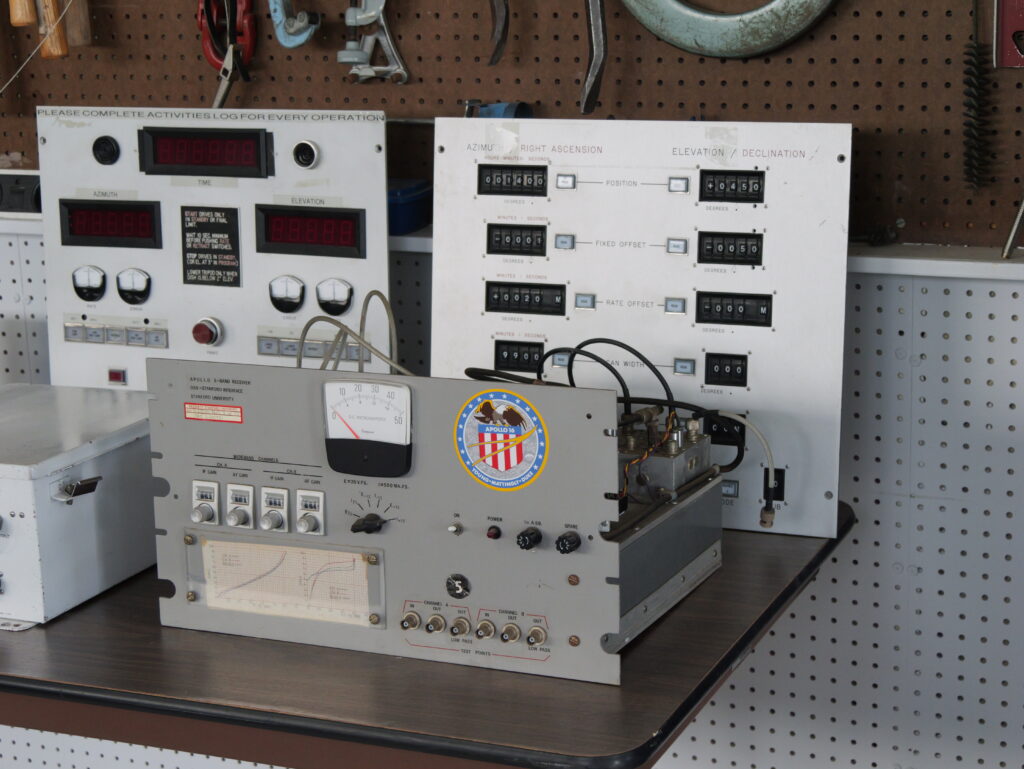
The most powerful equipment in the building happens to be the oldest. To communicate with faraway spacecraft, the Dish relies on a Klystron, an electron-beam amplifier built in the mid-1950s that can deliver a signal of up to 30,000 watts. “We put a lot of power out into space,” Casper said. Klystron was last fired in 2018. “It’s kind of obsolete by today’s standards,” Muther said. “But then NASA came to us, and they wanted one last use of it.”
That last use was NASA’s InSight mission to Mars. Riding along with the martian lander were two briefcase-sized CubeSats—tiny satellites for research purposes—built to relay InSight’s signals home as it dropped down through the martian atmosphere. Before the spacecraft arrived, NASA wanted to know whether the CubeSats had survived launch and still functioned.
So, the team aimed the Dish at the satellites, more than a million miles away, and sent the exact signal InSight would later send as it was falling through the atmosphere. Seconds later, both CubeSats reported back that they had locked on.
“Well, they locked onto us, but we were pretending to be Insight,” Casper said. But the major catch was timing: the CubeSats were only reachable around 4 a.m. “We were here at 2 a.m. getting everything set up,” he said. He still calls it a major highlight. “We sent out a message a million miles away, and then a return signal came back to Earth, and everything was working.”
Still Listening
The Dish continues to stay busy. Right now, it is collecting data for an experimental government satellite testing algorithm for the next generation of GPS.
Some of the team’s favorite work is the least glamorous. Universities’ engineering clubs sometimes launch small CubeSats that go silent, and the students call SRI for help. “We usually hear it,” Casper said. Sometimes they upload new software to bring a satellite back to life. “We know how much work they put into designing this,” he said. “So if we can help, we try to help.”
The biggest threat now isn’t age. It’s noise. The once quiet countryside where the Dish was built is gone, and every new transmitter raises the background hum that makes faint signals harder to catch. Stanford’s own radio station sits about 100 yards away. “Sometimes that gets in our way,” Casper said. “But we find workarounds.”
Looking ahead, SRI plans to replace the mesh reflector surface and keep the antenna running.
For now, the Dish sits where it has been for six decades. Turning slowly above a hill most M-A students have hiked at least once, it still talks to things millions of miles away.